
Media + Blog
Planet Green Trees Podcast
Komorn Law In The News
Media

Possession and Home Search – 6th Circuit Court Draws the Line

Michigan Drivers Can Get Up to $800 for Pothole Damage Through New Contest
What?Michigan pothole contest offers drivers up to $800

The Smell of Marijuana Alone is not Probable Cause to Search a Vehicle
Key Takeaways The Michigan Supreme Court’s 2024 decision in People v. Armstrong held that the odor of marijuana alone is not probable cause to search a vehicle. Michigan’s legalization framework (MMMA 2008, MRTMA 2018) means the smell of cannabis is consistent with...

Probable Cause and the Smell of Marijuana
Probable Cause and Marijuana Odor: Post ‑ Armstrong Search StrategiesThis article analyzes the legal landscape for vehicle searches premised on the odor of marijuana, explains how recent Michigan decisions have changed probable‑cause analysis, and provides practical...

Traffic Stops and Cannabis – What Do Prosecutors Look For?
This article is about what prosecutors and law enforcement commonly rely on during traffic stops involving cannabis in Michigan, Of course all cases and situations are not the same and evolve as they move forward.This article analyzes the legal landscape for vehicle...

Improper Transport of Cannabis in Michigan
Improper Transport of Cannabis in Michigan This article explains the statutory rules, penalties, and controlling case law governing the transportation of cannabis in Michigan, with practical compliance and defense points for practitioners. It synthesizes the Michigan...

3‑D Printed Marijuana Breathalyzer Prototype
Key Takeaways 2021 NIJ research found that THC levels in blood, urine, or oral fluid do not correlate with impairment, and field sobriety tests fail to detect cannabis intoxication. 2023 VCU research (DOJ‑funded) began developing a colorimetric THC breathalyzer...

Michigan Self‑Defense – Can you Really Stand your Ground?
Overview Michigan’s Self‑Defense Act (MCL 780.971–780.974) establishes when a person may lawfully use force—including deadly force—to defend themselves or another. The statute eliminates the duty to retreat in most situations and provides broad protections for...

Defining Entrapment by Estoppel
Summary Entrapment by estoppel is a defense that applies when a government official tells someone that certain conduct is legal, and the person reasonably relies on that assurance, only to be prosecuted later. It is rooted in due process, not in traditional entrapment...

Fabricating and Suppressing Evidence Lawsuit (DeJesus v. Harvey)
Michigan Federal Judge Allows Wrongful Conviction Lawsuit to Proceed Against Former Detective and Polygraph ExaminerOverview A Michigan federal judge has refused to grant summary judgment to two former law‑enforcement officials accused of fabricating and suppressing...

Supreme Court Clarifies Qualified Immunity Standard
United States Supreme Court issued a unanimous 9–0 decision in Gabriel Olivier v. City of Brandon, MississippiKey Takeaways The Supreme Court issued a unanimous 9–0 decision clarifying how courts must evaluate “clearly established law” in qualified immunity cases. The...

Judge Lets Wrongful Conviction Suit Proceed
Michigan Federal Judge Allows Wrongful Conviction Lawsuit to Proceed Against Former Detective and Polygraph ExaminerOverview A Michigan federal judge has refused to grant summary judgment to two former law‑enforcement officials accused of fabricating and suppressing...

Defining “Reasonableness” in a Post-Lockridge World
Defining "Reasonableness" People v. Steanhouse, (2017)Summary While People v. Lockridge (2015) successfully struck down the mandatory nature of Michigan’s sentencing guidelines, it left a significant procedural vacuum: how exactly were appellate courts supposed to...
What to Expect at Your Preliminary Examination
Michigan Preliminary Exams The Strategic Gatekeeper in Felony Defense A Guide to One of the Most Important Early Stages in a Felony CaseSummary A preliminary examination (“prelim”) is the first major evidentiary hearing in a Michigan felony case. It is where a...

The Day Michigan’s Sentencing Guidelines Changed (People v Lockridge)
People v Lockridge, 498 Mich 358 (2015)A Guide to One of the Most Important Early Stages in a Felony CaseSummary: The Day Michigan’s Sentencing Guidelines Changed In 2015, the Michigan Supreme Court handed down a landmark decision in People v. Lockridge, 498 Mich 358...

Michigan Court of Appeals Vacates Sentences in OWI‑3rd and Prisoner‑in‑Possession Case
Michigan Preliminary Exams The Strategic Gatekeeper in Felony Defense Convictions Upheld, But Panel Finds Sentences “Disproportionate” and Lacking Adequate ExplanationCheboygan Circuit Court LC No. 20-006006-FHSummary A divided Michigan Court of Appeals panel upheld...

What is a Preliminary Exam?
Michigan Preliminary Examinations The Strategic Gatekeeper in Felony Defense The Preliminary Examination as the First Line of Defense In Michigan felony cases, the preliminary examination (PE) is the first—and often most decisive—opportunity to challenge the...

What does Nolle Prosequi mean?
What does Nolle Prosequi mean? Fatal Flaw In criminal cases, nolle prosequi may be employed when there is a significant weakness in the prosecution's case, when the prosecutor acknowledges an inability to prove the charges, or even when the prosecutor has lost...

People v. Lukity, 460 Mich 484 (1999)
Case Summary The Michigan Supreme Court reversed the Court of Appeals and reinstated the defendant’s conviction for first-degree criminal sexual conduct against his fourteen‑year‑old daughter. The Court held that although one evidentiary error occurred, it was...

Motion in Limine vs Motion to Suppress
Defininition and Explaination - Motion in LimineOverview Although both a motion in limine and a motion to suppress deal with evidence, they serve very different purposes in Michigan criminal cases. Understanding the distinction is critical because each motion affects...
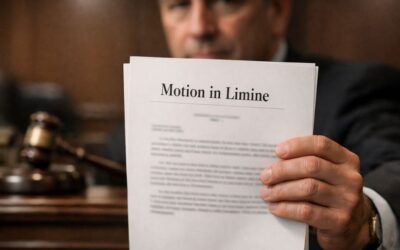
A Motion in Limine – What does it Mean?
Defininition and Explaination - Motion in LimineA motion in limine is a pretrial request asking the judge to exclude (or sometimes allow) specific evidence before the jury ever hears it. It’s one of the most important evidentiary tools in both criminal and civil...

Michigan Supreme Court and Court of Appeals Cases – Threat of Terrorism
Case Summary In People v Kvasnicka, the defendant sent a message to a young girl stating she “would not be laughing” when he came to her school to “shoot it up or blow it up like Columbine.” Charged under Michigan’s threat‑of‑terrorism statute, he argued the law was...
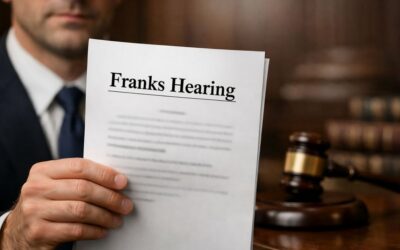
What is a Franks Hearing?
What is a Frank's Hearing?A Franks hearing is a critical legal tool used when a defendant claims that police lied, exaggerated, or recklessly disregarded the truth in a search warrant affidavit. When law enforcement places its hand on the Constitution, the law...

Michigan House Bill Proposes 32% Tax on Internet Devices for Kids
Taxed Again..? They're working on it.A newly introduced Michigan House bill would impose a 32% excise tax on smartphones, tablets, gaming systems, and other internet‑connected devices marketed to or primarily used by minors. Lawmakers backing the proposal argue the...
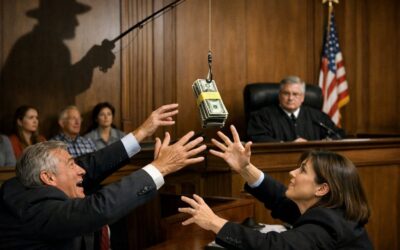
Shadow cash is corrupting Michigan courtrooms
The Shadow Cash Threat: Protecting the Integrity of Michigan Courtrooms In recent months, a spotlight has been cast on a hidden influence within the Michigan legal system: "shadow cash." This term refers to third-party litigation funding (TPLF), where outside...

Michigan judge charged in stealing from incapacitated adults
No Good Headline to Lead with HereSummary Federal prosecutors have charged a 36th District Court judge and three associates with orchestrating a long‑running financial scheme that diverted funds from incapacitated adults under court‑appointed guardianship. The...

Michigan Supreme Court and Court of Appeals Cases – Prisoner in Possession
Prisoner in Possession of a Controlled SubstanceCase Summary In People v Tadgerson, the Michigan Supreme Court addressed a critical question: does the crime of a prisoner possessing a controlled substance under MCL 800.281(4) require proof of intent, or is it a...

What is Inference Stacking?
What Is Inference Stacking? A Legal ExplanationInference stacking—also called pyramiding of inferences—is a rule of evidence that prohibits courts or juries from building one inference on top of another when the first inference is not supported by direct evidence....

Michigan Supreme Court and Court of Appeals Cases – Murder
Case Summary In People v Jones, the Michigan Court of Appeals addressed whether a single act of abuse can support convictions for both first‑degree child abuse and felony murder. The defendant argued that using the same conduct to support both charges violated...

Michigan Supreme Court and Court of Appeals Cases – Neglect of Duty
Case Summary In People v Harper, a Wayne County Sheriff’s deputy was charged with neglect of duty after witnessing an inmate escape during his smoke break and taking no action to stop or pursue the prisoner. The prosecution relied on the Sheriff’s Department policy...