No Results Found
The page you requested could not be found. Try refining your search, or use the navigation above to locate the post.


Assault with Intent to do Great Bodily Harm Less Than Murder
According to Michigan State Law (Michigan Compiled Laws – MCL), Assault with Intent to do Great Bodily Harm Less Than Murder (AWIGBH) is a serious felony offense defined in MCL 750.84. It is a specific intent crime, meaning that the prosecution must prove not only that an assault occurred, but also that the defendant had the deliberate purpose or design to cause serious injury, falling short of murder, to the victim.
750.84 Assault with intent to do great bodily harm less than murder; assault by strangulation or suffocation; “strangulation or suffocation” defined; other violation out of same conduct.
Sec. 84.
FAQ 1: What distinguishes Assault with Intent to do Great Bodily Harm Less Than Murder (AWIGBH) from other assault charges in Michigan?
AWIGBH, under MCL 750.84, is a specific intent crime. This means the prosecution must prove two main things: 1) that an assault (an attempt or threat to commit a battery) occurred, and 2) that the defendant had the specific intent to cause “great bodily harm” to the victim. “Great bodily harm” is defined as any serious injury of an aggravated nature. This specific intent element is what elevates it above simple assault or aggravated assault, where such a high level of intent to injure is not required.
FAQ 2: What are the potential penalties for a conviction of AWIGBH in Michigan?
AWIGBH is a serious felony offense in Michigan. A conviction is punishable by imprisonment for up to 10 years and/or a fine of up to $5,000. The actual sentence imposed by the court will depend on various factors, including the defendant’s prior criminal record and the Michigan Sentencing Guidelines.
FAQ 3: Does the victim have to suffer a serious injury for someone to be convicted of AWIGBH?
No. While the charge requires the intent to cause great bodily harm, the victim does not necessarily have to suffer that specific level of injury for a conviction. The focus of the crime is on the defendant’s state of mind and actions at the time of the assault, not the outcome. However, if the victim did suffer a serious injury, that injury can be presented as evidence to help prove the defendant’s intent.
FAQ 4: What kind of evidence might the prosecution use to prove “intent to do great bodily harm”?
To prove the specific intent required for AWIGBH, the prosecution may present various types of evidence, including:
Recent FAQ Posts – More Below
The page you requested could not be found. Try refining your search, or use the navigation above to locate the post.
FAQ 5: What are some common legal defenses against an AWIGBH charge, and how is Komorn Law experienced in fighting these types of charges?
Fighting an AWIGBH charge requires a robust legal strategy due to its serious nature. Common legal defenses include:
An Assault with Intent to do Great Bodily Harm Less Than Murder charge is very serious in Michigan can have serious consequences affecting your job, finances, and even your freedom. It’s crucial to understand your rights and explore all available legal options.
Contacting an experienced criminal defense attorney as soon as possible is essential. Since 1993 Attorney Michael Komorn lead trial attorney in both state and federal courts has provided a strong defense above and beyond for clients. Contact Komorn Law and Call our office 248-357-2550 for a case evaluation.
SUper Drunk – High BAC Charge? – Better Call Komorn
Here are some court contacts we frequently handle cases.
If you are facing any legal charges in Oakland County and need to hire an attorney, call our Office (248) 357-2550. If you need to contact the court, here is the information:
If you are facing any legal charges in Macomb County and need to hire an attorney, call our Office (248) 357-2550. If you need to contact the court, here is the information:
If you are facing any legal charges in Wayne County and need to hire an attorney, call our Office (248) 357-2550. If you need to contact the court, here is the information for the Third Circuit Court (Wayne County):
If you are facing any legal charges in Kent County and need to hire an attorney, call our Office (248) 357-2550. If you need to contact the court, here is the information:
If you are facing any legal charges in Traverse County and need to hire an attorney, call our Office (248) 357-2550. If you need to contact the court, here is the information for the 13th Circuit Court (which includes Traverse County):
If you are facing any legal charges in Monroe County and need to hire an attorney, call our Office (248) 357-2550. If you need to contact the court, here is the information:

Super Drunk (High Breath Alcohol Content)
Operating a Vehicle with a High BAC (Super Drunk) – MCL 257.625(1)(c)
FAQ 1: What BAC level qualifies as “High BAC” or “Super Drunk” in Michigan?
Answer: In Michigan, operating a vehicle with a blood alcohol content (BAC) of 0.17% or more is considered “High BAC” or “Super Drunk.” This carries more severe penalties than a standard OWI (Operating While Intoxicated).
FAQ 2: What are the enhanced penalties for a first-offense High BAC conviction in Michigan?
Answer: Penalties for a first-offense High BAC conviction can include up to 180 days in jail, a fine of $200 to $700, a mandatory ignition interlock device on the vehicle for one year, license suspension for one year (with a restricted license possible after 45 days with an interlock), and mandatory alcohol treatment.
FAQ 3: Can the prosecution use a preliminary breath test (PBT) as evidence in a Super Drunk case?
Answer: Generally, a PBT administered at the roadside is used to establish probable cause for an arrest but is not admissible as evidence in court to prove a specific BAC level. The prosecution will typically rely on an evidentiary breath test or blood test administered at a police station or hospital.
FAQ 4: What legal challenges can be raised against a High BAC charge?
Answer: Defenses can include challenging the legality of the initial traffic stop, the administration and accuracy of the evidentiary breath or blood test, any medical conditions that might affect the test results, and ensuring the proper chain of custody of blood samples.
Recent FAQ Posts – More Below
The page you requested could not be found. Try refining your search, or use the navigation above to locate the post.
FAQ 5: How can a defense attorney help with a High BAC charge?
Answer: An attorney can investigate the circumstances of the stop and testing, challenge the admissibility of evidence, negotiate with the prosecution for a potential reduction in charges, and present mitigating factors at sentencing to minimize penalties.
A super drunk charge is very serious in Michigan can have serious consequences affecting your driving privileges, job, finances, and even your freedom. It’s crucial to understand your rights and explore all available legal options.
Contacting an experienced criminal defense attorney as soon as possible is essential. At Komorn Law, our attorneys have a deep understanding of Michigan’s laws and can provide you with a strong defense to protect your rights and future. Call 248-357-2550
SUper Drunk – High BAC Charge? – Better Call Komorn
Here are some court contacts we frequently handle cases.
If you are facing any legal charges in Oakland County and need to hire an attorney, call our Office (248) 357-2550. If you need to contact the court, here is the information:
If you are facing any legal charges in Macomb County and need to hire an attorney, call our Office (248) 357-2550. If you need to contact the court, here is the information:
If you are facing any legal charges in Wayne County and need to hire an attorney, call our Office (248) 357-2550. If you need to contact the court, here is the information for the Third Circuit Court (Wayne County):
If you are facing any legal charges in Kent County and need to hire an attorney, call our Office (248) 357-2550. If you need to contact the court, here is the information:
If you are facing any legal charges in Traverse County and need to hire an attorney, call our Office (248) 357-2550. If you need to contact the court, here is the information for the 13th Circuit Court (which includes Traverse County):
If you are facing any legal charges in Monroe County and need to hire an attorney, call our Office (248) 357-2550. If you need to contact the court, here is the information:

Maintaining public trust in the judiciary is paramount to a functioning legal system. In Michigan, several mechanisms exist to ensure judicial accountability, holding judges responsible for their conduct both on and off the bench.
These safeguards are primarily governed by these guidelines below.
The cornerstone of judicial accountability in Michigan is the Judicial Tenure Commission, established by the Michigan Constitution (Article VI, Section 30).
Misconduct in Office: This encompasses actions that violate the Code of Judicial Conduct or the rules governing judicial ethics.
Persistent Failure to Perform the Duties of Office: Neglecting judicial responsibilities, such as timely rulings or regular court attendance, falls under this category.
Conduct Clearly Prejudicial to the Administration of Justice: This broad category covers behavior that undermines public confidence in the integrity and impartiality of the judiciary.
Physical or Mental Disability Seriously Interfering with the Performance of Judicial Duties: When a judge’s health significantly impairs their ability to fulfill their responsibilities.
Conviction of a Felony: A criminal conviction can lead to disciplinary action.
Upon investigating a complaint, the JTC may dismiss it, issue a private admonishment, or file a formal complaint with the Michigan Supreme Court if it finds sufficient evidence of misconduct.
If a formal complaint is filed, the Supreme Court appoints a master to conduct a public hearing. The master then submits findings and recommendations to the JTC, which, in turn, makes its own recommendation to the Supreme Court.
The Michigan Supreme Court has the ultimate authority to discipline judges, with sanctions ranging from censure and reprimand to suspension and removal from office (MCL 600.225 outlines the Supreme Court’s general superintending control over all state courts).
While the JTC is the primary body for addressing judicial misconduct, other avenues exist:
The Michigan Code of Judicial Conduct, adopted by the Michigan Supreme Court, provides specific ethical guidelines for judges.
When facing legal challenges, particularly those involving potential judicial overreach or misconduct, it is crucial to have experienced and dedicated legal representation. Attorney Michael Komorn of Komorn Law PLLC provides an aggressive defense in courtrooms across Michigan.

Freedom of Speech - The First Amendment This right is not really absoluteIn a world filled with diverse opinions and constant communication, knowing your fundamental rights is more important than ever. In Michigan, residents are protected by robust free speech rights,...

Michigan Criminal Laws FAQs Brass KnucklesGetting caught with brass knuckles in Michigan can lead to serious legal trouble. While some states have more lenient laws, Michigan takes a strict stance on these types of weapons. If you or someone you know faces charges...
Michigan Criminal Laws FAQs Resisting an Unlawful Arrest in MichiganThe question of whether you can legally resist an unlawful arrest in Michigan is complex, and the answer is generally no, with very limited exceptions. While the idea of defending oneself against an...
Q: Who can file a complaint against a judge in Michigan?
A: Any individual, including members of the public, attorneys, or court staff, can file a complaint with the Michigan Judicial Tenure Commission if they believe a judge has engaged in misconduct.
A: The JTC reviews the complaint to determine if it alleges conduct that, if true, would constitute judicial misconduct or disability. If so, the JTC may conduct an investigation, which can involve interviewing witnesses, reviewing court records, and requesting information from the judge.
Q: What are the possible sanctions a judge can face in Michigan for misconduct?
A: The Michigan Supreme Court, based on recommendations from the JTC, can impose various sanctions, including private admonishment, public censure or reprimand, suspension with or without pay, and removal from office.
Charged with a Crime? – Better Call Komorn
Here are some court contacts we frequently handle cases.
Komorn Law, PLLC, led by Attorney Michael Komorn, serves clients throughout Michigan.
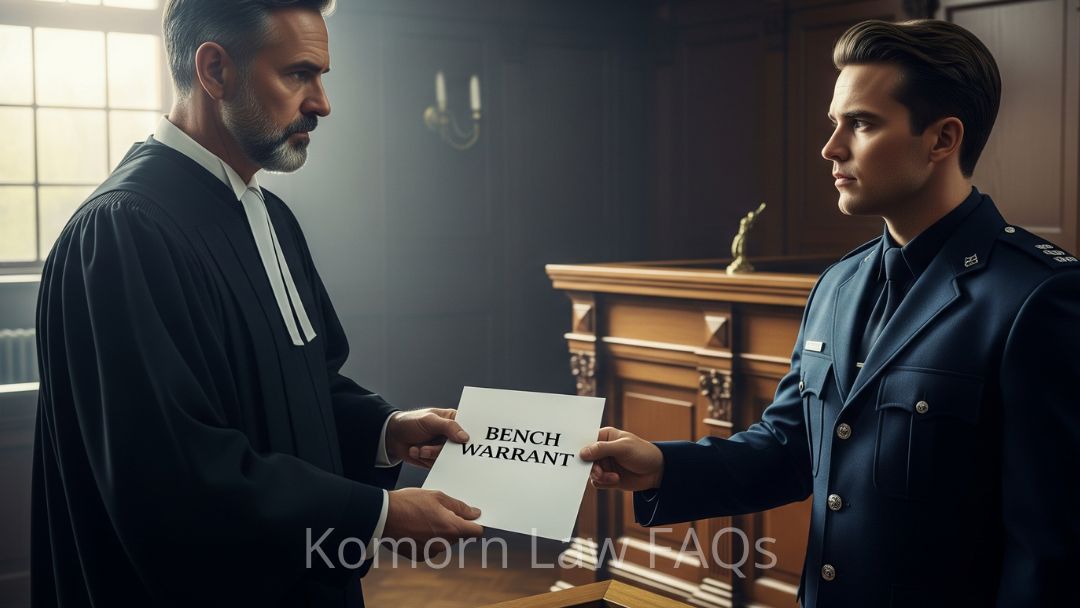
Bench Warrants
According to Michigan State Law (Michigan Compiled Laws – MCL), a Bench Warrant is a court order that directs law enforcement officers to arrest and bring a specific individual before the court. It’s issued by a judge (from the “bench”) when someone fails to comply with a court order or requirement. Unlike an arrest warrant, which is typically issued at the beginning of a criminal case, a bench warrant is issued after a case has begun, usually due to non-compliance.
FAQ 1: What is a bench warrant in Michigan?
A bench warrant in Michigan is a court order issued by a judge that compels law enforcement to arrest a specific person and bring them before the court. It’s typically issued when an individual fails to comply with a court order, such as:
The warrant gives law enforcement the authority to arrest the person named in the warrant.
FAQ 2: How do I know if I have a bench warrant in Michigan?
It can be difficult to know definitively if you have a bench warrant unless you are directly notified by law enforcement or the court. However, you can try the following:
FAQ 3: What should I do if I have a bench warrant?
If you discover that you have a bench warrant in Michigan, it’s crucial to take immediate action:
FAQ 4: Can I be arrested anywhere if there’s a bench warrant out for me in Michigan?
Yes, if there is a valid bench warrant for your arrest in Michigan, you can be arrested anywhere in the state, and potentially even outside of Michigan if the warrant is entered into a national database. Law enforcement officers are authorized to execute the warrant, meaning they can take you into custody. This can happen during a traffic stop, at your home, at your workplace, or in any other location where you are encountered.
Recent FAQ Posts – More Below
The page you requested could not be found. Try refining your search, or use the navigation above to locate the post.
FAQ 5: How can your firm help me resolve a bench warrant in Michigan?
Komorn Law has extensive experience in assisting clients with resolving bench warrants in Michigan. Our attorneys can:
If you have a bench warrant in Michigan, contact Komorn Law immediately for experienced legal assistance. We can help you navigate the legal system and resolve the warrant efficiently and effectively.
DO NOT IGNORE A BENCH WARRANT.
Getting picked up on a bench warrant in Michigan can have serious consequences affecting your driving privileges, job, finances, and even your freedom. It’s crucial to understand your rights and explore all available legal options.
Contacting an experienced criminal defense attorney as soon as possible is essential. At Komorn Law, our attorneys have a deep understanding of Michigan’s laws and can provide you with a strong defense to protect your rights and future. Call 248-357-2550
Accused of Traffic Violation? – Better Call Komorn
Here are some court contacts we frequently handle cases.
If you are facing any legal charges in Oakland County and need to hire an attorney, call our Office (248) 357-2550. If you need to contact the court, here is the information:
If you are facing any legal charges in Macomb County and need to hire an attorney, call our Office (248) 357-2550. If you need to contact the court, here is the information:
If you are facing any legal charges in Wayne County and need to hire an attorney, call our Office (248) 357-2550. If you need to contact the court, here is the information for the Third Circuit Court (Wayne County):
If you are facing any legal charges in Kent County and need to hire an attorney, call our Office (248) 357-2550. If you need to contact the court, here is the information:
If you are facing any legal charges in Traverse County and need to hire an attorney, call our Office (248) 357-2550. If you need to contact the court, here is the information for the 13th Circuit Court (which includes Traverse County):
If you are facing any legal charges in Monroe County and need to hire an attorney, call our Office (248) 357-2550. If you need to contact the court, here is the information:

Traffic Offenses
According to Michigan State Law (Michigan Compiled Laws – MCL), Traffic Offenses encompass a wide range of violations related to the operation of motor vehicles on public roads and highways. These offenses are primarily governed by the Michigan Vehicle Code (MCL 257.1 et seq.) and include actions that endanger public safety, impede traffic flow, or violate regulations concerning vehicle equipment, registration, and driver licensing. While Operating While Intoxicated (OWI) is a significant category of traffic offenses, this blog post focuses on other violations.
FAQ 1: What are the potential consequences of speeding tickets and other traffic violations in Michigan?
The potential consequences of speeding tickets and other traffic violations in Michigan, as generally outlined in MCL 257.901 et seq. and related sections, can vary significantly depending on the specific offense. These consequences can include:
FAQ 2: Can I lose my driver’s license for accumulating too many points?
Yes, you can lose your driver’s license in Michigan for accumulating too many points on your driving record, as governed by MCL 257.320 and related administrative rules. The Michigan point system assigns a certain number of points to different traffic violations. If you accumulate a specified number of points within a certain timeframe, the Secretary of State is required to take action against your driving privileges:
The duration of the suspension typically increases with the number of points accumulated. It’s important to be aware of the points associated with different traffic violations and to drive responsibly to avoid accumulating excessive points. The Secretary of State will notify you if you are facing license suspension due to points.
FAQ 3: What is reckless driving in Michigan?
MCL 257.626 defines reckless driving in Michigan as operating a vehicle upon a highway or other place open to the general public, including an area designated for the parking of motor vehicles,
Key elements of reckless driving include:
Examples of actions that could be considered reckless driving include:
Reckless driving is a more serious traffic offense than typical speeding or minor infractions and carries more severe penalties.
FAQ 4: What should I do if I receive a traffic ticket in Michigan?
If you receive a traffic ticket in Michigan, you generally have a few options:
It’s important to carefully read the information on your ticket for specific instructions and deadlines for responding to the court. Failing to respond can result in additional penalties, such as late fees and potential license suspension.
Recent FAQ Posts – More Below
The page you requested could not be found. Try refining your search, or use the navigation above to locate the post.
FAQ 5: Should I hire a lawyer for a traffic ticket in Michigan?
Whether you should hire a lawyer for a traffic ticket in Michigan depends on the severity of the charge and the potential consequences. Consider hiring a lawyer if:
For minor speeding tickets or non-moving violations, hiring a lawyer may not be cost-effective. However, for more serious offenses or situations where your driving privileges are at risk, consulting with an attorney experienced in Michigan traffic law can be a wise decision. They can advise you on your rights, explore potential defenses, and represent you in court to achieve the best possible outcome.
Facing a Traffic Violation in Michigan?
Facing a Traffic Violations charge in Michigan can have serious consequences affecting your driving privileges, job, finances, and even your freedom. It’s crucial to understand your rights and explore all available legal options.
Contacting an experienced criminal defense attorney as soon as possible is essential. At Komorn Law, our attorneys have a deep understanding of Michigan’s laws and can provide you with a strong defense to protect your rights and future. Call 248-357-2550
Accused of Traffic Violation? – Better Call Komorn
Here are some court contacts we frequently handle cases.
If you are facing any legal charges in Oakland County and need to hire an attorney, call our Office (248) 357-2550. If you need to contact the court, here is the information:
If you are facing any legal charges in Macomb County and need to hire an attorney, call our Office (248) 357-2550. If you need to contact the court, here is the information:
If you are facing any legal charges in Wayne County and need to hire an attorney, call our Office (248) 357-2550. If you need to contact the court, here is the information for the Third Circuit Court (Wayne County):
If you are facing any legal charges in Kent County and need to hire an attorney, call our Office (248) 357-2550. If you need to contact the court, here is the information:
If you are facing any legal charges in Traverse County and need to hire an attorney, call our Office (248) 357-2550. If you need to contact the court, here is the information for the 13th Circuit Court (which includes Traverse County):
If you are facing any legal charges in Monroe County and need to hire an attorney, call our Office (248) 357-2550. If you need to contact the court, here is the information: