No Results Found
The page you requested could not be found. Try refining your search, or use the navigation above to locate the post.

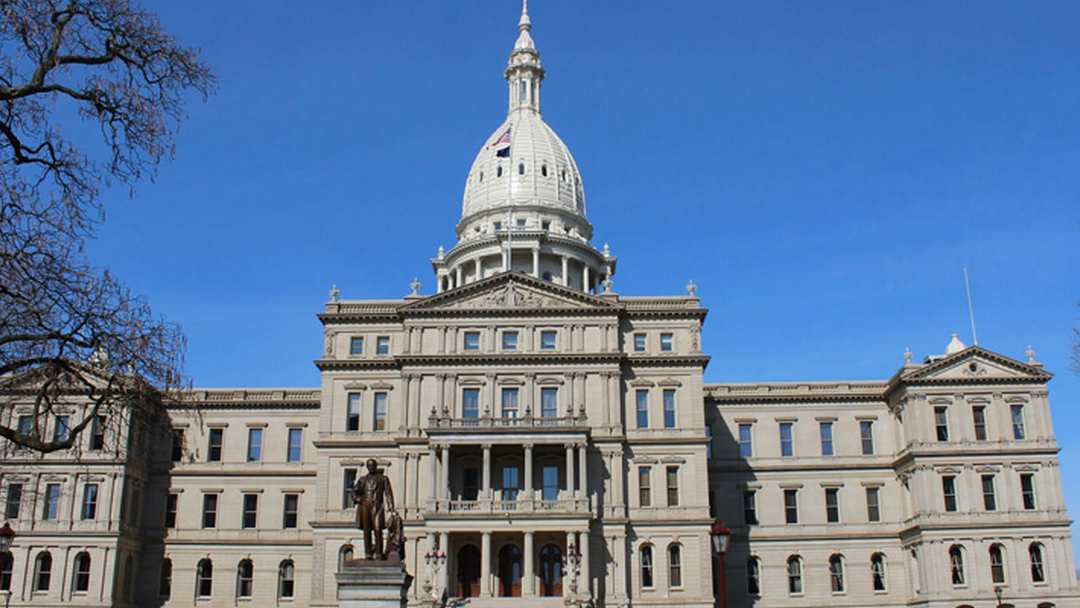
Michigan House Bill 5450 of 2024 is a bill that was introduced by Representative Sharon MacDonell on February 14, 2024.
The bill was referred to the House Committee on Education and was reported with a recommendation with a substitute on May 14, 2024. The bill was then referred to second reading. On November 13, 2024, the bill was passed by the House.
The bill is an act to amend 1976 PA 451, entitled “The revised school code,” by adding section 1313a. The bill requires the Department of Health and Human Services to develop and provide to the Department of Education an informational notice in English, Spanish, and Arabic containing information and best practices regarding the storage of firearms.
The notice must include an overview of the requirements under section 9 of 1927 PA 372, MCL 28.429, answers to frequently asked questions about firearm storage requirements, and guidance on where a parent or legal guardian can obtain gun locks and gun safes, including free or low-cost options.
The Department of Health and Human Services is also required to share the informational notice with all public schools and nonpublic schools.
The bill is currently in the Senate. If the bill is passed by the Senate, it will be sent to the Governor for signature. If the Governor signs the bill, it will become law.
Current Bill 11/13/24
Michigan firearms and bows laws
Other Articles
The page you requested could not be found. Try refining your search, or use the navigation above to locate the post.

President Biden’s administration has proposed the reclassification of marijuana from a Schedule I controlled substance to a Schedule III drug, which recognizes its medical benefits. This significant shift would not only have far-reaching implications for markets and consumers but would also enhance the potential for medical research into cannabis.
Two months prior to the election, Trump released a statement that significantly aligned him with both the Biden administration and his opponent, Vice President Harris.
He affirmed that he supports legalizing the recreational use of marijuana.
“I believe it is time to end needless arrests and incarcerations of adults for small amounts of marijuana for personal use. We must also implement smart regulations, while providing access for adults, to safe, tested product.” he said in a post on Truth Social.

Trump expressed his support for Florida’s recreational cannabis ballot by indicating he would vote in favor of it even though the proposed amendment did not reach the required 60% threshold and he implied that Biden’s cannabis policy is likely to remain unchanged.
“As President, we will continue to focus on research to unlock the medical uses of marijuana to a Schedule 3 drug, and work with Congress to pass common sense laws, including safe banking for state authorized companies,” Trump said.
There’s much more good detail here at an article on the once great tax supported NPR site.
Other Articles
The page you requested could not be found. Try refining your search, or use the navigation above to locate the post.

In Michigan, police can take your dashcam footage in specific situations, primarily when they believe it could serve as evidence in a criminal investigation.
Michigan law permits officers to seize personal property, like dashcam footage, if they have probable cause, a warrant, or if exceptions to the warrant requirement apply.
Here’s a breakdown of how and when police can take and use dashcam footage.
Under the Fourth Amendment to the U.S. Constitution and Article I, Section 11 of the Michigan Constitution, searches and seizures are generally considered unreasonable without a warrant.
However, there are several exceptions that allow police to seize dashcam footage without first obtaining a warrant:
Probable Cause with a Warrant: Police typically need a warrant based on probable cause to seize dashcam footage. The officer must convince a judge that the footage likely contains evidence of a crime. Under MCL 780.651, Michigan law provides procedures for issuing search warrants for personal property believed to contain evidence of criminal activity.
Consent: If you voluntarily hand over your dashcam or footage, the police do not need a warrant. Consent is a common way police legally acquire dashcam recordings.
Exigent Circumstances: Police can seize dashcam footage without a warrant if there’s an immediate threat of evidence destruction or if a delay might harm others or impede justice. Exigent circumstances might apply in cases like drunk driving or hit-and-run incidents where the footage could be overwritten or lost.
Search Incident to Arrest: If you’re lawfully arrested, officers may be able to seize property within your immediate reach, including dashcam footage, to prevent evidence tampering. The U.S. Supreme Court’s decision in Arizona v. Gant (2009) established guidelines for searches incident to arrest, emphasizing a connection between the arrest and the evidence sought.
Once seized lawfully, dashcam footage can be used as evidence against you in court. Courts allow video footage as a form of evidence if it is authentic and relevant to the case. For instance, in People v. Wood (Mich. App. 2018), dashcam footage from a police vehicle was successfully used to support DUI charges, setting a precedent for its evidentiary value.
Legal Counsel and Your Rights
When facing legal challenges, particularly in criminal cases, it is advisable to seek legal counsel immediately.
An experienced attorney can provide guidance on how to navigate interactions with law enforcement while safeguarding your constitutional rights.
Since 1993 our expert legal defense in navigating criminal law matters and protecting your constitutional rights are what we eat for breakfast everyday.
Contact Komorn Law PLLC if you’re ready to fight and win.
Research us and then call us.
Other Articles
The page you requested could not be found. Try refining your search, or use the navigation above to locate the post.
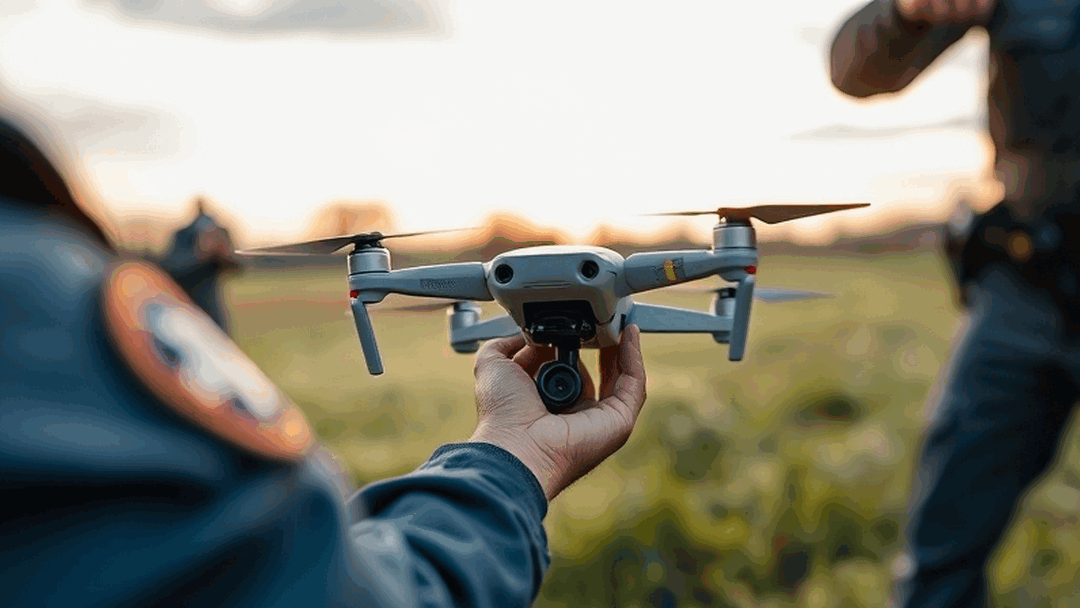
As we have seen … They can charge, arrest you and take your stuff for whatever they want. You’ll have to fight it out in court to get it back.
In Michigan, the police can confiscate your drone under certain conditions, mainly if you’re violating the law.
Here’s what you need to know about when and why your drone might be taken by authorities.
—> There’s some cool drone shows at the end of this article.
If you’re using your drone in a way that breaks Michigan or federal laws, the police can step in. For example, Michigan law (MCL 259.322) prohibits using drones to interfere with law enforcement, harass others, or invade privacy. If your drone is involved in these activities, the police can seize it as part of their investigation.
Under MCL 259.322, it is illegal to operate a drone in a way that interferes with law enforcement or emergency operations. Flying a drone over prisons, for example, is strictly prohibited. Violating these laws could lead to arrest, fines, or both.
Flying a drone over private property without permission could be considered trespassing. Michigan law (MCL 259.320) regulates the safe operation of drones, and if you violate airspace laws or property rights, your drone could be confiscated as evidence of trespassing or other violations.
259.320 Criminal liability; offense committed with aid of an unmanned aircraft system; exception.
Sec. 20.
(1) A person is guilty of an offense committed with the aid of an unmanned aircraft system if the unmanned aircraft system is under the person’s control and the activity performed with the aid of the unmanned aircraft system would have given rise to criminal liability under the penal law of this state if it was performed directly by the person without the aid of an unmanned aircraft system.
(2) Notwithstanding subsection (1), and except as provided in sections 21 and 22 and section 45a(1) of the Michigan penal code, 1931 PA 328, MCL 750.45a, solely flying an unmanned aircraft system through navigable airspace in accordance with federal law does not give rise to criminal liability under the penal law of this state.
The Key sentence from above: “solely flying an unmanned aircraft system through navigable airspace in accordance with federal law does not give rise to criminal liability under the penal law of this state.”
-So if you use the drone in aiding you to commit a crime – The trouble begins (or maybe just an alleged a crime to sieze it). See you in court.
Flying drones near airports, military bases, or other restricted areas can lead to immediate police action. The Federal Aviation Administration (FAA) has strict rules about no-fly zones, and Michigan police will work with federal authorities to confiscate drones that pose a national security risk.
If you have been accused or charged with a crime.
Say nothing to anyone. Talk to us first.
Our firm is experienced in both State and Federal courts defending clients.
CALL NOW
If your drone causes an accident or is flown recklessly, the police can confiscate it to prevent further harm or investigate the incident. This is especially relevant if someone is injured or property is damaged.
If you’re flying a drone for commercial purposes, you must have an FAA Part 107 Remote Pilot Certificate. To get this, you’ll need to pass a knowledge test administered by the FAA.
If you’re flying for recreational purposes, you don’t need a license, but you must follow FAA safety guidelines, including flying below 400 feet and keeping the drone within your line of sight.
Yes, Federal Aviation Administration (FAA) laws take precedence over state or local drone regulations.
This means that federal rules about airspace, drone registration, and licensing apply across the country, including Michigan. However, local laws that don’t conflict with FAA rules—like those concerning privacy or property—can still apply.
In Michigan, there are no separate state registration requirements for drones beyond the FAA’s regulations. However, local ordinances may still apply, particularly regarding where you can fly the drone, so it’s important to check local rules.
Disclaimer: This article provides a general overview and does not substitute for legal advice. As with any law it can change or be modified and research should be done before you rely on any information provided on the internet. Although we make all attempts to link relevant laws these laws can often be gray and corrupted to fit a narrative. Anyone charged with any alleged crime should consult an attorney for specific legal guidance.
Beautiful when they are used for good…
The page you requested could not be found. Try refining your search, or use the navigation above to locate the post.
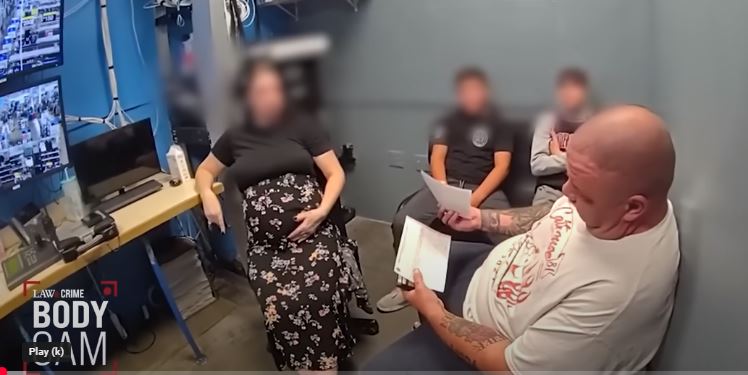
Watch Some Body Cam Footage Down Below
Other Articles
The page you requested could not be found. Try refining your search, or use the navigation above to locate the post.