
No Results Found
The page you requested could not be found. Try refining your search, or use the navigation above to locate the post.


A Michigan bill aims to crack down on excessive noise from vehicles with intentional modifications.
The Problem:
The Bill:
The Concerns:
The Bigger Picture:
Or better yet start tonight and use the law that’s already there. Like this one…
Sec. 74-1. – Prohibition generally.
(a) It shall be unlawful for any person to make, continue or cause to be made or continued any loud, unnecessary or unusual noise or any noise which either annoys, disturbs, injures or endangers the comfort, repose, health, peace or safety of others, within the limits of the city.
(b) Each of the acts enumerated in this chapter is declared unlawful and prohibited, and violators shall be responsible for a municipal civil infraction, but this enumeration shall not be deemed to be exclusive.(Code 1981, § 17-1; Ord. No. O-13-19, § 5, 10-21-2019)
YOU TOO ROYAL OAK
Disorderly Conduct (Disturbing the Peace and Noise)
Ordinance at Section §278-35, First Reading
B. Makes unreasonable noise which tends to cause a public danger, alarm, disorder or nuisance;
P. Vehicle sound equipment noise and vibration. It shall be unlawful for any person to be in possession or control of a parked or moving vehicle with a stereo, disc player, cassette player, speakers, or other similar equipment that is producing sound on a street, driveway, publicly patrolled parking lot or public place at or with a level, volume, intensity, frequency, or other attribute that is perceptible at a distance of 50 feet or more, either by hearing the sound by the human ear or by feeling the sound in the form of vibrations associated therewith. This subsection shall not be applicable to sound emanating from emergency vehicles, vending vehicles, or publicly sponsored or permitted concerts, sporting events, activities, or gatherings. A violation of this subsection is a civil infraction punishable by a fine of $100.
[Added 7-25-2016 by Ord. No. 2016-09]
Q. Loud vehicles. The operation of any automobile, truck, motorcycle or other vehicle so out of repair or so loaded or constructed as to cause loud and unnecessary grating, grinding, rattling or other unreasonable noise, including the noise resulting from exhaust, which is plainly audible at a distance of 50 feet from the vehicle and unreasonably disturbing to the quiet, comfort or repose of other persons. A violation of this subsection is a civil infraction punishable by a fine of $100.
[Added 7-25-2016 by Ord. No. 2016-09]

The U.S. Supreme Court has ruled against two women who loaned their cars to others arrested for drug crimes while using the vehicles, leading Alabama police to seek civil forfeiture of the cars.
Their vehicles were confiscated under an Alabama statute that empowers law enforcement to seize cars utilized in the commission or facilitation of drug-related offenses.
APPEALS in STATE or FEDERAL COURT
When you need to appeal a decision you feel is wrong.
Call Komorn Law (248) 357-2550
In a 6-3 decision, the Supreme Court ruled that the due process clause of the 14th Amendment mandates a timely forfeiture hearing in cases involving the seizure of personal property—however, it does not necessitate a separate preliminary hearing.
CULLEY ET AL. v. MARSHALL, ATTORNEY GENERAL
OF ALABAMA, ET AL.
CERTIORARI TO THE UNITED STATES COURT OF APPEALS FOR
THE ELEVENTH CIRCUIT
No. 22–585. Argued October 30, 2023—Decided May 9, 2024
Petitioner Halima Culley loaned her car to her son, who was later pulled over by Alabama police officers and arrested for possession of
marijuana. Petitioner Lena Sutton loaned her car to a friend, who was
stopped by Alabama police and arrested for trafficking methamphetamine.
In both cases, petitioners’ cars were seized under an Alabama civil forfeiture law that permitted seizure of a car “incident to an arrest” so long as the State then “promptly” initiated a forfeiture case. Ala. Code §20–2–93(b)(1), (c).
The State of Alabama filed forfeiture complaints against Culley’s and Sutton’s cars just 10 and 13 days, respectively, after their seizure. While their forfeiture proceedings were pending, Culley and Sutton each filed purported class-action complaints in federal court seeking money damages under 42 U. S. C. §1983, claiming that state officials violated their due process rights by retaining their cars during the forfeiture process without holding preliminary hearings.
In a consolidated appeal, the Eleventh Circuit affirmed the dismissal of petitioners’ claims, holding that a timely forfeiture hearing affords claimants due process and that no separate preliminary hearing is constitutionally required.
Read the rest of the SCOTUS Opinion here
In the FEDERAL COURT SYSTEM
When you need to go on the offense – to put the prosecution on defense
Komorn Law (248) 357-2550.
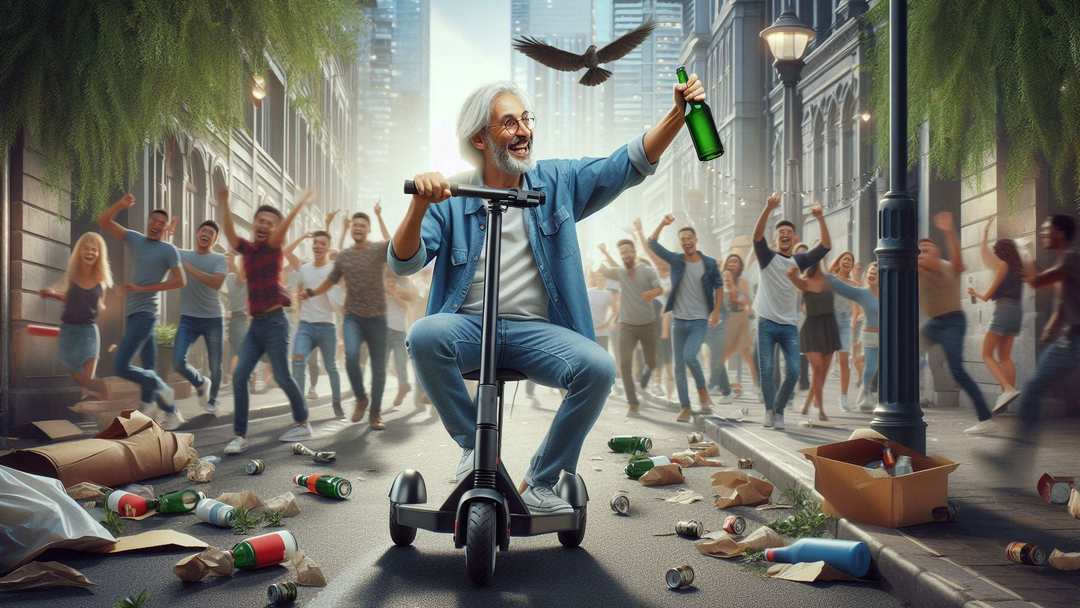
Question: We recently got “Bird” scooters (electric skateboards) in our town. Are they considered a motor vehicle? Can I be arrested for drunk driving on an electric skateboard?
Answer: Public Act 204 of 2018 amended the Michigan Vehicle Code (MVC) by adding MCL 257.13f to define “electric skateboard” as a wheeled device with a floorboard to stand on that is not more than 60 inches long and 18 inches wide and is designed for only one person at a time. To be an electric skateboard, the device must have an electrical propulsion system that does not exceed 2,500 watts and a maximum speed on a paved level surface that does not exceed 25 mph. An electric skateboard may be designed to be powered by human propulsion, in addition to the electric propulsion system.
An electric skateboard is exempted from the definition of “motor vehicle” under MCL 257.33, but a person riding an electric skateboard “has all of the rights and is subject to all of the duties applicable to the driver of a vehicle.” MCL 257.657. Questions regarding an arrest for a violation of MCL 257.625 (Operating While Intoxicated) on an electric skateboard/horse, should generally be referred to your city attorney or local prosecutor.
Question: My husband saw on the news last night that golf carts were allowed on the county roads in the state of Michigan. Is this true?
Answer: MCL 257.657a authorizes a village or city of fewer than 30,000 people to allow the operation of golf carts on the streets of that village or city by resolution, and sets forth the requirements and restrictions in doing so. Similarly, a township of fewer than 30,000 people is also authorized to allow this under certain circumstances unless disapproved by the county board of commissioners.
Previously, it was possible to equip, register and insure your golf cart to be road legal as a low speed vehicle. However, the Michigan Department of State (MDOS) has announced that it will no longer process assembled vehicle title applications for vehicles manufactured as a golf cart and has requested law enforcement personnel to refuse or deny any request to complete a TR-54 Vehicle Number and On-Road Equipment Inspection for a golf cart. Additional information may be found on the MDOS website.
Golf carts that are currently titled and registered for on-road use will retain its current title and registration.
If the golf cart is not currently titled, registered, and insured for on-road use, and is not within one of the cities, villages or townships that has allowed on road use, it may only be operated on a highway under very limited circumstances if it meets the definition of an ORV as provided in MCL 324.81101 of the Natural Resources and Environmental Protection Act. The limited circumstances, such as crossing a street or highway at a right angle for the purpose of getting from one area to another, can be found in MCL 324.81122. Additionally, MCL 324.81131 authorizes local municipalities to pass an ordinance allowing the operation of ORV’s on streets within the municipality and sets forth the requirements and restrictions in doing so.
Question: I have a Polaris Ranger and want to know if I can operate it on the road?
Answer: As noted on the SOS website, certain off-road vehicles (ORVs), all-terrain vehicles (ATVs) and off-road dune buggies can be titled as an assembled vehicle for on-road use.
If this type of ORV is not currently titled, registered and insured for on-road use, it may only be operated on a highway under very limited circumstances if it meets the definition of an ORV as provided in MCL 324.81101 of the Natural Resources and Environmental Protection Act. The limited circumstances, such as crossing a street or highway at a right angle for the purpose of getting from one area to another, can be found in MCL 324.81122.
Additionally, MCL 324.81131 authorizes local municipalities to pass an ordinance allowing the operation of ORV’s on streets within the municipality and sets forth the requirements and restrictions in doing so.
Question: Where can I legally ride a goped?
Answer: A goped, while not specifically defined in the Michigan Vehicle Code, does fall under the definition of a moped (MCL.257.32b) . Mopeds are required to have certain equipment such as; a headlight, brake light, seat, horn, muffler, and brakes on each wheel, in order to be legally operated on the roadway. In addition, the operator of a moped must be at least 15 years of age, have a moped license or an operator/chauffeur license, and the vehicle must be registered with the Department of State and display a valid registration plate. Finally, a person operating a moped must wear an approved crash helmet if they are under 19 years of age.
Because gopeds are not equipped with the required equipment they cannot be legally driven on the roadway. Also, by definition they are a motor vehicle and therefore cannot be driven on a sidewalk constructed for use by pedestrians.
Question: Can someone tell me what the laws in Michigan are for riding pocket bikes?
Answer: If the “pocket bike” has an engine displacement of 50cc’s or less, produces 2.0 brake horsepower or less, is capable of a top speed of no more than 30 mph, and the operator is not required/allowed to shift gears, then it may be legally classified as a moped. The document titled “Moped Requirements” lists the operational and equipment requirements for such motor vehicles. Most “pocket bikes” will not meet those requirements and therefore will not be street legal.
If the “pocket bike” has an engine displacement greater than 50cc’s then it is classified as a motorcycle and must meet the requirements applicable to that type of vehicle. Again, most “pocket bikes” will not meet these requirements.
Each traffic violation has a point value, which is set by law in the Michigan Vehicle Code.
DUI Charges?
Sometimes it’s cheaper in the long run to fight them
Call to Fight for your Rights (248) 357-2550
Governor Gretchen Whitmer signed into law a bill making it illegal to manually use a cell phone or other mobile electronic device while operating a vehicle on Michigan roads. Under the law, a driver cannot hold or support a phone or other device with any part of their hands, arms, or shoulders.
Even if a cell phone or other device is mounted on your dashboard or connected to your vehicle’s built-in system, you cannot use your hands to operate it beyond a single touch.
Disclaimer: This Frequently Asked Questions page is provided solely as a means of providing basic answers to questions about the Michigan Vehicle Code and is not designed or intended to provide a basis to contest a citation for a violation of the code. The positions stated are only those of the Michigan Department of State Police and are not binding on any other law enforcement agency or any Court. If our position is supported by case law then it will be enumerated within the answer provided. Source of Information – Traffic Laws FAQ
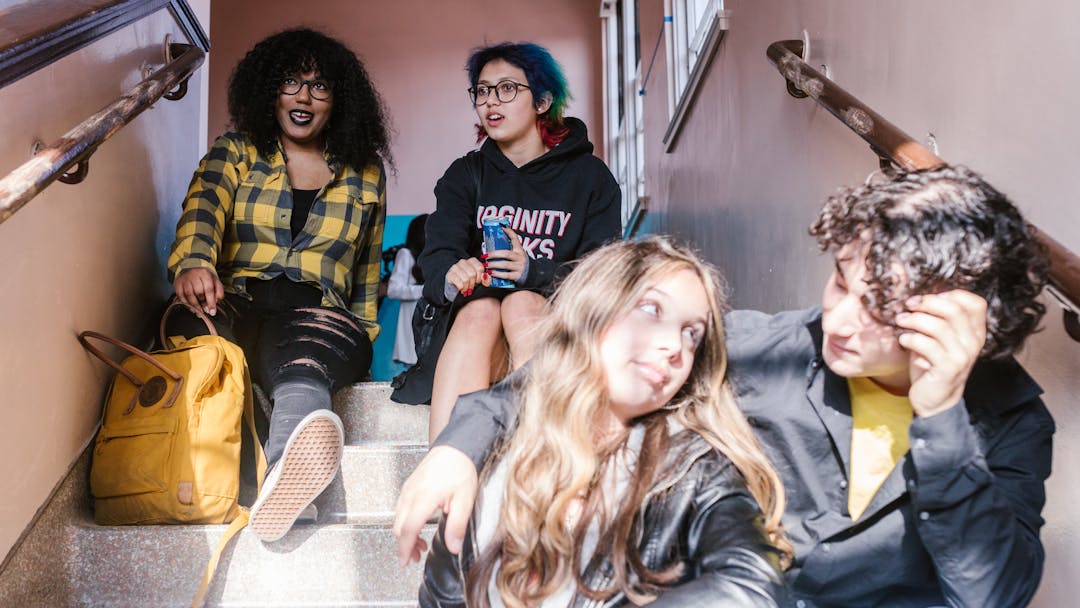
The Detroit Public Schools Community District has observed a substantial rise in the use of marijuana edibles and vape pens within schools. In light of this concerning trend, the district is appealing to local, state, and federal leaders to promptly implement a policy addressing this issue.
In an email sent on Thursday, Superintendent Nikolai Vitti reports a significant increase in drug-related incidents within the district. Between 2019 and 2021, there were 289 recorded incidents. However, the number has surged to 1,735 between 2021 and 2023, emphasizing the urgent need for attention and immediate action to address this concerning issue.
The email reportedly reached ot to Gov. Gretchen Whitmer, Detroit Mayor Mike Duggan, city council members, and Senators Gary Peters and Debbie Stabenow.

Criminal sexual conduct (CSC) in Michigan refers to a range of sexual offenses that vary in severity based on factors like the nature of the act, the age of the victim, and whether force or coercion was involved.
Michigan law categorizes CSC into four degrees:
First-degree CSC involves sexual penetration and occurs in cases such as those involving minors under 13, victims incapacitated or helpless, or acts involving force or coercion. It is the most serious and can result in life imprisonment.
Second-degree CSC involves sexual contact, rather than penetration, under similar circumstances as CSC I, carrying penalties of up to 15 years in prison.
Third-degree CSC involves sexual penetration through force, coercion, or with victims aged 13-16, punishable by up to 15 years in prison.
Fourth-degree CSC involves sexual contact through force, coercion, or with minors aged 13-16, and is a misdemeanor punishable by up to 2 years in prison.
But wait there’s more… There is more than just the threat of jail time that comes with these charges. There’s also different types and definitions such as CSC consent, false accusations, legal defense strategies and more. See links below.
The page you requested could not be found. Try refining your search, or use the navigation above to locate the post.
Note: This article provides a general overview and does not substitute for legal advice. Anyone charged with a CSC offense should consult an attorney for specific legal guidance.
Probation and Sentencing Law Changes in Michigan (2021)Recently, Michigan implemented significant reforms in their criminal justice system, impacting both misdemeanor and felony sentencing as well as probation. If you or someone you care about is currently on...

(FOX 2) -September 24, 2023 11:22PM Next month marks the end of drug tests probing for marijuana use among some of the government's tens of thousands of employees who work for the state of Michigan. Following a summer vote by members on the Michigan Civil Service...

MARQUETTE, Mich. (WLUC) - The Michigan State Police Forensic Science Lab located at the 8th District Headquarters in Marquette is the only forensic science lab in the Upper Peninsula. The 10-person lab is made up of fingerprint examiners, controlled substance...

A federal jury in Detroit found a Michigan man guilty of evading federal income taxes and obstructing the IRS, among other charges. According to court documents and evidence presented at trial, Ryan Richmond, of Bloomfield, owned and operated the marijuana dispensary...
CASE LAW Federal case list is long - See items after that list MICHIGAN UNITED STATES OF AMERICA v. IDRIS QUINTELL WILKES (2023) - Link Michigan law covered more cocaine-related substances than federal law. More specifically, he argued that Michigan law swept more...

Legendary activist, tireless advocate for Michigan Cannabis legalization, and frontline soldier for those affected by the war on cannabis. You will be remembered and have a chapter in the history of the end of cannabis prohibition. Carry on wherever you are. Carry on....

GRAND RAPIDS, MICHIGAN – U.S. Attorney for the Western District of Michigan Mark Totten today announced that John Dawood Dalaly, 71, of West Bloomfield, Michigan, was sentenced to serve 28 months in federal prison and fined $25,000 for paying bribes to Rick Vernon...

In a significant legal development, the United States Supreme Court has recently issued a ruling that has far-reaching implications for individuals facing charges related to "threat speech" in Michigan. The case of Counterman v. Colorado, decided on June 27, 2023,...