
JDC employee charged with supplying minors with cannabis gummies

JDC employee charged with supplying minors with cannabis gummies

The recent arrest and felony charges against a juvenile detention center employee for allegedly supplying marijuana gummies to minors serve as a stark reminder that despite Michigan’s progressive cannabis laws, serious penalties still exist for drug-related offenses. For those facing such charges, understanding the complex interplay of state and federal law, and securing experienced legal representation, is paramount.

Marijuana: Still a Controlled Substance, Federally and in Michigan (with Nuances)

While Michigan has legalized recreational and medical marijuana under the Michigan Regulation and Taxation of Marijuana Act (MRTMA) and the Michigan Medical Marihuana Act (MMMA), it is crucial to understand that marijuana remains a controlled substance under both federal and, in certain contexts, state law.

Federally, as of July 2025, marijuana continues to be classified as a Schedule I controlled substance under the Controlled Substances Act (CSA). While there are ongoing discussions and proposals to reclassify it to Schedule III, and the DEA finalized this move in January 2025, it still means manufacturing, distributing, or possessing marijuana can lead to federal charges, even in states where it is legal. Federal jurisdiction often applies to cases involving federal property, interstate commerce, or large-scale operations.

In Michigan, the MRTMA and MMMA provide specific legal frameworks for adult recreational use and qualified medical patients. However, these laws come with strict limitations and exceptions. For instance, providing marijuana to minors, as alleged in the recent detention center case, is explicitly illegal and carries severe felony penalties. The MRTMA does not shield individuals who engage in activities outside the scope of its defined allowances, such as exceeding possession limits, public consumption in prohibited areas, or, critically, unauthorized distribution, especially to those under 21.

How Prosecutors Can Bypass MRTMA Protections

Prosecutors in Michigan can, and often do, bypass the perceived protections of the MRTMA and MMMA when individuals engage in conduct that falls outside the defined legal parameters. Key areas where this occurs include:


  • Distribution to Minors: The most direct bypass. The MRTMA is designed for adults 21 and over. Supplying marijuana to individuals under the legal age is a serious felony offense, punishable under Michigan’s broader drug statutes, not the civil infraction provisions of the MRTMA for minor adult violations.
  • Commercial Activity Without Licensure: Operating outside the state’s regulated and licensed cannabis market for commercial gain can lead to felony charges for illegal manufacturing, distribution, or sales.
  • Exceeding Possession or Cultivation Limits: While the MRTMA allows for certain possession and cultivation amounts, exceeding these limits can result in escalating penalties, from civil infractions to misdemeanors and even felonies, depending on the quantity.
  • Operating Under the Influence: The MRTMA does not permit driving under the influence of marijuana, and individuals can face OWI (Operating While Intoxicated) charges.
  • Federal Jurisdiction: As mentioned, any activity that crosses into federal jurisdiction, such as possession on federal property or involvement in interstate drug trafficking, will not be protected by Michigan’s state laws.
  • Contraband in Correctional Facilities: Introducing any controlled substance into a detention facility, regardless of its state legal status, is a distinct and serious felony offense.

Why You Need Specialized and Experienced Legal Defense

When facing severe drug charges, particularly those involving controlled substances like marijuana that operate in a complex legal landscape of state-specific legalization and federal prohibition, the stakes are incredibly high. This is not a situation for a general practitioner. You need a law firm with a deep and nuanced understanding of both the Michigan Regulation and Taxation of Marijuana Act and its interplay with broader state and federal drug laws.

Komorn Law stands out as a preeminent legal defense firm with unparalleled experience in Michigan’s cannabis laws. Michael Komorn and his team have been at the forefront of cannabis defense since the inception of medical marijuana laws in Michigan, actively shaping and interpreting the legal landscape. Their expertise encompasses:

Aggressive Criminal Defense: They are renowned for their tenacious approach to defending clients against serious felony charges, including drug possession, distribution, manufacturing, and conspiracy.

Understanding of Prosecutorial Tactics: Komorn Law is well-versed in how prosecutors leverage existing laws to pursue charges, even when individuals believe their actions fall under state protections. They can identify the specific legal avenues prosecutors might use to bypass the MRTMA.

Trial Experience: With extensive experience in district, circuit, and federal courts, Komorn Law is prepared to take your case to trial if necessary, fighting tirelessly for your rights and a favorable outcome.

Protecting Your Future: Beyond the immediate charges, a conviction can have long-lasting consequences on your freedom, employment, and reputation. Komorn Law is dedicated to minimizing these impacts and protecting your future.

If you or a loved one are facing serious drug charges related to marijuana, do not assume Michigan’s legalization laws will protect you. The complexities of state and federal regulations, and the determination of prosecutors to enforce specific provisions, necessitate the most capable legal defense.

Contact Komorn Law today for a consultation and ensure your rights are rigorously defended.

Sextortion and Sexploitation in Michigan

Sextortion and Sexploitation in Michigan

FAQs and Laws about Sextortion and SexploitationSextortion and sexploitation are increasingly prevalent and devastating forms of digital abuse, leveraging technology to coerce, manipulate, and exploit individuals, often for sexual gratification or financial gain....

read more
Michigan State Police Bust $10 Million Marijuana Grow

Michigan State Police Bust $10 Million Marijuana Grow

Sometimes, a higher court needs to step in to ensure a lower court is properly administering justice. This powerful action is called "superintending control."Lake County, MI – In a significant enforcement action, the Michigan State Police (MSP) recently seized over...

read more
Extortion and Racketeering in Michigan

Extortion and Racketeering in Michigan

FAQs and Laws about Extortion and RacketeeringExtortion and racketeering represent serious criminal offenses in Michigan, targeting individuals who use threats, intimidation, or participate in organized criminal enterprises to obtain money, property, or undue...

read more

Komorn Law

Resisted Arrest? – Better Call Komorn

Police Interrogation Rights – Protecting Yourself During Questioning

Police Interrogation Rights – Protecting Yourself During Questioning

Police Interrogation Rights in Michigan: Protecting Yourself During Questioning

If you are arrested and question here’s what may happen


  • You will be lied to
  • You will be promised things they can’t deliver
  • You will be threatened
  • You will be manipulated
  • You will be misdirected
  • You will be mislead
  • You will be worn down by attrition
  • You will be subjected to questioning while they rip your place apart
  • and so much more

What you say will be used against you

Interactions with law enforcement can be stressful and intimidating. Whether you’re a witness, a person of interest, or a suspect, knowing your rights during police questioning in Michigan is crucial. What you say—or don’t say—can have a significant impact on your future. Understanding when and how to assert your rights is your strongest defense.

The Right to Remain Silent and Miranda Warnings

The foundation of your protection during police questioning comes from the Fifth Amendment to the U.S. Constitution and Article I, Section 17 of the Michigan Constitution, both of which protect against self-incrimination.

  • You Always Have the Right to Remain Silent: Even if police haven’t read you your Miranda rights, you are generally not required to answer their questions, beyond providing identification if requested (e.g., driver’s license during a traffic stop).

    • It’s important to verbally invoke this right. Simply staying silent might not be enough. You should clearly state, “I am exercising my right to remain silent” or “I do not wish to answer any questions.”

  • Miranda Warnings: When Are They Required? Police are only required to read you your Miranda rights when two conditions are met:

    • You are in custody: This means you are not free to leave, either because you’ve been arrested or a reasonable person in your situation would not feel free to leave.

    • You are being interrogated: This means the police are asking you questions designed to get an incriminating response.

  • What Miranda Rights Include: The standard Miranda warning informs you:

    • “You have the right to remain silent.”

    • “Anything you say can and will be used against you in a court of law.”

    • “You have the right to an attorney.”

    • “If you cannot afford an attorney, one will be appointed to you.”

  • Consequences of Not Being Mirandized: If police question you in custody without first giving you Miranda warnings, any statements you make in response to those questions might be thrown out of court. However, statements you make voluntarily, even without being read your rights, can still be used against you.

The Right to an Attorney

  • Invoking Your Right: Once you are in custody and wish to have an attorney, you must clearly state it. Saying, “I want to speak to my lawyer” or “I won’t answer any questions without my attorney present” is essential.

    • Once you unequivocally ask for a lawyer, all questioning must stop until your attorney is present, or unless you voluntarily initiate further conversation with the police.

  • Why an Attorney is Crucial: A lawyer can:

    • Advise you on what to say or not to say.

    • Ensure your rights are protected during questioning.

    • Prevent police from using coercive or manipulative tactics.

    • Challenge any unlawfully obtained evidence.

What to Do During a Police Encounter

  • Stay Calm and Polite: Even if you feel your rights are being violated, remain respectful. Arguing or resisting can lead to additional charges (MCL 750.81d).

  • Do Not Lie: While you have the right to remain silent, lying to police can lead to obstruction of justice charges.

  • Do Not Consent to Searches: Unless police have a warrant or probable cause, you have the right to refuse consent to searches of your person, vehicle, or property. Clearly state, “I do not consent to this search.”

  • Record the Interaction (If Safe and Legal): In Michigan, it is generally legal to record police in public, as long as it does not interfere with their duties. However, be aware of your surroundings and prioritize your safety.

  • Ask if You Are Free to Leave: If you’re not under arrest, you can ask, “Am I free to leave?” If the answer is yes, you can calmly walk away.

Recording of Interrogations in Michigan

Michigan law, specifically MCL 763.8, requires audiovisual recordings of custodial interrogations for major felonies (those punishable by life, any term of years, or 20 years or more).

  • Requirement: For major felonies, law enforcement agencies with operational recording equipment must make a time-stamped, audiovisual recording of the entire interrogation, including the notification of Miranda rights.
  • Defendant’s Objection: While a person being interrogated can object to being recorded, the recording may still proceed without their consent or knowledge in major felony cases.
  • Discovery: Defense counsel must be provided with a copy of the recorded statement if requested during discovery.
  • MSP Update

a marijuana OWI charge in Michigan requires a deep understanding of complex and evolving laws. Komorn Law, established in 1993, has the extensive experience and expertise to fight your case effectively, from district to federal court systems. Our team is well-versed in the nuances of Michigan’s marijuana laws, the science of impairment, and the strategies necessary to challenge OWI charges. We are dedicated to protecting your rights and ensuring you receive a vigorous defense. When you’re ready to hire a lawyer who hates to lose, call our office  (248) 357-2550.

FAQs

Remain Silent

Frequently Asked Questions


Q: Do police have to read me my Miranda rights as soon as they stop me?

A: No. Police only have to read you your Miranda rights if you are in custody (meaning you are not free to leave) AND they are interrogating you (asking questions designed to get an incriminating response). If you’re just pulled over for a traffic stop, or they’re asking general questions in a public place, they may not need to read them.

Q: What if I already said something to the police before I asked for a lawyer?

A: If you made statements before you were in custody and being interrogated, or before you clearly invoked your right to remain silent or your right to an attorney, those statements could potentially be used against you. However, if you were in custody and being interrogated without being Mirandized, or if police continued questioning after you asked for a lawyer, your attorney may be able to argue that those statements should be thrown out.

Q: Can police lie to me during an interrogation?

A: Yes, police are generally allowed to use a certain amount of deception during interrogations. They can lie about evidence they have, or about what other people have said. This is why it is so important to remain silent and ask for an attorney, rather than trying to “talk your way out of trouble.”

Sextortion and Sexploitation in Michigan

Sextortion and Sexploitation in Michigan

FAQs and Laws about Sextortion and SexploitationSextortion and sexploitation are increasingly prevalent and devastating forms of digital abuse, leveraging technology to coerce, manipulate, and exploit individuals, often for sexual gratification or financial gain....

read more
Michigan State Police Bust $10 Million Marijuana Grow

Michigan State Police Bust $10 Million Marijuana Grow

Sometimes, a higher court needs to step in to ensure a lower court is properly administering justice. This powerful action is called "superintending control."Lake County, MI – In a significant enforcement action, the Michigan State Police (MSP) recently seized over...

read more
Extortion and Racketeering in Michigan

Extortion and Racketeering in Michigan

FAQs and Laws about Extortion and RacketeeringExtortion and racketeering represent serious criminal offenses in Michigan, targeting individuals who use threats, intimidation, or participate in organized criminal enterprises to obtain money, property, or undue...

read more
How Much Does It Cost To Hire a Criminal Defense Attorney?

How Much Does It Cost To Hire a Criminal Defense Attorney?

Don't do the crime - if you can't pay the price.Average Flat Fees. Some criminal defense attorneys charge a flat fee for certain types of cases, instead of billing by the hour. This may or may not include filing fees, motions, fees, etc. Flat fees include: DUI/DWI –...

read more
One of Michigan’s Top DUI Attorneys

One of Michigan’s Top DUI Attorneys

We aggressively defend all aspects of traffic law, from simple civil infractions to more serious alcohol and drug-related offenses.  Don't wait till the last second to get an attorney.  That's how you lose.Why Attorney Michael Komorn is one of Michigan’s Top DUI...

read more
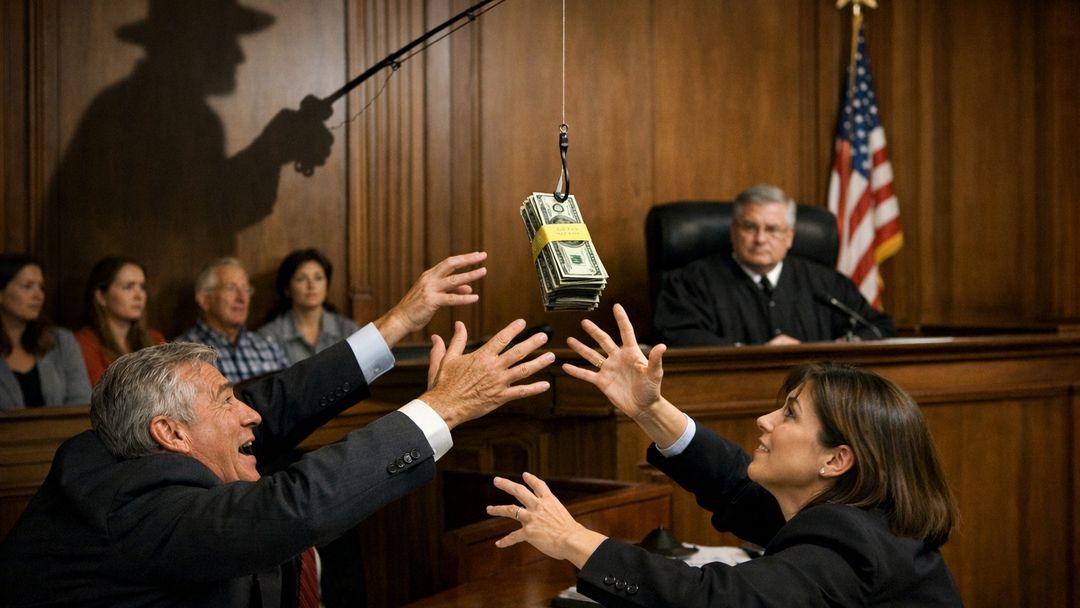
Shadow cash is corrupting Michigan courtrooms

Shadow cash is corrupting Michigan courtrooms

The Shadow Cash Threat: Protecting the Integrity of Michigan Courtrooms In recent months, a spotlight has been cast on a hidden influence within the Michigan legal system: "shadow cash." This term refers to third-party litigation funding (TPLF), where outside...

read more

Komorn Law

Arrested? – Better Call Komorn

Komorn Law
Areas of Service

We fight for our clients throughout the State of Michigan and Northern Ohio.

Here are some court contacts we frequently handle cases.

Oakland County

If you are facing any legal charges in Oakland County and need to hire an attorney, call our Office (248) 357-2550. If you need to contact the court, here is the information:

Macomb County

If you are facing any legal charges in Macomb County and need to hire an attorney, call our Office (248) 357-2550. If you need to contact the court, here is the information:

Wayne County

If you are facing any legal charges in Wayne County and need to hire an attorney, call our Office (248) 357-2550. If you need to contact the court, here is the information for the Third Circuit Court (Wayne County):

  • Telephone Number (Civil/Family): (313) 224-5510
  • Telephone Number (Criminal): (313) 224-5261 or (313) 224-2503
  • Address (Civil/Family): 2 Woodward Avenue, Detroit, MI 48226
  • Address (Criminal): 1441 St. Antoine, Detroit, MI 48226
  • Website: https://www.3rdcc.org/

Kent County

If you are facing any legal charges in Kent County and need to hire an attorney, call our Office (248) 357-2550. If you need to contact the court, here is the information:

  • Telephone Number: (616) 632-5220
  • Address: 180 Ottawa Avenue NW, Grand Rapids, MI 49503
  • Website: Kent County

Traverse County

If you are facing any legal charges in Traverse County and need to hire an attorney, call our Office (248) 357-2550. If you need to contact the court, here is the information for the 13th Circuit Court (which includes Traverse County):

Monroe County

If you are facing any legal charges in Monroe County and need to hire an attorney, call our Office (248) 357-2550. If you need to contact the court, here is the information:

Marijuana and Driving in Michigan is an OWI

Marijuana and Driving in Michigan is an OWI

Don’t Smoke and Drive

Michigan’s legalization of recreational marijuana in 2018 brought new freedoms, but it’s crucial for every driver to understand a critical distinction: while consuming marijuana is legal for adults over 21, driving under its influence is absolutely not. Operating While Intoxicated (OWI) laws in Michigan apply equally to alcohol and drugs, including marijuana. Getting behind the wheel while impaired by cannabis can lead to serious penalties, just like drunk driving.

The Complexity of Marijuana OWI Charges

Unlike alcohol, where a specific blood alcohol content (BAC) of 0.08% or higher automatically means intoxication, marijuana OWI cases are more complex.

No “Per Se” THC Limit: Michigan does not have a “per se” (meaning “by itself”) THC limit for driving impairment. This means there isn’t a specific amount of THC in your blood that automatically proves you’re too impaired to drive.

This is largely because THC can stay in a person’s system for days or even weeks after the intoxicating effects have worn off, making a simple blood test for presence of THC an unreliable indicator of current impairment. The Impaired Driving Safety Commission, a body created by the Michigan Legislature, has even recommended against establishing a per se THC limit due to this poor correlation between THC bodily content and driving impairment.

“Under the Influence” Standard: For marijuana OWI, the prosecution must prove that your ability to operate a motor vehicle was “visibly impaired” or that you were “under the influence” of marijuana. This means the drug had a significant effect on your mental or physical condition, preventing you from driving in a normal manner. (MCL 257.625(1))

How Impairment is Determined

Law enforcement officers use several methods to assess marijuana impairment:

Observation: Officers will look for visible signs of impairment during a traffic stop, such as:

Erratic driving (swerving, speeding, slow driving)
Bloodshot eyes
Slurred speech or difficulty communicating
Disorientation or confusion
Odor of smoked marijuana in the vehicle

Field Sobriety Tests (FSTs): While often associated with alcohol, officers may administer FSTs (like the walk-and-turn or one-leg stand) to evaluate balance, coordination, and mental processing. It’s important to remember that FSTs are designed primarily for alcohol impairment and can be influenced by many factors unrelated to drug use.

Drug Recognition Experts (DREs): If an officer suspects drug impairment and a breathalyzer test shows little to no alcohol, they may call in a Drug Recognition Expert.

DREs are specially trained officers who conduct a standardized 12-step evaluation to determine if a driver is impaired by drugs and, if so, which category of drugs. This involves a series of physical and mental assessments, including checking vital signs, eye movements, and muscle tone.

Blood Tests: If probable cause for OWI is established, officers can request a blood draw.

Blood tests can detect the presence of THC and its metabolites. While the presence of THC alone isn’t enough for a conviction (due to the lack of a per se limit), it serves as evidence that the substance was consumed.

Common Defenses for Marijuana OWI Cases

Successfully defending against a marijuana OWI charge often involves challenging the prosecution’s evidence of impairment:

Challenging the Traffic Stop: Was there a lawful reason for the stop? If the stop was illegal, any evidence gathered afterward might be inadmissible.

Disputing Impairment: An attorney can argue that any observed signs of impairment were due to factors other than marijuana (e.g., fatigue, medical condition, anxiety, poor lighting).

Questioning DRE Protocol: The DRE protocol is specific, and any deviations by the officer can be challenged in court. The reliability of DRE testimony can also be scrutinized.

Accuracy of Blood Tests: While blood tests confirm presence, the timing of the test relative to consumption can be critical. An attorney can argue that the THC in your system was from past use and not indicative of current impairment.

Medical Marijuana Patients: If you are a registered medical marijuana patient, the Michigan Medical Marihuana Act (MMMA) provides some protection. You cannot be prosecuted solely for having THC in your system; the prosecution must prove actual impairment. This exception, established in People v. Koon, is a key defense for medical users

a marijuana OWI charge in Michigan requires a deep understanding of complex and evolving laws. Komorn Law, established in 1993, has the extensive experience and expertise to fight your case effectively, from district to federal court systems. Our team is well-versed in the nuances of Michigan’s marijuana laws, the science of impairment, and the strategies necessary to challenge OWI charges. We are dedicated to protecting your rights and ensuring you receive a vigorous defense. When you’re ready to hire a lawyer who hates to lose, call our office  (248) 357-2550.

FAQs

A good reason to keep your med card

Q: Can I use medical marijuana and drive in Michigan?

A: Yes, but only if you are not “under the influence” or “visibly impaired” by it. While registered medical marijuana patients have certain protections, they are still subject to OWI laws if their ability to drive safely is compromised by marijuana use.

Q: Will a positive blood test for THC automatically lead to a conviction?

A: No, not necessarily. Unlike alcohol, Michigan does not have a “per se” THC limit. The prosecution must prove that the THC in your system actually impaired your driving ability. The presence of THC alone, especially inactive metabolites, may not be enough for a conviction.

Q: What are the penalties for a first-offense marijuana OWI in Michigan?

A: Penalties for a first-offense OWI with marijuana can be severe and are similar to alcohol OWIs. They can include up to 93 days in jail, fines of up to $500, up to 360 hours of community service, vehicle immobilization, and driver’s license suspension for up to 180 days with possible restrictions. (MCL 257.625)

Sextortion and Sexploitation in Michigan

Sextortion and Sexploitation in Michigan

FAQs and Laws about Sextortion and SexploitationSextortion and sexploitation are increasingly prevalent and devastating forms of digital abuse, leveraging technology to coerce, manipulate, and exploit individuals, often for sexual gratification or financial gain....

read more
Michigan State Police Bust $10 Million Marijuana Grow

Michigan State Police Bust $10 Million Marijuana Grow

Sometimes, a higher court needs to step in to ensure a lower court is properly administering justice. This powerful action is called "superintending control."Lake County, MI – In a significant enforcement action, the Michigan State Police (MSP) recently seized over...

read more
Extortion and Racketeering in Michigan

Extortion and Racketeering in Michigan

FAQs and Laws about Extortion and RacketeeringExtortion and racketeering represent serious criminal offenses in Michigan, targeting individuals who use threats, intimidation, or participate in organized criminal enterprises to obtain money, property, or undue...

read more

Komorn Law

Resisted Arrest? – Better Call Komorn

Michigan’s Evolving “Youth Lifer” Laws

Michigan’s Evolving “Youth Lifer” Laws

Evolving “Youth Lifer” Laws

In a significant shift for criminal justice in Michigan, the state’s Supreme Court has issued groundbreaking rulings that redefine how young adults are sentenced for serious crimes, particularly those that historically carried mandatory life without parole (LWOP).

These decisions, coupled with ongoing legislative discussions, are reshaping the landscape for individuals labeled “youth lifers” and highlight the concept of “emerging adults” in the legal system.

The Landmark Decisions: People v. Taylor and People v. Czarnecki

The Michigan Supreme Court delivered a pivotal 5-2 ruling in the combined cases of  People v. Taylor and People v. Czarnecki.

The Michigan Supreme Court held that mandatory life-without-parole sentences violate the state constitution’s protection against “cruel or unusual” punishment for anyone under age 21 at the time of the offense. The decision extends the court’s 2022 ruling in People v. Parks that such sentences are unconstitutional for those 18 or under.

The Core Ruling:

The Court held that mandatory life without parole sentences for individuals who were 19 or 20 years old at the time of their offense are unconstitutional under Michigan’s state constitution, specifically its prohibition against “cruel or unusual punishment” (Michigan Constitution, Article I, Section 16).

This decision extends previous protections that applied to those 18 years old and younger. The Court acknowledged that brain development continues well into a person’s twenties, leading to diminished culpability and a greater capacity for rehabilitation in this age group, similar to minors.

Basis in Science and Development:

The Court heavily relied on scientific research demonstrating that “emerging adults” (generally defined as individuals aged 18-25) are neurologically more akin to juveniles than fully matured adults.

This means they are more prone to impulsivity, susceptible to peer pressure, and have a higher potential for growth and change. Mandating a sentence that presumes no possibility

Retroactive Application:

Crucially, this ruling applies retroactively. This means that hundreds of individuals currently serving mandatory LWOP sentences for crimes committed when they were 19 or 20 will now have the opportunity to seek resentencing.

The State Appellate Defender Office (SADO) has identified approximately 580 individuals impacted by these rulings.

The Concept of “Emerging Adults”

The Michigan Supreme Court’s decisions underscore a growing recognition of “emerging adults” in the criminal justice system.

Developmental Nuances: This term refers to young people, typically between the ages of 18 and 25, whose brains are still developing, particularly the prefrontal cortex responsible for decision-making, impulse control, and understanding long-term consequences.

Legal Implications: The acknowledgment of this developmental stage suggests that traditional adult sentencing models may not be appropriate for this population, leading to calls for more individualized sentencing that considers youth-related mitigating factors.

Michigan’s Stance: With these recent rulings, Michigan joins a handful of other states that have extended protections against mandatory LWOP to individuals under 21, marking a progressive step in youth justice reform.

Ongoing Legislative Efforts

While the Supreme Court has made its stance clear, legislative discussions are actively taking place that could further impact these laws.

Proposed Bills: There have been legislative efforts, such as House Bills 4506, 4507, and 4508, aiming to potentially alter the impact of the Supreme Court’s decisions.

These bills, for instance, could allow for longer sentences for 19- and 20-year-olds convicted of certain serious crimes and may provide prosecutors with more time to review cases for resentencing.

Some of these legislative proposals have faced criticism from advocacy groups who argue they might undermine the Supreme Court’s intent for individualized sentencing.

Resentencing Process: For those eligible, the resentencing process typically involves a “Miller” hearing, named after a U.S. Supreme Court case.

During these hearings, a judge reviews the individual’s case, considering mitigating factors related to their youth, capacity for rehabilitation, and other circumstances, before deciding on a new sentence. The goal is to move away from automatic LWOP to a sentence that is proportionate to the individual’s culpability and potential for change.

Impact on Current and Future Cases

These evolving laws have significant implications:

For Current “Youth Lifers”: Individuals who were sentenced to mandatory LWOP at 19 or 20 years old now have a path to potentially be released from prison after serving a specific number of years, offering them a second chance at life outside of incarceration. This also includes individuals who were 18 at the time of their offense, as per the earlier People v. Parks and People v. Poole rulings.

For Future Cases: Prosecutors and judges in Michigan must now factor in the age and developmental stage of defendants under 21 when considering sentencing for serious crimes that previously mandated LWOP. This necessitates a more individualized approach, focusing on rehabilitation potential rather than automatic condemnation.

MCL Reference:

Michigan Compiled Law (MCL) Section 769.1 deals with sentencing, and various other sections within the Michigan Penal Code (e.g., MCL 750.316 for first-degree murder) define the crimes that previously carried these mandatory sentences.

The Supreme Court’s rulings effectively modify the application of these sentencing provisions for young adults.

When you’re facing serious criminal charges in Michigan, understanding the constantly evolving landscape of the law is crucial. At Komorn Law, established in 1993, we have the experience and expertise to fight your case in a court of law, from the district to federal court systems. So when you’re ready to hire a lawyer who hates to lose, call our office  (248) 357-2550.

FAQs

Evolving “Youth Lifer” Laws in Michigan

Q: Does this ruling mean all “youth lifers” will be immediately released from prison?

A: No. The ruling means they are no longer subject to mandatory life without parole. They will receive resentencing hearings where a judge will consider their individual circumstances, including their youth at the time of the crime and their potential for rehabilitation. While some may eventually be released, it is not an automatic process.

Q: What is an “emerging adult” in the context of criminal law?

A: An “emerging adult” typically refers to individuals between the ages of 18 and 25. The Michigan Supreme Court, in its rulings, recognized that this age group still undergoes significant brain development, making them distinct from older adults in terms of decision-making and impulse control.

Q: How does this impact victims and their families?

A: The resentencing process can be incredibly difficult for victims and their families, as it may require them to revisit traumatic events. Prosecutors’ offices are responsible for notifying victims and ensuring their voices are heard during resentencing hearings. The legal system aims to balance justice for victims with the evolving understanding of youth culpability and potential for rehabilitation.

Sextortion and Sexploitation in Michigan

Sextortion and Sexploitation in Michigan

FAQs and Laws about Sextortion and SexploitationSextortion and sexploitation are increasingly prevalent and devastating forms of digital abuse, leveraging technology to coerce, manipulate, and exploit individuals, often for sexual gratification or financial gain....

read more
Michigan State Police Bust $10 Million Marijuana Grow

Michigan State Police Bust $10 Million Marijuana Grow

Sometimes, a higher court needs to step in to ensure a lower court is properly administering justice. This powerful action is called "superintending control."Lake County, MI – In a significant enforcement action, the Michigan State Police (MSP) recently seized over...

read more
Extortion and Racketeering in Michigan

Extortion and Racketeering in Michigan

FAQs and Laws about Extortion and RacketeeringExtortion and racketeering represent serious criminal offenses in Michigan, targeting individuals who use threats, intimidation, or participate in organized criminal enterprises to obtain money, property, or undue...

read more

Komorn Law

Resisted Arrest? – Better Call Komorn

Komorn Law
Areas of Service

We fight for our clients throughout the State of Michigan and Northern Ohio.

Here are some court contacts we frequently handle cases.

Oakland County

If you are facing any legal charges in Oakland County and need to hire an attorney, call our Office (248) 357-2550. If you need to contact the court, here is the information:

Macomb County

If you are facing any legal charges in Macomb County and need to hire an attorney, call our Office (248) 357-2550. If you need to contact the court, here is the information:

Wayne County

If you are facing any legal charges in Wayne County and need to hire an attorney, call our Office (248) 357-2550. If you need to contact the court, here is the information for the Third Circuit Court (Wayne County):

  • Telephone Number (Civil/Family): (313) 224-5510
  • Telephone Number (Criminal): (313) 224-5261 or (313) 224-2503
  • Address (Civil/Family): 2 Woodward Avenue, Detroit, MI 48226
  • Address (Criminal): 1441 St. Antoine, Detroit, MI 48226
  • Website: https://www.3rdcc.org/

Kent County

If you are facing any legal charges in Kent County and need to hire an attorney, call our Office (248) 357-2550. If you need to contact the court, here is the information:

  • Telephone Number: (616) 632-5220
  • Address: 180 Ottawa Avenue NW, Grand Rapids, MI 49503
  • Website: Kent County

Traverse County

If you are facing any legal charges in Traverse County and need to hire an attorney, call our Office (248) 357-2550. If you need to contact the court, here is the information for the 13th Circuit Court (which includes Traverse County):

Monroe County

If you are facing any legal charges in Monroe County and need to hire an attorney, call our Office (248) 357-2550. If you need to contact the court, here is the information:

Your Voice, Your Rights: Understanding the First Amendment in Michigan

Your Voice, Your Rights: Understanding the First Amendment in Michigan

Freedom of Speech – The First Amendment

This right is not really absolute

In a world filled with diverse opinions and constant communication, knowing your fundamental rights is more important than ever.

In Michigan, residents are protected by robust free speech rights, ensuring they can express themselves, practice their beliefs, gather peacefully, and seek information without undue government interference.

This article will break down what these rights mean for you in Michigan and provide key information to help you understand your protections.

The First Amendment to the United States Constitution is a cornerstone of American liberty, ratified in 1791 as part of the Bill of Rights. It prohibits the government from making laws that establish a religion, interfere with the free exercise of religion, abridge the freedom of speech, infringe upon the freedom of the press, or obstruct the right to peaceably assemble and petition the government for a redress of grievances. While a federal protection, its principles are also deeply embedded in Michigan’s own Constitution, offering further safeguards for its citizens.

Here are some key facts about your First Amendment rights in Michigan:


Freedom of Speech:

  • What it means: You have the right to express your thoughts, opinions, and beliefs through spoken words, written words, and symbolic actions without government censorship or punishment. This applies to a wide range of topics, including political views, social commentary, and artistic expression.
  • Michigan Law: Article I, Section 5 of the Michigan Constitution states: “Every person may freely speak, write, express and publish his views on all subjects, being responsible for the abuse of such right; and no law shall be enacted to restrain or abridge the liberty of speech or of the press.”
  • Michigan Constitution: Michigan Legislature – Constitution of Michigan of 1963, Article I, Section 5
  • Limitations: This right is not absolute. It does not protect speech that incites violence, defamation (false statements that harm a person’s reputation), true threats, obscenity, or speech that directly incites imminent lawless action.

Freedom of the Press:

  • What it means: The media (newspapers, TV, online platforms, independent journalists) has the right to gather and report news and information without government interference. This is crucial for holding those in power accountable.

  • Michigan Law: This freedom is also protected under Article I, Section 5 of the Michigan Constitution, alongside freedom of speech.

  • Source: Michigan Legislature – Constitution of Michigan of 1963, Article I, Section 5

  • Related Law – Freedom of Information Act (FOIA): Michigan’s FOIA (MCL 15.231 et seq.) gives citizens the right to access public records from government bodies, promoting transparency and aiding the press in its watchdog role.

  • Source: Michigan Legislature – FOIA (Act 442 of 1976)

Freedom of Assembly:

  • What it means: You have the right to gather peacefully with others to express your views, protest, or discuss issues. This includes peaceful demonstrations, rallies, and public meetings.

  • Michigan Law: Article I, Section 3 of the Michigan Constitution states: “The people have the right peaceably to assemble, to consult for the common good, to instruct their representatives and to petition the government for redress of grievances.”

  • Source: Michigan Legislature – Constitution of Michigan of 1963, Article I, Section 3

Local Regulations

  • Detroit Example: While the right to assembly is protected, local governments (like the City of Detroit, which is in Wayne County) can impose reasonable “time, place, and manner” restrictions to ensure public safety and order. For example, permits might be required for large gatherings, or certain areas might be designated for protests to avoid obstructing traffic.

  • Source: Detroit Police Department – First Amendment Activities Policy (See Section 302.6)

Freedom to Petition the Government:

  • What it means: You have the right to ask the government to address your concerns or change laws. This can be done through letters, petitions, or by directly communicating with elected officials.

  • Michigan Law: This is also enshrined in Article I, Section 3 of the Michigan Constitution, alongside freedom of assembly.

  • Source: Michigan Legislature – Constitution of Michigan of 1963, Article I, Section 3

Facing State or Federal Charges?

When your constitutional rights are on the line, especially your First Amendment freedoms, you need a legal team that understands the nuances of the law and is ready to fight for you. Komorn Law, established in 1993, has the experience and expertise to navigate complex First Amendment cases in courts ranging from district to federal systems. Their dedication to protecting individual liberties is unwavering. So, when you’re ready to hire a lawyer who hates to lose, call our office at (248) 357-2550.

FAQs

Freedom of Speech in Michigan

Q: Can my First Amendment rights be restricted in Michigan?

A: Yes, your First Amendment rights are not absolute. They can be restricted in certain circumstances, such as if your speech incites violence, constitutes a true threat, defames someone, or if public safety is at risk during an assembly. Restrictions must generally be “content-neutral” and apply equally to everyone.

Q: Does my First Amendment right to free speech apply to private companies or social media platforms?

A: Generally, no. The First Amendment protects you from government censorship. Private companies, including social media platforms, are not bound by the First Amendment and can set their own rules for content on their platforms.

Q: What should I do if I believe my First Amendment rights have been violated in Michigan?

A: If you believe your First Amendment rights have been violated by a government entity or official, it is crucial to seek legal advice. An attorney specializing in civil rights can assess your situation and help you understand your options, which may include filing a lawsuit.

Komorn Law, established in 1993, has the experience and expertise to fight your case in a court of law. So when you’re ready to hire a lawyer who steps in the ring to fight, call our office at (248) 357-2550.

Sextortion and Sexploitation in Michigan

Sextortion and Sexploitation in Michigan

FAQs and Laws about Sextortion and SexploitationSextortion and sexploitation are increasingly prevalent and devastating forms of digital abuse, leveraging technology to coerce, manipulate, and exploit individuals, often for sexual gratification or financial gain....

read more
Michigan State Police Bust $10 Million Marijuana Grow

Michigan State Police Bust $10 Million Marijuana Grow

Sometimes, a higher court needs to step in to ensure a lower court is properly administering justice. This powerful action is called "superintending control."Lake County, MI – In a significant enforcement action, the Michigan State Police (MSP) recently seized over...

read more
Extortion and Racketeering in Michigan

Extortion and Racketeering in Michigan

FAQs and Laws about Extortion and RacketeeringExtortion and racketeering represent serious criminal offenses in Michigan, targeting individuals who use threats, intimidation, or participate in organized criminal enterprises to obtain money, property, or undue...

read more

Komorn Law

Resisted Arrest? – Better Call Komorn
Client Was Caught With Brass Knuckles – What’s the Law?

Client Was Caught With Brass Knuckles – What’s the Law?

Michigan Criminal Laws FAQs

Brass Knuckles

Getting caught with brass knuckles in Michigan can lead to serious legal trouble. While some states have more lenient laws, Michigan takes a strict stance on these types of weapons. If you or someone you know faces charges involving brass knuckles, understanding the law is crucial.

Laws Regarding Brass Knuckles in Michigan

In Michigan, brass knuckles are considered dangerous weapons, and their possession, manufacture, or sale is generally prohibited. The relevant statutes are found within the Michigan Penal Code.

  • Michigan Compiled Laws (MCL) 750.224 – Dangerous Weapons; Manufacturing, Selling, Possessing: This section of the law prohibits the manufacture, sale, offering for sale, or possession of a variety of dangerous weapons, and specifically lists “metallic knuckles” (which include brass knuckles) as one such prohibited item.

  • Penalties for Possession: Violating MCL 750.224 is a felony offense. A conviction can result in imprisonment for up to 5 years and/or a fine of up to $2,500. (MCL 750.224)

  • Concealed Weapons: Even if not explicitly mentioned in MCL 750.224, carrying brass knuckles concealed on your person or in a vehicle can also lead to charges under Michigan’s concealed weapon laws. MCL 750.227 – Concealed Weapons; Carrying; Penalty: This law prohibits carrying certain dangerous weapons concealed without a license. While often associated with pistols, it broadly covers “any other dangerous weapon.” A violation of MCL 750.227 is a felony, punishable by imprisonment for up to 5 years, or a fine of up to $2,500, or both. (MCL 750.227)

  • Intent to Unlawfully Use: Michigan law also addresses carrying a weapon with the intent to use it unlawfully against another person. MCL 750.226 – Carrying with Unlawful Intent: This law states that a person shall not “with intent to use the same unlawfully against the person of another, go armed with a pistol or other firearm… or any other dangerous or deadly weapon or instrument.” This is a felony, punishable by up to 5 years in prison or a fine of up to $2,500. (MCL 750.226)

Oversized Jewelry as a Weapon

Oversized Jewelry as a Weapon: While Michigan law doesn’t specifically name “oversized jewelry” as a prohibited weapon, there are two key ways such an item could lead to charges:

  • Resemblance to Brass Knuckles (MCL 750.224): Legal interpretations suggest that if an item of jewelry is designed or functions in a way that resembles brass knuckles, it could be considered “metallic knuckles” under MCL 750.224. This means even if it’s marketed as jewelry, its form or potential use as a weapon could make its possession illegal.

In Michigan, MCL 750.224 criminalizes the possession, manufacture, or sale of “metallic knuckles”. This section specifically includes devices like blackjack, slungshot, billy, metallic knuckles, sand club, sand bag, and bludgeon. The key point is that even items that resemble brass knuckles, such as jewelry, handbags, or belt buckles, are included in this prohibition.

Elaboration:
This specific subsection of the Michigan Penal Code defines and prohibits the possession, manufacture, or sale of certain weapons.

Metallic Knuckles:
The term “metallic knuckles” directly encompasses brass knuckles, which are known for their ability to concentrate force on a punch and cause increased tissue damage.

Resemblance:
The law’s wording extends the ban to items that resemble metallic knuckles, even if they are not exactly the same. This means that even items like jewelry, handbags, or belt buckles could be considered illegal if they visually mimic the shape and function of brass knuckles.

Consequences:
Violating (MCL 750.224) is a felony in Michigan, punishable by imprisonment for up to five years, a fine of up to $2,500, or both.

FAQs About Brass Knuckles in Michigan

What exactly are “metallic knuckles” under Michigan law?

“Metallic knuckles” is the legal term used in Michigan to describe what are commonly known as brass knuckles. This includes any device worn on the hand to increase the impact of a punch, typically made of metal.

Can I claim self-defense if I used brass knuckles?

While self-defense is a legal argument in certain assault cases, simply possessing brass knuckles is generally illegal in Michigan. Using a prohibited weapon, even in self-defense, can complicate your legal situation and potentially lead to additional charges.

What should I do if I’m charged with possessing brass knuckles?

If you are charged with possessing brass knuckles, it is crucial to seek legal counsel immediately. An experienced attorney can review the specifics of your case, explain your rights, and develop the best defense strategy.

Komorn Law, established in 1993, has the experience and expertise to fight your case in a court of law. So when you’re ready to hire a lawyer who steps in the ring to fight, call our office at (248) 357-2550.

Sextortion and Sexploitation in Michigan

Sextortion and Sexploitation in Michigan

FAQs and Laws about Sextortion and SexploitationSextortion and sexploitation are increasingly prevalent and devastating forms of digital abuse, leveraging technology to coerce, manipulate, and exploit individuals, often for sexual gratification or financial gain....

read more
Michigan State Police Bust $10 Million Marijuana Grow

Michigan State Police Bust $10 Million Marijuana Grow

Sometimes, a higher court needs to step in to ensure a lower court is properly administering justice. This powerful action is called "superintending control."Lake County, MI – In a significant enforcement action, the Michigan State Police (MSP) recently seized over...

read more
Extortion and Racketeering in Michigan

Extortion and Racketeering in Michigan

FAQs and Laws about Extortion and RacketeeringExtortion and racketeering represent serious criminal offenses in Michigan, targeting individuals who use threats, intimidation, or participate in organized criminal enterprises to obtain money, property, or undue...

read more

Komorn Law

Resisted Arrest? – Better Call Komorn

Komorn Law
Areas of Service

We fight for our clients throughout the State of Michigan and Northern Ohio.

Here are some court contacts we frequently handle cases.

Oakland County

If you are facing any legal charges in Oakland County and need to hire an attorney, call our Office (248) 357-2550. If you need to contact the court, here is the information:

Macomb County

If you are facing any legal charges in Macomb County and need to hire an attorney, call our Office (248) 357-2550. If you need to contact the court, here is the information:

Wayne County

If you are facing any legal charges in Wayne County and need to hire an attorney, call our Office (248) 357-2550. If you need to contact the court, here is the information for the Third Circuit Court (Wayne County):

  • Telephone Number (Civil/Family): (313) 224-5510
  • Telephone Number (Criminal): (313) 224-5261 or (313) 224-2503
  • Address (Civil/Family): 2 Woodward Avenue, Detroit, MI 48226
  • Address (Criminal): 1441 St. Antoine, Detroit, MI 48226
  • Website: https://www.3rdcc.org/

Kent County

If you are facing any legal charges in Kent County and need to hire an attorney, call our Office (248) 357-2550. If you need to contact the court, here is the information:

  • Telephone Number: (616) 632-5220
  • Address: 180 Ottawa Avenue NW, Grand Rapids, MI 49503
  • Website: Kent County

Traverse County

If you are facing any legal charges in Traverse County and need to hire an attorney, call our Office (248) 357-2550. If you need to contact the court, here is the information for the 13th Circuit Court (which includes Traverse County):

Monroe County

If you are facing any legal charges in Monroe County and need to hire an attorney, call our Office (248) 357-2550. If you need to contact the court, here is the information: