Viridis Labs Barred from Michigan’s Cannabis Industry

Viridis Labs Barred from Michigan’s Cannabis Industry

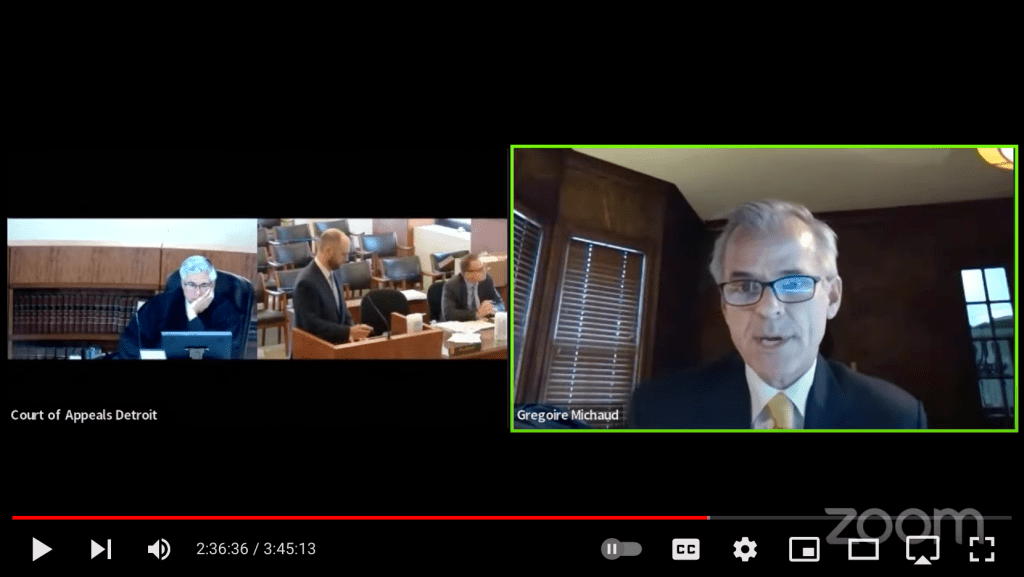
The Cannabis Regulatory Agency (CRA) has announced a landmark settlement, permanently banning three former law enforcement officials from participating in Michigan’s cannabis market. The agreement mandates the immediate closure of Viridis Laboratories and its sister facility, Viridis North, after years of regulatory disputes over allegations of fraudulent testing.

The majority owners of the labs—former Michigan State Police forensic director Greg Michaud, forensic scientist Todd Welch, and former toxicologist Dr. Michele Glinn—have been prohibited for life from holding any role in the state’s cannabis industry. This decisive action concludes a protracted legal and administrative battle, affirming the CRA’s authority to enforce scientific integrity and consumer protection within the market.

A Pattern of Non-Compliance and Regulatory Conflict

Since its founding in 2018, Viridis Laboratories—which once claimed its founders’ law enforcement backgrounds provided superior credibility—drew intense scrutiny from regulators and competitors. The labs were accused of employing unapproved testing methods, inflating THC levels, and downplaying the presence of harmful contaminants, directly undermining the state’s rigorous safety standards.

The conflict escalated in 2021 when the CRA ordered the largest recall in Michigan history, removing an estimated $229 million worth of products from shelves due to unreliable test results from Viridis. A subsequent administrative law judge’s ruling in March found that the company repeatedly violated state rules by failing to follow its own protocols, misidentifying mold, and maintaining inadequate records. Despite these findings, Viridis continued to operate while challenging the CRA in court, with its lawsuits being repeatedly dismissed.

The Precedent Set by the Settlement

The settlement marks a critical moment for regulatory oversight in Michigan’s cannabis industry. By admitting to all violations detailed in six formal complaints and dropping its remaining legal challenges, Viridis has acknowledged a “sustained, deliberate pattern of noncompliance” that, according to CRA Executive Director Brian Hanna, “shook confidence in the entire regulated cannabis system.”

This resolution sends a clear message that scientific integrity is the non-negotiable foundation of the cannabis market. For legal professionals and industry stakeholders, this case highlights the severe consequences of regulatory non-compliance and the importance of adhering to stringent safety protocols. As the industry continues to evolve, this settlement will serve as a powerful precedent for future enforcement actions, emphasizing that ethics and transparency are paramount to a business’s continued operation and legal standing.

Aggressive Defense in any Courtroom

For anyone facing charges –  Attorney Michael Komorn of Komorn Law PLLC brings extensive experience in criminal defense in any Michigan court, including Federal Court. Call the office to to hire us. 248-357-2550

More Posts

Michigan lab fights back in court after marijuana recall

Michigan lab fights back in court after marijuana recall

A marijuana lab licensed in Michigan is suing the Marijuana Regulatory Agency (MRA) over a recall that impacted nearly $230 million worth and 64,000 pounds of marijuana products in the state. Michigan Court of Claims Judge Christopher M. Murray on Monday appeared to...

read more
Testing Lab Sues Marijuana Regulatory Agency Over Recall

Testing Lab Sues Marijuana Regulatory Agency Over Recall

A cannabis testing lab is suing the Michigan’s Marijuana Regulatory Agency over a major recall of cannabis products. Many products tested by Viridis Laboratories were pulled from shelves The marijuana products impacted have a test date between August 10, 2021 and...

read more
What do you do when you are pulled over for suspected DUI?

What do you do when you are pulled over for suspected DUI?

If you are pulled over for suspected drunk driving you are probably going to be arrested. The less you say - the better off you are in the long run. If you find yourself being pulled over for suspected DUI, ensure you pull over safely to the roadside, maintain a...

read more
Michigan DUI Laws and Consequences – Second Offense

Michigan DUI Laws and Consequences – Second Offense

Michigan DUI Laws and Consequences – Second Offense Operating Under the Influence (OUI) is a serious offense in Michigan. If someone is caught driving under the influence of alcohol or drugs, they can face severe penalties. When it comes to a second offense, the...
read more
Shadow cash is corrupting Michigan courtrooms

Shadow cash is corrupting Michigan courtrooms

The Shadow Cash Threat: Protecting the Integrity of Michigan Courtrooms In recent months, a spotlight has been cast on a hidden influence within the Michigan legal system: "shadow cash." This term refers to third-party litigation funding (TPLF), where outside...

read more

Komorn Law

Arrested? – Better Call Komorn

Komorn Law
Areas of Service

We represent clients throughout the

State of Michigan and Northern Ohio.

Here are some court contacts we frequently handle cases.

Oakland County

If you are facing any legal charges in Oakland County and need to hire an attorney, call our Office (248) 357-2550. If you need to contact the court, here is the information:

Macomb County

If you are facing any legal charges in Macomb County and need to hire an attorney, call our Office (248) 357-2550. If you need to contact the court, here is the information:

Wayne County

If you are facing any legal charges in Wayne County and need to hire an attorney, call our Office (248) 357-2550. If you need to contact the court, here is the information for the Third Circuit Court (Wayne County):

  • Telephone Number (Civil/Family): (313) 224-5510
  • Telephone Number (Criminal): (313) 224-5261 or (313) 224-2503
  • Address (Civil/Family): 2 Woodward Avenue, Detroit, MI 48226
  • Address (Criminal): 1441 St. Antoine, Detroit, MI 48226
  • Website: https://www.3rdcc.org/

Kent County

If you are facing any legal charges in Kent County and need to hire an attorney, call our Office (248) 357-2550. If you need to contact the court, here is the information:

  • Telephone Number: (616) 632-5220
  • Address: 180 Ottawa Avenue NW, Grand Rapids, MI 49503
  • Website: Kent County

Traverse County

If you are facing any legal charges in Traverse County and need to hire an attorney, call our Office (248) 357-2550. If you need to contact the court, here is the information for the 13th Circuit Court (which includes Traverse County):

Monroe County

If you are facing any legal charges in Monroe County and need to hire an attorney, call our Office (248) 357-2550. If you need to contact the court, here is the information:

Appeals Court Reaffirms Strict One-Year Deadline for Suing the State of Michigan

Appeals Court Reaffirms Strict One-Year Deadline for Suing the State of Michigan

Michigan Court of Appeals reiterated that there are no exceptions to the one-year deadline for filing lawsuits against the state of Michigan.

Summary

In a decision issued on July 30, 2025, the Michigan Court of Appeals reiterated that there are no exceptions to the one-year deadline for filing lawsuits against the state of Michigan. This ruling potentially impacts plaintiffs who filed claims outside this timeframe, even if previous conflicting court decisions suggested otherwise.

Background

Suing a governmental entity, including the state, often involves specific procedural rules and shorter statutes of limitations compared to lawsuits against private parties. These rules are designed to protect public funds and ensure timely notice of claims. For some time, there had been conflicting interpretations within the Michigan courts regarding exceptions to the standard one-year period for bringing claims against the state. This created uncertainty for both plaintiffs and their legal counsel.

Details

  • Date of Decision: July 30, 2025.

  • Court: Michigan Court of Appeals.

  • Key Ruling: No exceptions exist to the one-year deadline for suing the state of Michigan.

  • Impact: This decision clarifies the strict adherence to the one-year deadline, potentially leading to the dismissal of cases that were filed outside this window but during periods of conflicting legal guidance. It underscores the critical importance of prompt action when pursuing claims against the state.

  • Future Implications: Attorney Jon Marko, representing affected plaintiffs, has indicated plans to appeal this decision to the Michigan Supreme Court, where the issue originated two years prior.

Aggressive Defense in any Courtroom

For anyone facing charges –  Attorney Michael Komorn of Komorn Law PLLC brings extensive experience in criminal defense in any Michigan court, including Federal Court. Call the office to to hire us. 248-357-2550

More Posts

Michigan State Police Bust $10 Million Marijuana Grow

Michigan State Police Bust $10 Million Marijuana Grow

Sometimes, a higher court needs to step in to ensure a lower court is properly administering justice. This powerful action is called "superintending control."Lake County, MI – In a significant enforcement action, the Michigan State Police (MSP) recently seized over...

read more
Extortion and Racketeering in Michigan

Extortion and Racketeering in Michigan

FAQs and Laws about Extortion and RacketeeringExtortion and racketeering represent serious criminal offenses in Michigan, targeting individuals who use threats, intimidation, or participate in organized criminal enterprises to obtain money, property, or undue...

read more
Cybercrime and Financial Fraud in Michigan

Cybercrime and Financial Fraud in Michigan

FAQs and Laws about Cybercrime and Financial FraudThe digital age has brought unprecedented convenience, but it has also opened new avenues for criminals to commit financial fraud and cybercrime. In Michigan, as elsewhere, individuals and businesses face increasing...

read more
What do you do when you are pulled over for suspected DUI?

What do you do when you are pulled over for suspected DUI?

If you are pulled over for suspected drunk driving you are probably going to be arrested. The less you say - the better off you are in the long run. If you find yourself being pulled over for suspected DUI, ensure you pull over safely to the roadside, maintain a...

read more
Michigan DUI Laws and Consequences – Second Offense

Michigan DUI Laws and Consequences – Second Offense

Michigan DUI Laws and Consequences – Second Offense Operating Under the Influence (OUI) is a serious offense in Michigan. If someone is caught driving under the influence of alcohol or drugs, they can face severe penalties. When it comes to a second offense, the...

read more
Shadow cash is corrupting Michigan courtrooms

Shadow cash is corrupting Michigan courtrooms

The Shadow Cash Threat: Protecting the Integrity of Michigan Courtrooms In recent months, a spotlight has been cast on a hidden influence within the Michigan legal system: "shadow cash." This term refers to third-party litigation funding (TPLF), where outside...

read more

Komorn Law

Arrested? – Better Call Komorn

Komorn Law
Areas of Service

We represent clients throughout the

State of Michigan and Northern Ohio.

Here are some court contacts we frequently handle cases.

Oakland County

If you are facing any legal charges in Oakland County and need to hire an attorney, call our Office (248) 357-2550. If you need to contact the court, here is the information:

Macomb County

If you are facing any legal charges in Macomb County and need to hire an attorney, call our Office (248) 357-2550. If you need to contact the court, here is the information:

Wayne County

If you are facing any legal charges in Wayne County and need to hire an attorney, call our Office (248) 357-2550. If you need to contact the court, here is the information for the Third Circuit Court (Wayne County):

  • Telephone Number (Civil/Family): (313) 224-5510
  • Telephone Number (Criminal): (313) 224-5261 or (313) 224-2503
  • Address (Civil/Family): 2 Woodward Avenue, Detroit, MI 48226
  • Address (Criminal): 1441 St. Antoine, Detroit, MI 48226
  • Website: https://www.3rdcc.org/

Kent County

If you are facing any legal charges in Kent County and need to hire an attorney, call our Office (248) 357-2550. If you need to contact the court, here is the information:

  • Telephone Number: (616) 632-5220
  • Address: 180 Ottawa Avenue NW, Grand Rapids, MI 49503
  • Website: Kent County

Traverse County

If you are facing any legal charges in Traverse County and need to hire an attorney, call our Office (248) 357-2550. If you need to contact the court, here is the information for the 13th Circuit Court (which includes Traverse County):

Monroe County

If you are facing any legal charges in Monroe County and need to hire an attorney, call our Office (248) 357-2550. If you need to contact the court, here is the information:

Supreme Court Precedent Ignored by Lower Courts in Union Payment Cases

Supreme Court Precedent Ignored by Lower Courts in Union Payment Cases

Should public employees retain the right to stop supporting a union, regardless of a prior written membership agreement, as guaranteed by the U.S. Supreme Court?

In a concerning trend for individual worker rights, lower courts are reportedly ignoring a key U.S. Supreme Court decision, Janus v. AFSCME, to continue enforcing mandatory union payments from public employees. This issue, highlighted in an amicus brief filed with the Supreme Court on July 24, 2025, by the National Right to Work Legal Defense Foundation and the Mackinac Center for Public Policy, argues that states and unions are circumventing the 2018 Janus ruling, which declared it unconstitutional to compel public employees to pay union fees without their clear and affirmative consent. The brief urges the Supreme Court to step in and ensure its precedent is respected, protecting the First Amendment rights of millions of public workers.

Background on Public Sector Union Payments and the Janus Decision

For decades, many public employees in states without “Right-to-Work” laws were required to pay “agency fees” or “fair share fees” to a public sector union as a condition of employment, even if they chose not to be full union members. These fees were intended to cover the costs of collective bargaining, contract administration, and grievance procedures from which non-members benefited. This practice was upheld by the Supreme Court in the 1977 case Abood v. Detroit Board of Education, which reasoned that requiring these payments prevented “free riders” who benefited from union representation without contributing to its costs.

However, the legal landscape shifted dramatically with the Supreme Court’s 2018 decision in Janus v. American Federation of State, County, and Municipal Employees, Council 31 (AFSCME). In a 5-4 ruling, the Court overturned Abood, holding that requiring public employees to pay agency fees violated their First Amendment rights to free speech and association. The Janus Court stated that “neither an agency fee nor any other payment to the union may be deducted from a nonmember’s wages, nor may any other attempt be made to collect such a payment, unless the employee affirmatively consents to pay.” This meant that public employees could no longer be forced to financially support a union as a condition of employment.

Finish this Article then Comeback and Read

Michigan’s Freedom to Work Law Killed in 2024

Lower Courts and States Sidestep Supreme Court Mandate

Despite the clear mandate from Janus, the National Right to Work Legal Defense Foundation and the Mackinac Center for Public Policy contend that at least 17 states and numerous unions are implementing tactics to undermine the ruling. These tactics often involve restrictive “opt-out” windows, sometimes as narrow as 10-15 days per year or even once per multi-year contract, during which employees can stop payroll deductions for union dues. If an employee misses this window, they can be forced to continue paying for years, even after resigning union membership.

Even more concerning, several U.S. Circuit Courts have ruled that governments and unions can continue deducting dues without “clear and compelling evidence” of an employee’s knowing and voluntary waiver of their First Amendment right to opt out. Instead, these courts have allowed union contract fine print and procedural hurdles to effectively trap employees in payment obligations. The Ninth Circuit, in particular, has been criticized for ruling that states can seize union dues based solely on a union’s assertion of consent, even if that claim is false, and that unions themselves are not “state actors” bound by constitutional limits despite directing government payroll deductions. This, the brief argues, directly contradicts the spirit and letter of the Janus decision.

Key details of the ongoing issue:

  • Supreme Court Precedent: Janus v. AFSCME (2018) ruled that public employees cannot be forced to pay union fees without affirmative consent.

  • Alleged Violations: States and unions are using restrictive “opt-out” windows and relying on weak consent standards to continue collecting fees.

  • Lower Court Rulings: Six U.S. Circuit Courts have allowed unions and governments to keep deducting dues without clear evidence of employee consent.

  • Specific Example: The Ninth Circuit’s ruling in Wright v. SEIU Local 503 stated that states could seize dues based on a union’s assertion of consent, even if unverified.

  • Organizations Challenging: National Right to Work Legal Defense Foundation and Mackinac Center for Public Policy filed an amicus brief on July 24, 2025, urging Supreme Court intervention.

  • Impact on Employees: Millions of public employees may be forced to pay for union speech they oppose due to missed narrow opt-out windows or insufficient consent standards.

Aggressive Defense in any Courtroom

For anyone facing charges –  Attorney Michael Komorn of Komorn Law PLLC brings extensive experience in criminal defense in any Michigan court, including Federal Court. Call the office to to hire us. 248-357-2550

Frequently Asked Questions (FAQs)

  • What was the main outcome of Janus v. AFSCME? The Janus decision ruled that public sector employees cannot be forced to pay agency fees to a union as a condition of employment. They must give clear and affirmative consent for any payroll deductions to a union.
  • What are “agency fees” or “fair share fees”? These were payments made by public employees who chose not to join a union but were still required to contribute to the cost of collective bargaining, contract administration, and grievance processes, from which they benefited. Janus declared these unconstitutional without affirmative consent.
  • Does the Janus decision apply to private sector employees? No, Janus v. AFSCME specifically applies to public sector employees. Private sector employees may still be subject to union security clauses in non-Right-to-Work states, as governed by the National Labor Relations Act (NLRA).
  • What is a “Right-to-Work” state? A “Right-to-Work” state is one that has laws prohibiting union security agreements, meaning employees cannot be required to join a union or pay union dues/fees as a condition of employment. Michigan’s Right-to-Work law was repealed in 2023, effective in early 2024.
  • What should a public employee do if they believe their Janus rights are being violated? If a public employee believes they are being forced to pay union fees without their affirmative consent, or if they are being restricted by narrow opt-out windows, they should seek legal counsel. Organizations like the National Right to Work Legal Defense Foundation also provide resources.

More Posts

Michigan State Police Bust $10 Million Marijuana Grow

Michigan State Police Bust $10 Million Marijuana Grow

Sometimes, a higher court needs to step in to ensure a lower court is properly administering justice. This powerful action is called "superintending control."Lake County, MI – In a significant enforcement action, the Michigan State Police (MSP) recently seized over...

read more
Extortion and Racketeering in Michigan

Extortion and Racketeering in Michigan

FAQs and Laws about Extortion and RacketeeringExtortion and racketeering represent serious criminal offenses in Michigan, targeting individuals who use threats, intimidation, or participate in organized criminal enterprises to obtain money, property, or undue...

read more
Cybercrime and Financial Fraud in Michigan

Cybercrime and Financial Fraud in Michigan

FAQs and Laws about Cybercrime and Financial FraudThe digital age has brought unprecedented convenience, but it has also opened new avenues for criminals to commit financial fraud and cybercrime. In Michigan, as elsewhere, individuals and businesses face increasing...

read more
What do you do when you are pulled over for suspected DUI?

What do you do when you are pulled over for suspected DUI?

If you are pulled over for suspected drunk driving you are probably going to be arrested. The less you say - the better off you are in the long run. If you find yourself being pulled over for suspected DUI, ensure you pull over safely to the roadside, maintain a...

read more
Michigan DUI Laws and Consequences – Second Offense

Michigan DUI Laws and Consequences – Second Offense

Michigan DUI Laws and Consequences – Second Offense Operating Under the Influence (OUI) is a serious offense in Michigan. If someone is caught driving under the influence of alcohol or drugs, they can face severe penalties. When it comes to a second offense, the...

read more
Shadow cash is corrupting Michigan courtrooms

Shadow cash is corrupting Michigan courtrooms

The Shadow Cash Threat: Protecting the Integrity of Michigan Courtrooms In recent months, a spotlight has been cast on a hidden influence within the Michigan legal system: "shadow cash." This term refers to third-party litigation funding (TPLF), where outside...

read more

Komorn Law

Arrested? – Better Call Komorn

Komorn Law
Areas of Service

We represent clients throughout the

State of Michigan and Northern Ohio.

Here are some court contacts we frequently handle cases.

Oakland County

If you are facing any legal charges in Oakland County and need to hire an attorney, call our Office (248) 357-2550. If you need to contact the court, here is the information:

Macomb County

If you are facing any legal charges in Macomb County and need to hire an attorney, call our Office (248) 357-2550. If you need to contact the court, here is the information:

Wayne County

If you are facing any legal charges in Wayne County and need to hire an attorney, call our Office (248) 357-2550. If you need to contact the court, here is the information for the Third Circuit Court (Wayne County):

  • Telephone Number (Civil/Family): (313) 224-5510
  • Telephone Number (Criminal): (313) 224-5261 or (313) 224-2503
  • Address (Civil/Family): 2 Woodward Avenue, Detroit, MI 48226
  • Address (Criminal): 1441 St. Antoine, Detroit, MI 48226
  • Website: https://www.3rdcc.org/

Kent County

If you are facing any legal charges in Kent County and need to hire an attorney, call our Office (248) 357-2550. If you need to contact the court, here is the information:

  • Telephone Number: (616) 632-5220
  • Address: 180 Ottawa Avenue NW, Grand Rapids, MI 49503
  • Website: Kent County

Traverse County

If you are facing any legal charges in Traverse County and need to hire an attorney, call our Office (248) 357-2550. If you need to contact the court, here is the information for the 13th Circuit Court (which includes Traverse County):

Monroe County

If you are facing any legal charges in Monroe County and need to hire an attorney, call our Office (248) 357-2550. If you need to contact the court, here is the information:

MSC has ruled against extensive warrantless searches of cell phones.

MSC has ruled against extensive warrantless searches of cell phones.

The Michigan Supreme Court recently issued a significant ruling on August 1, 2025, limiting the ability of law enforcement to conduct broad, warrantless searches of cell phones during criminal investigations.

Summary

The Michigan Supreme Court recently issued a significant ruling on August 1, 2025, limiting the ability of law enforcement to conduct broad, warrantless searches of cell phones during criminal investigations.

The Court found that generalized warrants to search “any and all records or documents” on a cell phone violate Fourth Amendment rights against unreasonable searches and seizures, emphasizing the vast amount of private information stored on modern devices.

Background

The Fourth Amendment of the U.S. Constitution protects individuals from unreasonable searches and seizures. In the digital age, applying this protection to electronic devices like cell phones has been a complex legal challenge.

Courts across the country have grappled with balancing law enforcement’s need for evidence with individuals’ privacy rights, especially given that a single cell phone can contain a person’s entire life history.

This case, People v. Carson, centered on a defendant appealing convictions partly based on text messages obtained via a broad search warrant for his phone.

Details:

  • Date of Decision: August 1, 2025.
  • Court: Michigan Supreme Court.
  • Key Ruling: A warrant to search a cell phone must be specific about what information law enforcement is looking for, rather than allowing a broad search of “any and all data.”
  • Reasoning: The majority opinion highlighted that modern cell phones contain an “unlimited amount of private information” and that “wide-ranging exploratory rummaging is constitutionally intolerable.”
  • Impact: This decision sets a higher standard for law enforcement seeking search warrants for cell phones in Michigan, offering greater protection for individual privacy. It will likely require police to be much more precise in their warrant applications, potentially impacting how digital evidence is collected in criminal cases.

Aggressive Defense in any Courtroom

For anyone facing charges –  Attorney Michael Komorn of Komorn Law PLLC brings extensive experience in criminal defense in any Michigan court, including Federal Court. Call the office to to hire us. 248-357-2550

More Posts

Michigan State Police Bust $10 Million Marijuana Grow

Michigan State Police Bust $10 Million Marijuana Grow

Sometimes, a higher court needs to step in to ensure a lower court is properly administering justice. This powerful action is called "superintending control."Lake County, MI – In a significant enforcement action, the Michigan State Police (MSP) recently seized over...

read more
Extortion and Racketeering in Michigan

Extortion and Racketeering in Michigan

FAQs and Laws about Extortion and RacketeeringExtortion and racketeering represent serious criminal offenses in Michigan, targeting individuals who use threats, intimidation, or participate in organized criminal enterprises to obtain money, property, or undue...

read more
Cybercrime and Financial Fraud in Michigan

Cybercrime and Financial Fraud in Michigan

FAQs and Laws about Cybercrime and Financial FraudThe digital age has brought unprecedented convenience, but it has also opened new avenues for criminals to commit financial fraud and cybercrime. In Michigan, as elsewhere, individuals and businesses face increasing...

read more
What do you do when you are pulled over for suspected DUI?

What do you do when you are pulled over for suspected DUI?

If you are pulled over for suspected drunk driving you are probably going to be arrested. The less you say - the better off you are in the long run. If you find yourself being pulled over for suspected DUI, ensure you pull over safely to the roadside, maintain a...

read more
Michigan DUI Laws and Consequences – Second Offense

Michigan DUI Laws and Consequences – Second Offense

Michigan DUI Laws and Consequences – Second Offense Operating Under the Influence (OUI) is a serious offense in Michigan. If someone is caught driving under the influence of alcohol or drugs, they can face severe penalties. When it comes to a second offense, the...

read more
Shadow cash is corrupting Michigan courtrooms

Shadow cash is corrupting Michigan courtrooms

The Shadow Cash Threat: Protecting the Integrity of Michigan Courtrooms In recent months, a spotlight has been cast on a hidden influence within the Michigan legal system: "shadow cash." This term refers to third-party litigation funding (TPLF), where outside...

read more

Komorn Law

Arrested? – Better Call Komorn

Komorn Law
Areas of Service

We represent clients throughout the

State of Michigan and Northern Ohio.

Here are some court contacts we frequently handle cases.

Oakland County

If you are facing any legal charges in Oakland County and need to hire an attorney, call our Office (248) 357-2550. If you need to contact the court, here is the information:

Macomb County

If you are facing any legal charges in Macomb County and need to hire an attorney, call our Office (248) 357-2550. If you need to contact the court, here is the information:

Wayne County

If you are facing any legal charges in Wayne County and need to hire an attorney, call our Office (248) 357-2550. If you need to contact the court, here is the information for the Third Circuit Court (Wayne County):

  • Telephone Number (Civil/Family): (313) 224-5510
  • Telephone Number (Criminal): (313) 224-5261 or (313) 224-2503
  • Address (Civil/Family): 2 Woodward Avenue, Detroit, MI 48226
  • Address (Criminal): 1441 St. Antoine, Detroit, MI 48226
  • Website: https://www.3rdcc.org/

Kent County

If you are facing any legal charges in Kent County and need to hire an attorney, call our Office (248) 357-2550. If you need to contact the court, here is the information:

  • Telephone Number: (616) 632-5220
  • Address: 180 Ottawa Avenue NW, Grand Rapids, MI 49503
  • Website: Kent County

Traverse County

If you are facing any legal charges in Traverse County and need to hire an attorney, call our Office (248) 357-2550. If you need to contact the court, here is the information for the 13th Circuit Court (which includes Traverse County):

Monroe County

If you are facing any legal charges in Monroe County and need to hire an attorney, call our Office (248) 357-2550. If you need to contact the court, here is the information:

Michigan Supreme Court Vacates Court of Appeals Ruling of State Anti-Terror Statute

Michigan Supreme Court Vacates Court of Appeals Ruling of State Anti-Terror Statute

Michigan Supreme Court Vacates Court of Appeals Ruling, Temporarily Preserves State Anti-Terror Statute

If you are charged with a crime you’re part of the State of Michigan family now. Call us – Because you don’t want to be a part of that family.

Komorn Law (248) 357-2550

March 28, 2025 -The Michigan Supreme Court vacated a ruling from the Michigan Court of Appeals that declared the state’s anti-terrorism statute unconstitutional, announced Michigan Attorney General Dana Nessel. Today’s ruling preserves the 2002 statute, which criminalizes threats and false threats of terrorism, and orders the Court of Appeals (COA) to reconsider their ruling under specific questions and considerations from the state Supreme Court. 

Earlier this month Attorney General Nessel filed an amicus brief (PDF) at the Michigan Supreme Court in support of the emergency application filed by the Wayne County Prosecutor to preserve the law. 

Today’s order from the Michigan Supreme Court (PDF) vacated the COA’s judgment, keeping the judgment from affecting current criminal cases, and remanded the case to that Court for further consideration. Specifically, the Court instructed the COA to assess its judgment in light of MCL 750.543z and the Constitutional-Doubt canon. The COA is also ordered to address whether imposing a limiting construction would remedy any constitutional deficiency, what the limiting construction should accomplish, and whether the Wayne County Circuit Court abused its discretion in dismissing the case.  

“The anti-terrorism law is a vital tool for holding accountable those who make serious threats in our state,” Nessel said. “While the case has been remanded for further consideration, I am hopeful that this decision brings us closer to correctly reaffirming the law’s constitutionality and preserving the ability of prosecutors across Michigan to protect public safety.” 

The Court of Appeals had ruled in March that the statute in question is unconstitutional because it does not require proof that the defendant subjectively understood the threatening nature of the statements or acted recklessly when making them. Attorney General Nessel argued to the Michigan Supreme Court in her amicus brief that the Court of Appeals’ decision is clearly erroneous, as prosecutors are already required through the statute to prove charged defendants intended to intimidate or coerce a civilian population or sought to influence or affect government conduct through intimidation or coercion.

Attorney Michael Komorn

Attorney Michael Komorn

State / Federal Legal Defense

With extensive experience in criminal legal defense since 1993 from pre-arrest, District, Circuit, Appeals, Supreme and the Federal court systems.

KOMORN LAW (248) 357-2550

More Articles

More

Free Speech, Terror and Michigan Law

Free Speech, Terror and Michigan Law

Michigan Supreme Court Vacates Court of Appeals Ruling, Temporarily Preserves State Anti-Terror StatuteIf you are charged with a crime you're part of the State of Michigan family now. Call us - Because you don't want to be a part of that family. Komorn Law (248)...

read more
The Takings Clauses of the United States and Michigan

The Takings Clauses of the United States and Michigan

These clauses protect property rights and maintain a balance between public needs and individual ownership The Takings Clauses of the United States and Michigan Constitutions are pivotal components of property law, ensuring that private property is not seized by the...

read more
Michigan Supreme Court – People of Michigan v. Duff

Michigan Supreme Court – People of Michigan v. Duff

A seizure may occur when a police vehicle partially blocks a defendant’s egress if thetotality of the circumstances indicate that a reasonable person would not have felt free to leave In the case of People v Duff (July 26, 2024)., the Michigan Supreme Court issued an...

read more
Free Speech, Terror and Michigan Law

Free Speech, Terror and Michigan Law

Michigan Supreme Court Vacates Court of Appeals Ruling, Temporarily Preserves State Anti-Terror Statute

If you are charged with a crime you’re part of the State of Michigan family now. Call us – Because you don’t want to be a part of that family.

Komorn Law (248) 357-2550

On March 28, 2025, the Michigan Supreme Court issued a consequential order in People v. Kvasnicka, directing the Court of Appeals to reconsider its ruling that Michigan’s anti-terrorism statute—MCL 750.543m—violates the First Amendment. The order raises profound questions about the boundaries of protected speech and the state’s power to criminalize communications that may be perceived as threatening.

At Komorn Law, we believe these questions lie at the heart of a constitutional democracy. The First Amendment is not optional—it’s essential. Our firm has long stood as a bulwark against the encroachment of vague and overly broad criminal statutes that chill free expression under the guise of public safety.

The Legal Background

The case centers around MCL 750.543m, Michigan’s anti-terrorism statute, which criminalizes the making of threats and false threats of terrorism. The statute came under fire when the Michigan Court of Appeals found it unconstitutional for failing to require proof that a defendant subjectively knew their statements could be interpreted as threats of violence.

This reasoning echoed the U.S. Supreme Court’s decision in Counterman v. Colorado, 600 U.S. 66 (2023), which held that true-threat prosecutions must prove that the speaker had a culpable mental state—such as recklessness—about how their words would be perceived.

Rather than affirming or reversing that ruling outright, the Michigan Supreme Court vacated the Court of Appeals’ judgment and sent the case back for a more nuanced analysis. The Court directed the lower court to re-examine the statute in light of:

  1. MCL 750.543z, which bars prosecution of conduct “presumptively protected” by the First Amendment;
  2. The constitutional-doubt canon, a legal doctrine instructing courts to interpret statutes in a way that avoids constitutional conflict;
  3. The possibility of adopting a limiting construction to save the statute from invalidation; and
  4. Whether the trial court’s dismissal of the case without prejudice was procedurally improper while an appeal remained pending.

This remand opens the door for Michigan’s judiciary to refine the balance between public safety and individual liberty—especially where political speech, hyperbole, or artistic expression may be misconstrued as threatening.

The State’s Position

Attorney General Dana Nessel, who submitted an amicus brief supporting the Wayne County Prosecutor, celebrated the high court’s ruling as a preservation of an “important public safety tool.” Her office argued that the statute already requires proof of intent to intimidate or coerce, thereby satisfying constitutional standards. But the Supreme Court did not endorse that view outright—leaving the Court of Appeals with a mandate to dig deeper.

Free speech isn’t free if fear of prosecution suppresses lawful expression.

Why This Matters 

Free speech isn’t free if fear of prosecution suppresses lawful expression. Vague laws that do not distinguish between actual threats and controversial, political, or even offensive speech risk turning our criminal courts into censors. This case—while still developing—has the potential to shape how Michigan protects or prosecutes speech going forward.

Komorn Law

At Komorn Law, we understand the stakes. We have represented clients whose words were taken out of context, misunderstood, or weaponized by the state under overbroad statutes. We fight to ensure that criminal charges do not become a substitute for political disagreement or public discomfort.

If you or someone you know is facing prosecution for speech-related conduct—whether online or off—we are here to defend your rights with constitutional precision and fearless advocacy.

See links and info below to court cases and laws here

Attorney Michael Komorn

Attorney Michael Komorn

State / Federal Legal Defense

With extensive experience in criminal legal defense since 1993 from pre-arrest, District, Circuit, Appeals, Supreme and the Federal court systems.

KOMORN LAW (248) 357-2550

Links

  1. Counterman v. Colorado, 600 U.S. 66 (2023)

(Held that “true threats” prosecutions require proof that the speaker was at least reckless regarding whether their statements would be interpreted as threatening.)

  1. MCL 750.543m – Michigan Anti-Terrorism Statute

(Defines criminal penalties for threats or false threats of terrorism in Michigan.)

  1. MCL 750.543z – Free Speech Protection Clause

(Prohibits prosecution or seizure for conduct presumptively protected under the First Amendment.)

  1. Sole v. Michigan Economic Development Corp., 509 Mich 406 (2022)

(Applies the constitutional-doubt canon: statutes should be interpreted to avoid constitutional conflicts.)

  1. People v. Burkman, 513 Mich 300 (2024)

(Addresses how courts may apply limiting constructions to save statutes from constitutional invalidation.)

  1. Osborne v. Ohio, 495 U.S. 103 (1990)

(Permits courts to narrowly construe statutes to avoid infringing on constitutional rights.)

  1. People v. Scott, 513 Mich 180 (2024)

(Discusses abuse of discretion when trial courts act on matters under interlocutory appeal.)

More Articles

More

Free Speech, Terror and Michigan Law

Free Speech, Terror and Michigan Law

Michigan Supreme Court Vacates Court of Appeals Ruling, Temporarily Preserves State Anti-Terror StatuteIf you are charged with a crime you're part of the State of Michigan family now. Call us - Because you don't want to be a part of that family. Komorn Law (248)...

read more
The Takings Clauses of the United States and Michigan

The Takings Clauses of the United States and Michigan

These clauses protect property rights and maintain a balance between public needs and individual ownership The Takings Clauses of the United States and Michigan Constitutions are pivotal components of property law, ensuring that private property is not seized by the...

read more
Michigan Supreme Court – People of Michigan v. Duff

Michigan Supreme Court – People of Michigan v. Duff

A seizure may occur when a police vehicle partially blocks a defendant’s egress if thetotality of the circumstances indicate that a reasonable person would not have felt free to leave In the case of People v Duff (July 26, 2024)., the Michigan Supreme Court issued an...

read more