May 2, 2024 | Blog, Supreme Court, Supreme Court Ruling
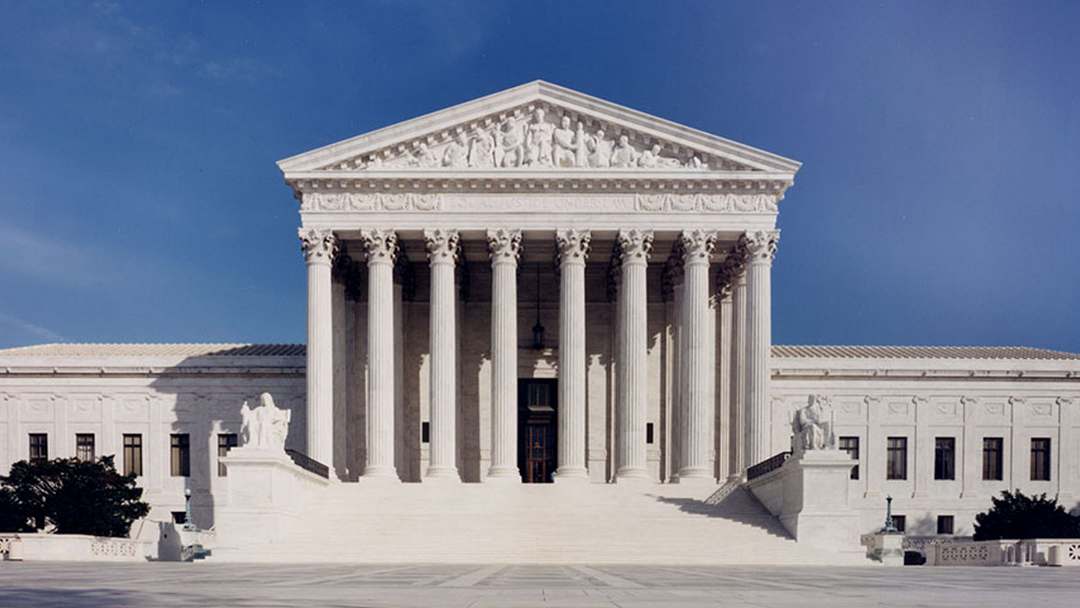
The Constitution provides “no textual justification for saying that the existence or the scope of a State’s power to expropriate private property without just compensation varies according to the branch of government effecting the expropriation.”
The case in question is Sheetz v. County of El Dorado, California.
Background:
Background of the Case: George Sheetz, the petitioner, was required by the County of El Dorado to pay a $23,420 traffic impact fee as a condition of receiving a residential building permit. The fee was part of a “General Plan” enacted by the County’s Board of Supervisors to address increasing demand for public services spurred by new development.
Reason for the Case:
Sheetz claimed that conditioning the building permit on the payment of a traffic impact fee constituted an unlawful “exaction” of money in violation of the Takings Clause. He argued that the Court’s decisions in Nollan v. California Coastal Comm’n, and Dolan v. City of Tigard, required the County to make an individualized determination that the fee imposed on him was necessary to offset traffic congestion attributable to his project.
Content of the Case:
The courts below ruled against Sheetz based on their view that Nollan and Dolan apply only to permit conditions imposed on an ad hoc basis by administrators, not to a fee like this one imposed on a class of property owners by Board-enacted legislation.
Final Opinion of the Case:
The Supreme Court held that the Takings Clause does not distinguish between legislative and administrative land-use permit conditions. Therefore, the ruling was in favor of Sheetz, overturning the decision of the lower courts.
Read the full SCOTUS Opinion here
Need to Fight the System?
See what we can do for you
Call to Fight for your Rights (248) 357-2550
Jan 15, 2024 | Blog, Supreme Court, USA news
The Petitions of the Week column highlights a selection of cert petitions recently filed in the Supreme Court. A list of all petitions we’re watching is available here.
Organized crime, from the mafia to small-time money laundering schemes, often evades criminal prosecution. To bolster efforts to fight organized crime, Congress passed the Racketeer Influenced and Corrupt Organizations Act, known as RICO, more than 50 years ago.
In addition to the criminal penalties for violating RICO, the law also authorizes private individuals to bring civil lawsuits for an injury to their “business or property” as a result of the defendant’s “racketeering activity,” which the law defines broadly to include a wide range of criminal offenses.
This week, we highlight petitions that ask the court to consider, among other things, whether someone can sue under RICO to recover lost earnings.
Marketed as “a revolution in medicinal hemp-powered wellness,” Dixie X is a CBD supplement that claims to offer a variety of health benefits. After learning about Dixie X in a magazine, Douglas Horn began using the supplement in 2012 to soothe pain and inflammation from a car accident. Although the ad claimed that the supplement does not contain any THC (the active ingredient in marijuana),
RESTORE YOUR SECOND AMENDMENT RIGHTS
RESTORE YOUR PROFESSIONAL LICENSE
RESTORE YOUR DRIVER LICENSE
RESTORE YOUR PAST (Expungements)
Call our Office for a free case evaluation
Komorn Law (248) 357-2550
(tap here to call now)
Professional License Restoration / Rights Restoration / Record Expungments / Driver License Restoration
Satisfied, Horn began using Dixie X. Shortly after, he failed a random drug test at work and was fired. Suspecting the supplement, Horn sent a batch to an independent lab, which found that the product contained THC.
Horn went to federal court in New York, arguing that the company that sold Dixie X, Medical Marijuana, Inc. – which, despite its name, deals only in hemp-based CBD products – was responsible for his termination. Part of his lawsuit alleged violations of state law, including a claim that he was fraudulently induced to purchase the supplement while unaware of its risks. But Horn also argued that the company injured his “business or property” under RICO by conspiring to commit federal mail and wire fraud that resulted in the loss of his salary.
In Medical Marijuana, Inc. v. Horn, the maker of Dixie X asks the justices to grant review and reverse the 2nd Circuit’s ruling. The company argues that economic harm stemming from a personal injury has no business, so to speak, under RICO. “If quintessential personal injuries count as injuries to ‘business or property’ just because economic damage inevitably results,” the company writes, “Congress’ careful limitation on civil RICO claims would be toothless.”
Read the Rest here at ScotusBlog
Komorn Law – Federal Courts and All Michigan Courts
A list of this week’s featured petitions is below:
Yim v. City of Seattle, Washington
23-329
Issue: Whether Seattle’s restriction on private owners’ right to exclude potentially dangerous tenants from their property violates the 14th Amendment’s due process clause.
Amer v. New Jersey
23-351
Issues: (1) Whether a defendant is always “unable to stand trial” under Article VI(a) of the Interstate Agreement on Detainers while a pretrial motion is pending; and (2) whether a defendant has been “brought to trial” within 180 days of his request for final disposition of charges under Article III(a) of the agreement at the point when jury selection begins.
Medical Marijuana, Inc. v. Horn
23-365
Issue: Whether economic harms resulting from personal injuries are injuries to “business or property by reason of” the defendant’s acts for purposes of a civil treble-damages action under the Racketeer Influenced and Corrupt Organizations Act.
Bhattacharya v. State Bank of India
23-390
Issue: Whether, to establish a “direct effect in the United States” under 28 U.S.C. § 1605(a)(2), a plaintiff must make an extratextual showing that either the sovereign engaged in a U.S.-based “legally significant act,” or that the U.S. effects were “legally significant” in addition to being direct.

Sep 11, 2023 | Supreme Court
In a significant legal development, the United States Supreme Court has recently issued a ruling that has far-reaching implications for individuals facing charges related to “threat speech” in Michigan. The case of Counterman v. Colorado, decided on June 27, 2023, reaffirms the fundamental importance of the First Amendment while reshaping the legal landscape for cases involving threats. In this article, we will explore the key aspects of this ruling and its impact on Michigan’s laws.
Summary of the Case
Billy Counterman sent a series of disturbing social media messages to a local musician, causing her severe emotional distress. The case revolved around whether these messages constituted “true threats” under the First Amendment. The Supreme Court, in a 7-2 decision, held that true-threat cases require a subjective mens rea standard, and the applicable standard is recklessness. In simple terms, the state must now prove that the defendant consciously disregarded a substantial risk that their communications would be viewed as threatening violence.
Impact on Michigan’s Laws
This ruling has direct implications for Michigan’s statutes that criminalize “threat speech” offenses. Laws related to assault, ethnic intimidation, and verbal threats of terrorism now require prosecutors to meet a higher burden of proof. They must demonstrate that the defendant was aware, in some way, of the threatening nature of their statements.
This shift places a greater emphasis on understanding the defendant’s subjective intent. This marks a significant departure from the previous objective “reasonable person” standard.
Protecting Free Speech
The Counterman ruling underscores the delicate balance between protecting free speech and preventing dangerous communications. While the First Amendment safeguards our right to express even controversial or unpopular opinions, it is essential to draw the line when speech crosses into the realm of genuine threats. The Court acknowledged that some true threats may go unpunished, but this decision also ensures that protected speech is protected.
At Komorn Law, we have a deep understanding of constitutional law and criminal defense in Michigan. With over 30 years of experience, we have successfully represented clients facing charges under similar statutes. Our legal team provides expert counsel and aggressive advocacy for those accused of any crime or alleged illegal activities. Call our Office 248-357-2550
Conclusion:
The Counterman v. Colorado Supreme Court ruling is a landmark decision that strengthens First Amendment protections while redefining the criteria for true-threat cases. For individuals in Michigan facing legal issues related to threat speech, it is crucial to have experienced legal representation. Komorn Law stands ready to provide the expertise and advocacy necessary to protect your rights and defend against these charges.
If you or someone you know has been accused of a crime or DUI.
Call Komorn Law – Call Now 248-357-2550
Komorn Law Social Media
Recent Posts
DISCLAIMER
In a legal environment that continues to evolve, it is essential to stay informed and seek guidance from knowledgeable professionals. Before acting on any information you find on the internet, this website, any linked website, any referring website or any verbal or written information consult a licensed attorney. Contact Komorn Law today to discuss your case and learn how we can assist you in navigating the complexities of Michigan’s laws. Consult an Attorney – Remember you’re on the internet.