When Can Police Take Your Dash Cam?

When Can Police Take Your Dash Cam?

You work hard. Now get ready to work harder to prepare to give more.

In Michigan, police can take your dashcam footage in specific situations, primarily when they believe it could serve as evidence in a criminal investigation.

Michigan law permits officers to seize personal property, like dashcam footage, if they have probable cause, a warrant, or if exceptions to the warrant requirement apply.

Here’s a breakdown of how and when police can take and use dashcam footage.

Legal Basis for Seizing Dashcam Footage

Under the Fourth Amendment to the U.S. Constitution and Article I, Section 11 of the Michigan Constitution, searches and seizures are generally considered unreasonable without a warrant.

However, there are several exceptions that allow police to seize dashcam footage without first obtaining a warrant:

  • Probable Cause with a Warrant: Police typically need a warrant based on probable cause to seize dashcam footage. The officer must convince a judge that the footage likely contains evidence of a crime. Under MCL 780.651, Michigan law provides procedures for issuing search warrants for personal property believed to contain evidence of criminal activity.

  • Consent: If you voluntarily hand over your dashcam or footage, the police do not need a warrant. Consent is a common way police legally acquire dashcam recordings.

  • Exigent Circumstances: Police can seize dashcam footage without a warrant if there’s an immediate threat of evidence destruction or if a delay might harm others or impede justice. Exigent circumstances might apply in cases like drunk driving or hit-and-run incidents where the footage could be overwritten or lost.

  • Search Incident to Arrest: If you’re lawfully arrested, officers may be able to seize property within your immediate reach, including dashcam footage, to prevent evidence tampering. The U.S. Supreme Court’s decision in Arizona v. Gant (2009) established guidelines for searches incident to arrest, emphasizing a connection between the arrest and the evidence sought.

Using Dashcam Footage as Evidence

Once seized lawfully, dashcam footage can be used as evidence against you in court. Courts allow video footage as a form of evidence if it is authentic and relevant to the case. For instance, in People v. Wood (Mich. App. 2018), dashcam footage from a police vehicle was successfully used to support DUI charges, setting a precedent for its evidentiary value.

Conclusion

In Michigan, police need a valid reason—such as probable cause or your consent—to take your dashcam footage. When seized lawfully, the footage can be used as evidence in court. Knowing these rights can help you understand when you may be legally required to turn over dashcam footage and under what circumstances it could be used against you.

Legal Counsel and Your Rights

When facing legal challenges, particularly in criminal cases, it is advisable to seek legal counsel immediately.

An experienced attorney can provide guidance on how to navigate interactions with law enforcement while safeguarding your constitutional rights.

Since 1993 our expert legal defense in navigating criminal law matters and protecting your constitutional rights are what we eat for breakfast everyday.

Contact Komorn Law PLLC if you’re ready to fight and win.

Research us and then call us.

Other Articles

A secured and safe vote thanks to new laws in Michigan

A secured and safe vote thanks to new laws in Michigan

Governor Whitmer Signs Historic Election Bills Package to Ensure Every Vote Can be Cast and CountedIn Case You Missed It November 30, 2023 “Today, we are expanding voting rights and strengthening our democracy,” said Governor Whitmer. “Michiganders spoke clearly last...

MI Court of Appeals – MRTMA defense denied dismissal

MI Court of Appeals – MRTMA defense denied dismissal

Does the Michigan Regulation and Taxation of Marihuana Act protect you in all Marijuana scenarios?The Conflict The central issue in this interlocutory appeal is whether the Michigan Regulation and Taxation of Marihuana Act (MRTMA), MCL 333.27951 et seq., prevents a...

The “Automobile Exception” in Michigan law

The “Automobile Exception” in Michigan law

The "automobile exception" in Michigan law allows police to search a vehicle without a warrant if they have probable cause to believe it contains evidence of a crime.This exception is grounded in the idea that vehicles are inherently mobile, meaning evidence could be...

The search being challenged was triggered by the odor of cannabis

The search being challenged was triggered by the odor of cannabis

The case People of Michigan v. Freddie Wilkins III (No. 367209) revolves around a legal challenge regarding the search of a vehicle without a warrant.Police conducted a warrantless search under the "automobile exception."The case People of Michigan v. Freddie Wilkins...

People who are going to need a Lawyer – November 12, 2024

People who are going to need a Lawyer – November 12, 2024

Other Articles

Drones – What Drones?

Drones – What Drones?

Jersey cops launched into the night sky with catapults to throw dreamcatchers at the unknown drones to entangle their props and bring em down! Just kidding - I think.Darrr.. What drones? Those drones pose no threat there are no drones. That's just a balloon,...

Cash For Kids Judge Pardoned (The Kickback Club)

Cash For Kids Judge Pardoned (The Kickback Club)

Biden’s commutation for Judge in ‘kids for cash’ scandal should anger the entire universe.Biden’s commutation in ‘kids for cash’ scandal. BY MICHAEL RUBINKAMUpdated 5:32 PM EST, December 13, 2024A judge implicated in one of the most notorious judicial scandals in U.S....

Trump plans – How does Cannabis Business fit in?

Trump plans – How does Cannabis Business fit in?

You work hard. Now get ready to work harder to prepare to give more.President Biden's administration has proposed the reclassification of marijuana from a Schedule I controlled substance to a Schedule III drug, which recognizes its medical benefits. This significant...

Cambridge Analytica data breach comes before court

Cambridge Analytica data breach comes before court

Oral arguments in Facebook v. Amalgamated Bank will begin

The justices are set to review securities law as they hear arguments in a significant case linked to the 2015 data breach involving Cambridge Analytica and Facebook.

The tech giant’s effort to fend off federal securities fraud lawsuits in Facebook v. Amalgamated Bank could narrow the opportunities for private investors to hold companies accountable under federal laws that regulate corporate misconduct.

In 2016, the British political consulting firm Cambridge Analytica accessed and exploited the data of over 30 million Facebook users in relation to Donald Trump’s presidential campaign.

In light of Facebook’s awareness of the data breach and before the public disclosure of Cambridge’s significant data practices, the company proactively submitted a securities filing to its investors that detailed the potential risks stemming from a security breach as well as the likely adverse effects on Facebook’s operations and stock performance.

That disclosure did not reveal that, as Facebook was aware, a large breach of that sort already had occurred.

Read more here at SCOTUS Blog

Defend Your Future with Michigan’s Top Criminal Defense Attorney

Your rights and freedom are too important to leave to chance.

Facing Criminal Charges?

When you’re caught in the turmoil of criminal charges, every moment counts. The anxiety of potential jail time, hefty fines, and a tarnished reputation can be overwhelming. You may feel lost and unsure about where to turn for help.

The Consequences of Inaction

The stakes are high. A conviction can lead to long-lasting repercussions—affecting your job, relationships, and even your future opportunities. Without a strong defense, you risk losing everything you’ve worked hard for. Don’t let fear dictate your fate.

Attorney Michael Komorn

Attorney Michael Komorn

State / Federal Legal Defense

With extensive experience in criminal legal defense since 1993 from pre-arrest, District, Circuit, Appeals, Supreme and the Federal court systems.

KOMORN LAW (248) 357-2550

Disclaimer: This article provides a general overview, or opinions and does not substitute for legal advice.  As with any law it can change or be modified and research should be done before you rely on any information provided on the internet. Although we make all attempts to link relevant laws these laws can often be gray and corrupted to fit a narrative. Anyone charged with any alleged crime should consult an attorney for specific legal guidance. Articles may be 3rd party or contain opinions and information that do not reflect the current stance of Komorn Law.

Michigan Laws

Listen Live to the US Supreme Court

Listen Live to the US Supreme Court

Listen live to arguments in the Supreme Court. On Monday, the Supreme Court is set to hear arguments over the phone for the first time ever due to the coronavirus pandemic; they'll hear 10 cases remotely from now until May 13. But that's not the only history being...

read more
US Supreme Court – knock-and-announce rule

US Supreme Court – knock-and-announce rule

SUPREME COURT OF THE UNITED STATES BOOKER T. HUDSON, Jr., PETITIONER v. MICHIGAN [June 15, 2006]     Justice Scalia delivered the opinion of the Court, except as to Part IV.     We decide whether violation of the “knock-and-announce” rule requires the suppression of...

read more
Planet Green Trees Radio Episode 149-MSC People v. Koon

Planet Green Trees Radio Episode 149-MSC People v. Koon

The best resource for everything related to Michigan medical marijuana with your host Attorney Michael Komorn. Live every Thursday evening from 8 -10 pm eastern time. By Michael Komorn The Michigan Supreme Court issued a unanimous opinion making a finding that...

read more
Search and Seizure – Consent or Plain view

Search and Seizure – Consent or Plain view

The Fourth Amendment was established to protect individuals from unreasonable searches and seizures, yet there are exceptions.

In Michigan, understanding the concepts of search and seizure, particularly regarding consent and plain view, is crucial for both law enforcement and citizens.

The Fourth Amendment protects individuals from unreasonable searches and seizures, but there are specific circumstances under which law enforcement can legally conduct a search without a warrant.

Search and Seizure Basics

Search and seizure refers to the process by which police officers can investigate a person’s property or belongings to find evidence of a crime.

Under the Fourth Amendment, any search must typically be supported by probable cause and conducted with a warrant.

However, two significant exceptions to this rule are consent searches and plain view seizures.

Consent Searches

Consent occurs when an individual voluntarily agrees to allow law enforcement officers to conduct a search. It is essential that this consent is given freely without coercion or intimidation.

In Michigan, if someone consents to a search of their home or vehicle, anything discovered during that search can be used as evidence in court.

This means if you invite police into your home and they find illegal substances or weapons during their investigation, that evidence can lead to criminal charges against you.

You might as well invite the devil in.

Plain View Doctrine

On the other hand, the plain view doctrine allows officers to seize evidence without a warrant if it is clearly visible while they are in a lawful position.

For example, if police are conducting an investigation outside your house for unrelated reasons (such as responding to noise complaints) and they see illegal items through an open window or door, they can legally seize those items without needing your permission.

The key difference here lies in how the police come across the evidence:

Consent requires permission from the individual being searched while plain view relies on what officers observe from their legal vantage point.

So keep your shades closed and your doors locked. You do not have to answer the door when the police or anybody come knocking.

Understanding these concepts not only empowers individuals regarding their rights but also highlights how crucial it is for law enforcement agencies to operate within legal boundaries when conducting searches. 

Knowing your rights when it comes to search and seizure—especially concerning consent versus plain view—can make all the difference in protecting yourself legally in Michigan.

For more details about the laws follow these links


Case Example: Search and Seizure – Consent – Plain view

Defendant moved to suppress coffee filters seized from a detached garage suspected of being the site of a methamphetamine manufacturing operation, that motion should have been allowed because the officers lacked consent to search and did not lawfully seize the coffee filters.

“In 2015, police officers arrested defendant, Michael Brian McJunkin, after responding to reported suspicious activity at a house in Battle Creek. When the police arrived, they noticed the smell of ammonia permeating from a detached garage and suspected methamphetamine (meth) manufacturing. The officers later discovered an active ‘one-pot’ meth laboratory and coffee filters containing ground up pseudoephedrine, a primary component in meth manufacturing. … Because we hold that the officers lacked consent to search and did not lawfully seize the coffee filters, we reverse.

“The parties agree that the officers did not have a warrant to search Wightman’s garage or the Explorer. McJunkin challenges the trial court’s conclusion that the search and seizure was legally justified under the consent and plain-view exceptions to the warrant requirement.

“We hold that the trial court clearly erred by ruling that Wightman freely and unequivocally consented to the search of his garage because the ruling was based on factual findings that were not supported by the evidence.

“Based on these errors, we conclude that the totality of the circumstances did not support a finding that the officers had consent to search the garage. As discussed, to establish the consent exception to the warrant requirement, evidence must show that the officers received consent that ‘is unequivocal, specific, and freely and intelligently given.’ … The evidentiary hearing disclosed no consent to search the garage that meets any of those criteria and, therefore, we reverse the trial court’s decision.

“For these reasons, the trial court erred by ruling that the consent and plain-view exceptions to the Fourth Amendment warrant requirements applied to the officers’ seizure of evidence from McJunkin’s vehicle.”

Read the court opinion (PDF).

Read the dissent (PDF).

Defend Your Future with Michigan’s Top Criminal Defense Attorney

Your rights and freedom are too important to leave to chance.

Facing Criminal Charges?

When you’re caught in the turmoil of criminal charges, every moment counts. The anxiety of potential jail time, hefty fines, and a tarnished reputation can be overwhelming. You may feel lost and unsure about where to turn for help.

The Consequences of Inaction

The stakes are high. A conviction can lead to long-lasting repercussions—affecting your job, relationships, and even your future opportunities. Without a strong defense, you risk losing everything you’ve worked hard for. Don’t let fear dictate your fate.

Expert Legal Representation

Our Michigan Top Criminal Defense Attorney is here to provide the expertise and support you need during this challenging time. With years of experience in navigating the complexities of criminal law, we craft personalized defense strategies tailored specifically for your case.

Why Choose Us?

Proven Track Record: Our attorney has successfully defended countless clients against various charges, earning a reputation for excellence in the courtroom.

Personalized Approach: We understand that every case is unique; we take the time to listen and build a defense strategy that fits your specific situation.

Your Advocate: We will fight tirelessly on your behalf, ensuring that your rights are protected every step of the way.

Your Freedom Is Our Priority

Attorney Michael Komorn

Attorney Michael Komorn

State / Federal Legal Defense

With extensive experience in criminal legal defense since 1993 from pre-arrest, District, Circuit, Appeals, Supreme and the Federal court systems.

KOMORN LAW (248) 357-2550

Disclaimer: This article provides a general overview, or opinions and does not substitute for legal advice.  As with any law it can change or be modified and research should be done before you rely on any information provided on the internet. Although we make all attempts to link relevant laws these laws can often be gray and corrupted to fit a narrative. Anyone charged with any alleged crime should consult an attorney for specific legal guidance. Articles may be 3rd party or contain opinions and information that do not reflect the current stance of Komorn Law.

Michigan Laws

Trump’s Marijuana Reclassification 2025

Trump’s Marijuana Reclassification 2025

Donald Trump’s Actions On December 18, 2025, President Donald Trump signed an executive order reclassifying marijuana from a Schedule I to a Schedule III controlled substance under the federal Controlled Substances Act (CSA). This marks the most significant federal...

read more
Fourth Amendment Search & Seizure — A Quick Summary

Fourth Amendment Search & Seizure — A Quick Summary

Fourth Amendment Search & Seizure — Quick Summary The Fourth Amendment protects individuals from unreasonable searches and seizures, limiting when and how the government may intrude on privacy. These protections apply only when police conduct qualifies as a search...

read more
Marijuana Under Fire in Michigan

Marijuana Under Fire in Michigan

Marijuana in Michigan is facing renewed challenges as lawmakers push for higher taxes and regulatory changes that critics argue undermine the voter-approved legalization of 2018. Court battles, legislative maneuvers, and industry pushback highlight the tension between...

read more
Improper Transport of a Firearm in Michigan

Improper Transport of a Firearm in Michigan

Improper Firearms Transport, Storage Laws and Penalties Michigan law makes improper gun transport a misdemeanor crime under MCL 750.227d. Firearms can be confiscated and sometimes not returned, but attorneys can file motions under Michigan Court Rules (MCR) to seek...

read more
House Bill 5107 – The MRTMA Shuffle

House Bill 5107 – The MRTMA Shuffle

Michigan House Bill 5105 proposes new marijuana penalties and possession limits to combat illicit cannabis operations. Michigan’s Cannabis Regulation Challenges Since Michigan legalized recreational marijuana in 2018 under the Michigan Regulation and Taxation of...

read more
House Bill 5105 – The MRTMA Shuffle

House Bill 5105 – The MRTMA Shuffle

Michigan House Bill 5105 proposes new marijuana penalties and possession limits to combat illicit cannabis operations. Michigan’s Cannabis Laws Since Michigan legalized recreational marijuana in 2018, the state has worked to balance personal freedom with public...

read more
Miranda v Arizona

Miranda v Arizona

Case Summary Miranda v. Arizona established that before police conduct custodial interrogation, they must advise suspects of their rights: the right to remain silent, that statements may be used against them, and the right to an attorney. These “Miranda warnings”...

read more

A drunk driving investigation, a car wreck and a blood draw

A drunk driving investigation, a car wreck and a blood draw

A Case Summary: People v. Blake Anthony-William Barton

On October 11, 2024, the Michigan Court of Appeals issued a decision in the case People of the State of Michigan v. Blake Anthony-William Barton.

The case involved a drunk driving  investigation following a car accident in Britton, Michigan.

Case: Lenawee Circuit Court LC No. 23-021272-FH

Background

The incident occurred on September 10, 2022, at approximately 2:00 a.m.  Officer David Low of the Raisin Township Police Department responded to a car accident at the intersection of Sutton Road and Ridge Highway. He found a vehicle in a wooded area off the roadway, with the driver, later identified as Barton, partially pinned underneath the car.

Barton admitted to consuming alcohol earlier in the night and claimed he was on his way to a rodeo. However, it was already 2:16 a.m., well past the time any rodeo would have ended.

Medical Treatment and Blood Draw

Barton was transported to ProMedica Toledo Hospital in Toledo, Ohio, for treatment. While there, medical staff drew his blood for medical purposes, not under arrest.

Two days later, the prosecutor’s office requested the chemical analysis of Barton’s blood from the hospital.

The prosecutor’s office sent a letter to Toledo Hospital requesting that it provide Barton’s chemical analysis from September 10.

The Prosecuting Attorney for Lenawee County signed the letter. Specifically, he requested:

Please provide to the Raisin Township Police Department the complete chemical analysis of the above-named subject that was performed on or about September 10, 2022.

This request is submitted in accordance with Ohio Revised Code, 2317.02, which is attached for your reference.

This is an open and pending investigation. Please mail the records to the Raisin Township Police Department . . . (emphasis omitted).

The letter did not attach a copy of Ohio Rev Code 2317.02 as it stated.

Instead, the prosecutor’s office provided a Michigan Attorney General opinion detailing the enforceability of MCL 257.625a(6)(e) prior to a person’s arrest.

In response, Toledo Hospital sent the chemical analysis results to the police department. The chemical analysis disclosed that Barton’s blood and urine samples, which indicated a blood alcohol level of 0.23 and the presence of tetrahydrocannabinol (THC).

Legal Proceedings

The Lenawee Circuit Court initially granted Barton’s motion to suppress the blood evidence due to a perceived technical  noncompliance with Michigan Compiled Laws (MCL) 257.625a(6)(e).

 (e) If, after an accident, the driver of a vehicle involved in the accident is transported to a medical facility and a sample of the driver’s blood is withdrawn at that time for medical treatment, the results of a chemical analysis of that sample are admissible in any civil or criminal proceeding to show the amount of alcohol or presence of a controlled substance or other intoxicating substance in the person’s blood at the time alleged, regardless of whether the person had been offered or had refused a chemical test. The medical facility or person performing the chemical analysis shall disclose the results of the analysis to a prosecuting attorney who requests the results for use in a criminal prosecution as provided in this subdivision. A medical facility or person disclosing information in compliance with this subsection is not civilly or criminally liable for making the disclosure.

However, the prosecution later submitted evidence showing that the court’s decision relied on a factual error.

Consequently, the Michigan Court of Appeals reversed the circuit court’s decision and remanded the case.

This goes to show you can still fight a case even when you think all is lost.

Attorney Michael Komorn

Attorney Michael Komorn

State / Federal Legal Defense

With extensive experience in criminal legal defense since 1993 from pre-arrest, District, Circuit, Appeals, Supreme and the Federal court systems.

KOMORN LAW (248) 357-2550

Disclaimer: This article provides a general overview, or opinions and does not substitute for legal advice.  As with any law it can change or be modified and research should be done before you rely on any information provided on the internet. Although we make all attempts to link relevant laws these laws can often be gray and corrupted to fit a narrative. Anyone charged with any alleged crime should consult an attorney for specific legal guidance. Articles may be 3rd party or contain opinions and information that do not reflect the current stance of Komorn Law.

More Articles

Police say they can tell if you are too high to drive

Police say they can tell if you are too high to drive

Police say they can tell if you are too high to drive. Critics call it ‘utter nonsense’

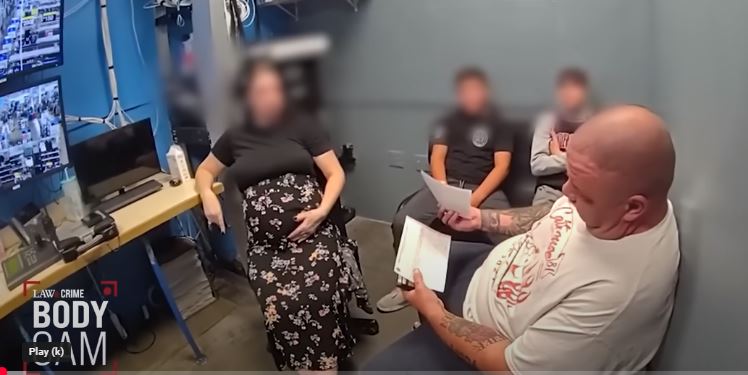
Haley Butler-Moore sped up to pass a semi on the highway when she suddenly saw the police lights.

She’d left Albuquerque hours earlier, heading to a Halloween party in Denver. Tired from the long drive, she recalled being nervous as she pulled out her paperwork. The trooper asked Butler-Moore to come sit in the patrol car.

“Do you use any recreational drugs?” asked the officer, as captured on the body camera.

“No,” said Butler-Moore.

“OK, because your eyes are saying something completely different. So how much have you used today?”

Attorney Michael Komorn

Attorney Michael Komorn

State / Federal Legal Defense

With extensive experience in criminal legal defense since 1993 from pre-arrest, District, Circuit, Appeals, Supreme and the Federal court systems.

KOMORN LAW (248) 357-2550

‘Police science’

At the police station, the DRE officer, one of more than 8,000 scattered in departments across the country, asked Butler-Moore to recount everything she did that day.

“If there is no impairment, it will come out here,” the officer told her, the entire evaluation recorded on bodycam.

But the officer had concerns. Butler-Moore had put the wrong date, from the day before. That’s because, Butler-Moore said, she didn’t realize it was already after midnight.

Read the whole story here at MLive

Disclaimer: This article provides a general overview, or opinions and does not substitute for legal advice.  As with any law it can change or be modified and research should be done before you rely on any information provided on the internet. Although we make all attempts to link relevant laws these laws can often be gray and corrupted to fit a narrative. Anyone charged with any alleged crime should consult an attorney for specific legal guidance. Articles may be 3rd party or contain opinions and information that do not reflect the current stance of Komorn Law.

Michigan Laws

DUI in Michigan

DUI in Michigan

DUI in MichiganDriving under the influence (DUI) is a serious offense in Michigan that can result in severe legal consequences. Michigan DUI laws and penalties are designed to prevent impaired driving and keep the roads safe for everyone. From fines and license...

read more
Michigan’s DUI Laws and Penalties

Michigan’s DUI Laws and Penalties

Michigan's OWI Laws and PenaltiesAn DUI / OUI / OWVI conviction requires proof only that the driver shows visible signs of impairment due to ingesting alcohol or drugs. The Michigan Law Under MCL 257.625(3), you are assumed guilty of a crime if, regardless of your...

read more
Michigan Law on Boating Under the Influence

Michigan Law on Boating Under the Influence

Michigan Laws on Boating Under the InfluenceBoating is a fun activity, but it can be dangerous if the operator is under the influence of drugs or alcohol. Michigan law prohibits operating a motorboat while under the influence of drugs or alcohol. Boating Under the...

read more