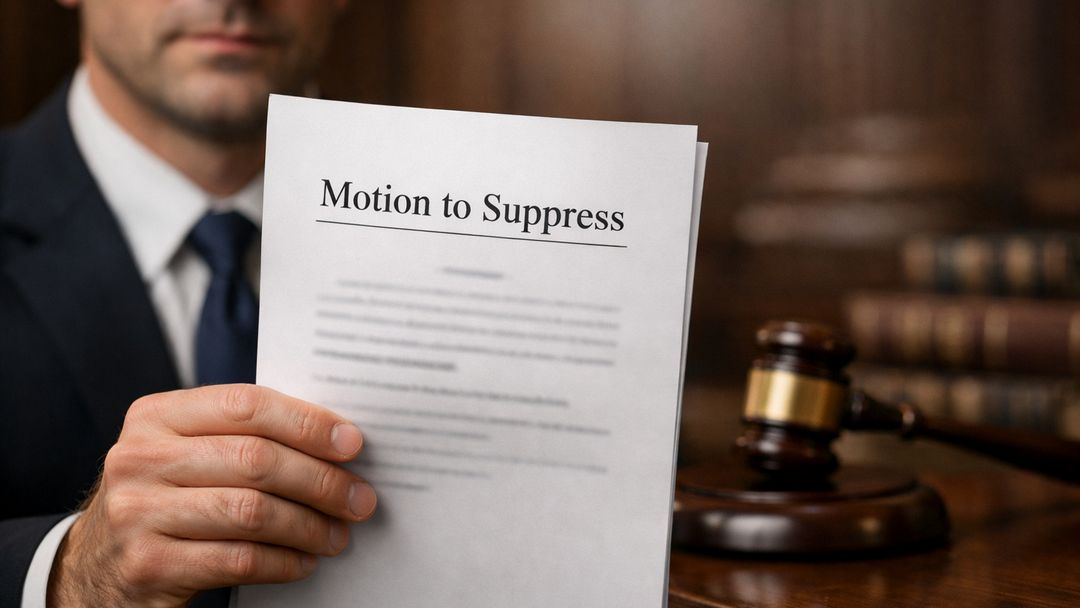

Do the passengers in your vehicle have 4th Amendment Rights?

Do the passengers in your vehicle have 4th Amendment Rights?

Passengers in a vehicle are afforded Fourth Amendment protections against unreasonable searches and seizures, though the scope of these rights varies based on the specific circumstances surrounding the stop and search.

The Fourth Amendment protects all individuals, including passengers, from unlawful government intrusions.

However, the scope of this protection can vary, especially in the context of vehicle stops and searches.

Fourth Amendment Rights of Passengers

The U.S. Supreme Court has clarified the rights of passengers in several key cases. In Brendlin v. California (2007), the Court ruled that passengers, like drivers, are “seized” during a traffic stop and therefore have the right to challenge the legality of the stop. This means that if the stop is found to be unlawful, any evidence obtained as a result may be suppressed, even if it was found on a passenger.

However, the right to challenge the stop does not necessarily extend to a right to challenge the search of the vehicle. In Rakas v. Illinois (1978), the Supreme Court held that passengers do not have a legitimate expectation of privacy in a vehicle they do not own or control. Therefore, while a passenger can challenge the stop itself, they cannot generally challenge the search of the vehicle unless they have a personal privacy interest in the area searched, such as in their personal belongings.

Attorney Michael Komorn

Attorney Michael Komorn

State / Federal Legal Defense

With extensive experience in criminal legal defense since 1993 from pre-arrest, District, Circuit, Appeals, Supreme and the Federal court systems.

KOMORN LAW (248) 357-2550

Michigan Law and Passenger Rights

Under Michigan law, as per the Michigan Compiled Laws (MCL), the rights of passengers align with federal standards. For instance, MCL 257.742 outlines the procedure for stopping vehicles and the obligations of drivers and passengers during traffic stops. While the law primarily addresses the driver’s responsibilities, passengers are also protected under the broader umbrella of the Fourth Amendment.

However, Michigan courts, following federal precedent, generally hold that passengers cannot challenge the search of a vehicle unless they can demonstrate a personal privacy interest in the area searched. For example, if a passenger’s personal bag or purse is searched, they may have standing to challenge that search.

Consent and Plain View Doctrine

If a driver consents to a search, that consent typically extends to the entire vehicle, including areas where passengers’ belongings may be stored. However, the scope of the consented search must be reasonable. Similarly, under the plain view doctrine, if an officer lawfully stops a vehicle and observes illegal items in plain view, those items can be seized without violating Fourth Amendment rights, regardless of whether they belong to the driver or a passenger.

Conclusion

Passengers in a vehicle do have Fourth Amendment rights, particularly concerning the legality of the traffic stop. However, their ability to challenge the search of the vehicle is limited unless they can show a personal privacy interest in the area searched. The balance between individual rights and law enforcement authority continues to be shaped by court rulings, both at the federal and state levels. Understanding these nuances is essential for recognizing the protections afforded to passengers under the Fourth Amendment.

Legal Counsel and Your Rights

When facing legal challenges, particularly in criminal cases, it is advisable to seek legal counsel immediately.

An experienced attorney can provide guidance on how to navigate interactions with law enforcement while safeguarding your constitutional rights.

Since 1993 our expert legal defense in navigating criminal law matters and protecting your constitutional rights are what we eat for breakfast everyday.

Contact Komorn Law PLLC if you’re ready to fight and win.

Research us and then call us.

Do you know what to do if you are pulled over by a police officer?

Below is some information that can help to make a traffic stop less stressful and safer for everyone.

  • First, when you notice emergency lights behind you, pull over to the right side of the road as soon as it’s safe to do so. Keep calm and try to remain still. Stay in your vehicle, open the driver’s side window and keep your hands in sight on the steering wheel.
  • When the officer asks, provide your driver’s license, vehicle registration and proof of insurance. At this point in the traffic stop, the officer should tell you why you were stopped. If he or she doesn’t, it’s okay to inquire about the reason for the stop once you have provided your driver’s license, vehicle registration and proof of insurance. When addressing the officer, speak with the same level of respect you expect from him or her.
  • If the officer issues you a citation, don’t argue the reason for it during the traffic stop. The best and most appropriate place to dispute a citation is in court.
  • When the officer tells you it’s okay to leave, make sure your seat belt is buckled and that it’s safe to enter the roadway before pulling out. As you get back on the road, follow all traffic laws, including using your turn signal. The officer will likely remain on the side of the road, with lights activated, until you have safely re-entered traffic.

If you feel the officer acted inappropriately or didn’t treat you fairly, it’s okay to follow up with a phone call to his or her supervisor.

Source: Michigan Government

Recent

People v. Lukity, 460 Mich 484 (1999)

People v. Lukity, 460 Mich 484 (1999)

Case Summary The Michigan Supreme Court reversed the Court of Appeals and reinstated the defendant’s conviction for first-degree criminal sexual conduct against his fourteen‑year‑old daughter. The Court held that although one evidentiary error occurred, it was...

read more
Motion in Limine vs Motion to Suppress

Motion in Limine vs Motion to Suppress

Defininition and Explaination - Motion in LimineOverview Although both a motion in limine and a motion to suppress deal with evidence, they serve very different purposes in Michigan criminal cases. Understanding the distinction is critical because each motion affects...

read more

Other Articles

The US Supreme Court and Federal Gun Law Cases

The US Supreme Court and Federal Gun Law Cases

The US Supreme Court and Federal Gun Law CasesChallenges to Federal Gun Laws the right of the people to keep and bear Arms, shall not be infringed Updated July 8, 2024 Ratified in 1791, the Second Amendment provides, “A well regulated Militia, being necessary to the...

Do Passengers in a Vehicle have 4th Amendment Rights?

Do Passengers in a Vehicle have 4th Amendment Rights?

Do Passengers have 4th Amendment Rights?Michigan Supreme Court Limits Police Ability to Search Passenger Property in CarsBackground Mead was a passenger in a car and had just met the driver, who offered him a ride. When the police stopped the vehicle and ordered both...

Do Students Have 4th Amendment Rights in Schools

Do Students Have 4th Amendment Rights in Schools

Students and 4th Amendment RightsStudents are entitled to a right to be safe from unreasonable searches and seizures even within school premises, as ruled by the Supreme Court of the United States. However, these rights are somewhat limited for students, allowing...

Forfeiture Law: SCOTUS and Sixth Circuit Issue Landmark Rulings

Forfeiture Law: SCOTUS and Sixth Circuit Issue Landmark Rulings

Forfeiture Law in Focus: SCOTUS and Sixth Circuit Issue Landmark RulingsThe landscape of forfeiture law has been significantly shaped by recent decisions from the U.S. Supreme Court and the Sixth Circuit Court of Appeals. These rulings, in the cases of United States v...

Probable Cause v Reasonable Suspicion

Probable Cause v Reasonable Suspicion

What’s the difference between probable cause and reasonable suspicion?

Definition of Probable Cause

Probable cause refers to the belief held by a reasonable person that a crime is currently being committed, has already been committed, or is likely to be committed in the near future.

Legal Repercussions of Probable Cause – Probable cause serves as the necessary foundation for obtaining a search or arrest warrant and empowers a police officer to make an arrest if a crime is witnessed in progress.

Definition of Reasonable Suspicion

Reasonable suspicion has been defined by the United States Supreme Court as “the sort of common-sense conclusion about human behavior upon which practical people . . . are entitled to rely.”

Further, it has defined reasonable suspicion as requiring only something more than an “unarticulated hunch.” It requires facts or circumstances that give rise to more than a bare, imaginary, or purely conjectural suspicion.

Reasonable suspicion means that any reasonable person would suspect that a crime was in the process of being committed, had been committed or was going to be committed very soon.

Legal Repercussions of Reasonable Suspicion – When an officer has reasonable suspicion in a given situation, they are permitted to briefly detain or frisk the suspect.

However, reasonable suspicion alone does not authorize a full search of a person or their vehicle unless the individual is on school property.

It is important to note that reasonable suspicion does not provide sufficient grounds for an arrest or for obtaining a search warrant.

The Difference Between Probable Cause and Reasonable Suspicion

It is common for individuals to confuse the terms probable cause and reasonable suspicion, yet each has distinct implications that affect a person’s rights, the appropriate law enforcement procedures, and the overall outcome of an encounter with police.

Reasonable suspicion serves as a preliminary step prior to establishing probable cause; it indicates that there is a belief a crime may have occurred. This situation transitions into probable cause when the evidence suggests that a crime has most likely taken place.

Stop and Frisk

In Terry v. Ohio, 392 U.S. 1 (1968), the court recognized that a limited stop and frisk of an individual could be conducted without a warrant based on less than probable cause.

The stop must be based on a reasonable, individualized suspicion based on articulable facts, and the frisk is limited to a pat-down for weapons.

An anonymous tip that a person is carrying a gun is not, by itself, sufficient to justify a stop and frisk. Florida v. J.L., 529 U.S. 266 (2000).

Florida v. Bostick 501 U.S. 429, 437 (1991) – A person’s refusal to cooperate is not sufficient for reasonable suspicion.

Illinois v. Wardlow, 528 U.S. 119, 124-25 (2000). – A person’s flight in a high crime area after seeing police was sufficient for reasonable suspicion to stop and frisk.

Attorney Michael Komorn

Attorney Michael Komorn

State / Federal Legal Defense

With extensive experience in criminal legal defense since 1993 from pre-arrest, District, Circuit, Appeals, Supreme and the Federal court systems.

KOMORN LAW (248) 357-2550

The same requirement of founded suspicion for a “person” stop applies to stops of individual vehicles.

United States v. Arvizu, 534 U.S. 266 (2002). The scope of the “frisk” for weapons during a vehicle stop may include areas of the vehicle in which a weapon may be placed or hidden.

Michigan v. Long, 463 U.S. 1032 (1983). The police may order passengers and the driver out of or into the vehicle pending completion of the stop.

Maryland v. Wilson, 519 U.S. 408 (1997). The passengers may not be detained longer than it takes the driver to receive his citation. Once the driver is ready to leave, the passengers must be permitted to go as well.

During a stop for traffic violations, the officers need not independently have reasonable suspicion that criminal activity is afoot to justify frisking passengers, but they must have reason to believe the passengers are armed and dangerous. Arizona v. Johnson, 129 S Court. 781, 784 (2009).

Legal Counsel and Your Rights

When facing legal challenges, particularly in criminal cases, it is advisable to seek legal counsel immediately.

An experienced attorney can provide guidance on how to navigate interactions with law enforcement while safeguarding your constitutional rights.

Since 1993 our expert legal defense in navigating criminal law matters and protecting your constitutional rights are what we eat for breakfast everyday.

Contact Komorn Law PLLC if you’re ready to fight and win.

Research us and then call us.

Recent

People v. Lukity, 460 Mich 484 (1999)

People v. Lukity, 460 Mich 484 (1999)

Case Summary The Michigan Supreme Court reversed the Court of Appeals and reinstated the defendant’s conviction for first-degree criminal sexual conduct against his fourteen‑year‑old daughter. The Court held that although one evidentiary error occurred, it was...

read more
Motion in Limine vs Motion to Suppress

Motion in Limine vs Motion to Suppress

Defininition and Explaination - Motion in LimineOverview Although both a motion in limine and a motion to suppress deal with evidence, they serve very different purposes in Michigan criminal cases. Understanding the distinction is critical because each motion affects...

read more

Other Articles

The US Supreme Court and Federal Gun Law Cases

The US Supreme Court and Federal Gun Law Cases

The US Supreme Court and Federal Gun Law CasesChallenges to Federal Gun Laws the right of the people to keep and bear Arms, shall not be infringed Updated July 8, 2024 Ratified in 1791, the Second Amendment provides, “A well regulated Militia, being necessary to the...

Do Passengers in a Vehicle have 4th Amendment Rights?

Do Passengers in a Vehicle have 4th Amendment Rights?

Do Passengers have 4th Amendment Rights?Michigan Supreme Court Limits Police Ability to Search Passenger Property in CarsBackground Mead was a passenger in a car and had just met the driver, who offered him a ride. When the police stopped the vehicle and ordered both...

Do Students Have 4th Amendment Rights in Schools

Do Students Have 4th Amendment Rights in Schools

Students and 4th Amendment RightsStudents are entitled to a right to be safe from unreasonable searches and seizures even within school premises, as ruled by the Supreme Court of the United States. However, these rights are somewhat limited for students, allowing...

Forfeiture Law: SCOTUS and Sixth Circuit Issue Landmark Rulings

Forfeiture Law: SCOTUS and Sixth Circuit Issue Landmark Rulings

Forfeiture Law in Focus: SCOTUS and Sixth Circuit Issue Landmark RulingsThe landscape of forfeiture law has been significantly shaped by recent decisions from the U.S. Supreme Court and the Sixth Circuit Court of Appeals. These rulings, in the cases of United States v...

Are there exceptions that justify warrantless searches?

Are there exceptions that justify warrantless searches?

The Fourth Amendment of the U.S. Constitution safeguards citizens by prohibiting unreasonable searches and seizures and generally mandates the necessity of a warrant for such intrusions.

However, there are specific contexts where warrant requirements are relaxed or not applicable. Here are six notable exceptions:

Border Searches

At U.S. borders and international points of entry, law enforcement officials have broad authority to conduct searches without a warrant. This includes searching individuals, vehicles, and luggage. The rationale is that the government has a sovereign interest in protecting its borders and regulating who and what enters the country. These searches are considered reasonable under the Fourth Amendment due to the national security interests at stake.

Drug Testing

Drug testing by government employers, schools, or other institutions can occur without a warrant or individualized suspicion in certain circumstances. For example, random drug testing of student-athletes or employees in safety-sensitive positions is allowed. The Supreme Court has upheld such practices, balancing the government’s interest in safety and public welfare against individual privacy rights.

National Security

In matters of national security, the government can conduct searches without a warrant under specific conditions, such as through the Foreign Intelligence Surveillance Act (FISA). These searches are typically related to monitoring foreign spies, terrorists, or other national security threats. The courts have generally granted the government greater leeway in these cases, recognizing the unique and urgent nature of national security concerns.

Attorney Michael Komorn

Attorney Michael Komorn

State / Federal Legal Defense

With extensive experience in criminal legal defense since 1993 from pre-arrest, District, Circuit, Appeals, Supreme and the Federal court systems.

KOMORN LAW (248) 357-2550

School Searches

School officials have the authority to search students and their belongings without a warrant, provided they have reasonable suspicion that the student has violated a school rule or law. The standard for these searches is lower than in other contexts because schools are responsible for maintaining a safe and orderly environment conducive to education.

Searches of Prisoners, Parolees, and Probationers

Individuals owned by the criminal justice system, such as prisoners, parolees, and probationers, have a reduced expectation of privacy. Warrantless searches of these individuals and their property are permitted under the terms of their incarceration, parole, or probation. These searches are justified by the government’s interest in maintaining security and ensuring compliance with the terms of their release.

Workplace Searches

Government employers can conduct warrantless searches of employees’ workspaces, particularly if there is a reasonable suspicion of work-related misconduct or if the search is part of a general policy to ensure workplace efficiency and security. The expectation of privacy in a government workplace is lower, especially when the area searched is related to work rather than personal activities.

These exceptions illustrate the balance between individual rights and the government’s need to ensure safety, security, and efficiency in specific contexts where the warrant requirement is not strictly enforced.

Are there more? Yes.

Legal Counsel and Your Rights

When facing legal challenges, particularly in criminal cases, it is advisable to seek legal counsel immediately.

An experienced attorney can provide guidance on how to navigate interactions with law enforcement while safeguarding your constitutional rights.

Since 1993 our expert legal defense in navigating criminal law matters and protecting your constitutional rights are what we eat for breakfast everyday.

Contact Komorn Law PLLC if you’re ready to fight and win.

Research us and then call us.

Do you know what to do if you are pulled over by a police officer?

Below is some information that can help to make a traffic stop less stressful and safer for everyone.

  • First, when you notice emergency lights behind you, pull over to the right side of the road as soon as it’s safe to do so. Keep calm and try to remain still. Stay in your vehicle, open the driver’s side window and keep your hands in sight on the steering wheel.
  • When the officer asks, provide your driver’s license, vehicle registration and proof of insurance. At this point in the traffic stop, the officer should tell you why you were stopped. If he or she doesn’t, it’s okay to inquire about the reason for the stop once you have provided your driver’s license, vehicle registration and proof of insurance. When addressing the officer, speak with the same level of respect you expect from him or her.
  • If the officer issues you a citation, don’t argue the reason for it during the traffic stop. The best and most appropriate place to dispute a citation is in court.
  • When the officer tells you it’s okay to leave, make sure your seat belt is buckled and that it’s safe to enter the roadway before pulling out. As you get back on the road, follow all traffic laws, including using your turn signal. The officer will likely remain on the side of the road, with lights activated, until you have safely re-entered traffic.

If you feel the officer acted inappropriately or didn’t treat you fairly, it’s okay to follow up with a phone call to his or her supervisor.

Source: Michigan Government

Recent

People v. Lukity, 460 Mich 484 (1999)

People v. Lukity, 460 Mich 484 (1999)

Case Summary The Michigan Supreme Court reversed the Court of Appeals and reinstated the defendant’s conviction for first-degree criminal sexual conduct against his fourteen‑year‑old daughter. The Court held that although one evidentiary error occurred, it was...

read more
Motion in Limine vs Motion to Suppress

Motion in Limine vs Motion to Suppress

Defininition and Explaination - Motion in LimineOverview Although both a motion in limine and a motion to suppress deal with evidence, they serve very different purposes in Michigan criminal cases. Understanding the distinction is critical because each motion affects...

read more

Other Articles

The US Supreme Court and Federal Gun Law Cases

The US Supreme Court and Federal Gun Law Cases

The US Supreme Court and Federal Gun Law CasesChallenges to Federal Gun Laws the right of the people to keep and bear Arms, shall not be infringed Updated July 8, 2024 Ratified in 1791, the Second Amendment provides, “A well regulated Militia, being necessary to the...

Do Passengers in a Vehicle have 4th Amendment Rights?

Do Passengers in a Vehicle have 4th Amendment Rights?

Do Passengers have 4th Amendment Rights?Michigan Supreme Court Limits Police Ability to Search Passenger Property in CarsBackground Mead was a passenger in a car and had just met the driver, who offered him a ride. When the police stopped the vehicle and ordered both...

Do Students Have 4th Amendment Rights in Schools

Do Students Have 4th Amendment Rights in Schools

Students and 4th Amendment RightsStudents are entitled to a right to be safe from unreasonable searches and seizures even within school premises, as ruled by the Supreme Court of the United States. However, these rights are somewhat limited for students, allowing...

Forfeiture Law: SCOTUS and Sixth Circuit Issue Landmark Rulings

Forfeiture Law: SCOTUS and Sixth Circuit Issue Landmark Rulings

Forfeiture Law in Focus: SCOTUS and Sixth Circuit Issue Landmark RulingsThe landscape of forfeiture law has been significantly shaped by recent decisions from the U.S. Supreme Court and the Sixth Circuit Court of Appeals. These rulings, in the cases of United States v...

Warrantless Searches in Michigan

Warrantless Searches in Michigan

I don’t need a warrant for that…

In Michigan, as in the rest of the United States, the Fourth Amendment of the fading Constitution provides individuals with protection against unreasonable searches and seizures by law enforcement.

Generally, this means that police need a warrant—issued by a judge and based on probable cause—before conducting a search.

However, there are several exceptions to the warrant requirement that allow law enforcement officers in Michigan to conduct searches without first obtaining a warrant.

Warrantless searches are subject to strict legal regulations and are typically deemed necessary in situations where acquiring a warrant is not feasible or essential.

Below are the key types of warrantless searches recognized in Michigan.

Search Incident to Lawful Arrest

One of the most common types of warrantless searches is a search incident to a lawful arrest. When law enforcement officers lawfully arrest an individual, they are permitted to search the person and the immediate area within their control without a warrant. The rationale behind this exception is to ensure officer safety and prevent the destruction of evidence. For instance, if someone is arrested in a vehicle, officers may search the person and the passenger compartment of the vehicle. However, they may not search areas beyond the arrestee’s immediate control without a warrant or another exception.

Consent Searches

Another significant exception is a consent search. If an individual voluntarily consents to a search, law enforcement officers do not need a warrant. For consent to be valid, it must be given freely and without coercion. Additionally, the person giving consent must have the authority to do so. For example, a homeowner can consent to the search of their home, but they cannot generally consent to the search of another person’s private areas within the home. If the police conduct a search based on consent, the scope of the search is limited to the area for which consent was given.

Legal Help

If you’re facing charges for a firearm offense while under the influence of alcohol or a controlled substance in Michigan, it’s essential to seek legal counsel immediately. A trained and experienced DUI attorney can provide guidance potentially helping to mitigate penalties or even challenge the charges.

Legal defense Attorney Michael Komorn is trained and certified in Field Sobriety Tests (FST), Horizontal Gaze Nystagmus and the infamous breathalyzer and has been representing clients charged with DUI and alleged crimes since 1993. Call Komorn Law 248-357-2550 when you’re ready to challenge DUI or any alleged criminal charges.

Plain View Doctrine

The plain view doctrine allows law enforcement to seize evidence without a warrant if it is in plain view. For this doctrine to apply, officers must be lawfully present in the location where they see the evidence, and its incriminating nature must be immediately apparent.

For example, if an officer is legally inside a home and sees illegal drugs on a table, the drugs can be seized without a warrant.

This doctrine does not permit officers to move or manipulate objects to gain a better view; the evidence must be plainly visible.

Exigent Circumstances

Exigent circumstances exist when there is an urgent need for action that justifies a warrantless search.

This exception applies when the situation demands immediate attention, such as when there is a threat to life, a risk of evidence being destroyed, or a potential escape of a suspect.

For instance, if officers are pursuing a suspect who flees into a building, they may enter and search the building without a warrant under the exigent circumstances exception.

Similarly, if officers hear sounds indicating that evidence is being destroyed, they may conduct a search without a warrant.

Automobile Exception

The automobile exception allows police to search a vehicle without a warrant if they have probable cause to believe it contains evidence of a crime.

The rationale behind this exception is the inherent mobility of vehicles, which could allow suspects to move the vehicle and the evidence it contains before a warrant can be obtained.

Under this exception, officers can search any part of the vehicle, including the trunk and containers within it, as long as they have probable cause.

This exception is distinct from searches incident to arrest, as it applies even when the vehicle’s occupants are not arrested.

Stop and Frisk (Terry Stops)

A stop and frisk, also known as a Terry stop, is a brief detention and pat-down of an individual by law enforcement based on reasonable suspicion that the person is involved in criminal activity and may be armed. This exception is named after the landmark Supreme Court case Terry v. Ohio (1968), which established that officers could perform a limited search for weapons without a warrant if they have reasonable suspicion. The frisk is generally limited to a pat-down of the outer clothing to check for weapons; it is not a full search of the person.

Inventory Searches

Inventory searches occur when law enforcement takes custody of a person’s property, such as after arresting someone and impounding their vehicle. The purpose of an inventory search is not to gather evidence but to protect the owner’s property, ensure officer safety, and safeguard the police from claims of lost or stolen property. Because these searches are conducted as part of standard procedures and not based on suspicion of criminal activity, they do not require a warrant. However, the search must be conducted according to established police protocols to be valid.

Schools

School officials need not obtain a warrant before searching a student who is under their authority. A search of a student need only be reasonable under all the circumstances.  New Jersey v. TLO, 469 U.S. 325 (1985)

U.S. Supreme Court Ruling (Schools)

The Court did not reach this issue.  As explained in the reasoning section below, the Court concluded that, under the circumstances of this case, the search of T.L.O.’s purse did not violate the Fourth Amendment to the U.S. Constitution.

The Court did not address the issue of whether unlawfully seized evidence should be suppressed in a juvenile delinquency hearing.

However, the Court decided that the Fourth Amendment applies to school officials.

Conclusion

While the Fourth Amendment generally protects against warrantless searches, several well-established exceptions allow law enforcement in Michigan to conduct searches without a warrant.

These exceptions are designed to balance the need for effective law enforcement with individuals’ rights to privacy. The legality of warrantless searches often depends on the specific circumstances and whether the situation falls within one of the recognized exceptions.

Understanding these exceptions is crucial for both law enforcement and the public, as they outline the boundaries of permissible police conduct and the protection of constitutional rights.

Related Posts

Attorney Michael Komorn

Attorney Michael Komorn

State / Federal Legal Defense

With extensive experience in criminal legal defense since 1993 from pre-arrest, District, Circuit, Appeals, Supreme and the Federal court systems.

KOMORN LAW (248) 357-2550

Recent

Miranda v Arizona

Miranda v Arizona

Case Summary Miranda v. Arizona established that before police conduct custodial interrogation, they must advise suspects of their rights: the right to remain silent, that statements may be used against them, and the right to an attorney. These “Miranda warnings”...

read more
Motion in Limine vs Motion to Suppress

Motion in Limine vs Motion to Suppress

Defininition and Explaination - Motion in LimineOverview Although both a motion in limine and a motion to suppress deal with evidence, they serve very different purposes in Michigan criminal cases. Understanding the distinction is critical because each motion affects...

read more

Other Articles

Domestic Violence Conviction Prohibits Gun Ownership

Domestic Violence Conviction Prohibits Gun Ownership

No Second Amendment Rights For YouIf you are charged with a crime you're part of the State of Michigan family now. Call us - Because you don't want to be a part of that family. Komorn Law (248) 357-2550A federal judge in Michigan has ruled that a man with a prior...

Update on Michigan’s Sick Time Act (Small Business Compliance)

Update on Michigan’s Sick Time Act (Small Business Compliance)

Small Business Compliance Accrual Method: Employees accrue 1 hour of paid sick time forevery 30 hours worked, and unused paid sick time rolls over upto 72 hours, or 40 for a small business. Employers may limit theuse of earned sick time to 72 hours, or 40 for a small...

What Are Your Rights Before And After Arrest?

What Are Your Rights Before And After Arrest?

What are your rights before and after arrest?Generally, police require a search warrant to lawfully enter any private premises or to search electronic devices such as your phone or computer. If the police do not possess a search warrant, you are under no obligation to...

A secured and safe vote thanks to new laws in Michigan

A secured and safe vote thanks to new laws in Michigan

Governor Whitmer Signs Historic Election Bills Package to Ensure Every Vote Can be Cast and CountedIn Case You Missed It November 30, 2023 “Today, we are expanding voting rights and strengthening our democracy,” said Governor Whitmer. “Michiganders spoke clearly last...

Michigan Crime Victim Compensation

Michigan Crime Victim Compensation

Michigan has a crime victim compensation fund. You can contact them using the various links on this page. This post is just to provide you with information. We do not provide any services for this topic.

Crime Victims

Victims of crime often face lasting repercussions that extend far beyond the initial act, affecting them physically, emotionally, and financially, but it is important to remember that you are not alone in this journey.

If you or someone close to you has been affected by a crime, you may be eligible for Crime Victim Compensation coverage for certain expenses.

This program provides assistance for out-of-pocket medical costs, lost wages, funeral expenses, counseling services, and other financial burdens incurred as a direct result of the crime.

What is Crime Victim Compensation?

If you or someone you care about has been affected by crime, you may be eligible for compensation to help cover specific expenses related to the incident.

This program provides financial assistance for out-of-pocket medical expenses, lost wages, funeral costs, counseling services, and other related expenses incurred by individuals who have suffered harm as a direct result of a crime.

Crime Victim Compensation serves as the last option for financial support, meaning you must first exhaust your private insurance and any available public funds to qualify for this compensation.

Do You Qualify?

Who is considered a victim?

The following individuals may be considered a victim and qualify for crime victim compensation:

  • A person who was physically, emotionally, psychologically, or mentally injured as the direct result of a crime.
  • A sexual assault victim.
  • A person injured while trying to help a crime victim.
  • Eligible individuals with out-of-pocket expenses as a direct result of a crime.
  • A Michigan resident injured in another state that doesn’t pay compensation for a nonresident.

Who is considered a claimant?

There are a number of definitions of eligible claimants under the law in Michigan, including:


  • A victim.
  • A person related to the victim by blood or affinity to the second degree, including child born after death of deceased victim.
  • A person who was in a dating relationship with the victim at the time of the crime.
  • If the victim was a guardian or primary caregiver to an adult who is physically or mentally incapacitated, that adult who is physically or mentally incapacitated.
  • If the victim was a guardian or primary caregiver to a minor, that minor.
  • If the victim is a minor or is an adult who is physically or mentally incapacitated and a dependent, the guardian/caregiver to that victim.
  • A guardian/caregiver to a victim when the victim was a minor.
  • A person who assumes legal obligation or voluntarily pays for a victim’s funeral/burial expenses.
  • A person who, at the time the crime occurred, was a household member with the victim (an individual who resides in the same dwelling unit).
  • May require proof of permanent residence to demonstrate the individual is eligible, including a lease agreement, utility bill, license registration, document showing mailing address, etc.
  • A person who was previously a household member of the victim for a period of not less than 2 years AND who is related to the victim by blood or affinity.
  • A dependent who suffers loss of support as a result of the death of the victim who died as a result of the crime.
Attorney Michael Komorn

Attorney Michael Komorn

State / Federal Legal Defense

With extensive experience in criminal legal defense since 1993 from pre-arrest, District, Circuit, Appeals, Supreme and the Federal court systems.

KOMORN LAW (248) 357-2550

Covered Crimes

A crime considered eligible for Crime Victim Compensation under Michigan law is defined as “A crime committed under the laws of Michigan, the United States, or a Federally recognized tribe in Michigan, including pregnancy or death, or that poses a reasonably perceived or actual threat of injury or death within Michigan.”

Examples of eligible crimes include:

  • Homicide
  • Robbery
  • Assault
  • Carjacking
  • Hate Crime
  • Kidnapping
  • Child Abuse
  • Domestic Violence
  • Sexual Assault
  • Human Trafficking
  • Stalking
  • Elder Abuse
  • DWI/DUI
  • Terrorism/Mass Violence

Acts of international terrorism and crimes committed against a Michigan resident in another state (that does not have a victim compensation program) that would be considered a crime under Michigan law is also be considered an eligible crime.

Eligibility Requirements

The following are required for a victim/claimant to be eligible for Crime Victim Compensation benefits:

  • An individual must be emotionally, physically, psychologically, or mentally injured as a direct result of a crime.
  • If the victim is a minor, deceased, or mentally incapacitated, a claimant can file a claim for expenses incurred as a result of the victim’s injuries.
  • A victim who experiences a crime that inflicts bodily harm – including pregnancy or death – or a reasonably perceived or actual threat of injury or death under the laws of the United States, State of Michigan, federally recognized Tribal land, or in another state where the crime committed would be considered a crime under Michigan law.
    • An act of international terrorism committed outside the territorial jurisdiction of the United States would also be considered eligible.
  • The crime must be reported to law enforcement (waivers may apply).
  • If the crime was a sexual assault, then a sexual assault forensic exam may be used in lieu of reporting to police.
  • The victim or claimant must cooperate with law enforcement officials in the investigation and prosecution of the case (waivers may apply).
  • Cannot be criminally responsible/an accomplice to the crime or involved in misconduct that contributed to the injury at the time of the crime.
  • At least $200 of out-of-pocket loss(es) OR at least five (5) days of lost wages or support.
  • File a claim within five years from the date of injury or discovery (waivers may apply).
  • Seek reimbursement from other sources (health insurance, Medicaid, short/long term disability, etc.) before applying for compensation benefits.

Questions? 

If you have questions about the Crime Victim Compensation program or the application process, call or email the Crime Victim Compensation program for assistance. If you need help completing your application, contact your local county prosecutor. You can search for your local prosecutor by clicking here

Here is a Michigan Law

WILLIAM VAN REGENMORTER CRIME VICTIM’S RIGHTS ACT (EXCERPT) Act 87 of 1985

MCL – Section 780.766

More Rights You Should Know

Miranda v Arizona

Miranda v Arizona

Case Summary Miranda v. Arizona established that before police conduct custodial interrogation, they must advise suspects of their rights: the right to remain silent, that statements may be used against them, and the right to an attorney. These “Miranda warnings”...

read more
What could happen when you click the – I agree – box?

What could happen when you click the – I agree – box?

Wrongful death suit against Disney serves as a warning to consumers when clicking ‘I agree’A wrongful death lawsuit involving Walt Disney Parks and Resorts highlights the critical importance for consumers to meticulously review the fine print before registering for a...

read more

Other Articles

Michigan Cannabis Tax Fraud Cases Are Rising

Michigan Cannabis Tax Fraud Cases Are Rising

Hands up CaponeMichigan’s regulated cannabis industry is in a very different place than it was when medical marijuana and adult-use legalization were the primary battlegrounds. As prices compress, margins disappear, and tax burdens increase, enforcement doesn’t...

read more
Deadlocked Jury – What does it mean?

Deadlocked Jury – What does it mean?

A deadlocked jury is often called a hung jury—A deadlocked jury—often called a hung jury—occurs when jurors cannot reach the unanimous (or legally required) agreement needed to deliver a verdict. In criminal cases, most jurisdictions require unanimity. When the jury...

read more
Social Security Scams – What to Know

Social Security Scams – What to Know

The Social Security Administration (SSA) and the Office of the Inspector General (OIG) have issued several warnings about ongoing Social Security scams and continue to advise caution to the public. Here are some of the popular Social Security scams to watch out for in...

read more
Michigan Drivers Face Higher Gas Tax in 2026

Michigan Drivers Face Higher Gas Tax in 2026

Keep Pushing.Summary Michigan’s fuel‑tax structure will undergo a major statutory shift on January 1, 2026, raising the state gas tax from 31 cents to approximately 52.4 cents per gallon. The change eliminates the 6% sales tax on fuel and replaces it with a higher,...

read more
Michigan begins 2026 with New Laws

Michigan begins 2026 with New Laws

Michigan’s 2026 legal landscape includes major tax reforms—most notably the gas‑tax increase from 31¢ to 52.4¢ per gallon—along with cannabis tax changes, wage increases, consumer protections, and transparency laws.Michigan begins 2026 with a slate of new laws...

read more
The 6th Amendment – Do You Know What It Is?

The 6th Amendment – Do You Know What It Is?

The 6th Amendment to the United States Constitution is a crucial pillar of the Bill of Rights, designed to ensure fair and just legal proceedings for individuals accused of crimes. Ratified on December 15, 1791, this amendment outlines several key rights that are fundamental to the American justice system.

Key Provisions of the 6th Amendment:

  • Right to a Speedy and Public Trial: One of the fundamental guarantees of the 6th Amendment is the right to a speedy trial. This provision ensures that individuals accused of crimes are not held in pretrial detention for extended periods, preventing undue delay that could prejudice their defense. Additionally, trials must be public, allowing for transparency and accountability in the judicial process.

  • Right to a Fair Jury: The amendment affords individuals the right to a trial by an impartial jury of their peers. This jury serves as a safeguard against arbitrary governmental actions and ensures that decisions in criminal cases are made by a diverse group representing the community where the alleged crime occurred.

  • Right to Confront Witnesses: Central to the concept of due process, the 6th Amendment guarantees defendants the right to confront and cross-examine witnesses testifying against them. This right helps to safeguard against unreliable or false testimony and allows defendants to challenge the evidence presented by the prosecution.

  • Right to Compulsory Process: Defendants have the right to compel witnesses to appear and testify on their behalf. This provision empowers individuals to present evidence that supports their defense, ensuring a comprehensive and balanced presentation of facts during trial.

  • Right to Counsel: Perhaps one of the most well-known provisions of the 6th Amendment is the right to legal counsel. Defendants have the right to be represented by an attorney, whether retained privately or provided by the state if they cannot afford one. This ensures that defendants are adequately prepared and supported in navigating the complexities of the legal system.

  • Right to Know Charges and Evidence: The amendment guarantees that defendants are informed of the nature and cause of accusations against them (the charges). Moreover, they have the right to be informed of the evidence and witnesses presented by the prosecution, allowing them to prepare an effective defense strategy.

Attorney Michael Komorn

Attorney Michael Komorn

State / Federal Legal Defense

With extensive experience in criminal legal defense since 1993 from pre-arrest, District, Circuit, Appeals, Supreme and the Federal court systems.

KOMORN LAW (248) 357-2550

The principles enshrined in the 6th Amendment continue to play a pivotal role in ensuring fairness, equity, and accountability in the American legal system. As society evolves and legal challenges evolve with it, the 6th Amendment remains a bedrock for protecting individual rights against the power of the state.

In conclusion, the 6th Amendment stands as a cornerstone of justice in the United States, guaranteeing essential rights to individuals accused of crimes. By upholding principles such as the right to a speedy trial, an impartial jury, confrontation of witnesses, compulsory process, legal counsel, and access to information, this amendment reinforces the core values of due process and fairness under law.

For more detailed information, you can explore the full text and historical context of the 6th Amendment on the official website of the U.S. Congress.

Legal Counsel and Your Rights

When facing legal challenges, particularly in criminal cases, it is advisable to seek legal counsel immediately.

An experienced attorney can provide guidance on how to navigate interactions with law enforcement while safeguarding your constitutional rights.

Since 1993 our expert legal defense in navigating criminal law matters and protecting your constitutional rights are what we eat for breakfast everyday.

Contact Komorn Law PLLC if you’re ready to fight and win.

Research us and then call us.

Recent

Miranda v Arizona

Miranda v Arizona

Case Summary Miranda v. Arizona established that before police conduct custodial interrogation, they must advise suspects of their rights: the right to remain silent, that statements may be used against them, and the right to an attorney. These “Miranda warnings”...

read more
What could happen when you click the – I agree – box?

What could happen when you click the – I agree – box?

Wrongful death suit against Disney serves as a warning to consumers when clicking ‘I agree’A wrongful death lawsuit involving Walt Disney Parks and Resorts highlights the critical importance for consumers to meticulously review the fine print before registering for a...

read more

Other Articles

The US Supreme Court and Federal Gun Law Cases

The US Supreme Court and Federal Gun Law Cases

The US Supreme Court and Federal Gun Law CasesChallenges to Federal Gun Laws the right of the people to keep and bear Arms, shall not be infringed Updated July 8, 2024 Ratified in 1791, the Second Amendment provides, “A well regulated Militia, being necessary to the...

Do Passengers in a Vehicle have 4th Amendment Rights?

Do Passengers in a Vehicle have 4th Amendment Rights?

Do Passengers have 4th Amendment Rights?Michigan Supreme Court Limits Police Ability to Search Passenger Property in CarsBackground Mead was a passenger in a car and had just met the driver, who offered him a ride. When the police stopped the vehicle and ordered both...

Do Students Have 4th Amendment Rights in Schools

Do Students Have 4th Amendment Rights in Schools

Students and 4th Amendment RightsStudents are entitled to a right to be safe from unreasonable searches and seizures even within school premises, as ruled by the Supreme Court of the United States. However, these rights are somewhat limited for students, allowing...

Forfeiture Law: SCOTUS and Sixth Circuit Issue Landmark Rulings

Forfeiture Law: SCOTUS and Sixth Circuit Issue Landmark Rulings

Forfeiture Law in Focus: SCOTUS and Sixth Circuit Issue Landmark RulingsThe landscape of forfeiture law has been significantly shaped by recent decisions from the U.S. Supreme Court and the Sixth Circuit Court of Appeals. These rulings, in the cases of United States v...