Jan 12, 2019 | Blog, News
Toronto man loses his driver’s license after a medical doctor said his daily cannabis use would affect his ability to safely operate a motor vehicle.
A Toronto man lost his Ontario driver’s licence after admitting to a doctor he smokes marijuana on a daily basis.
The man, age 53, provided part of his medical file and other information to Global News for examination but asked not to be publicly identified out of concern for his employment.
Lost Your License Because You Are A Medical Marijuana Patient?
Contact Komorn Law Immediately to secure your rights… 800-656-3557.
Last October, the man was referred to Dr. Peter Phua, a medical doctor who works in a psychotherapy clinic.
He was seeking help with anxiety and claustrophobia, an extreme fear of confined places.
The man says he was honest and upfront about his lifetime use of marijuana, which by mid-month was legally obtainable in Canada. He said he has always been truthful with physicians.
READ MORE: Police in Canada can now demand breath samples in bars, at home
“He’s a doctor, I thought I could trust him. If you can’t trust your doctor who can you trust?” he said.
Phua is listed as a family physician in the public record of the College of Physicians and Surgeons of Ontario.
At the initial meeting, the man says he told Phua he sometimes smokes five small joints in a day, usually mixed on a 50-50 basis with tobacco.
“I told him I don’t smoke and drive,” he said, explaining he owns his own business, has several employees, and is conscientious about his cannabis consumption.
He suffers from Crohn’s Disease and has survived two forms of cancer. He says marijuana helps him relax.
In the first meeting, the man said Phua warned him he could have his driver’s licence revoked over his marijuana use, but wouldn’t.
At a second meeting with the doctor about a week later, he says Phua repeated his warning and the assurance he wouldn’t report him.
READ MORE: Returning bottles to the Beer Store? Beware of possible breath test by police
“Twice he threatened, twice he said he would not, and then he did,” the man said.
A week after the second meeting, the man got a phone call from Phua, who announced he was contacting the Ministry of Transportation of Ontario to have his driver’s licence revoked.
“It was unreal, it sucked the air out of me,” he told Global News.
On Oct. 15, the man received a notice of suspension of driver’s licence from the ministry, announcing his driving privileges would be revoked as of Oct. 22.
The letter cited “evidence of medical condition that would affect your ability to safely operate a motor vehicle” as the reason.
“Stop driving. You must not drive while you are suspended,” the letter warned.
WATCH: Lawyers warn of possible breath tests by police at bars, home
_848x480_1422978627998.jpg?w=670&quality=70&strip=all)
By now, the man had contacted the College of Physicians and Surgeons to file a complaint against the doctor. The College is investigating whether Phua violated the man’s privacy and told the man “he will lie to MTO to get Mr. X’s driver’s licence suspended”, allegations which have not been established by the medical regulator.
The College of Physicians and Surgeons did not reply to a call for comment, nor did Phua.
The man also applied to appeal the decision by the MTO. He submitted medical evidence from a gastroenterologist who had treated him for several years.
“To my knowledge, there is no drug dependent history of impairment,” the doctor wrote, in support of the man’s licence reinstatement.
After submitting forms and medical advice, the man got good news.
“I got my licence back in two weeks. They (ministry staff) said it was a miracle,” the man said.
Medical professionals are obligated to inform the ministry about someone’s medical situation in certain circumstances.
According to MTO regulations, the “goal of the medical reporting program is to protect the public from individuals who have a medical condition that may make it unsafe to drive.”
The ministry’s rules changed on July 1, 2018.
READ MORE: Civil rights advocates question Canada’s new impaired driving law — but feds say don’t worry
Under section 203 of the Highway Traffic Act, there are now mandatory reporting requirements for high-risk medical conditions, vision conditions and functional impairments that make it dangerous for a person to drive.
The rules now apply to physicians, optometrists and nurse practitioners.
“Included in the mandatory high-risk conditions/impairments is uncontrolled substance use disorders. Physicians and nurse practitioners are required to report any patient who has a diagnosis of an uncontrolled substance use disorder, excluding caffeine and nicotine, and the person is non-compliant with treatment recommendations.”
But the man whose licence was suspended for marijuana use said he was not given any treatment recommendations or diagnosis by Phua.
According to the ministry, someone could also lose driving privileges for excessive consumption of alcohol, even if the patient does not drive while impaired.
READ MORE: Cannabis perceived as less dangerous than liquor when it comes to driving: study
“Each case is reviewed on an individual basis in the context of regulatory requirements and national medical standards,” said a ministry spokesperson.
Relieved that his licence has been returned, the man told Global News he’s concerned for other people who consume marijuana responsibly, hold driver’s licences and expect to be able to speak frankly with their doctor about cannabis use.
“It’s going to be a big problem. You want to trust a doctor. But if they suspend your licence, I don’t know.”
Oct 17, 2018 | Blog, News
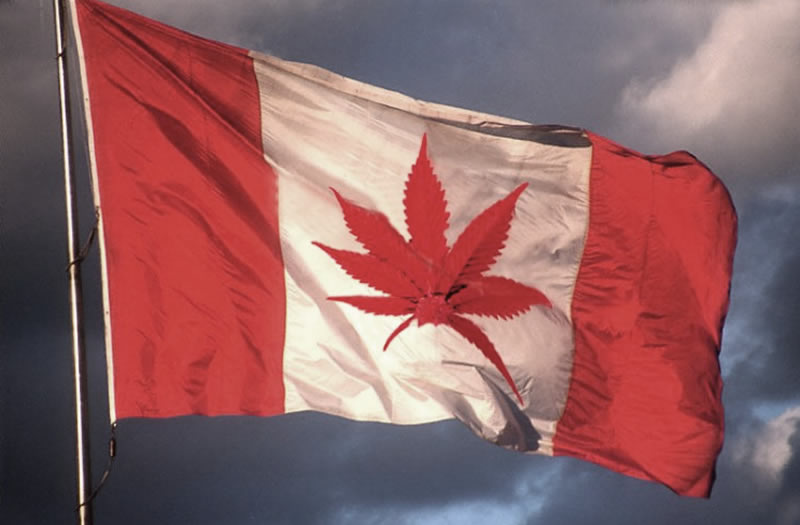
In case you have been sleeping under a rock for the last few years or have had kids and only watch cartoons… it has happened. Canada Officially Legalized Recreational Cannabis at midnight on October 17, 2018.
Historical Quotes
“A date which will live in infamy”…”This is one for the history books”…”We spend a great deal of time studying history, which, let’s face it, is mostly the history of stupidity.”
What will be the famous quote for this Canadian historical event…”It’s about time..eh!!”.
Congrats Canadians
You have now became the largest country in the world with a national legal marijuana marketplace.
BONUS – Hours before a federal official told The Associated Press that Canada will pardon all those with convictions for possessing up to 30 grams of marijuana, the now-legal threshold. That’s just about an ounce…but it’s a start.
Enjoy it. The US is not going to let you have all the glory or revenue for too long.
Anyhow…….
Different Ways
The war on this “drug” has ruined so many lives, several generations and derailed the potential future of so many people that could contribute to the creation of so many good things…in so many different ways.
The next step is clearing the “criminal records” of those who were railroaded, imprisoned or bullied into pleading by prosecutors and law enforcement who are allowed to use every trick in the book (they wrote). It’s time to bring those to light…in so many different ways.
Have you been charged with a crime? Remain Silent and Contact Komorn Law Immediately to protect your rights and freedom 800-656-3557.
The step after that is compensating for the lost time, the money, the life savings and potential that were taken away in the process of defending ones self or the time spent in prison. There is no price for lost time which can not be returned. There is no dollar amount that can be accurately calculated. For every one dollar should be estimated as losing twenty…in so many different ways
Under A Different Light
As the process of legalization creeps it’s way through the USA let us not become sheep. Let us move forward, work harder and create.
Of course the human factors such a power, greed and corruption will still play a part in the legalization process and business part but it will be under a different light.
Of course it will take generations of law enforcement to get the concept of recreational cannabis. They will still find away to make money and destroy lives but it will be under a different light.
Of course the Government will tax it, figure out how to control it and continue to cause conflicts about it so they can keep spending our money and keeping their jobs. That’s human nature… but now it will be under a different light.
Of course there will those who will oppose it and those who want more of it. As long as we don’t pound each other into submission that’s how compromise and progress happens. With cannabis being legal the battle will now be (yes I am going to say it just to mess with the robots)… under a different light.
Let these historical moments be one of the good victories for the people who were victimized by the system.
Komorn Law has represented numerous clients through the legal chaos of starting up a business in the Michigan Medical Marihuana Industry. If you or someone you know is facing charges as a result of Medical Marijuana, DUI, Drugs, Forfeiture, Criminal Enterprise, or any other charges please contact our office and ensure you’re defended by an experienced lawyer. Attorney Michael Komorn is recognized as an expert on the Michigan Medical Marihuana Act and is the President of the Michigan Medical Marijuana Association (MMMA), a nonprofit patient advocacy group which advocates for the rights of medical marijuana patients and their caregivers.
Contact us for a free no-obligation case evaluation 800-656-3557.
Follow Komorn Law
Sep 14, 2018 | Blog, News
Canadians who work in the marijuana industry — and those who invest in the booming pot sector — risk a lifetime ban on travel to the U.S.
That’s not nice eh…
Posted on Politico 9/13/18
Canadians who work in the marijuana industry — and those who invest in the booming pot sector — risk a lifetime ban on travel to the U.S., according to a senior official overseeing U.S border operations.
As Canada prepares to become the world’s only major industrialized nation to legalize retail marijuana sales starting Oct. 17, the Canadian cannabis sector is projected to generate billions of dollars of revenue in coming years and Canadians have flocked to take jobs and buy stocks in the burgeoning industry. But the move has potential to disrupt border crossings between the U.S. and Canada for travelers who run afoul of American drug laws, even if their activities are legal in Canada.
The U.S. Customs and Border Protection agency will continue to apply long-standing U.S. federal laws and regulations that treat marijuana as a banned substance — and participants in the cannabis industry as drug traffickers — who are inadmissible into the U.S. Although some U.S. states have eased marijuana laws, the U.S. continues to maintain a federal prohibition that applies at the border, said Todd Owen, executive assistant commissioner for the Office of Field Operations, who gave POLITICO a detailed preview of how CBP will apply longstanding rules.
Here’s exactly how it would work at the border: CBP officials are not planning to go out of their way to interrogate every Canadian traveler about marijuana use. However, other factors may cause them to raise the topic.
Charged with distracted driving or driving under the influence of marijuana or alcohol? Contact Komorn Law for a free case evaluation 800-656-3557.
“Our officers are not going to be asking everyone whether they have used marijuana, but if other questions lead there — or if there is a smell coming from the car, they might ask,” Owen said. Likewise, marijuana residue, which can linger for weeks inside a car, could be detected by CBP inspection dogs and lead to further questioning, he noted. If asked about past drug use, travelers should not lie, he said. “If you lie about it, that’s fraud and misrepresentation, which carries a lifetime ban,” Owen said.
If a traveler admits to past use of any illegal drugs, including marijuana, the traveler will be found to be inadmissible into the United States. CBP typically will allow them the opportunity to “voluntary withdraw” from the border — or face an “expedited removal.” Whether or not the traveler enters the U.S., a record will be kept by CBP and that traveler will not be allowed to return to the U.S. The traveler will have the opportunity to apply for a waiver from a lifetime ban, which costs U.S. $585 and requires several months to process. The waivers are issued at the discretion of CBP.
CBP agents commonly ask travelers what they do for a living. Canadians who work in the marijuana industry will not be permitted to enter the U.S. “If you work for the industry, that is grounds for inadmissibility,” Owen said.
By LUIZA CH. SAVAGE
09/13/2018 04:33 PM EDT
https://www.politico.com/story/2018/09/13/canada-weed-pot-border-783260
About Komorn Law
Komorn Law has represented numerous clients through the legal chaos of starting up a business in the Michigan Medical Marihuana Industry.
If you or someone you know is facing charges as a result of Medical Marijuana, DUI, Drugs, Forfeiture, Criminal Enterprise, etc. Please contact our office and ensure you’re defended by an experienced lawyer in the evolving laws.
Lead attorney Michael Komorn is recognized as an expert on the Michigan Medical Marihuana Act. He is the President of the Michigan Medical Marijuana Association (MMMA), a nonprofit patient advocacy group which advocates for the rights of medical marijuana patients and their caregivers.
Contact us for a free no-obligation case evaluation
800-656-3557.
Follow Komorn Law
Jun 24, 2018 | Blog, Legalization, News
Recreational marijuana use will soon be legal in Canada after the Senate passed a “historic” bill on Tuesday 6/19/18 with a vote of 52-29.
Canada is the second country in the world to implement legislation to permit a nationwide marijuana market.
Uruguay was the first country to legalize marijuana’s production, sale and consumption in December 2013. Read the law and regulation-if you can here
In the neighboring US, nine states and the District of Columbia now allow for recreational marijuana use, and 30 allow for medical use.
The act to legalize the recreational use of marijuana was introduced on April 13, 2017, and was later passed at the House of Commons in November. The Senate passage of the bill was the final hurdle in the process.
Bill C-45, AKA…The Cannabis Act, stems from a campaign pledge of Prime Minister Justin Trudeau to keep marijuana away from underage users and reduce related crime.
Although the Canadian government had initially stated its intent to implement by July 2018, provinces and territories and who would be responsible for drafting their own rules for marijuana sales. They have advised that they would need eight to 12 weeks after the Senate approval to transition to the new framework.
The government is expected to choose a date in early or mid September.