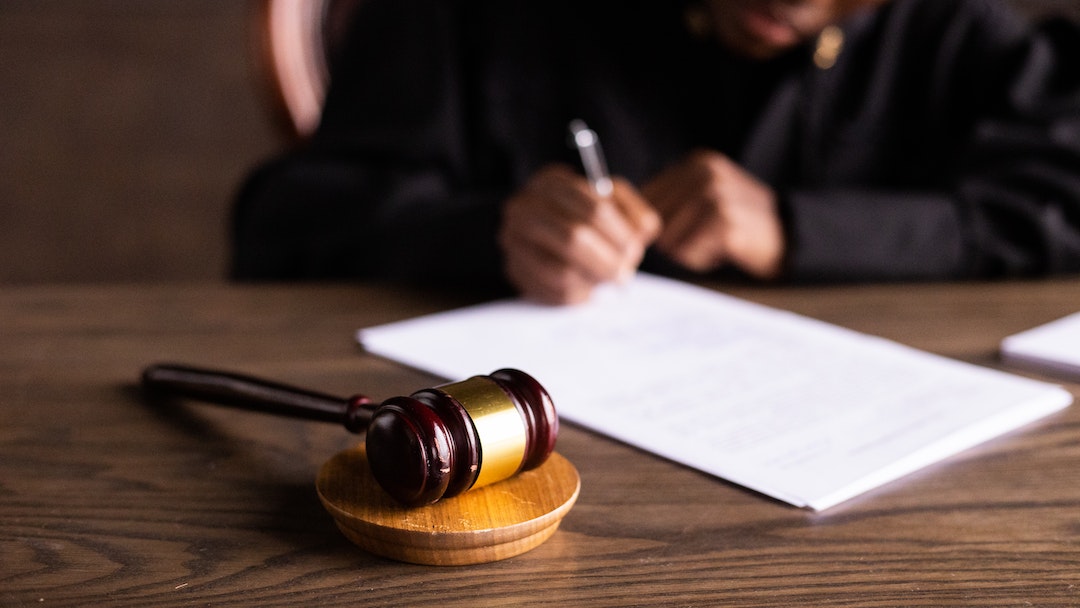
The court ruled to suppress the evidence (namely an alleged handgun, suspected marihuana, suspected psilocybin mushrooms) due to the fact that the People failed to rebut the burden that the warrantless search was unconstitutional and/or failed to provide evidence that an exception to the Search Warrant requirement existed at the time of the search and seizure.
The People filed a Motion for Reconsideration of Order Granting Defendant's Motion to Suppress Evidence.
A motion for reconsideration must demonstrate a "palpable error by which the court and the parties have been misled and show that a different disposition of the motion must result from correction of the error." Charbeneau v Wayne Co Gen Hosp, 158 Mich App 730, 733; 405 NW2d 151, 153 (1987).
The People presented evidence from the transcript to again attempt to rebut the burden regarding the warrantless search being unconstitutional and/or provide evidence that an exception to the Search Warrant requirement existed.
The People sited to the testimony of Deputy Tath who stated the Defendant consented, and listed the items that were seized - "I seized suspected marijuana, suspected psilocybin mushrooms, and I believe a handgun." The issue with this testimony being the People's evidence does not present a timeline for when consent was given.
The People have the burden to establish Defendant's consent to search before any evidence could lawfully be seized as an exception to the warrant requirement, the failure by the People to establish that specific timeline was fatal to the People's argument.
Therefore, the Prosecution has not convinced the Court that the prior Order of the Court was palpable error.
If you or someone you know has been accused of a crime or DUI. Call Komorn Law and turn the odds in your favor. Call Now 248-357-2550
DISCLAIMER This website and/or post may contain re-posted content, opinions, comments, ads, third party posts, outdated information, posts from disgruntled persons, posts from those with agendas, private stuff, work related information, non work related information and general internet BS. Therefore...Before you believe anything on the internet regarding anything and everything - do your research on "Official Government and State Sites", Call the Michigan State Police, Check the State Attorney General Website and Consult an Attorney - Use Your Brain. You're on the internet.
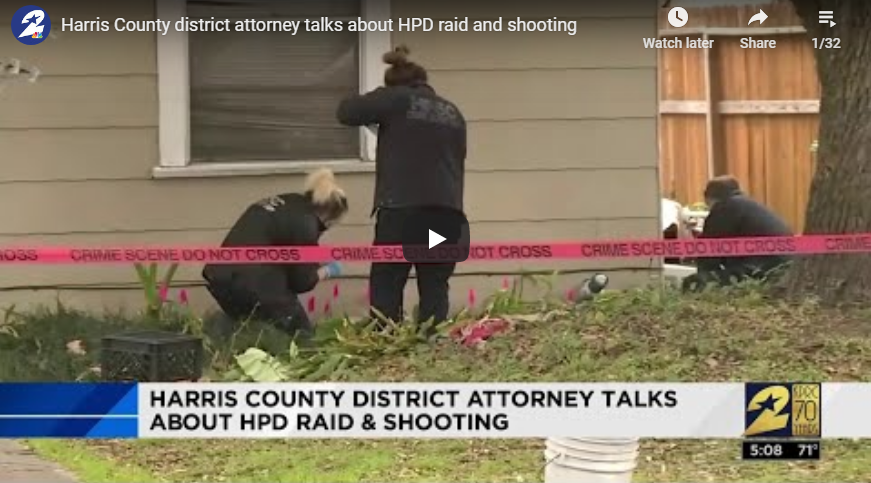
Prosecutors announced they expect to dismiss possibly 91 more drug convictions tied to an indicted ex-Houston Texas police officer.
A look back at botched Harding Street raid...
The Harris County DA’s Office had announced in February it would dismiss 73 cases connected to the former officer, Gerald Goines, whose cases are being reviewed following a deadly drug raid.
Goines’ work with the Houston Police Department’s narcotics unit has come under scrutiny following the January 2019 drug raid in which Dennis Tuttle, 59, and his wife, Rhogena Nicholas, 58, were killed.
Prosecutors allege Goines, 55, lied to obtain the warrant to search the couple’s home by claiming that a confidential informant had bought heroin there. Goines later said there was no informant and that he had bought the drugs himself, they allege. Five officers, including Goines, were injured in the raid.
In the 73 cases announced in February, Goines was the only witness to alleged drug buys.
In the 91 cases announced Thursday, Goines wrote affidavits that were used to secure search warrants in drug cases.
Police stop by your place uninvited? You are going to need a lawyer! Komorn Law handles all types of cases similar to police raids, marijuana arrests, criminal charges as well as DUI and Drugged Driving.
Call Our Office 248-357-2550 before you swallow the prosecutor's "plea bargain" hook, line and sinker.
All of the individuals in the 164 cases being dismissed are minorities and the majority are African American, prosecutors said.
“We will continue to work to clear people convicted solely on the word of a police officer who we can no longer trust,” said Harris County District Attorney Kim Ogg. “We are committed to making sure the criminal justice is fair and just for everyone.”
Nicole DeBorde, Goines’ attorney, accused Ogg of using the ex-officer’s case for political gain. Ogg is up for re-election in November.
As it goes, my clients were overcharged with crimes involving drugs, guns, bombs and money. We litigated this case for over three years including 5 days of preliminary exam testimony, and several motions litigated at the District Court and the Circuit Court.
We had made several appearances in circuit court in our continued effort to challenge the governments search and seizure of evidence because of the illegal “Knock and Talk”
Knock and Talk
When the police don’t have enough evidence to get a search warrant, they sometimes employ a procedure they have nicknamed “knock and talk” to investigate further.
Courts have ruled that a police officer has the same right as an everyday citizen (for example, a Girl Scout selling cookies) to visit your house, knock on your front door, and ask to speak with you.
Unfortunately, abuses of the “knock and talk” technique are now rampant.
Two Cases
Two somewhat recent cases in Michigan have helped clarify the law in this area.
In one case, from 2015, when no one answered the front door, the police started walking around the property knocking on back doors and side doors until they spotted some marijuana through a window in the back of the house.
The instinctual fourth amendment argument is that the police need a warrant before they roam around your back-yard peering into your windows.
In July 2016, however, the Supreme Court dismissed the appeal without deciding the issue.
People v. Radandt
That same month a similar case before the Michigan Supreme Court, was heard, arguing that a so-called “knock and talk” violates the Fourth Amendment when it is conducted in the middle of the night.
In June 2017 the Michigan Supreme Court agreed with this argument and held that the police were trespassing, and therefore violating the Fourth Amendment, when they woke up suspects and their families in the middle of the night to interrogate them in their homes. People v. Frederick; People v. Van Doorne;
In People v Frederick, 500 Mich 228, 895 NW2d 541 (2017), the supreme court considered the scope of the implied license a homeowner extends to the general public in People v Frederick, 500 Mich 228, 895 NW2d 541 (2017).
The police had visited defendants’ homes during the early morning hours (4:00 and 5:30 a.m.) and knocked on the door. After conversations during which both defendants consented to searches of their homes, the police searched the homes and recovered marijuana products.
The court concluded that the procedure was not a permissible “knock and talk,” which is permitted because the public, and the police, have an implied license to approach the door, knock and wait briefly to be received, and then, if not invited to stay longer, leave.
The court reasoned that the scope of the implied license is time sensitive and that generally there is no implied license to knock at someone’s door in the middle of the night.
In exceeding the scope of the implied license, the police were trespassing. The trespass, coupled with information gathering (the police were seeking to find something or gain information), constituted a search under the Fourth Amendment, and because the police did not have warrants and no exception to the warrant requirement existed, the approaches violated the Fourth Amendment.
The court further held that defendants’ consent, even if voluntary, was invalid unless it was sufficiently attenuated from the warrantless search. A court considers the following factors in making that determination: (1) the temporal proximity of the illegal act and the alleged consent, (2) the presence of intervening circumstances, and (3) the purpose and flagrancy of the official misconduct. The court remanded the case for a weighing of those factors by the trial court.
Back to the Case at Hand
The facts of this case were very similar to the Fredericks case.
Here several officers ( some in uniform, some in raid gear and none of them in girl scout uniforms), in several different vehicles, (some marked some unmarked), encroached and trespassed upon my clients property, came into the back yard and insisted that FANG had the authority to do a compliance check of their medical marihuana grow.
We took issue with the coming into the back yard, because it was a trespass. We also took issue with the concept that a multi-jurisdictional task force has the authority to do a compliance check for MMMA behavior, or would be able to determine compliance if they did have the authority and by asserting the authority ( that they did not have), directly impacted the volition of the alleged consent to search.
MCL 333.26426 (g) Possession of, or application for, a registry identification card shall not constitute probable cause or reasonable suspicion, nor shall it be used to support the search of the person or property of the person possessing or applying for the registry identification card, or otherwise subject the person or property of the person to inspection by any local, county or state governmental agency.
The evidentiary hearings had been very contentious, and it may be fair to say that the investigators and officers in this matter did not like my suggestions that they had trampled all over my clients 4th amendment rights.
Status Quo: Overcharged
The original overcharging of by the prosecutor’s office is a common practice.
Anytime allegations involve the combination of narcotics and firearms (even if licensed, registered, CCW or CPL) Prosecutors love to charge felony firearm. Felony firearm mandates a 2 years term of imprisonment in the Michigan Department of Corrections to run consecutive to any other sentence.
The jury instruction is complicated, and sometimes a compromised jury will think it is doing a favor for the accused and find him or her not guilty of the underlying felony and guilty of the felony firearm only. This is illogical in any legal analysis but does not matter and will still result in a mandatory 2 years in prison.
Bomb Making Charge – Because It Exploded
One of the more outrageous and memorable examples of prosecutors overcharging, and incidentally was one of the counts dismissed at the exam, was for the crime of bomb making.
This count was literally created by the police after seizing legal fireworks, ( what are commonly known as M80’s- flash powder) then testing the fireworks (they blew off some fireworks) and then created a report that concluded that the fireworks were bombs because they created an explosion.
As I said this count was dismissed at the exam, but this bomb making count is just another example of the awesome power that the prosecutors have. They are literally the “Kings of the Court Room.”
Kings of the Courtroom
The Kings of the Courtroom (and Queens) run their kingdom like a well-oiled machine. They have the awesome power to charge any crime they want.
It is only the Prosecutors who can add to the charges, amend the charges, increase or decrease the charges or dismiss the charges. And of course, they have absolute immunity from civil liability while doing it.
This is the reason that 95-97 percent of people charged with crimes plead guilty.
“A study by Northwestern University Law School’s Centre on Wrongful Convictions found that 46% of documented wrongful capital convictions between 1973 and 2004 could be traced to false testimony by snitches—making them the leading cause of wrongful convictions in death-penalty cases.
The Innocence Project keeps a database of Americans convicted of serious crimes but then exonerated by DNA evidence. Of the 318 it lists, 57 involved informants—and 30 of the convicted had entered a guilty plea.”
“The prosecutor has more control over life, liberty and reputation than any other person in America,” said Robert Jackson, the attorney-general, in 1940. American prosecutors are more powerful than ever before.
The Pressure to Plead Guilty
Several legal changes have empowered them. The first is the explosion of plea bargaining, where a suspect agrees to plead guilty to a lesser charge if the more serious charges against them are dropped.
Plea bargains were unobtainable in the early years of American justice. But today more than 95% of cases end in such deals and thus are never brought to trial.”
“Jed Rakoff, a district judge in New York, thinks it unlikely that 95% of defendants are guilty. Of the 2.4m Americans behind bars, he thinks it possible that “thousands, perhaps tens of thousands” confessed despite being innocent. One reason they might do so is because harsh, mandatory-minimum sentencing rules can make such a choice rational. Rather than risk a trial and a 30-year sentence, some cop a plea and accept a much shorter one.”
Battle Weary: Back to the Case at Hand
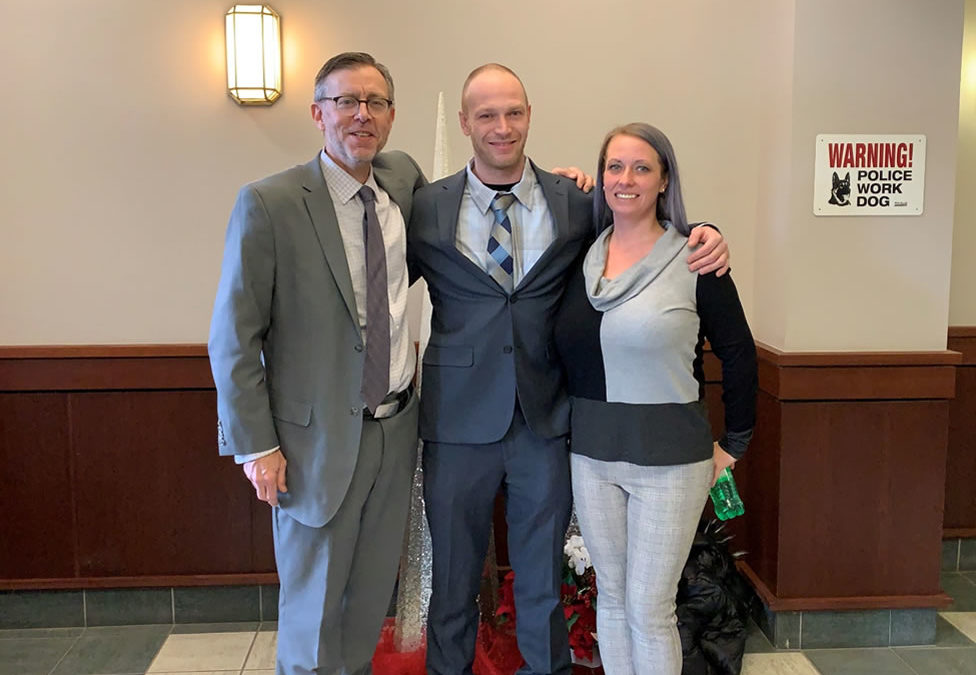
As it goes, and only because of our hard work, my client’s will, desire and commitment to this battle, today we were finally rewarded.
Clients were beyond joyful for the results today, but even with that said, it is hard to really understand, unless you live through it, just how overwhelming the State can be when they want.
All charges were dismissed as to one of the accused, and a plea to a few benign misdemeanors, with immediate sentencing to fines for the other. Case over.
It was a long hard battle and one that we were prepared to continue. The motivation to resolve as we did today, was primarily because the allegations in this case had a lot of potential liability. which was one of the motivations to resolve the case as we did.