

What?Michigan pothole contest offers drivers up to $800
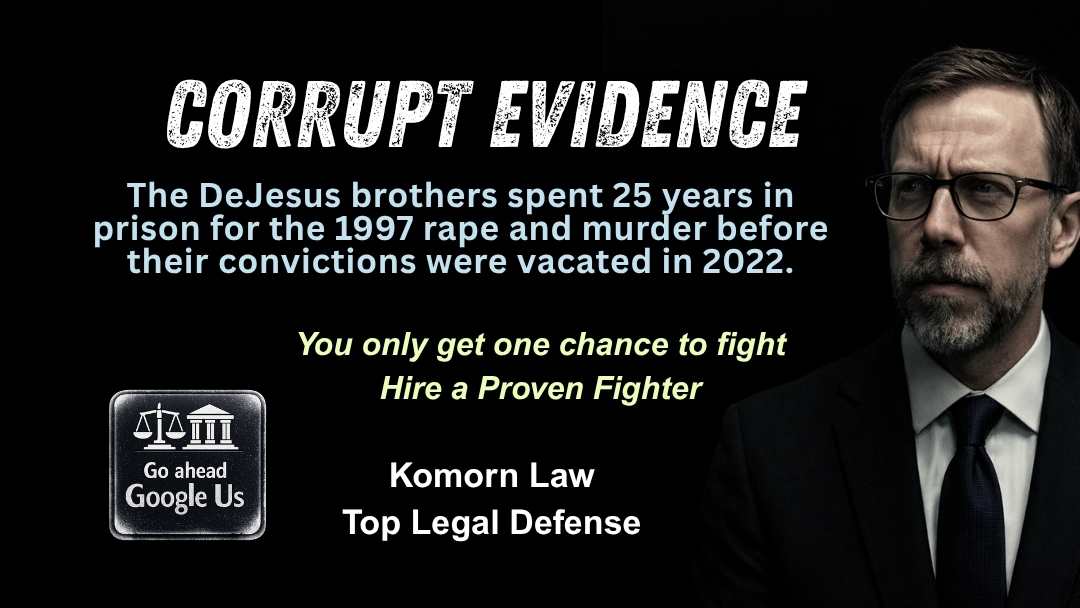
Judge Lets Wrongful Conviction Suit Proceed
Michigan Federal Judge Allows Wrongful Conviction Lawsuit to Proceed Against Former Detective and Polygraph Examiner
Overview
A Michigan federal judge has refused to grant summary judgment to two former law‑enforcement officials accused of fabricating and suppressing evidence that contributed to the wrongful convictions of George and Melvin DeJesus—brothers who spent 25 years in prison for a 1997 rape and murder they did not commit.
In a detailed opinion, U.S. District Judge Shalina D. Kumar found that the record contains sufficient evidence for a jury to determine whether retired Oakland County Sheriff’s Detective William Harvey and former Michigan State Police polygraph examiner Chester Romatowski engaged in unconstitutional conduct that led to the brothers’ convictions. The ruling allows the brothers’ civil rights lawsuit to move forward on claims of fabrication of evidence, Brady violations, malicious prosecution, and civil conspiracy.
Legal Background
The DeJesus brothers were convicted of the rape and murder of their neighbor, Margaret Midkiff, and sentenced to life without parole. Their convictions were vacated in March 2022 after the Michigan Attorney General’s Conviction Integrity Unit uncovered significant new evidence, including additional alibi support, concerns about the polygraph analysis used to validate the prosecution’s key witness, and proof that the witness—Brandon Gohagen—had committed a similar rape and murder just months before Midkiff’s death.
According to the court’s opinion, Gohagen told investigators that he raped Midkiff under pressure from the DeJesus brothers and that the brothers killed her. As part of a plea agreement, Gohagen was required to take a polygraph examination to verify his account. Although the polygraph results were actually inconclusive, prosecutors were told that he had passed.
The brothers now allege that Romatowski falsified the polygraph report to make Gohagen appear truthful and that Harvey suppressed handwritten notes from 1995 witness interviews that supported the brothers’ alibis and could have implicated Gohagen instead.
Key Issues Before the Court
Judge Kumar identified several factual disputes that must be resolved by a jury:
1. Alleged Fabrication of the Polygraph Report
The court found that the brothers presented expert evidence showing that the polygraph conclusion was “unquestionably at odds with any accepted numerical evaluation methods” and that the error was so fundamental it “strongly suggests that the test result was deliberately misrepresented.”
Although the polygraph itself was never shown to the jury during the criminal trial, testimony from the original prosecutor indicated that the prosecution would not have proceeded without assurance that Gohagen was telling the truth. Judge Kumar held that a reasonable jury could conclude the allegedly falsified report was essential to the charging decision.
2. Alleged Suppression of Exculpatory Notes
The brothers also claim that Harvey failed to disclose handwritten notes from 1995 witness interviews that supported their alibis and could have been used to charge Gohagen. These notes were later discovered in the Oakland County Sheriff’s Office file.
Judge Kumar found that the circumstantial evidence was sufficient for a jury to infer that Harvey received and reviewed the notes when his office assumed responsibility for the case. This supports a viable Brady claim for suppression of exculpatory evidence.
3. Malicious Prosecution Claims
The court allowed both federal and state malicious prosecution claims to proceed. Judge Kumar emphasized that there was no physical evidence linking the brothers to the crime and that Gohagen’s testimony was the only evidence implicating them.
Given the disputes over the polygraph report and the withheld notes, the court found that a jury must determine whether probable cause existed and whether the defendants improperly influenced the decision to prosecute.
4. Civil Conspiracy
The defendants argued that plaintiffs had already agreed to dismiss their civil conspiracy claim. The court rejected this argument, noting that no formal stipulation had ever been entered. The claim therefore remains active.
5. Qualified Immunity
Judge Kumar held that neither defendant is entitled to qualified immunity. By the 1990s, it was clearly established that law‑enforcement officials may not fabricate incriminating evidence or withhold exculpatory material. The court concluded that the brothers’ allegations, if proven, would constitute violations of clearly established constitutional rights.
Impact and Implications
The ruling underscores the judiciary’s willingness to scrutinize alleged misconduct in historical wrongful conviction cases, particularly where the prosecution relied heavily on a single witness whose credibility was bolstered by questionable investigative practices.
The opinion also highlights the significance of the Michigan Attorney General’s Conviction Integrity Unit, which uncovered evidence that ultimately led to the brothers’ exoneration. Among the most striking revelations was that Gohagen had been convicted in 2017 for a rape and murder committed 11 months before Midkiff’s death—an offense bearing “a striking resemblance” to the crime for which the DeJesus brothers were wrongfully convicted.
The court’s decision ensures that a jury will evaluate whether the defendants’ actions contributed to the brothers’ wrongful imprisonment and whether they should be held liable for the decades of liberty the brothers lost.
What Comes Next
A trial date has not yet been set. Counsel for the DeJesus brothers expressed relief that the case will proceed, emphasizing the importance of accountability after the brothers spent 25 years incarcerated for a crime they did not commit. Defense counsel did not immediately respond to requests for comment.
The case is DeJesus et al. v. Harvey et al., No. 2:22‑cv‑12879, pending in the U.S. District Court for the Eastern District of Michigan.
FAQs
What is the basis of the lawsuit? The brothers allege that a detective and a polygraph examiner fabricated and suppressed evidence that led to their wrongful convictions.
Why is the polygraph report significant? Although never shown to the jury, prosecutors testified that they would not have proceeded without believing Gohagen had passed the exam.
What evidence was allegedly withheld? Handwritten notes from 1995 witness interviews that supported the brothers’ alibis and could have implicated Gohagen.
Why did the court deny qualified immunity? Because by the 1990s it was clearly established that officials cannot fabricate evidence or withhold exculpatory material.
What happens next? The case proceeds toward trial, where a jury will determine whether the defendants’ actions caused the wrongful convictions.
Komorn Law, founded in 1993, brings decades of seasoned experience to Michigan’s most complex criminal and regulatory matters, including the evolving cannabis framework from the MMMA to today’s MRTMA landscape. The firm represents clients facing controlled‑substance offenses, DUI and drug‑related driving charges, firearm violations, property crimes, resisting or obstructing, and the most serious allegations such as manslaughter and homicide. With a proven record in courts across Michigan and the federal system, Komorn Law delivers strategic, relentless advocacy when the stakes are highest. To work with a firm that truly refuses to back down, call 248-357-2550.
More Articles
The Smell of Marijuana Alone is not Probable Cause to Search a Vehicle
Key Takeaways The Michigan Supreme Court’s 2024 decision in People v. Armstrong held that the odor of marijuana alone...
Probable Cause and the Smell of Marijuana
Probable Cause and Marijuana Odor: Post ‑ Armstrong Search StrategiesThis article analyzes the legal landscape for...
Traffic Stops and Cannabis – What Do Prosecutors Look For?
This article is about what prosecutors and law enforcement commonly rely on during traffic stops involving cannabis in...
More

3‑D Printed Marijuana Breathalyzer Prototype
Key Takeaways 2021 NIJ research found that THC levels in blood, urine, or oral fluid do not correlate with impairment, and field sobriety tests fail to detect cannabis intoxication. 2023 VCU research (DOJ‑funded) began developing a colorimetric THC breathalyzer...
Michigan Self‑Defense – Can you Really Stand your Ground?
Overview Michigan’s Self‑Defense Act (MCL 780.971–780.974) establishes when a person may lawfully use force—including deadly force—to defend themselves or another. The statute eliminates the duty to retreat in most situations and provides broad protections for...
Defining Entrapment by Estoppel
Summary Entrapment by estoppel is a defense that applies when a government official tells someone that certain conduct is legal, and the person reasonably relies on that assurance, only to be prosecuted later. It is rooted in due process, not in traditional entrapment...
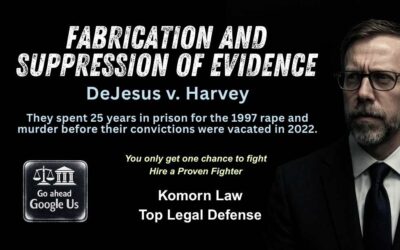
Fabricating and Suppressing Evidence Lawsuit (DeJesus v. Harvey)
Michigan Federal Judge Allows Wrongful Conviction Lawsuit to Proceed Against Former Detective and Polygraph ExaminerOverview A Michigan federal judge has refused to grant summary judgment to two former law‑enforcement officials accused of fabricating and suppressing...
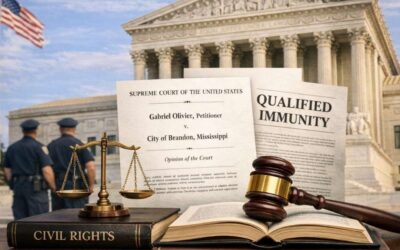
Supreme Court Clarifies Qualified Immunity Standard
United States Supreme Court issued a unanimous 9–0 decision in Gabriel Olivier v. City of Brandon, MississippiKey Takeaways The Supreme Court issued a unanimous 9–0 decision clarifying how courts must evaluate “clearly established law” in qualified immunity cases. The...
Judge Lets Wrongful Conviction Suit Proceed
Michigan Federal Judge Allows Wrongful Conviction Lawsuit to Proceed Against Former Detective and Polygraph ExaminerOverview A Michigan federal judge has refused to grant summary judgment to two former law‑enforcement officials accused of fabricating and suppressing...