
What to Expect at Your Preliminary Examination

What to Expect at Your Preliminary Examination

Michigan Preliminary Exams

 The Strategic Gatekeeper
in Felony Defense

A Guide to One of the Most Important Early Stages in a Felony Case

Summary

A preliminary examination (“prelim”) is the first major evidentiary hearing in a Michigan felony case. It is where a district court judge decides whether the prosecution has shown probable cause—a very low standard—that a crime occurred and that the defendant may have committed it. A bindover is the most common outcome, but the hearing remains strategically valuable. It allows the defense to cross‑examine witnesses, challenge weak evidence, preserve constitutional issues, and begin shaping the case long before trial.

Background

Every Michigan felony begins in district court. Before a case can move to circuit court, the prosecutor must present enough evidence to justify continuing the prosecution. At the preliminary exam, the judge must answer two questions:

  • Was a crime committed?

  • Is there probable cause to believe the defendant committed it?

If the answer to both is yes, the case is bound over to circuit court. If not, charges may be dismissed or reduced.

The standard of proof at this stage is probable cause, which is dramatically lower than the “beyond a reasonable doubt” standard required at trial. The uploaded document illustrates this difference by comparing probable cause to “approximately 3 on a scale of 0–100,” versus “90–93” for trial—an analogy meant only to show how low the bar is.

Opinions

From a defense perspective, the preliminary exam is one of the most important early opportunities to shape the case. Even when a bindover is expected, the hearing allows counsel to:

  • Cross‑examine witnesses under oath

  • Expose inconsistencies or gaps in memory

  • Challenge questionable evidence, including search‑and‑seizure issues

  • Lock in sworn testimony for impeachment at trial

  • Force the prosecution to reveal details not found in police reports

  • Build a record for later motions, including motions to suppress or quash the bindover

For example, in cases involving controlled substances—including marijuana—testimony at the prelim may reveal whether evidence was seized lawfully or whether statutory defenses might apply later.

What’s at Stake

The preliminary exam can influence the direction of the entire case:

  • Case Bound Over: The most common result; the case proceeds to circuit court.

  • Charges Dismissed: Rare, but possible if probable cause is not established.

  • Charges Reduced: The judge may find probable cause only for a lesser offense.

  • Adjournment: Occurs when witnesses are unavailable or discovery is incomplete.

  • Plea Agreement: Sometimes reached before or during the hearing.

A bindover is not a finding of guilt. It simply means the prosecution met the minimal threshold required to continue the case.

In Closing

The preliminary examination is not about winning or losing the case—it is about building the defense. At Komorn Law, the goal is to leave the hearing with a strong record: cross‑examination that exposes weaknesses, objections that preserve constitutional issues, and testimony that can be used later to challenge the prosecution’s case. As the document states, “The preliminary exam is the beginning of your defense — and we treat it with the seriousness it deserves.”

FAQs

Q: Is the preliminary exam the same as a trial?

A: No. The judge is not deciding guilt—only whether probable cause exists.

Q: Will I have to testify?

A: Almost never. Defendants typically do not testify at prelims.

Q: Can charges be dismissed at this stage?

A: Yes, but it is uncommon. Dismissal occurs only when the prosecution fails to meet the low probable‑cause standard.

Q: What if the police search was illegal?

A: Your attorney can begin raising Fourth Amendment issues at the prelim, preserving them for later motions.

Q: Why hold the prelim if the case will likely be bound over?

A: Because it provides sworn testimony, discovery advantages, and opportunities to challenge evidence that may shape the entire defense strategy.

Related Links & Sources

  • Michigan Court Rules – Preliminary Examinations (MCR 6.110)

  • Michigan Compiled Laws – Criminal Procedure

  • Michigan Controlled Substances Statutes (including PHC and MRTMA references)

  • Komorn Law PLLC – Criminal Defense Resources

Komorn Law, founded in 1993, brings decades of seasoned experience to Michigan’s most complex criminal and regulatory matters, including the evolving cannabis framework from the MMMA to today’s MRTMA landscape. The firm represents clients facing controlled‑substance offenses, DUI and drug‑related driving charges, firearm violations, property crimes, resisting or obstructing, and the most serious allegations such as manslaughter and homicide. With a proven record in courts across Michigan and the federal system, Komorn Law delivers strategic, relentless advocacy when the stakes are highest. To work with a firm that truly refuses to back down, call  248-357-2550

More Articles

More

Motion in Limine vs Motion to Suppress

Motion in Limine vs Motion to Suppress

Defininition and Explaination - Motion in LimineOverview Although both a motion in limine and a motion to suppress deal with evidence, they serve very different purposes in Michigan criminal cases. Understanding the distinction is critical because each motion affects...
read more
A Motion in Limine – What does it Mean?

A Motion in Limine – What does it Mean?

Defininition and Explaination - Motion in LimineA motion in limine is a pretrial request asking the judge to exclude (or sometimes allow) specific evidence before the jury ever hears it. It’s one of the most important evidentiary tools in both criminal and civil...

read more
What is a Franks Hearing?

What is a Franks Hearing?

What is a Frank's Hearing?A Franks hearing is a critical legal tool used when a defendant claims that police lied, exaggerated, or recklessly disregarded the truth in a search warrant affidavit. When law enforcement places its hand on the Constitution, the law...

read more
Shadow cash is corrupting Michigan courtrooms

Shadow cash is corrupting Michigan courtrooms

The Shadow Cash Threat: Protecting the Integrity of Michigan Courtrooms In recent months, a spotlight has been cast on a hidden influence within the Michigan legal system: "shadow cash." This term refers to third-party litigation funding (TPLF), where outside...


read more
The Day Michigan’s Sentencing Guidelines Changed (People v Lockridge)

The Day Michigan’s Sentencing Guidelines Changed (People v Lockridge)

People v Lockridge, 498 Mich 358 (2015)

A Guide to One of the Most Important Early Stages in a Felony Case

Summary: The Day Michigan’s Sentencing Guidelines Changed

In 2015, the Michigan Supreme Court handed down a landmark decision in People v. Lockridge, 498 Mich 358 (2015), fundamentally altering the state’s criminal sentencing landscape. For decades, Michigan operated under a “mandatory” sentencing guideline system. Lockridge struck down the mandatory nature of these guidelines, ruling that they violated the Sixth Amendment of the U.S. Constitution. Today, while the guidelines remain a critical tool for judges, they are advisory rather than compulsory, granting trial courts significantly more discretion in determining a defendant’s fate.

Background

The Conflict Between Judges and Juries. The core of the Lockridge dispute lies in the Sixth Amendment right to a jury trial. Historically, the U.S. Supreme Court established in cases like Apprendi v. New Jersey and Alleyne v. United States that any fact that increases the penalty for a crime—beyond the prescribed statutory maximum or mandatory minimum—must be submitted to a jury and proved beyond a reasonable doubt.

In Michigan, the legislative sentencing guidelines required judges to “score” various variables (Offense Variables or OVs). Many of these variables were based on facts found by the judge during sentencing, not by the jury during the trial. Because these scores mandated a specific minimum sentence range, the Michigan system was increasingly seen as unconstitutional under federal precedent.

Historical Factual Case Details

The case originated with Kimani Lockridge, who was convicted by a jury of third-degree home invasion. During sentencing, the trial judge scored several Offense Variables, including OV 4 (psychological injury to a victim) and OV 9 (number of victims).

The jury had not made specific findings regarding these psychological injuries or the specific number of victims; the judge determined these facts independently. These scores pushed Lockridge’s sentencing guidelines into a higher bracket, essentially mandating a longer minimum prison term than would have been required based solely on the jury’s verdict. Lockridge challenged this, arguing that his constitutional rights were violated because a judge, not a jury, found the facts that increased his mandatory minimum sentence.

What’s at Stake

Judicial Discretion vs. Legislative Control

Prior to Lockridge, Michigan’s sentencing system was designed to ensure uniformity—the legislature wanted to make sure that two people committing the same crime in different counties received similar sentences.

However, the “mandatory” nature of this uniformity came at a cost. It stripped judges of the ability to look at the unique nuances of a case if those nuances fell outside the rigid grid. The stakes in Lockridge involved the balance of power:

  • For Defendants: It was about the right to have a jury of peers decide every fact that could lead to more prison time.

  • For the State: It was about maintaining a predictable, structured sentencing system that prevented “rogue” sentencing.

The Court’s Opinion

In a majority opinion authored by Justice Robert P. Young Jr., the Michigan Supreme Court held that the state’s sentencing guidelines were unconstitutional to the extent that they required a judge to increase a mandatory minimum sentence based on facts not found by a jury or admitted by the defendant.

To remedy this, the Court did not throw out the guidelines entirely. Instead, they performed “judicial surgery.” They severed the provision of the law that made the guidelines mandatory. The Court ruled that:

  1. Guidelines are now advisory.

  2. Sentencing courts must still “consult” the guidelines and take them into account.

  3. A sentence that departs from the guidelines is now reviewed by appellate courts for “reasonableness.”

In Closing: The New Normal

People v. Lockridge represents one of the most significant shifts in Michigan criminal law in the last 20 years. While the guidelines still provide a “starting point” for every sentence, the “mandatory” shackles have been removed. This gives defense attorneys more room to argue for leniency and gives judges the freedom to impose sentences they believe truly fit the crime and the individual—provided they can justify the result as “reasonable.”

FAQ: Understanding the Impact of Lockridge

1. Does Lockridge mean judges can ignore the sentencing guidelines? No. Judges are still legally required to calculate and “consult” the guidelines. However, they are no longer strictly bound to stay within the calculated range if they believe a different sentence is more appropriate.

2. Can a judge still use facts not found by a jury? Yes. Under Lockridge, judges can still consider “judge-found facts” to score the guidelines, but because the guidelines are now advisory rather than mandatory, this no longer violates the Sixth Amendment.

3. What happens if a judge goes above the suggested guideline range? If a judge “departs” from the guidelines (either upward or downward), the appellate courts will review the sentence to determine if it is “reasonable.” The judge must provide substantial reasons on the record for the departure.

4. Did Lockridge apply to people already in prison? The ruling applied to cases that were still “pending on direct review” at the time the decision was released. It generally does not allow for the reopening of old cases where the appeals had already been exhausted.

5. How has this changed the work of defense attorneys? It has increased the importance of “sentencing advocacy.” Lawyers now focus more on “reasonableness” arguments, highlighting personal history, rehabilitation, and specific mitigating factors that the rigid guideline grid might have ignored.

Komorn Law, founded in 1993, brings decades of seasoned experience to Michigan’s most complex criminal and regulatory matters, including the evolving cannabis framework from the MMMA to today’s MRTMA landscape. The firm represents clients facing controlled‑substance offenses, DUI and drug‑related driving charges, firearm violations, property crimes, resisting or obstructing, and the most serious allegations such as manslaughter and homicide. With a proven record in courts across Michigan and the federal system, Komorn Law delivers strategic, relentless advocacy when the stakes are highest. To work with a firm that truly refuses to back down, call  248-357-2550

More Articles

More

Motion in Limine vs Motion to Suppress

Motion in Limine vs Motion to Suppress

Defininition and Explaination - Motion in LimineOverview Although both a motion in limine and a motion to suppress deal with evidence, they serve very different purposes in Michigan criminal cases. Understanding the distinction is critical because each motion affects...

read more
A Motion in Limine – What does it Mean?

A Motion in Limine – What does it Mean?

Defininition and Explaination - Motion in LimineA motion in limine is a pretrial request asking the judge to exclude (or sometimes allow) specific evidence before the jury ever hears it. It’s one of the most important evidentiary tools in both criminal and civil...

read more
What is a Franks Hearing?

What is a Franks Hearing?

What is a Frank's Hearing?A Franks hearing is a critical legal tool used when a defendant claims that police lied, exaggerated, or recklessly disregarded the truth in a search warrant affidavit. When law enforcement places its hand on the Constitution, the law...

read more
Shadow cash is corrupting Michigan courtrooms

Shadow cash is corrupting Michigan courtrooms

The Shadow Cash Threat: Protecting the Integrity of Michigan Courtrooms In recent months, a spotlight has been cast on a hidden influence within the Michigan legal system: "shadow cash." This term refers to third-party litigation funding (TPLF), where outside...

read more
Michigan Court of Appeals Vacates Sentences in OWI‑3rd and Prisoner‑in‑Possession Case

Michigan Court of Appeals Vacates Sentences in OWI‑3rd and Prisoner‑in‑Possession Case

Michigan Preliminary Exams

 The Strategic Gatekeeper
in Felony Defense

Convictions Upheld, But Panel Finds Sentences “Disproportionate” and Lacking Adequate Explanation

Cheboygan Circuit Court
LC No. 20-006006-FH

Summary

A divided Michigan Court of Appeals panel upheld the convictions of a Cheboygan man for Operating While Intoxicated – Third Offense and Prisoner in Possession of a Weapon, but vacated both sentences after finding they were grossly disproportionate to the underlying conduct. The majority held that the trial court failed to justify a 25‑year minimum sentence for a nonviolent OWI‑3rd offense and imposed a within‑guidelines sentence for the weapon charge without properly considering mitigating factors. The case has been remanded for resentencing.

Background

The consolidated appeals in People v. Brcic involved two separate convictions:

  • A 2020 OWI‑3rd offense, for which the defendant, Steven Russell Brcic, received a 25 to 50‑year sentence.

  • A prisoner‑in‑possession of a weapon (PPW) conviction arising while Brcic awaited trial in county jail.

The sentencing judge justified the extreme upward departure by comparing Brcic’s repeated drunk‑driving behavior to that of habitual violent offenders, asserting that such offenders receive 25‑year minimums. The Court of Appeals majority rejected that analogy, noting that Michigan law distinguishes between risk‑creating conduct and actual violence.

On July 14, 2020, Officer Noah Morse responded to a larceny call at a Walmart in Cheboygan County. A store employee asked him to check on Steven Russell Brcic, who appeared intoxicated and unsteady near the bottle return area. Morse found Brcic sitting in the driver’s seat of a Chevrolet Tahoe with an open beer can. After being told not to drive, Brcic agreed to wait for a ride — but surveillance footage soon showed he drove away.

Shortly afterward, a nearby resident heard a crash. Police found the Tahoe flipped on its side near a tree, with no one inside. Three minors reported seeing the same man — later identified as Brcic — driving recklessly moments before the crash, swerving toward them and yelling out the window. Witnesses and an EMT saw a man matching his description limping toward a river.

When officers approached, Brcic ignored commands, walked into the river, and swam backstroke for more than 15 minutes while officers followed along the shore. He eventually climbed onto a police boat and was taken for medical evaluation. A hospital blood draw showed a 0.2266 BAC. He was arrested and charged with OWI‑3rd, resisting/obstructing, driving with a suspended license, failure to report an accident, and open container violations, all enhanced as a fourth‑offense habitual offender.

While jailed awaiting trial, Brcic received a disposable razor under jail policy. Officers later found him in his cell bleeding heavily from self‑inflicted injuries. The razor blade had been removed from its housing, and the blade was recovered from the toilet. He was charged with Prisoner in Possession of a Weapon (PPW) as a habitual offender. A jury convicted him, and he received a 58‑month to 25‑year sentence — the top of the guideline range.

Separately, Brcic challenged a jailhouse blood draw via suppression motion. The trial court granted suppression, and the prosecution appealed. During the interlocutory appeal, Brcic remained incarcerated. After the Michigan Department of Corrections issued a 180‑day speedy‑trial notice, trial was scheduled for March 2023. Brcic moved to dismiss for speedy‑trial violations, but the court denied the motion, citing the appellate stay and COVID‑19‑related delays.

At trial in March 2023, a jury convicted him of OWI‑3rd and all related charges. The sentencing guidelines recommended 19–76 months, but the trial court imposed a 25‑ to 50‑year sentence, citing his extensive drunk‑driving history, danger to the community, and analogy to habitual violent‑offender statutes.

These consolidated appeals followed.

Opinions

The majority—Judge Adrienne Young and Judge Daniel Korobkin—affirmed both convictions but found the sentences legally unsound.

On the OWI‑3rd Sentence

The trial court imposed a 25‑year minimum, nearly four times the upper end of the recommended minimum guidelines range (19–76 months). The majority held that:

  • The trial court failed to articulate adequate reasons for such an extreme departure.

  • The analogy to violent habitual offenders was misplaced, because OWI‑3rd is a nonviolent offense, even if high‑risk.

  • The sentence implicitly equated Brcic’s conduct with violent recidivism, which Michigan law does not support.

On the PPW Sentence

Although the PPW sentence fell within the guidelines, the majority found it still disproportionate because:

  • The trial court did not meaningfully address mitigating factors, including the mental‑health crisis during which the incident occurred.

  • A within‑guidelines sentence is presumptively proportional, but that presumption can be overcome—something the majority found Brcic had done.

As Judge Young wrote:

“Because Brcic’s within‑guidelines sentence for PPW is disproportionate and his OWI‑3rd sentence…is also disproportionate, we vacate his sentences and remand for resentencing.”

Speedy Trial Issue

Brcic also argued that his right to a speedy trial was violated. The panel disagreed, noting that delays were largely attributable to the COVID‑19 pandemic, and the trial was ultimately scheduled after the Department of Corrections issued a speedy‑trial notice.

Dissent

Judge Matthew Ackerman concurred in part but dissented from the decision to vacate the sentences. He argued that:

  • Brcic’s repeated drunk‑driving history justified the trial court’s harsh approach.

  • The majority’s decision disrupts the balance between legislative sentencing policy and judicial discretion.

  • The ruling imposes new scrutiny on upward departures and undermines the presumption of proportionality for within‑guidelines sentences.

Ackerman described the case as part of a broader “tug‑of‑war” over sentencing authority following People v. Lockridge.

What’s at Stake

This decision reinforces several key principles in Michigan sentencing law:

  • Extreme upward departures require clear, specific, and compelling justification.

  • Nonviolent habitual conduct cannot be treated as equivalent to violent recidivism without explanation.

  • Within‑guidelines sentences are not immune from proportionality review.

  • Mental‑health context and other mitigating factors must be meaningfully considered.

The case now returns to the trial court for a full resentencing.

In Closing

The Court of Appeals’ ruling in People v. Brcic underscores the judiciary’s ongoing effort to ensure that Michigan sentences remain proportionate, individualized, and grounded in law, even when dealing with repeat offenders. While the convictions stand, the sentencing court must now revisit both penalties with a more rigorous and transparent analysis.

FAQs

Q: Did the Court of Appeals overturn the convictions?

A: No. Both convictions were affirmed. Only the sentences were vacated.

Q: Why was the 25‑year OWI‑3rd sentence struck down?

A: The trial court failed to justify the extreme upward departure and improperly analogized the defendant to violent habitual offenders.

Q: Can a within‑guidelines sentence be disproportionate?

A: Yes. The presumption of proportionality can be overcome if the sentence does not fit the circumstances.

Q: What happens next?

A: The case is remanded to the trial court for resentencing on both convictions.

Q: Did the pandemic delays violate the defendant’s speedy‑trial rights?

A: No. The panel found the delays justified under the circumstances.

Komorn Law, founded in 1993, brings decades of seasoned experience to Michigan’s most complex criminal and regulatory matters, including the evolving cannabis framework from the MMMA to today’s MRTMA landscape. The firm represents clients facing controlled‑substance offenses, DUI and drug‑related driving charges, firearm violations, property crimes, resisting or obstructing, and the most serious allegations such as manslaughter and homicide. With a proven record in courts across Michigan and the federal system, Komorn Law delivers strategic, relentless advocacy when the stakes are highest. To work with a firm that truly refuses to back down, call  248-357-2550

More Articles

More

Motion in Limine vs Motion to Suppress

Motion in Limine vs Motion to Suppress

Defininition and Explaination - Motion in LimineOverview Although both a motion in limine and a motion to suppress deal with evidence, they serve very different purposes in Michigan criminal cases. Understanding the distinction is critical because each motion affects...

read more
A Motion in Limine – What does it Mean?

A Motion in Limine – What does it Mean?

Defininition and Explaination - Motion in LimineA motion in limine is a pretrial request asking the judge to exclude (or sometimes allow) specific evidence before the jury ever hears it. It’s one of the most important evidentiary tools in both criminal and civil...

read more
What is a Franks Hearing?

What is a Franks Hearing?

What is a Frank's Hearing?A Franks hearing is a critical legal tool used when a defendant claims that police lied, exaggerated, or recklessly disregarded the truth in a search warrant affidavit. When law enforcement places its hand on the Constitution, the law...

read more
Shadow cash is corrupting Michigan courtrooms

Shadow cash is corrupting Michigan courtrooms

The Shadow Cash Threat: Protecting the Integrity of Michigan Courtrooms In recent months, a spotlight has been cast on a hidden influence within the Michigan legal system: "shadow cash." This term refers to third-party litigation funding (TPLF), where outside...

read more
What is a Preliminary Exam?

What is a Preliminary Exam?

Michigan Preliminary Examinations

 The Strategic Gatekeeper
in Felony Defense

The Preliminary Examination as the First Line of Defense

In Michigan felony cases, the preliminary examination (PE) is the first—and often most decisive—opportunity to challenge the government’s case. Before a felony can advance to Circuit Court, the prosecution must show that a crime occurred and that probable cause exists to believe the defendant committed it. This hearing is the jurisdictional checkpoint that prevents unsupported or overcharged cases from moving forward.

Because the PE is designed as a screening mechanism, it becomes a critical moment for defense counsel to expose weaknesses, test the prosecution’s theory, and force the state to justify its charges under oath.

The Low Probable Cause Standard and Its Tactical Impact

The probable cause standard is intentionally minimal. It requires only a reasonable belief—not certainty, not even likelihood—that the defendant may have committed the offense. While a trial demands proof beyond a reasonable doubt, the PE requires only a fraction of that showing.

Magistrates are instructed to bind a case over unless the evidence is so unreliable or contradictory that no reasonable person could believe guilt is possible. This means close calls favor the prosecution. For the defense, this reality makes preparation and strategy essential. The low standard does not diminish the importance of the hearing—it heightens it.

Why Defense Should Almost Always Hold the PE

The document outlines several strategic advantages to holding the examination:

Locking in Testimony

Witnesses are often unprepared, making the PE the best opportunity to secure sworn statements for later impeachment.

Real Discovery

Police reports are “curated fiction.” The PE forces the prosecution to reveal actual evidence and witness performance.

Preserving Favorable Testimony

If a witness is recanting or wavering, the PE transcript preserves their statements even if they later disappear or change their story.

Assessing Witness Demeanor

The PE provides the first real look at how witnesses handle pressure.

The document also warns of risks—such as locking in damaging testimony or enabling prosecutors to add charges under People v Hunt—but concludes that for a specialist, the benefits overwhelmingly favor holding the exam.

Using the PE Transcript as a Strategic Weapon

Once the case reaches Circuit Court, the PE transcript becomes the backbone of post‑bindover litigation.

Motion to Quash

A magistrate’s factual findings are reviewed for abuse of discretion (People v Talley), while legal conclusions are reviewed de novo (People v Stone). This gives defense counsel a second chance to challenge weak evidence.

Motion to Suppress

Cross‑examination at the PE can establish the factual foundation for Fourth or Fifth Amendment challenges. The document notes that counsel should use the officer’s own testimony to show the defendant was not free to leave or was questioned without Miranda warnings.

The transcript reveals:

  • Inconsistencies between witness accounts

  • Missing elements of the offense

  • Hearsay issues

  • Weaknesses in the prosecution’s theory

  • Opportunities for impeachment

This early record often shapes the entire defense strategy.

Procedural Rules That Can Make or Break the Case

The PE is governed by strict jurisdictional timelines. The Probable Cause Conference must occur within 7–14 days of arraignment, and the PE must follow within 5–7 days unless “good cause” is shown. “Simple docket congestion” is not good cause and can justify dismissal.

The document also highlights MCL 766.11b, which allows lab and autopsy reports without live testimony—a rule upheld in People v Parker. Defense must object to preserve later challenges.

Outcomes and Final Recommendations

A PE typically ends in one of three results:

  • Bindover to Circuit Court

  • Reduction to a misdemeanor

  • Discharge for lack of probable cause

The document stresses that counsel must file a Motion to Quash immediately after receiving the transcript, citing People v Fleming, which holds that failing to challenge sufficiency in the trial court waives appellate review.

FAQs

What is the purpose of a preliminary examination?

It screens felony charges to ensure the prosecution has evidence of a crime and probable cause linking the defendant.

Is the probable cause standard high?

No. As the document notes, it is roughly a “3%” certainty threshold—far below the trial standard.

Should the defense waive the PE?

Generally no. The PE provides critical discovery, impeachment material, and strategic leverage.

Can the PE lead to additional charges?

Yes. Under People v Hunt, prosecutors may add charges if testimony supports them.

What happens if the magistrate makes a legal error?

Defense may file a Motion to Quash, which receives de novo review on legal issues.

Komorn Law, founded in 1993, brings decades of seasoned experience to Michigan’s most complex criminal and regulatory matters, including the evolving cannabis framework from the MMMA to today’s MRTMA landscape. The firm represents clients facing controlled‑substance offenses, DUI and drug‑related driving charges, firearm violations, property crimes, resisting or obstructing, and the most serious allegations such as manslaughter and homicide. With a proven record in courts across Michigan and the federal system, Komorn Law delivers strategic, relentless advocacy when the stakes are highest. To work with a firm that truly refuses to back down, call  248-357-2550

More Articles

More

Motion in Limine vs Motion to Suppress

Motion in Limine vs Motion to Suppress

Defininition and Explaination - Motion in LimineOverview Although both a motion in limine and a motion to suppress deal with evidence, they serve very different purposes in Michigan criminal cases. Understanding the distinction is critical because each motion affects...

read more
A Motion in Limine – What does it Mean?

A Motion in Limine – What does it Mean?

Defininition and Explaination - Motion in LimineA motion in limine is a pretrial request asking the judge to exclude (or sometimes allow) specific evidence before the jury ever hears it. It’s one of the most important evidentiary tools in both criminal and civil...

read more
What is a Franks Hearing?

What is a Franks Hearing?

What is a Frank's Hearing?A Franks hearing is a critical legal tool used when a defendant claims that police lied, exaggerated, or recklessly disregarded the truth in a search warrant affidavit. When law enforcement places its hand on the Constitution, the law...

read more
Shadow cash is corrupting Michigan courtrooms

Shadow cash is corrupting Michigan courtrooms

The Shadow Cash Threat: Protecting the Integrity of Michigan Courtrooms In recent months, a spotlight has been cast on a hidden influence within the Michigan legal system: "shadow cash." This term refers to third-party litigation funding (TPLF), where outside...

read more
Motion in Limine vs Motion to Suppress

Motion in Limine vs Motion to Suppress

Defininition and Explaination – Motion in Limine

Overview

Although both a motion in limine and a motion to suppress deal with evidence, they serve very different purposes in Michigan criminal cases. Understanding the distinction is critical because each motion affects the trial in its own way and relies on different legal standards. Komorn Law regularly litigates both types of motions to protect clients’ constitutional rights and prevent improper evidence from reaching the jury.

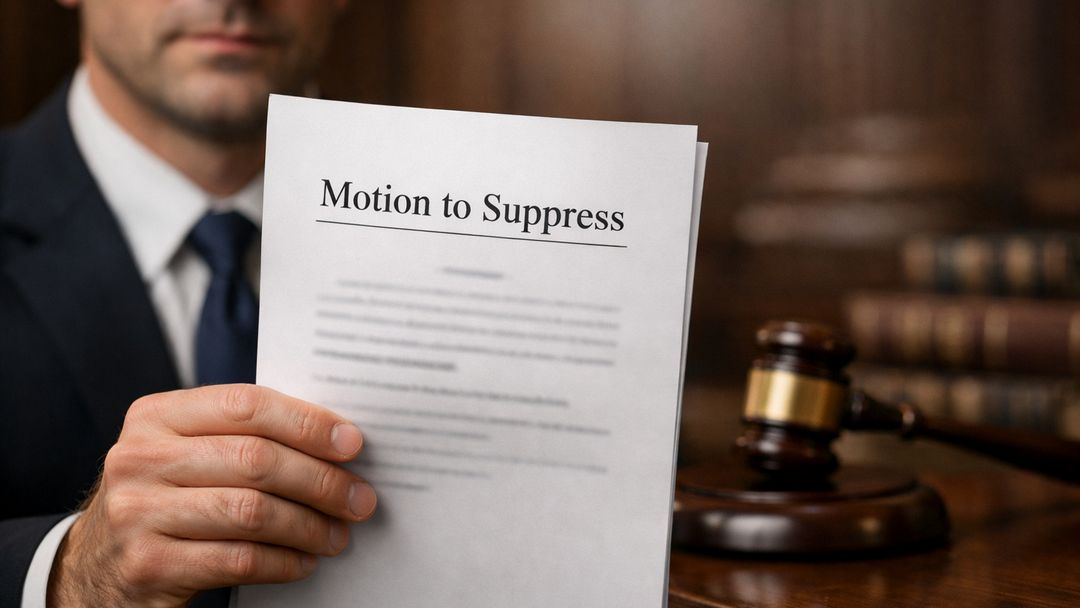
What Is a Motion to Suppress?

A motion to suppress asks the court to exclude evidence because it was obtained in violation of a defendant’s constitutional rights. These motions typically involve:

  • Fourth Amendment illegal searches or seizures
  • Fifth Amendment violations (e.g., Miranda issues)
  • Sixth Amendment right‑to‑counsel violations
  • Unlawful traffic stops
  • Invalid warrants
  • Coerced statements If the court grants a motion to suppress, the evidence is completely barred from trial because it was unlawfully obtained. See Mapp v. Ohio, 367 U.S. 643 (1961) (exclusionary rule).

What Is a Motion in Limine?

A motion in limine is a pretrial request asking the judge to decide whether certain evidence should be excluded or allowed before the jury hears it. Unlike a motion to suppress, it does not depend on constitutional violations. Instead, it focuses on the Michigan Rules of Evidence, such as:

  • MRE 401–403 (relevance and prejudice)

  • MRE 404(b) (other‑acts evidence)

  • MRE 702 (expert testimony) A motion in limine is about trial fairness, not police misconduct.

Key Differences Between the Two Motions

Although both motions can keep evidence out of trial, they differ in purpose, timing, and legal basis:

Issue Motion to Suppress Motion in Limine
Legal Basis Constitutional violations Michigan Rules of Evidence
Focus Police conduct Jury fairness & evidentiary rules
Timing Usually early in the case Typically right before trial
Effect Evidence excluded entirely Evidence excluded or limited at trial
Examples Illegal search, Miranda violation Prior bad acts, hearsay, prejudicial statements

A motion to suppress challenges how evidence was obtained. A motion in limine challenges whether the jury should hear it.

Why Both Motions Matter in Criminal Defense

Strategic use of both motions can dramatically change the outcome of a case. A successful motion to suppress may eliminate key evidence, forcing the prosecution to reduce or dismiss charges. A motion in limine can prevent the jury from hearing damaging, irrelevant, or inflammatory information. Together, they help ensure a fair trial and protect constitutional rights.

Since 1993, Komorn Law, PLLC has aggressively defended clients in Michigan courts, litigating motions to suppress, motions in limine, and complex constitutional issues. If you are facing criminal charges or need strategic pretrial advocacy, contact us at 248‑357‑2550 or visit > KomornLaw.com

FAQs

Q: Can a motion in limine exclude evidence that was illegally obtained?
A: No. That requires a motion to suppress based on constitutional grounds.

Q: Can both motions be filed in the same case?
A: Yes. Many cases involve both constitutional issues and evidentiary concerns.

Q: When is a motion to suppress usually filed?
A: Early in the case, often before the preliminary exam or shortly after discovery.

Q: Does a motion in limine apply only to the prosecution’s evidence?
A: No. Either side may file one to control what the jury hears.

Q: What happens if the prosecutor violates a granted motion in limine?
A: The judge may issue sanctions, strike testimony, or declare a mistrial.

More

What is a Preliminary Exam?

What is a Preliminary Exam?

Michigan Preliminary Examinations The Strategic Gatekeeper in Felony Defense The Preliminary Examination as the First Line of Defense In Michigan felony cases, the preliminary examination (PE) is the first—and often most decisive—opportunity to challenge the...

read more
What does Nolle Prosequi mean?

What does Nolle Prosequi mean?

What does Nolle Prosequi mean? Fatal Flaw In criminal cases, nolle prosequi may be employed when there is a significant weakness in the prosecution's case, when the prosecutor acknowledges an inability to prove the charges, or even when the prosecutor has lost...

read more
People v. Lukity, 460 Mich 484 (1999)

People v. Lukity, 460 Mich 484 (1999)

Case Summary The Michigan Supreme Court reversed the Court of Appeals and reinstated the defendant’s conviction for first-degree criminal sexual conduct against his fourteen‑year‑old daughter. The Court held that although one evidentiary error occurred, it was...

read more
Motion in Limine vs Motion to Suppress

Motion in Limine vs Motion to Suppress

Defininition and Explaination - Motion in LimineOverview Although both a motion in limine and a motion to suppress deal with evidence, they serve very different purposes in Michigan criminal cases. Understanding the distinction is critical because each motion affects...

read more
A Motion in Limine – What does it Mean?

A Motion in Limine – What does it Mean?

Defininition and Explaination - Motion in LimineA motion in limine is a pretrial request asking the judge to exclude (or sometimes allow) specific evidence before the jury ever hears it. It’s one of the most important evidentiary tools in both criminal and civil...

read more
What is a Franks Hearing?

What is a Franks Hearing?

What is a Frank's Hearing?A Franks hearing is a critical legal tool used when a defendant claims that police lied, exaggerated, or recklessly disregarded the truth in a search warrant affidavit. When law enforcement places its hand on the Constitution, the law...

read more
Shadow cash is corrupting Michigan courtrooms

Shadow cash is corrupting Michigan courtrooms

The Shadow Cash Threat: Protecting the Integrity of Michigan Courtrooms In recent months, a spotlight has been cast on a hidden influence within the Michigan legal system: "shadow cash." This term refers to third-party litigation funding (TPLF), where outside...

read more