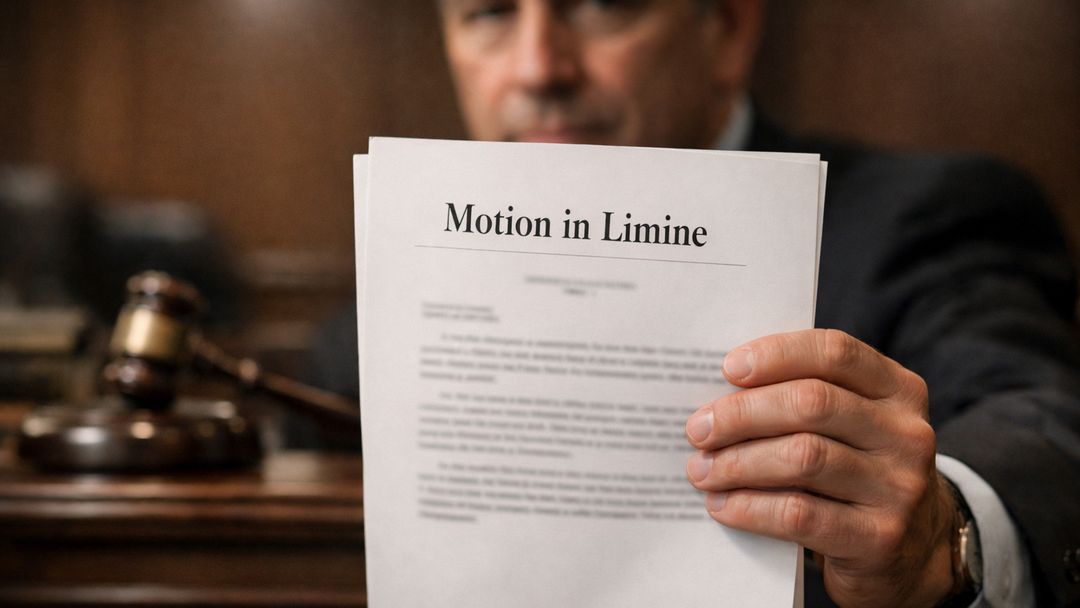
A Motion in Limine – What does it Mean?

A Motion in Limine – What does it Mean?

Defininition and Explaination – Motion in Limine

A motion in limine is a pretrial request asking the judge to exclude (or sometimes allow) specific evidence before the jury ever hears it. It’s one of the most important evidentiary tools in both criminal and civil litigation.

  • A motion in limine is filed before trial begins, usually at or before the final pretrial conference.

  • The phrase comes from Latin meaning “at the threshold” — because the issue is decided before the jury crosses the threshold into the courtroom.

  • Its purpose is to prevent the jury from being exposed to prejudicial, irrelevant, or inadmissible evidence that could unfairly influence the verdict.

  • The judge rules on the motion outside the presence of the jury.

Why Lawyers Use Motions in Limine

  • To exclude damaging evidence that the opposing party might try to introduce.

  • To avoid “bell that can’t be unrung” situations, where even a brief mention of improper evidence could taint the jury.

  • To streamline the trial by resolving evidentiary disputes in advance.

  • To preserve issues for appeal by creating a clear record of what was objected to and why.

What a Motion in Limine Can Address

Common targets include:

  • Prior criminal history

  • Allegations not supported by admissible evidence

  • Hearsay statements

  • Speculative or inflammatory claims

  • Irrelevant personal information

  • Improper expert testimony

  • References to plea negotiations or insurance coverage

A motion in limine can also be affirmative, asking the court to allow certain evidence that might otherwise be challenged.

How Courts Handle These Motions

  • The judge reviews the motion, any response, and applicable rules of evidence.

  • The ruling may be:

    • Granted (evidence excluded)

    • Denied (evidence allowed)

    • Reserved (judge waits to see how the evidence comes up at trial)

  • If granted, no one may mention the excluded evidence in front of the jury without first obtaining permission outside the jury’s presence.

Why It Matters

A motion in limine can dramatically shape the trial. Keeping prejudicial or irrelevant information away from the jury protects the defendant’s right to a fair trial and keeps the focus on legally admissible evidence.

If you want, I can turn this into a full website article with headings, FAQs, citations, SEO meta description, and schema — just say the word.

Common Issues Addressed in Motions in Limine

Attorneys use motions in limine to challenge or pre‑approve evidence such as:

  • Prior criminal history or bad acts (MRE 404(b))

  • Hearsay statements (MRE 801–803)

  • Speculative or inflammatory allegations

  • Improper expert testimony (MRE 702)

  • References to plea negotiations (MRE 410)

  • Insurance coverage or settlement discussions

  • Irrelevant personal information A motion in limine may also be affirmative, asking the court to allow evidence that may otherwise be challenged.

How Michigan Courts Decide These Motions

Judges typically hear motions in limine at the final pretrial conference or immediately before trial. The court may:

  • Grant the motion (evidence excluded)

  • Deny the motion (evidence allowed)

  • Reserve ruling until the evidence arises at trial If granted, the parties must not reference the excluded evidence in front of the jury without first obtaining permission outside the jury’s presence. Violating a granted motion in limine can result in a mistrial or sanctions.

Impact on Trial Strategy

A well‑crafted motion in limine can dramatically shape the trial. By controlling what the jury hears, attorneys can focus the case on admissible, relevant evidence and prevent the opposing party from injecting improper or prejudicial material. In criminal cases, these motions are often essential to protecting the defendant’s constitutional rights and ensuring a fair trial.

Since 1993, Komorn Law, PLLC has aggressively defended clients in Michigan courts, from district court to the federal level. Our firm has extensive experience litigating evidentiary issues, including motions in limine, suppression motions, and constitutional challenges. If you are facing criminal charges or need strategic pretrial advocacy, contact us at 248‑357‑2550 or visit > KomornLaw.com

Motion in Limine FAQs

Q: What does “motion in limine” literally mean?
A: It means “at the threshold,” referring to decisions made before the trial begins.

Q: When is a motion in limine filed?
A: Typically before trial, often at or before the final pretrial conference.

Q: Is a motion in limine the same as an objection?
A: No. An objection happens during trial; a motion in limine resolves evidentiary issues before trial.

Q: What happens if someone violates a granted motion in limine? A: The judge may issue sanctions, strike testimony, or declare a mistrial depending on the severity.

Q: Can a motion in limine be used to admit evidence?
A: Yes. Parties may file motions seeking pre‑approval of evidence likely to be challenged.

More

What is Inference Stacking?

What is Inference Stacking?

What Is Inference Stacking? A Legal ExplanationInference stacking—also called pyramiding of inferences—is a rule of evidence that prohibits courts or juries from building one inference on top of another when the first inference is not supported by direct evidence....

read more
Michigan Cannabis Tax Fraud Cases Are Rising

Michigan Cannabis Tax Fraud Cases Are Rising

Hands up CaponeMichigan’s regulated cannabis industry is in a very different place than it was when medical marijuana and adult-use legalization were the primary battlegrounds. As prices compress, margins disappear, and tax burdens increase, enforcement doesn’t...

read more
Deadlocked Jury – What does it mean?

Deadlocked Jury – What does it mean?

A deadlocked jury is often called a hung jury—A deadlocked jury—often called a hung jury—occurs when jurors cannot reach the unanimous (or legally required) agreement needed to deliver a verdict. In criminal cases, most jurisdictions require unanimity. When the jury...

read more
Social Security Scams – What to Know

Social Security Scams – What to Know

The Social Security Administration (SSA) and the Office of the Inspector General (OIG) have issued several warnings about ongoing Social Security scams and continue to advise caution to the public. Here are some of the popular Social Security scams to watch out for in...

read more
What is a Franks Hearing?

What is a Franks Hearing?

What is a Frank’s Hearing?

A Franks hearing is a critical legal tool used when a defendant claims that police lied, exaggerated, or recklessly disregarded the truth in a search warrant affidavit.

When law enforcement places its hand on the Constitution, the law requires honesty. A Franks hearing tests whether that Hand acted lawfully or whether it crossed the line. In Michigan criminal cases, this hearing can determine whether key evidence stays in the case or is thrown out entirely.

What Triggers a Franks Hearing?

A defendant is entitled to a Franks hearing when they make a substantial preliminary showing that the police officer’s affidavit contained:

  • Intentional false statements,
  • Reckless disregard for the truth, or
  • Material omissions that misled the judge.

If the officer’s hand manipulated facts, omitted critical information, or shaped the affidavit to secure a warrant improperly, the court must examine whether the warrant was valid. See Franks v. Delaware, 438 U.S. 154 (1978).

How a Franks Hearing Works

At the hearing, the defense must show that the officer’s or courts hand inserted falsehoods or withheld facts that were essential to probable cause. The court then removes the false statements or adds the omitted facts and reevaluates the warrant. If probable cause collapses, the warrant falls — and so does the evidence seized under it.

This process ensures that the Hand of government power does not override constitutional protections.

What Counts as a Franks Violation?

A Franks violation occurs when an officer’s hands an intentionally or recklessly and misleads the judge who issued the warrant. Examples include:

  • Claiming confidential informant reliability without basis
  • Omitting exculpatory facts
  • Exaggerating surveillance observations
  • Misrepresenting timelines
  • Fabricating details to strengthen probable cause

If cases in the hands of law enforcement crosses into deception, the higher court must intervene.

Why Franks Hearings Matter in Michigan Criminal Defense

A successful Franks hearing can result in suppression of all evidence obtained through the defective warrant. Without that evidence, the prosecution’s case may weaken dramatically or collapse entirely. For defendants, this hearing is a powerful safeguard ensuring that the Hand of the state remains accountable to the Constitution.

Since 1993, Komorn Law, PLLC has aggressively defended clients in Michigan courts, from district court to the federal level. Our firm has extensive experience litigating evidentiary issues, including motions in limine, suppression motions, and constitutional challenges. If you feel like you were dealt a bad hand for criminal charges or need strategic pretrial advocacy, contact us at 248‑357‑2550 or visit > KomornLaw.com

FAQs

Q: What is a Franks hearing?
A: A Franks hearing examines whether an officer’s Hand included false or misleading information in a warrant affidavit.

Q: What must a defendant show to get a Franks hearing?
A: They must make a preliminary showing that the officer’s Hand acted intentionally or recklessly in misstating or omitting facts.

Q: What happens if the court finds a Franks violation?
A: The court removes the false statements, corrects omissions, and if probable cause disappears, the evidence is suppressed.

Q: Is every mistake in a warrant affidavit a Franks violation?
A: No. Only intentional or reckless Hand‑driven misrepresentations qualify — not simple negligence.

Q: Can a Franks hearing lead to dismissal of charges?
A: Yes. If the suppressed evidence was central to the case, the prosecution may have no Hand left to proceed.

Brady List

To ensure fair trials, the Supreme Court of the United States established the Brady Doctrine, which obligates prosecutors in every case to investigate, obtain, and disclose all information regarding any individual whose testimony or professional conduct may affect the integrity of judicial proceedings.

The Brady List is the definitive public-facing platform of record for accountability information and potential impeachment disclosures involving Law Enforcement Organizations [LEOrgs], Prosecutors, Judges, and government agents. The platform includes records of officer misconduct, decertification, public complaints, use-of-force reports, do-not-call listings [Giglio letter], and other materials relevant to due process, transparency, and the preservation of justice within the legal system.

This platform is available as-a-service to all Peace Officer Standards & Training [POST] Departments, Prosecutors, State (Regulatory) Bars, Law Enforcement Organizations [LEOrgs], Courts, Judicial Disciplinary Bodies, and Government Agencies.

More

What is Inference Stacking?

What is Inference Stacking?

What Is Inference Stacking? A Legal ExplanationInference stacking—also called pyramiding of inferences—is a rule of evidence that prohibits courts or juries from building one inference on top of another when the first inference is not supported by direct evidence....

read more
Michigan Cannabis Tax Fraud Cases Are Rising

Michigan Cannabis Tax Fraud Cases Are Rising

Hands up CaponeMichigan’s regulated cannabis industry is in a very different place than it was when medical marijuana and adult-use legalization were the primary battlegrounds. As prices compress, margins disappear, and tax burdens increase, enforcement doesn’t...

read more
Deadlocked Jury – What does it mean?

Deadlocked Jury – What does it mean?

A deadlocked jury is often called a hung jury—A deadlocked jury—often called a hung jury—occurs when jurors cannot reach the unanimous (or legally required) agreement needed to deliver a verdict. In criminal cases, most jurisdictions require unanimity. When the jury...

read more
Social Security Scams – What to Know

Social Security Scams – What to Know

The Social Security Administration (SSA) and the Office of the Inspector General (OIG) have issued several warnings about ongoing Social Security scams and continue to advise caution to the public. Here are some of the popular Social Security scams to watch out for in...

read more
Social Security Scams – What to Know

Social Security Scams – What to Know

The Social Security Administration (SSA) and the Office of the Inspector General (OIG) have issued several warnings about ongoing Social Security scams and continue to advise caution to the public. 

Here are some of the popular Social Security scams to watch out for in 2025:


  • Scams related to Cost-of-Living Adjustments (COLA): Scammers may attempt to trick individuals into believing they need to take action or provide personal information to receive their automatic COLA increase. However, COLA adjustments are automatic and do not require any action on your part to receive them.
  • Phishing Emails and Texts for Social Security Benefits Applications: Criminals are sending emails and text messages that look like official communications from the SSA or other government agencies, and include links to fraudulent websites that mimic the SSA’s official site. These scams aim to lure individuals into clicking on the links and revealing personal information or downloading malicious software. Remember: Government agencies use “.gov” for their official email addresses and website URLs.
  • Security Update Tool Scams: Scammers send emails claiming there are errors with Social Security information and instructing recipients to download a “Security Update Tool” to resolve the issue. This is a fake tool designed to compromise your computer system and steal your personal data. The SSA will never ask you to download software to fix errors.
  • Threats of Social Security Suspension and Arrest: Scammers, impersonating SSA or law enforcement officials, may threaten to suspend your Social Security Number or benefits, or even arrest you, unless you immediately provide personal information or make a payment. The SSA will not make such threats or demand immediate payment by unconventional methods.
  • Fake Information Update Requests: Scammers may contact individuals via various methods (phone calls, texts, emails, or fake letters) requesting personal information to “update” Social Security records or “confirm benefits”. Be wary of these requests, and if you are unsure, contact the SSA directly through their official website or phone number to verify the authenticity of the request.
  • Excess Payment Collection Scams: Scammers might contact individuals claiming they received an overpayment of Social Security benefits and demand repayment, often through gift cards or other unconventional methods. The SSA will send official notices via mail if there is an actual overpayment and will not demand payment using these methods.

General warning signs to watch out for


  • Threats or Demands for Immediate Action: Scammers will often use high-pressure tactics, threatening legal action or benefit suspension if you don’t act quickly.
  • Requests for Payment in Unusual Forms: Be suspicious of requests for payment using gift cards, prepaid debit cards, wire transfers, cryptocurrency, or by mailing cash.
  • Unexpected Communication: Be cautious of unexpected calls, texts, emails, social media messages, or letters, especially if they are unsolicited.
  • Links to Unofficial Websites: Always verify that the website you are visiting is the official SSA website (ssa.gov or socialsecurity.gov) and avoid clicking on suspicious links or clicking on anything you have doubt on.

How to protect yourself


  • Stay Informed: Follow the SSA OIG on social media (LinkedIn, X, Facebook) or subscribe to their email alerts to stay updated on the latest scam trends and warnings.
  • Be Skeptical of Unsolicited Communication: Do not click on suspicious links, download attachments, or share personal information with unknown sources.
  • Verify Communication: If you are unsure about the legitimacy of a call, text, email, or letter, contact the SSA directly through their official channels (ssa.gov or 1-800-772-1213) to verify the request.
  • Never Give Out Sensitive Information to Unknown Sources: The SSA will not ask for your Social Security number or bank account information over social media or through unsecured channels.
  • Use Strong Passwords and Multi-Factor Authentication: Protect your online accounts with strong, unique passwords and enable two-factor authentication whenever possible.
  • Report Scams: If you suspect a Social Security scam, report it to the SSA Office of the Inspector General (OIG) at oig.ssa.gov or call 1-800-269-0271.

By staying informed and taking preventive measures, you can reduce your risk of becoming a victim of Social Security scams. 

Aggressive Defense in any Courtroom

For anyone facing charges –  Attorney Michael Komorn of Komorn Law PLLC brings extensive experience in criminal defense in any Michigan court, including Federal Court. Call the office to to hire us. 248-357-2550

More Posts

Sextortion and Sexploitation in Michigan

Sextortion and Sexploitation in Michigan

FAQs and Laws about Sextortion and SexploitationSextortion and sexploitation are increasingly prevalent and devastating forms of digital abuse, leveraging technology to coerce, manipulate, and exploit individuals, often for sexual gratification or financial gain....

read more
Michigan State Police Bust $10 Million Marijuana Grow

Michigan State Police Bust $10 Million Marijuana Grow

Sometimes, a higher court needs to step in to ensure a lower court is properly administering justice. This powerful action is called "superintending control."Lake County, MI – In a significant enforcement action, the Michigan State Police (MSP) recently seized over...

read more
Legal Tip – Your Rights During a DUI Stop in Michigan

Legal Tip – Your Rights During a DUI Stop in Michigan

Komorn Law - Quick Legal TipsLegal Tip: Understanding Your Rights During a DUI Stop in Michigan A DUI stop can be stressful, but knowing your rights is crucial. You have the right to remain silent. You are not obligated to answer questions beyond basic identification....

read more
What do you do when you are pulled over for suspected DUI?

What do you do when you are pulled over for suspected DUI?

If you are pulled over for suspected drunk driving you are probably going to be arrested. The less you say - the better off you are in the long run. If you find yourself being pulled over for suspected DUI, ensure you pull over safely to the roadside, maintain a...

read more
Motion in Limine vs Motion to Suppress

Motion in Limine vs Motion to Suppress

Defininition and Explaination - Motion in LimineOverview Although both a motion in limine and a motion to suppress deal with evidence, they serve very different purposes in Michigan criminal cases. Understanding the distinction is critical because each motion affects...

read more

Komorn Law

Arrested? – Better Call Komorn

Komorn Law
Areas of Service

We represent clients throughout the

State of Michigan and Northern Ohio.

Here are some court contacts we frequently handle cases.

Oakland County

If you are facing any legal charges in Oakland County and need to hire an attorney, call our Office (248) 357-2550. If you need to contact the court, here is the information:

Macomb County

If you are facing any legal charges in Macomb County and need to hire an attorney, call our Office (248) 357-2550. If you need to contact the court, here is the information:

Wayne County

If you are facing any legal charges in Wayne County and need to hire an attorney, call our Office (248) 357-2550. If you need to contact the court, here is the information for the Third Circuit Court (Wayne County):

  • Telephone Number (Civil/Family): (313) 224-5510
  • Telephone Number (Criminal): (313) 224-5261 or (313) 224-2503
  • Address (Civil/Family): 2 Woodward Avenue, Detroit, MI 48226
  • Address (Criminal): 1441 St. Antoine, Detroit, MI 48226
  • Website: https://www.3rdcc.org/

Kent County

If you are facing any legal charges in Kent County and need to hire an attorney, call our Office (248) 357-2550. If you need to contact the court, here is the information:

  • Telephone Number: (616) 632-5220
  • Address: 180 Ottawa Avenue NW, Grand Rapids, MI 49503
  • Website: Kent County

Traverse County

If you are facing any legal charges in Traverse County and need to hire an attorney, call our Office (248) 357-2550. If you need to contact the court, here is the information for the 13th Circuit Court (which includes Traverse County):

Monroe County

If you are facing any legal charges in Monroe County and need to hire an attorney, call our Office (248) 357-2550. If you need to contact the court, here is the information:

What is Recidivism in Legal Terms?

What is Recidivism in Legal Terms?

What does Recidivism mean?

In legal contexts, recidivism refers to a person’s relapse into criminal behavior, often after having been previously convicted and penalized for similar or other crimes.

When someone re-offends, they are described as a “recidivist.” Recidivism is a critical metric for evaluating the effectiveness of the justice system, particularly in rehabilitation and deterrence efforts.

The rate of recidivism is often used to determine how often released individuals commit new crimes within a certain timeframe, such as within three or five years.

Attorney Michael Komorn

Attorney Michael Komorn

State / Federal Legal Defense

With extensive experience in criminal legal defense since 1993 from pre-arrest, District, Circuit, Appeals, Supreme and the Federal court systems.

KOMORN LAW (248) 357-2550

Recidivism can include a range of behaviors, from minor infractions to serious felonies, and it may be influenced by multiple factors. For instance, substance abuse, limited access to education, and lack of employment opportunities are often cited as contributing factors that increase the likelihood of recidivism. Conversely, interventions like vocational training, substance abuse programs, and stable housing have been associated with lower recidivism rates.

Recidivism data is essential for policymakers, who use it to evaluate the impact of sentencing practices, parole guidelines, and rehabilitation programs. A high recidivism rate might suggest that existing measures are insufficient to prevent re-offense, while a lower rate might indicate effective rehabilitation practices.

The legal system categorizes recidivism rates by different types of offenses. For example, studies show that property crime offenders may have higher rates of re-offense compared to violent crime offenders. This information helps tailor criminal justice reforms to address specific challenges posed by different types of crimes.

Here is a case example

Michigan COA Opinion – Mason

Disclaimer: This article provides a general overview and does not substitute for legal advice.  As with any law it can change or be modified and research should be done before you rely on any information provided on the internet. Although we make all attempts to link relevant laws these laws can often be gray and corrupted to fit a narrative. Anyone charged with any alleged crime should consult an attorney for specific legal guidance.

Michigan Laws

 What Are Your First Amendment Rights For Now

 What Are Your First Amendment Rights For Now

The Constitution of the United States is the supreme law of the United States of America for now. It superseded the Articles of Confederation, the nation's first constitution, in 1789. Originally comprising seven articles, it delineates the national frame and...

read more
How do I treat a dark traffic signal at an intersection?

How do I treat a dark traffic signal at an intersection?

Question: How do I treat a dark traffic signal at an intersection? Answer: When a signal at an intersection loses power and there are no other traffic control devices (e.g., stop sign, yield sign, temporary signal, temporary sign) or police officers present at...

read more
Disturbing the Peace – Laws and Penalties in Michigan

Disturbing the Peace – Laws and Penalties in Michigan

What are the laws and penalties of disturbing the peace in Michigan? Have you ever been in a situation where someone's behavior was so disruptive that it made you feel uncomfortable or unsafe? Maybe it was someone yelling loudly in public, creating a disturbance at a...

read more
Police found my friend’s drugs in my car-What do I do?

Police found my friend’s drugs in my car-What do I do?

When you're pulled over by the police and your friend throws their stash under your seat. Are they still your friend? That's up to you. But at the moment you probably are going to take the fall, pay the price and have your life turned inside out and upside down. The...

read more
THC Detection in Blood: Challenges and Implications

THC Detection in Blood: Challenges and Implications

THC Detection in Blood: Challenges and Implications

When it comes to enforcing drugged driving laws, police and employers face a unique challenge with marijuana. Unlike alcohol, which is metabolized and eliminated relatively quickly, THC, the psychoactive compound in marijuana, can remain detectable in the blood for several days or even weeks after use.

This is because THC is highly fat-soluble, meaning that it dissolves easily in fat cells. Once THC is absorbed into the bloodstream, it is distributed throughout the body, including the fat cells. When THC reaches the brain, it binds to cannabinoid receptors, producing the intoxicating effects associated with marijuana use.

As the intoxicating effects of THC wear off, it is released from the brain and redistributed to other tissues, including the fat cells. THC can be stored in fat cells for weeks or even months, and it is released slowly back into the bloodstream over time.

This means that a blood test for THC can detect past marijuana use, even if the individual is no longer under the influence. This poses a challenge for law enforcement and employers, who may want to use blood tests to identify drivers or employees who are currently impaired by marijuana.

Scientific Evidence

A number of studies have investigated the relationship between THC blood levels and impairment. One study found that THC blood levels above 5 ng/mL were associated with an increased risk of impaired driving performance. However, another study found that some individuals with THC blood levels below 5 ng/mL were still impaired, while others with THC blood levels above 5 ng/mL were not impaired.

These findings suggest that THC blood levels are not a reliable indicator of impairment. Other factors, such as individual metabolism, tolerance, and route of administration, can also play a role.


Implications

The limitations of THC blood tests for detecting impairment have important implications for law enforcement and employers. Law enforcement officers should not rely solely on blood tests to determine whether a driver is impaired by marijuana. They should also consider other factors, such as the driver’s behavior and performance on field sobriety tests.

Employers who use blood tests to screen employees for marijuana use should be aware that a positive test result does not necessarily mean that the employee is impaired at work. Employers should have a clear policy in place for responding to positive drug tests, and they should take into account all relevant factors, such as the employee’s job duties and performance.

Conclusion

THC detection in blood is a complex issue with important implications for law enforcement and employers. It is important to understand the limitations of THC blood tests and to use them in conjunction with other information to assess impairment.

Implications

The limitations of THC blood tests for detecting impairment have important implications for law enforcement and employers. Law enforcement officers should not rely solely on blood tests to determine whether a driver is impaired by marijuana. They should also consider other factors, such as the driver’s behavior and performance on field sobriety tests.

Employers who use blood tests to screen employees for marijuana use should be aware that a positive test result does not necessarily mean that the employee is impaired at work. Employers should have a clear policy in place for responding to positive drug tests, and they should take into account all relevant factors, such as the employee’s job duties and performance.

Conclusion

THC detection in blood is a complex issue with important implications for law enforcement and employers. It is important to understand the limitations of THC blood tests and to use them in conjunction with other information to assess impairment.

Conclusion

THC detection in blood is a complex issue with important implications for law enforcement and employers. It is important to understand the limitations of THC blood tests and to use them in conjunction with other information to assess impairment.

Did You Know

Michigan State Police Legal Updates

MSP Legal Update No. 153 (01/2023)

  • Search & Seizure: The smell of marihuana, standing alone, no longer constitutes probable cause to search for that substance
  • Vehicle Code: Violation for impeding traffic requires evidence the accused’s conduct actually affected the normal flow of traffic.

Legal Update No. 153 (01/2023)


MSP Legal Update No. 150 (01/2022)

  • Vehicle Code: Persons under the age of 21 may be prosecuted for operating a motor vehicle with the presence of marihuana in their system
  • Criminal Law: Ethnic intimidation based on gender includes harassing or intimidating another person because of the actual or perceived gender of that person.

Legal Update No. 150 (01/2022)


Legal Update No. 148 (09/2021)

Statutes: Code of Criminal Procedure amended to prohibit issuance of appearance tickets to a person arrested for an “operating while intoxicated” offense; Juvenile Law: Individuals who are 17 years of age to be treated as juveniles in criminal proceedings rather than automatically being treated as adults; Did You Know: The mere presence of an unidentified cocaine metabolite is insufficient to prove operation of a vehicle with the presence of “any amount” of cocaine in the body.

Legal Update No. 148 (09/2021)


Legal Update No. 147 (03/2021)

Statutes: The Code of Criminal Procedure amended to require persons arrested for certain misdemeanor and ordinance violations not exceeding 1-year in jail to be released from custody upon issuance and service of an appearance ticket; Vehicle Code: The Michigan Vehicle Code amended to eliminate the requirement to provide an audible signal when overtaking another vehicle.

Legal Update No. 147 (03/2021)

More Posts

Alcohol, Drugs, Kayaking – It could be a problem

Alcohol, Drugs, Kayaking – It could be a problem

Can I drink alcohol and smoke cannabis if I'm canoeing or kayaking or tubing or paddleboarding or just floating around?While Michigan law doesn't explicitly forbid consuming alcohol on non-motorized vessels like canoes or kayaks, it's strongly discouraged for safety...

read more
An Independent Review of the Intoxilyzer 9000

An Independent Review of the Intoxilyzer 9000

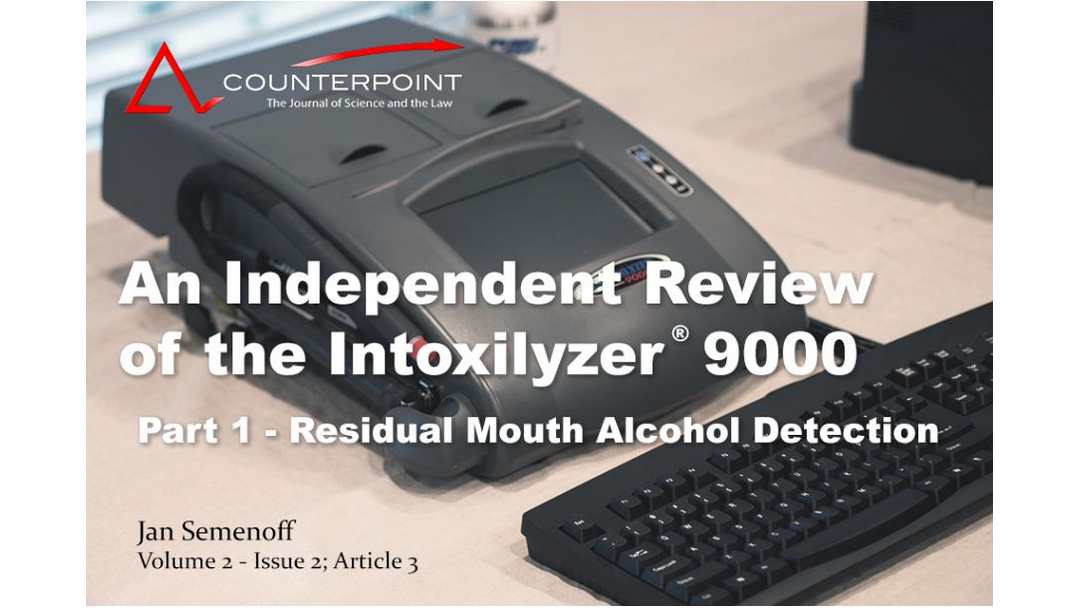
An Independent Review of the Intoxilyzer 9000 Part 1 - Residual mouth alcohol detection Counterpoint Volume 2; Issue 2 - Article 3 (August 2017) An article in the Core Skills III-2 Module Jan Semenoff, BA, EMAForensic CriminalistThe opportunity to conduct an...

read more
The Intoxilyzer 9000 (part 1)

The Intoxilyzer 9000 (part 1)

The Intoxilyzer 9000 (part 1 of 2)Roll-Out The Michigan State Police (MSP) initiated Intoxilyzer 9000 (Intoxilyzer) training for police officers statewide, commencing in 2023. In order to participate, officers were required to complete both preliminary breath test...

read more
The Intoxilyzer 9000 (part 2)

The Intoxilyzer 9000 (part 2)

The Intoxilyzer 9000 (part 2 of 2)Using it The Intoxilyzer is user-friendly and equipped with a built-in feature to alert officers of any potential issues. As a precautionary measure, officers are specifically advised to switch off their portable radios prior to...

read more
How DUI Charges Impact Your Child’s Future

How DUI Charges Impact Your Child’s Future

In Michigan driving is considered a privilege. with this privilege comes immense responsibility, especially when it comes to driving under the influence (DUI) as well as other responsibilities. The consequences of youth DUI extend far beyond the immediate legal...

read more
FAQs About Restoring Your Drivers License in Michigan

FAQs About Restoring Your Drivers License in Michigan

Frequently Asked Questions about Restoring Your Driver's License in MichiganHere's what you need to knowWhat are the steps to restore my driver's license in Michigan? The steps to restore your driver's license in Michigan vary depending on the reason your license was...

read more