
Shadow cash is corrupting Michigan courtrooms

Shadow cash is corrupting Michigan courtrooms

The Shadow Cash Threat: Protecting the Integrity of Michigan Courtrooms

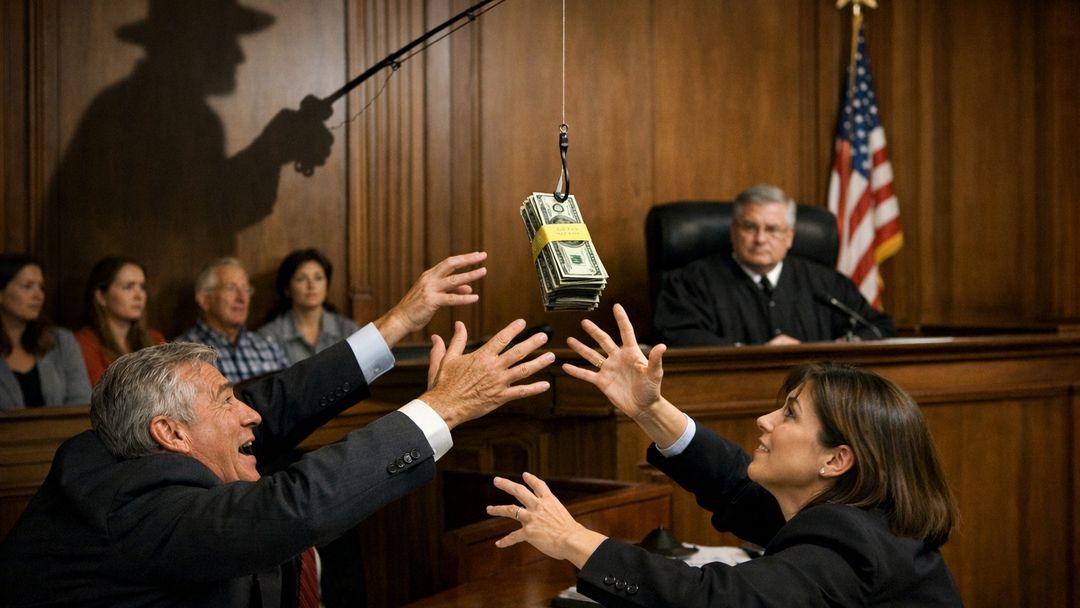
In recent months, a spotlight has been cast on a hidden influence within the Michigan legal system: “shadow cash.” This term refers to third-party litigation funding (TPLF), where outside investors—ranging from private equity firms to foreign entities—finance lawsuits in exchange for a portion of the settlement. While proponents argue it provides access to justice for those who cannot afford it, critics warn it is transforming our courts into investment markets. As detailed in a recent OP-ED from the Michigan House, the lack of transparency surrounding these deals creates significant ethical concerns, potentially allowing anonymous funders to steer case strategies and reject fair settlements in favor of higher returns.

The Legislative Push: House Bill 5281 and Transparency

To combat this “secret rot,” Michigan legislators have introduced House Bill 5281, also known as the Third-Party Litigation Funding Transparency Act. Sponsored by Representative Mike Harris, the bill aims to pull back the curtain by requiring that all funding agreements be disclosed to the court and all involved parties. Currently, Michigan operates with almost no disclosure requirements for these arrangements, meaning a judge or jury might never know that a foreign adversary or a hedge fund has a stake in the outcome. By mandating transparency and capping investor profits, the bill seeks to ensure that the primary beneficiary of a lawsuit remains the injured party, not a “shadow” shareholder.

Judicial Integrity and Dark Money in Elections

The concern over shadow cash extends beyond individual lawsuits and into the very seats of the judiciary. Michigan’s judicial elections have increasingly become battlegrounds for untraceable “dark money.” According to reports from Bridge Michigan, millions of dollars from anonymous donors have flooded recent Supreme Court races, raising questions about potential conflicts of interest. Under the Michigan Code of Judicial Conduct, specifically Canon 2, judges must avoid even the “appearance of impropriety.” However, when the source of a judge’s campaign support is hidden through non-profit 501(c)(4) “shadow parties,” the public’s ability to monitor these conflicts—and the integrity of the Michigan Campaign Finance Act—is severely compromised.

The Pros and Cons of Third-Party Funding

The debate over litigation funding is nuanced. Pros include “leveling the playing field” for individuals facing off against massive corporations with unlimited resources. Without this funding, some legitimate claims might never reach a courtroom. On the other hand, the cons are significant: investors often prioritize their ROI over the client’s best interest, which can prolong litigation and drive up insurance premiums and consumer costs. Furthermore, the Michigan Rules of Professional Conduct prohibit lawyers from sharing legal fees with non-lawyers, a line that TPLF often blurs. Without the safeguards proposed in recent legislative sessions, Michigan risks a system where justice is sold to the highest bidder rather than awarded based on the rule of law

FAQ

Q: Is third-party litigation funding currently illegal in Michigan?

A: No. It is a legal practice that currently operates in a “gray area” with very few disclosure requirements. House Bill 5281 does not seek to ban the practice, but rather to make it transparent and regulated.


Q: Why does it matter if a foreign entity funds a Michigan lawsuit?

A: Legal experts and legislators warn that foreign adversaries could use litigation funding to gain access to sensitive American business strategies, trade secrets, and intellectual property through the discovery process of a lawsuit.


Q: How does “dark money” affect my specific court case?

A: If a judge received significant campaign support from an anonymous group funded by your opponent, there is a risk of bias. Current laws make it difficult to identify these connections, which is why groups like the State Bar of Michigan have called for stricter disclosure rules.

Komorn Law,
Established 1993

In a legal climate where “shadow cash” and dark money threaten the fairness of our courtrooms, you need an advocate who stands firmly in the light. At Komorn Law, we have spent over 30 years fighting for transparency, due process, and the rights of Michigan citizens. Whether you are navigating a complex civil suit or facing the power of the state, our team ensures that your voice is heard and your interests remain the priority—not those of outside investors. For a defense that is relentless, ethical, and focused on you, contact Komorn Law at 30903 Northwestern Hwy Suite 240, Farmington Hills, MI 48334.

Call 248-357-2550

More

What does Nolle Prosequi mean?

What does Nolle Prosequi mean?

What does Nolle Prosequi mean? Fatal Flaw In criminal cases, nolle prosequi may be employed when there is a significant weakness in the prosecution's case, when the prosecutor acknowledges an inability to prove the charges, or even when the prosecutor has lost...
read more
People v. Lukity, 460 Mich 484 (1999)

People v. Lukity, 460 Mich 484 (1999)

Case Summary The Michigan Supreme Court reversed the Court of Appeals and reinstated the defendant’s conviction for first-degree criminal sexual conduct against his fourteen‑year‑old daughter. The Court held that although one evidentiary error occurred, it was...

read more
Motion in Limine vs Motion to Suppress

Motion in Limine vs Motion to Suppress

Defininition and Explaination - Motion in LimineOverview Although both a motion in limine and a motion to suppress deal with evidence, they serve very different purposes in Michigan criminal cases. Understanding the distinction is critical because each motion affects...
read more
A Motion in Limine – What does it Mean?

A Motion in Limine – What does it Mean?

Defininition and Explaination - Motion in LimineA motion in limine is a pretrial request asking the judge to exclude (or sometimes allow) specific evidence before the jury ever hears it. It’s one of the most important evidentiary tools in both criminal and civil...

read more
What is a Franks Hearing?

What is a Franks Hearing?

What is a Frank's Hearing?A Franks hearing is a critical legal tool used when a defendant claims that police lied, exaggerated, or recklessly disregarded the truth in a search warrant affidavit. When law enforcement places its hand on the Constitution, the law...

read more
Shadow cash is corrupting Michigan courtrooms

Shadow cash is corrupting Michigan courtrooms

The Shadow Cash Threat: Protecting the Integrity of Michigan Courtrooms In recent months, a spotlight has been cast on a hidden influence within the Michigan legal system: "shadow cash." This term refers to third-party litigation funding (TPLF), where outside...

read more
Michigan judge charged in stealing from incapacitated adults

Michigan judge charged in stealing from incapacitated adults

No Good Headline to Lead with Here

Summary

Federal prosecutors have charged a 36th District Court judge and three associates with orchestrating a long‑running financial scheme that diverted funds from incapacitated adults under court‑appointed guardianship. The indictment alleges that the group exploited gaps in Michigan’s guardianship system to siphon off more than $270,000 from individuals who lacked the capacity to manage their own affairs.

What Happened?

According to the U.S. Attorney’s Office, the defendants used their professional positions — including judicial authority, guardianship appointments, and legal representation — to gain access to the finances of vulnerable adults. Once in control of those accounts, they allegedly transferred money into personal or business accounts and concealed the transactions through falsified filings and misleading statements.

The federal investigation culminated in a multi‑count indictment alleging wire fraud, money laundering, and false statements.

Who Is Involved

  • Judge Andrea Bradley‑Baskin, 46 Sitting judge of the 36th District Court in Detroit. Charged with conspiracy to commit wire fraud, multiple counts of money laundering, and lying to federal investigators.

  • Nancy Williams, 59 Operator of Guardian and Associates, a private guardianship company appointed in more than 1,000 cases involving incapacitated adults.

  • Avery Bradley, 72 Longtime attorney facing conspiracy and wire‑fraud charges.

  • Dwight Rashad, 69 Detroit resident charged with conspiracy and money laundering.

When

The indictment was announced January 30, 2026, following a multi‑year federal investigation into irregularities in guardianship‑related financial transactions.

Where

The alleged conduct occurred in Detroit and involved guardianship cases within the Eastern District of Michigan.

How the Scheme Allegedly Worked

Federal prosecutors allege the defendants:

  • Obtained control of wards’ bank accounts through guardianship appointments and legal authority.

  • Redirected funds into personal accounts or business ventures.

  • Used stolen money for private investments, including a $70,000 stake in a local bar, and for personal expenses such as a Ford Expedition lease.

  • Filed misleading or incomplete probate documents to hide missing funds.

  • Provided false information when questioned by federal agents.

The victims were adults legally determined to be unable to manage their own finances — making oversight and accountability especially critical.

Statements From Prosecutors

U.S. Attorney Jerome Gorgon condemned the alleged conduct, stating that individuals entrusted with protecting vulnerable adults instead “abused that high honor for personal gain.” He emphasized that the justice system depends on integrity from those who hold judicial and fiduciary authority.

Why This Case Matters

1. Breach of Judicial and Fiduciary Duty

The allegations involve a sitting judge and court‑appointed guardians — individuals expected to uphold the highest ethical standards.

2. Systemic Weaknesses in Guardianship Oversight

Michigan’s guardianship system has long faced criticism for limited monitoring and inconsistent financial reporting requirements.

3. Harm to Vulnerable Adults

Victims were individuals legally deemed unable to protect themselves, amplifying the seriousness of the alleged misconduct.

4. Public Trust in the Courts

Charges against a sitting judge raise significant concerns about internal safeguards and accountability within Michigan’s judicial system.

Potential Legal Consequences

If convicted, the defendants face:

  • Federal prison sentences for wire fraud and conspiracy

  • Additional penalties for money laundering

  • Permanent removal from judicial or legal positions

  • Restitution orders to repay misappropriated funds

  • Possible state‑level disciplinary actions

FAQs

1. How much money was allegedly taken?

Federal prosecutors estimate more than $270,000 was diverted from incapacitated adults.

2. What role did the judge play?

Judge Bradley‑Baskin is accused of participating in the conspiracy, laundering funds, and lying to investigators.

3. How did the defendants access victims’ finances?

Through court‑appointed guardianship authority, which granted them control over wards’ bank accounts and assets.

4. What were the funds allegedly used for?

Personal expenses, business investments, and other non‑authorized uses unrelated to the wards’ care.

5. What happens next?

The case will proceed through federal court, where the defendants will have the opportunity to contest the charges. Additional investigations or related charges are possible.

Komorn Law, founded in 1993, brings decades of seasoned experience to Michigan’s most complex criminal and regulatory matters, including the evolving cannabis framework from the MMMA to today’s MRTMA landscape. The firm represents clients facing controlled‑substance offenses, DUI and drug‑related driving charges, firearm violations, property crimes, resisting or obstructing, and the most serious allegations such as manslaughter and homicide. With a proven record in courts across Michigan and the federal system, Komorn Law delivers relentless advocacy when the stakes are highest. Call our office when you are ready to hire an attorney experienced and seasoned fighting the system of “Justice”  248-357-2550

More

What does Nolle Prosequi mean?

What does Nolle Prosequi mean?

What does Nolle Prosequi mean? Fatal Flaw In criminal cases, nolle prosequi may be employed when there is a significant weakness in the prosecution's case, when the prosecutor acknowledges an inability to prove the charges, or even when the prosecutor has lost...

read more
People v. Lukity, 460 Mich 484 (1999)

People v. Lukity, 460 Mich 484 (1999)

Case Summary The Michigan Supreme Court reversed the Court of Appeals and reinstated the defendant’s conviction for first-degree criminal sexual conduct against his fourteen‑year‑old daughter. The Court held that although one evidentiary error occurred, it was...

read more
Motion in Limine vs Motion to Suppress

Motion in Limine vs Motion to Suppress

Defininition and Explaination - Motion in LimineOverview Although both a motion in limine and a motion to suppress deal with evidence, they serve very different purposes in Michigan criminal cases. Understanding the distinction is critical because each motion affects...

read more
A Motion in Limine – What does it Mean?

A Motion in Limine – What does it Mean?

Defininition and Explaination - Motion in LimineA motion in limine is a pretrial request asking the judge to exclude (or sometimes allow) specific evidence before the jury ever hears it. It’s one of the most important evidentiary tools in both criminal and civil...

read more
What is a Franks Hearing?

What is a Franks Hearing?

What is a Frank's Hearing?A Franks hearing is a critical legal tool used when a defendant claims that police lied, exaggerated, or recklessly disregarded the truth in a search warrant affidavit. When law enforcement places its hand on the Constitution, the law...

read more
Shadow cash is corrupting Michigan courtrooms

Shadow cash is corrupting Michigan courtrooms

The Shadow Cash Threat: Protecting the Integrity of Michigan Courtrooms In recent months, a spotlight has been cast on a hidden influence within the Michigan legal system: "shadow cash." This term refers to third-party litigation funding (TPLF), where outside...

read more

Oakland County Judge Faces Judicial Tenure Complaint

Oakland County Judge Faces Judicial Tenure Complaint

Oakland County Judge Faces Judicial Tenure Complaint After Removal from Felony Cases

An Oakland County District Court judge, Kristen Hartig of Troy’s 52-4 District Court, is now facing a formal complaint from the Michigan Judicial Tenure Commission (JTC) following her recent removal from all felony cases. The complaint, announced on Wednesday, June 4, 2025, details multiple allegations of misconduct, including a refusal to provide a personal psychological evaluation report to the commission during an investigation into her behavior.

The JTC’s complaint asserts that a previous investigation into Hartig’s conduct indicated mental health was an issue, leading to the order for a psychological evaluation. Her alleged refusal to promptly provide the report, despite repeated requests, is a central part of the current complaint. Furthermore, the commission accuses Judge Hartig of making false statements to the JTC, mistreating court employees, obstructing the administration of her court, and improperly dismissing criminal cases.

These allegations paint a picture of a judge who created a “climate of fear” among court personnel and acted beyond her authority. Prior to the formal complaint, Chief Judge Travis Reeds had already removed Judge Hartig from presiding over felony cases in May, reassigning her to civil, landlord/tenant, and small claims matters.

Following the JTC’s formal complaint, Judge Reeds stated that Hartig would be temporarily removed from her entire docket, emphasizing the importance of accountability to preserve public trust in the judiciary. Judge Hartig, through her spokesperson, has stated her respect for the JTC’s role and commitment to fully participating in the process, while also suggesting the complaint is based on “disputed claims and a flawed process.”

The next step in the process involves Hartig’s response to the complaint and a potential public hearing before a special master appointed by the Michigan Supreme Court, which will ultimately decide on any disciplinary action, ranging from censure to removal from the bench.

In Michigan, judicial immunity generally protects judges from civil liability for actions taken within their judicial capacity. This immunity is designed to allow judges to make decisions without fear of being personally sued, thereby preserving the independence of the judiciary.

However, this immunity does not shield judges from accountability for misconduct.

The Michigan Judicial Tenure Commission (JTC) serves as the primary mechanism for judicial accountability in the state. It investigates allegations of judicial misconduct and, if warranted, can file formal complaints and recommend sanctions to the Michigan Supreme Court, which holds the ultimate authority to discipline or remove judges from office for reasons such as misconduct in office, persistent failure to perform duties, or conduct clearly prejudicial to the administration of justice.

Read the 2025-06-04_FC 109 Complaint

Read More about Michigan Judges – Here at Abusive Discretion

Sextortion and Sexploitation in Michigan

Sextortion and Sexploitation in Michigan

FAQs and Laws about Sextortion and SexploitationSextortion and sexploitation are increasingly prevalent and devastating forms of digital abuse, leveraging technology to coerce, manipulate, and exploit individuals, often for sexual gratification or financial gain....

read more

When individuals find themselves facing criminal charges in State or Federal courtrooms, securing a robust defense is life changing. Attorney Michael Komorn of Komorn Law PLLC is known for providing an aggressive defense, leveraging extensive experience in both state and federal court systems. With a deep understanding of trial and appellate processes, Komorn is dedicated to advocating for clients’ rights and freedom.

Komorn Law

Charged with a Crime? – Better Call Komorn

What is a Preliminary Exam?

What is a Preliminary Exam?

Michigan Preliminary Examinations The Strategic Gatekeeper in Felony Defense The Preliminary Examination as the First Line of Defense In...

read more

Judicial Accountability in Michigan for Judges

Judicial Accountability in Michigan for Judges

Maintaining public trust in the judiciary is paramount to a functioning legal system. In Michigan, several mechanisms exist to ensure judicial accountability, holding judges responsible for their conduct both on and off the bench.

These safeguards are primarily governed by these guidelines below.

The Michigan Judicial Tenure Commission (JTC):

The cornerstone of judicial accountability in Michigan is the Judicial Tenure Commission, established by the Michigan Constitution (Article VI, Section 30). The JTC is an independent body tasked with investigating allegations of judicial misconduct and disability. Its powers and procedures are further defined by Michigan Court Rule 9.200 et seq. The JTC can investigate complaints filed by the public, attorneys, or initiate inquiries on its own motion.

Grounds for disciplinary action by the JTC include:

Misconduct in Office: This encompasses actions that violate the Code of Judicial Conduct or the rules governing judicial ethics.

Persistent Failure to Perform the Duties of Office: Neglecting judicial responsibilities, such as timely rulings or regular court attendance, falls under this category.

Conduct Clearly Prejudicial to the Administration of Justice: This broad category covers behavior that undermines public confidence in the integrity and impartiality of the judiciary.

Physical or Mental Disability Seriously Interfering with the Performance of Judicial Duties: When a judge’s health significantly impairs their ability to fulfill their responsibilities.

Conviction of a Felony: A criminal conviction can lead to disciplinary action.

Upon investigating a complaint, the JTC may dismiss it, issue a private admonishment, or file a formal complaint with the Michigan Supreme Court if it finds sufficient evidence of misconduct.

If a formal complaint is filed, the Supreme Court appoints a master to conduct a public hearing. The master then submits findings and recommendations to the JTC, which, in turn, makes its own recommendation to the Supreme Court.

The Michigan Supreme Court has the ultimate authority to discipline judges, with sanctions ranging from censure and reprimand to suspension and removal from office (MCL 600.225 outlines the Supreme Court’s general superintending control over all state courts).

Other Avenues for Accountability:

While the JTC is the primary body for addressing judicial misconduct, other avenues exist:

  • Impeachment: The Michigan Constitution (Article XI, Section 7) grants the House of Representatives the power to impeach civil officers, including judges, for corrupt conduct in office or for crimes or misdemeanors. The Senate then conducts the trial, and a two-thirds vote is required for conviction and removal.
  • Recall: Elected judges are subject to recall by the voters under specific conditions outlined in the Michigan Constitution (Article II, Section 9) and the Recall Act (MCL 168.951 et seq.).
  • Electoral Process: Voters have the opportunity to hold judges accountable at the ballot box during elections.

Code of Judicial Conduct:

The Michigan Code of Judicial Conduct, adopted by the Michigan Supreme Court, provides specific ethical guidelines for judges. It covers areas such as impartiality, diligence, avoidance of impropriety, and the proper discharge of judicial responsibilities. Violations of this Code can form the basis of a complaint to the JTC.

When facing legal challenges, particularly those involving potential judicial overreach or misconduct, it is crucial to have experienced and dedicated legal representation. Attorney Michael Komorn of Komorn Law PLLC provides an aggressive defense in courtrooms across Michigan. With a comprehensive understanding of the law and a commitment to protecting his clients’ rights, Michael Komorn is prepared to vigorously advocate on your behalf in both State and Federal courts. His experience and dedication can be invaluable in navigating complex legal situations.

Sextortion and Sexploitation in Michigan

Sextortion and Sexploitation in Michigan

FAQs and Laws about Sextortion and SexploitationSextortion and sexploitation are increasingly prevalent and devastating forms of digital abuse, leveraging technology to coerce, manipulate, and exploit individuals, often for sexual gratification or financial gain....

read more

FAQs about Judicial Accountability in Michigan:

Q: Who can file a complaint against a judge in Michigan?

A: Any individual, including members of the public, attorneys, or court staff, can file a complaint with the Michigan Judicial Tenure Commission if they believe a judge has engaged in misconduct. The JTC can also initiate investigations on its own.

Q: What happens after a complaint is filed with the JTC?

A: The JTC reviews the complaint to determine if it alleges conduct that, if true, would constitute judicial misconduct or disability. If so, the JTC may conduct an investigation, which can involve interviewing witnesses, reviewing court records, and requesting information from the judge.

Q: What are the possible sanctions a judge can face in Michigan for misconduct?

A: The Michigan Supreme Court, based on recommendations from the JTC, can impose various sanctions, including private admonishment, public censure or reprimand, suspension with or without pay, and removal from office.


Komorn Law

Charged with a Crime? – Better Call Komorn

Komorn Law
Areas of Service

We fight for our clients throughout the State of Michigan and Northern Ohio.

Here are some court contacts we frequently handle cases.

Komorn Law, PLLC, led by Attorney Michael Komorn, serves clients throughout Michigan. While our office is located in Farmington Hills, Michigan (Oakland County), our extensive experience in criminal defense spans various court systems across the state, including:

  • District Courts
  • Circuit Courts
  • Michigan Court of Appeals
  • Michigan Supreme Court
  • Federal Court System
Former Monroe County judge sentenced to up to five years in prison for prostitution case

Former Monroe County judge sentenced to up to five years in prison for prostitution case

WXYZ – Former Monroe County judge sentenced to up to five years in prison for prostitution case

According to a Michigan State Police investigation, former Monroe County 1st District Judge Jarod Calkins hired women for sex and transported them for that purpose.

During the sentencing, the women released victim impact statements saying they were tortured sexually.

According to the warrant, Calkins allegedly found his victims online; he used the name Michael Collins in accounts on Facebook, Tinder and OKCupid.

He was sentenced to one to five years for four charges that will run concurrently, meaning at the same time.

Arrested for or Charged with DUI or driving under the influence of “drugs”?… Contact Komorn Law 800-656-3557.


WXYZ News Report


Visit the MMMA Forum to learn more and open discussions about medical and adult use recereational cannabis


A former Monroe County judge will be sentenced in what prosecutors are calling a "sexual torture case."**Warning: Graphic language may be used.DETAILS: https://bit.ly/2KGof3e

Posted by WXYZ-TV Channel 7 on Thursday, November 29, 2018


A former Monroe County judge will be sentenced in what prosecutors are calling a "sexual torture case."**Warning: Graphic language may be used.DETAILS: https://bit.ly/2KGof3e

Posted by WXYZ-TV Channel 7 on Thursday, November 29, 2018


About Komorn Law

Komorn Law has represented numerous clients through the legal chaos of starting up a business in the Michigan Medical Marihuana Industry as well as consulting and legal representation for Medical Maruhuana Patients and Caregivers.

If you or someone you know has been arrested as a result of Medical Marijuana, DUI, Drugs, Forfeiture, Criminal Enterprise or any other criminal charges please contact our office and ensure you’re defended by an experienced lawyer.

Attorney Michael Komorn is recognized as an expert on the Michigan Medical Marihuana Act. He is the President of the Michigan Medical Marijuana Association (MMMA), a nonprofit patient advocacy group which advocates for the rights of medical marijuana patients and their caregivers.

Contact us for a free no-obligation case evaluation  800-656-3557.

Follow Komorn Law


This page is for informational purposes only. Laws, regulations and the world change routinely, therefore we insist you consult an attorney for the most current legal information.
Michigan Judge Theresa Brennan faces misconduct allegations

Michigan Judge Theresa Brennan faces misconduct allegations

Livingston County District Judge Theresa Brennan faces misconduct allegations that include perjury, failing to disclose personal ties to parties involved in her cases, requiring her staff to do personal tasks for her and mistreating people who came before her in her courtroom.  As the evidentiary hearing began Monday, the commission said it plans to add destroying evidence and obstruction of justice to the list of accusations


A retired judge appointed by the Michigan Judicial Tenure Commission is hearing the evidence in Livonia. Depending on his findings, the commission could eventually ask the state Supreme Court to discipline Brennan.


In the most recent 87-page complaint, the Judicial Tenure Commission said Brennan, among other issues:

  • Failed to disqualify herself or fully disclose her close personal relationship with a Michigan State Police detective involved in a murder case she presided over in 2013. She also failed to disclose conflicts and disqualify herself in other cases, the Judicial Tenure Commission said;
  • Failed to disqualify herself from hearing her own divorce case until six days after she knew the complaint had been filed;
  • Used improper demeanor in court;
  • Directed court staff to do personal tasks for her on court time;
  • Required staff to work on her re-election campaign during work hours;
  • Made misrepresentations during court hearings and in her contact with the tenure commission;
  • Committed perjury.


Below are Many News Reports and Court Video