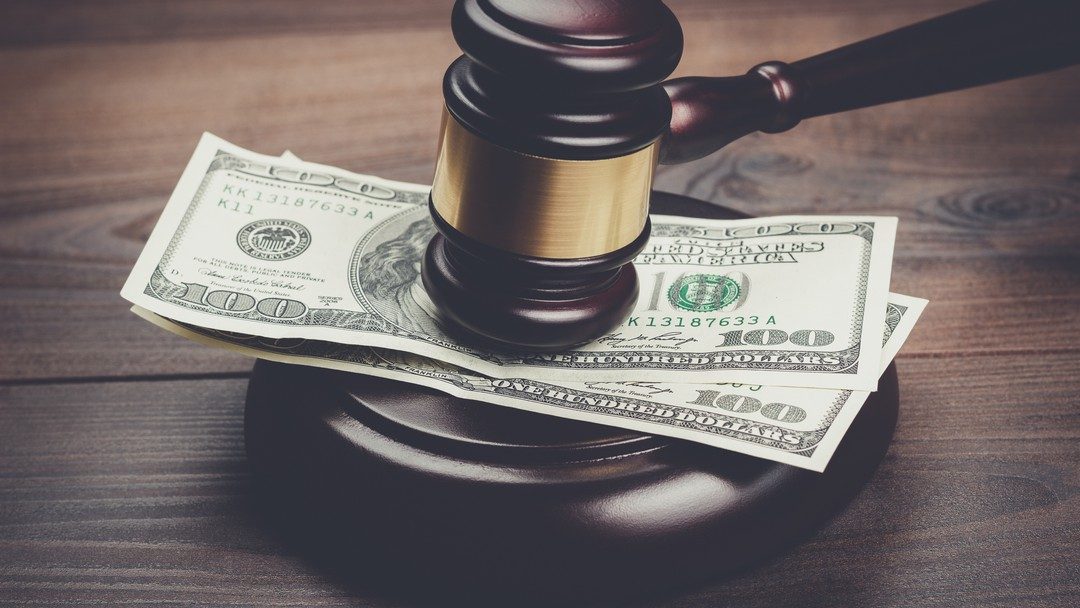

Could Zoom jury trials become the norm during the coronavirus pandemic?

Could Zoom jury trials become the norm during the coronavirus pandemic?

In April, a Florida court held a bench trial over Zoom to decide a child abduction case under the Hague Convention. Later that month, the same state held a major virtual trial on the voting rights of convicted felons, with the public listening in by phone.

As criminal courts grapple with the COVID-19 pandemic, some in the legal industry wonder whether a virtual jury trial could be next.

Just weeks ago, the idea might have seemed inconceivable. Now, as remote meetings using videoconferencing tools such as Zoom become a regular fixture in courts, some are concerned that virtual trials would deprive defendants of the constitutional right to confront witnesses, an impartial jury, due process of law and effective counsel.

READ THE REST HERE Could Zoom jury trials become the norm during the coronavirus pandemic?

Michigan Court Costs Are Unconstitutional?

Michigan Court Costs Are Unconstitutional?

So when you’re convicted of a crime, or a traffic ticket, you have to pay a bunch of costs. Did you know that many of those costs go back into the local court’s operating budget? So when that judge orders you to be a good convict and pay your court fees, you’re actually paying the salary of the judge’s court recorder, or paying for the copy machine they use to print your probation order. According to this source, local courts get up to 26% of their operating budget from their own generated revenues (fines, costs and imposed penalties. Not from holding bake sales).

Courts across Michigan generate $418 million per year to fund their own operating expenses. They don’t raise $418 million by finding people innocent.

But wait, there’s news. The 5th Circuit Court of the United States Court of Appeals just ruled that when judges have a personal interest in collecting costs from a defendant, they have a conflict of interest. The court said that they can’t rule in a case where their own court stands to benefit. In the 5th Circuit Court case, the judges personally didn’t benefit, but their staff salaries and operating expenditures came from some of the funds collected in court costs. And the U.S. Court of Appeals said nope.

The history of this is a bit twisted. So stay with me.

In 2014, the Michigan Supreme Court decided the People v. Cunningham case. That case threw half of a wet blanket on court fees. The Michigan Supreme Court said that the court couldn’t impose a cost unless they were authorized by the legislature to impose that cost.

And what do you think the legislature did? They ran out and passed a law that authorized the courts to collect fees. But that law is only in effect until 2020.

So someone challenged that by bringing a new court case, People v. Cameron. The Michigan Court of Appeals upheld the new law as constitutional. The Michigan Supreme Court declined to look at the case.

But in the meantime, someone saw the writing on the wall, because the Michigan Trial Court Funding Commission quietly began working on a new funding scheme that sounds a little more constitutional.

So what the Michigan Supreme Court did was decline to accept the application for leave to appeal, so that $418 million in annual court funding around the state wouldn’t go poof. The Michigan Supreme Court punted in order to give administrators time to figure out how to run the courts and follow the constitution at the same time.

Chief Justice Bridget Mary McCormack more or less admits as much. In her concurring opinion denying leave to appeal, Chief Justice McCormack said that trial court funding is a “long-simmering” problem in Michigan. She said that denying leave to appeal will “allow our current system of trial court funding in Michigan to limp forward.” She then goes on to tell the legislature to pass the new, centralized funding scheme.

Read the rest here - Pretty interesting. The whole website is good. Each city should have one - Dirty Traverse City

ABA Journal Link - Fines-and-fees system that helps fund court budget is unconstitutional, 5th Circuit rules

Charged with a Crime?

Call every other attorney on the planet.

Then call Komorn Law for a legal team who will truly fight for you.

There's no comparison for cost effective criminal defense representation.

Research it!

248-357-2550

Detroit Judge Accused of Being Soft on Crime by Police

Detroit Judge Accused of Being Soft on Crime by Police

The Job of a Judge is to make decisions of whether there is enough evidence to hold someone, give them bond or release them.  Police do not make decisions of whether a person is guilty or innocent.  They just are supposed to gather the facts and evidence.  Both should work together to support the allegations of facts to assist in determining whether a person is guilty or innocent.  Here we have a story in the Detroit News of a Judge that is being accused by police of being soft on crime.

The article says….

A fall out in Detroit’s 36th District Court that is pitting the judge against police officers who accuse him of being soft on crime. William C. McConico, the Judge who is standing up against police this time is saying that some of the disparagement is being done to smear him for refusing to lower a cop’s million dollar bond.

Detroit police Chief James Craig said the judge is a symptom of a “broken system” that often allows violent criminals back on the street. Craig and other police officers lambasted McConico in Mayafter the judge granted a $100,000 bond and tether to Ivory Traylor, a habitual criminal who allegedly shot at Detroit police officers.

Ivory Traylor had a previous armed robbery conviction, cut off his tether and ran. He was arrested less than 24 hours later. He is on the schedule to stand trial on charges of assault with intent to commit murder in August.

Judge McConico argued that some of the criticism against him was from his rejection of a request to lower the $1 million cash bond for a former Michigan State Police trooper, Mark Bessner, charged with causing the death of a 15-year-old Detroiter while the teenager was riding his ATV. Bessner is scheduled to stand trial in October on second-degree murder charges.

“You’ve got reckless statements being made that I hate cops,” McConico said. “That’s crazy. It’s absolutely crazy, and it’s not true. You’ve got some officers who are trying to make me look bad because I didn’t lower the trooper’s bond.”

McConico’s decision was the second time he refused to lower the bond. He says there are some officers are still mad and looking for reprisal.

Craig said his criticism of McConico has nothing to do with the Bessner case.

“My problem with him is: His decisions impact what we’re trying to do as a police department,” the chief said. “When you get judges who are soft on crime, it makes it harder for us to keep the city safe.”

In another controversy, Wayne County prosecutors say they plan to appeal McConio’s ruling in the May 16

There’s much more of the story you should read here at the Detroit News