If you are innocent and falsely accused of Criminal Sexual Conduct (CSC) in Michigan can you sue?
Yes, if you have been falsely accused of Criminal Sexual Conduct (CSC) in Michigan and can prove that the accusations were malicious or knowingly false, you may be able to sue for damages. However, successfully suing for damages depends on several factors, including the circumstances of the false accusation, the impact it had on your life, and the evidence you can provide. Here's how you might proceed:
Defamation Lawsuit
One of the most common ways to seek damages for a false accusation is through a defamation lawsuit. Defamation involves making false statements that harm your reputation. Defamation can be broken down into two types:
Libel: Written false accusations (such as social media posts, letters, or news articles).
Slander: Spoken false accusations.
To win a defamation case, you generally need to prove:
The statement was false: The accusation against you was not true.
The statement was made publicly: The false accusation was communicated to others, damaging your reputation.
Malice or negligence: In some cases, especially if you're a private citizen, you may need to show that the accuser acted with malice or negligence in making the false claim.
Damages: You suffered harm as a result, such as lost income, emotional distress, or damage to your personal or professional reputation.
Malicious Prosecution
You can also file a lawsuit for malicious prosecution if you were wrongly prosecuted based on false accusations. Malicious prosecution occurs when someone intentionally and maliciously makes a false report to law enforcement, leading to your arrest or prosecution. To succeed in a malicious prosecution claim, you need to prove:
The criminal case was dismissed in your favor: You were acquitted, the charges were dropped, or you were otherwise found not guilty.
There was no probable cause: The accusation had no legal basis, and the accuser knew it.
The accuser acted with malice: The accuser acted with ill intent, intending to harm you or knowing the accusation was false.
Intentional Infliction of Emotional Distress
You may also pursue a claim for intentional infliction of emotional distress (IIED) if the false accusation caused you significant emotional harm. To win an IIED claim, you need to prove:
Extreme and outrageous conduct: The accuser’s actions were so outrageous that they go beyond what is acceptable in society.
Intent: The accuser intended to cause you emotional distress or acted with reckless disregard for your well-being.
Severe emotional distress: You suffered severe emotional or psychological harm as a result of the false accusation.
False Imprisonment
If the false accusation led to your arrest and detention, you might have a claim for false imprisonment. This legal claim involves being unlawfully detained without proper legal justification. To win this claim, you need to prove:
You were detained without consent: You were held in custody against your will.
The detention was unlawful: The arrest or imprisonment was based on false accusations and without legal grounds.
Damages You Can Seek
If your lawsuit is successful, you may be able to recover a range of damages, including:
Lost Wages and Income: Compensation for wages you lost due to wrongful arrest, imprisonment, or reputational damage that affected your ability to work.
Emotional Distress: Damages for emotional pain, suffering, anxiety, or depression caused by the false accusation.
Reputation Damage: Compensation for harm to your personal or professional reputation.
Legal Fees: Recovery of costs associated with defending yourself in court against the false accusations.
Punitive Damages: In some cases, if the accuser acted maliciously, punitive damages may be awarded to punish the accuser and deter similar behavior in the future.
Challenges to Suing for Damages
Suing for damages after a false accusation can be difficult, especially if the accuser believed the accusation to be true or if it was a case of mistaken identity. To succeed in your claim, you must prove the accuser acted with malice or gross negligence. If the accuser cooperated with law enforcement and provided evidence in good faith, suing them may be more challenging.
Conclusion
If you were falsely accused of Criminal Sexual Conduct and suffered damages as a result, you may be able to pursue legal action. Common claims include defamation, malicious prosecution, false imprisonment, and intentional infliction of emotional distress. However, proving these claims requires clear evidence that the accusation was knowingly false or made with malice. Consulting with an experienced attorney is critical to evaluating your options and determining the best course of action.
Note: This article provides a general overview and does not substitute for legal advice. Anyone charged with a CSC offense should consult an attorney for specific legal guidance.
A Colorado man is poised to receive a $400,000 settlement from city authorities after being wrongfully arrested for a DUI, even though he had passed both a breath and blood test.
According to the complaint, Elias was driving southbound on College Avenue in Fort Collins around 10:30 p.m. on Jan. 4, 2020. He was heading home after leaving his girlfriend's house following a dinner party. Upon passing the intersection of Swallow Road and College Avenue, he slowed down to ensure he hadn't missed his intended turn to the east.
After realizing he had not missed his turn, he accelerated again but observed a car following closely in an aggressive manner.
According to the complaint, Elias then signaled a lane change to the left lane, aiming to clear the driver's path. It is mentioned that he executed the lane change normally, lawfully, and without encountering any issues.
Gates, who was driving the car, was working that night as a member of the then-recently formed Reduce All Impaired Driving inter-police agency task force looking for drunk or impaired drivers.
The complaint claims that Gates had been roving the streets of Larimer County that night “with the sole task of looking for and charging citizens with DUIs.”
“Gates does so because this is one of the most difficult allegations to disprove, given that Loveland PD does not employ dash cams (only bodycams) and so never capture the arrested individual’s actual driving,” the complaint reads.
Gates allegedly then began to question Elias on whether he had been drinking that night.
According to the complaint Elias was taken aback by this but remained steadfast that he had not committed a violation.
Gates then allegedly said he could smell an “overwhelming odor of alcohol” coming from the vehicle — the complaint disputes this claim.
Following continued questions, Elias invoked his right to remain silent and said he was not going to answer Gates’ questions.
The complaint claims that Gates did not have probable cause to continue to detain Elias at this point.
“But Officer Gates worked at the Loveland Police Department,” the complaint reads. “And LPD had a custom for the treatment of any person who refused to submit to their authority and questioning: They would be arrested.”
Elias declined to participate in a roadside test and made it clear that he would not provide any answers to Gates' inquiries, as stated in the complaint.
He was subsequently taken to the nearby police station on suspicion of driving under the influence, according to the information provided. It is important to note that no drugs or alcohol were discovered in Elias' vehicle, as stated in the lawsuit.
Elias's breath test at the station yielded a 0% blood alcohol content reading, as stated in the lawsuit.
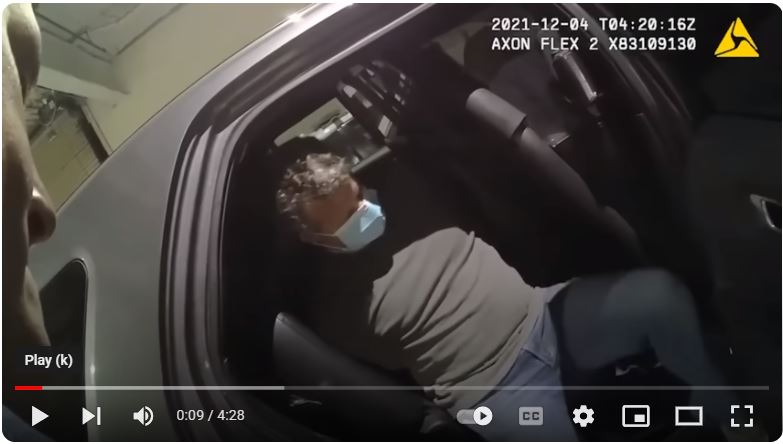
"I'm not going to play this game," Gates told Elias, per bodycam footage posted by Elias' attorney.
"I'm not playing a game, this is my freedom you're talking about," Elias responded.
Police then instructed Elias to undergo a blood test, which, according to the lawsuit, yielded negative results for all substances tested in March 2020.
Elias underwent an investigation of his pilot's license by the Federal Aviation Administration due to the DUI arrest, as stated in the complaint.
Allegations have been made regarding Loveland Police Department officers engaging in a competitive environment amongst themselves and with other police departments, focusing on the number of DUI arrests made.
Elias' attorney Sarah Schielke cited social media posts from a Facebook page, Mothers Against Drunk Driving, which promoted a timed competition for the most DUI arrests between departments.
Schielke has shared screenshots of an independent assessment conducted by Jensen Hughes, a private consultancy firm, in 2021.
According to the assessment, it was stated that officers from the Loveland Police Department prioritize DUI arrests over attending to other calls.
Elias' attorney Sarah Schielke released a YouTube video.
Have you been arrested or charged with DUI?
Charged with a Crime? Lost Your License? Conspiracy or CCE? Thought Crimes?
Notably, Elias claims to have experienced another unjust DUI arrest in Fort Collins, a neighboring municipality to Loveland.
A separate lawsuit he filed against Fort Collins officers in May stated that he was arrested on December 2, 2021 and subsequently spent three days in jail, once again on suspicion of a DUI offense.
He had also successfully undergone a breath test and blood test, with both yielding negative results.
Elias had a child abuse report filed against him by an officer because his 15-year-old son was in his car, and he was prohibited by a judge from driving anyone under 18 for that time period, according to the lawsuit.
When Elias' test results returned negative weeks later, the lawsuit stated that the case was dismissed.
It also alleges that the Fort Collins Police Department fosters a culture of vying for DUI arrests.
It's remarkable that it happened to me twice," Elias shared with CBS News. "I find it surprising that more individuals didn't experience it twice. Their sole concern seemed to be adding another tally to their list, and I just happened to pass by on two occasions.
DISCLAIMER This post may contain re-posted content, opinions, comments, ads, third party posts, outdated information, posts from disgruntled persons, posts from those with agendas and general internet BS. Therefore...Before you believe anything on the internet regarding anything - do your research on Official Government and State Sites, Call the Michigan State Police, Check the State Attorney General Website and Consult an Attorney - Use Your Brain.
Whether Michigan violated the rights of a marijuana business witha massive 2021 recallis beside the point, a federal court ruled this week.
“Federal law considers marijuana to be contraband for any purpose,” U.S. District Judge Paul Maloney wrote in his July 31 order, dismissing a lawsuit filed by Viridis laboratories against the the Michigan Cannabis Regulatory Agency (CRA)
Michigan, it appears, has a thriving, state-sanctioned contraband market. In June, nearly 700 licensed marijuana stores sold almost $260 million worth of cannabis products throughout the state, on pace to surpass $3 billion annually.
A Nevada judge has ruled on a closely-followed lawsuit that could have precedent setting influence on a federal level. He determined that the Nevada Board of Pharmacy can no longer list cannabis as a schedule one drug. It was a clear victory for the American Civil Liberties Union (ACLU) of Nevada, which filed the lawsuit back in April 2022.
On Wednesday, District Judge Joe Hardy Jr. sided with the ACLU’s argument that marijuana has an accepted medical use, because voters amended the state constitution in 2000 to legalize medical marijuana. He ordered the Board of Pharmacy to remove cannabis from the list of Schedule 1 drugs, although the timeline for such action is unclear.
The original basis for the lawsuit alleged that despite the passage of the Nevada Medical Marijuana Act and the Initiative to Regulate and Tax Marijuana, the state—specifically Nevada State Board of Pharmacy—failed to comport with the will of Nevada voters, the state Constitution and revised statutes. Instead of removing cannabis and cannabis derivatives from its list of controlled substances (NAC 453.510), the Board has continued to regulate them as Schedule 1 substances—similar to that of hardcore drugs with no medicinal benefit.
By definition, a Schedule 1 drug is classified as drugs with no currently accepted medical use and a high potential for abuse. With medical cannabis programs deeply entrenched in the state of Nevada, cannabis’ designation appears to fly in the face of well-established known medicinal uses of the drug. This is the exact contradiction that the ACLU sought to force a ruling on:
The ruling today that cannabis cannot be scheduled as a Schedule 1 substance by Nevada’s Board of Pharmacy without violating the Nevada Constitution reaffirms what the people of this state have known for decades, that marijuana has medicinal value and can be safely distributed to the public.Legal Director for ACLU of Nevada Chris Peterson.
While The Board of Pharmacy has had every opportunity to remove marijuana from its Schedule 1 list on its own, it has persistently resisted to reschedule cannabis in Nevada. Despite the will of the people, it appears to be taking its cues from federal (DEA) guidelines, which continues to list cannabis as a schedule 1 drug. In this hearing, the lawyer representing the Board of Pharmacy argued that federal agencies had not determined that marijuana has an accepted medical use.
While judge Hardy sided with the ACLU on cannabis reclassification, he stopped short of ruling on any issues related to overturning convictions for marijuana-related crimes, because the ACLU’s lawsuit did not address the topic.
If you or someone you know has been accused of a crime, DUI or Drugged Driving. Call Komorn Law and turn your defense into an offense. Call Now 248-357-2550
The Michigan Medical Marijuana Association (MMMA) Public forums for guests and members of the Michigan Medical Marijuana Association. This is an open forum related to a variety of topics from legal issues to growing for medical use to strains and more.
DISCLAIMER This post may contain re-posted content, opinions, comments, ads, third party posts, outdated information, posts from disgruntled persons, posts from those with agendas, private stuff and general internet BS. Therefore...Before you believe anything on the internet regarding anything - do your research on "Official Government and State Sites", Call the Michigan State Police, Check the State Attorney General Website and Consult an Attorney - Use Your Brain. You're on the internet.