Pursuant to Rule 4 (16) of the Marijuana Licenses Rule Set (R 420.4(16)), an applicant seeking licensure under the Michigan Regulation and Taxation of Marijuana Act (MRTMA) shall provide a social equity plan detailing a plan to promote and encourage participation in the marijuana industry by people from communities that have been disproportionately impacted by marijuana prohibition and enforcement and to positively impact those communities.
This bulletin is issued to provide applicants with guidance on what they should consider when developing and implementing the social equity plan that is required with the adult use application and designed to meet the intent of this rule. The information in this bulletin is provided for guidance and should not be construed as requirements for applicants’ social equity plans.
Things to Consider When Developing Your Social Equity Plan
Determine if the municipality where you plan to operate has enacted any requirements related to social equity. If the municipality has, make sure those requirements are addressed in your social equity plan.
Review your business’s strategic goals and objectives and determine how the social equity plan you are developing will help accomplish or complement those goals and objectives.
Determine the Focus of Your Social Equity Plan
Identify the primary component(s) of your social equity plan. The following are examples of what licensees in Michigan and other states have included in their social equity plans:
Employing individuals from disproportionately impacted communities at their marijuana establishment(s). A list of the communities the Marijuana Regulatory Agency (MRA) has identified as disproportionately impacted is listed here.
Employing disproportionately impacted individuals who have qualified for the MRA’s social equity program (caregivers or individuals with marijuana-related convictions) or individuals the licensee has identified as having been disproportionately impacted based on criteria established by the licensee.
Providing educational and outreach sessions in partnership with the MRA to individuals who qualified as disproportionately impacted individuals for the MRA’s social equity program (caregivers, individuals with marijuana-related convictions, individuals, and individuals from disproportionately impacted communities) or individuals the licensee has identified as disproportionately impacted based on criteria established by the licensee.
Providing mentorship programs for individuals who qualified as disproportionately impacted individuals for the MRA’s social equity program (caregivers, individuals with marijuana-related convictions, and individuals from disproportionately impacted communities) or individuals the licensee has identified as disproportionately impacted based on criteria established by the licensee.
Providing grants, loans, or monetary assistance to individuals seeking an adultuse license who have qualified for the MRA’s social equity program (caregivers, individuals with marijuana-related convictions, and individuals from disproportionately impacted communities) or individuals the licensee has identified as disproportionately impacted based on criteria established by the licensee.
Partnering in business ventures with licensees who qualified for the MRA’s social equity program or who the licensee has identified as disproportionately impacted based on criteria established by the licensee.
Providing training for employment in the marijuana industry for individuals who qualified as disproportionately impacted individuals for the MRA’s social equity program (caregivers, individuals with marijuana-related convictions, and individuals from disproportionately impacted communities) or individuals the licensee has identified as disproportionately impacted based on criteria established by the licensee.
Providing information and assistance for expungement of marijuana-related convictions for interested Michigan residents.
Determine How Will You Measure the Effectiveness of Your Social Equity Plan
In the same way a business owner would measure progress towards any other strategic goal or objective for his or her business, the MRA recommends that applicants identify in specific, concrete terms how they will measure the effectiveness of their social equity plans after they become licensed. Although the MRA does not require it, we recommend applicants include these measures of effectiveness in the social equity plan they submit with their adult-use application.
Promotion and Advertisement of Your Social Equity Plan
After applicants become licensed, the MRA recommends licensees promote and advertise their social equity plan in the same way they would any other strategic goal or objective. The public and other licensees have an interest in what licensees are doing to promote social equity. The MRA is also interested in providing recognition for licensees who have established meaningful social equity plans and partner with the MRA to promote and encourage participation in the marijuana industry by people who have been disproportionately impacted by marijuana prohibition and enforcement. The MRA plans to post on its website in the future the social equity plans that have been submitted by our licensees. Licensees who do not wish to have their social equity plans posted will have the option of refusal, although the MRA will indicate that the licensee has chosen not to publish the social equity plan.
DISCLAIMER This post may contain re-posted content, opinions, comments, ads, third party posts, outdated information, posts from disgruntled persons, posts from those with agendas and general internet BS. Therefore...Before you believe anything on the internet regarding anything do your research on Official Government and State Sites, Call the Michigan State Police, Check the State Attorney General Website and Consult an Attorney.
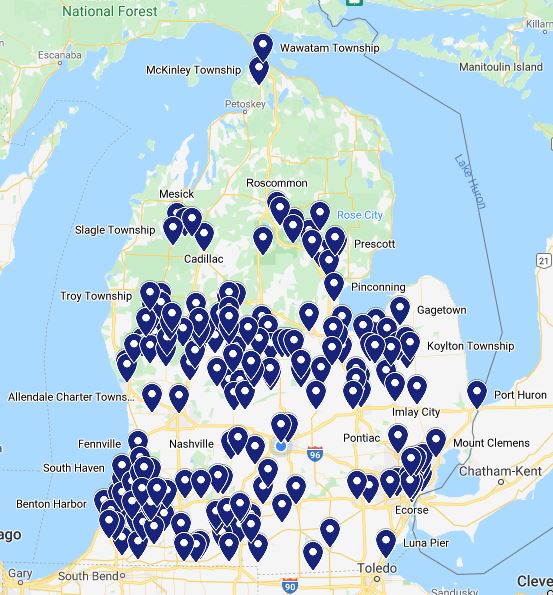
The Social Equity Program is designed to encourage participation in the marijuana industry by people who live in the 184 Michigan communities which have been disproportionately impacted by marijuana prohibition and enforcement:
Allegan: Fennville, Lee Township
Arenac: Alger, Sterling
Barry: Nashville
Bay: Bay City, Midland, Pinconning
Berrien: Benton Harbor, Berrien Spring, Coloma, Eau Claire, Niles, Oronoko Township, Sodus Township, Watervliet
Branch: Bronson, Butler Township, Coldwater, Gilead Township, Quincy, Sherwood, Sherwood Township, Union City
Calhoun: Albion, Battle Creek, Springfield, Tekonsha, Tekonsha Township, Union City
Cass: Cassopolis, Dowagiac, Edwardsburg, Lagrange Township, Marcellus, Vandalia
Eaton: Charlotte, Vermontville
Emmet: McKinley Township, Wawatam Township
Genesee: Clio, Flint, Flint Township, Mt. Morris, Mt. Morris Township
Gratiot: Alma, Bethany Township, Breckenridge, Fulton Township, Perrinton, Seville Township, Wheeler Township
Hillsdale: Montgomery
Ingham: East Lansing, Lansing
Ionia: Ionia, Muir, Orleans Township, Ronald Township
Isabella: Coldwater Township, Fremont Township, Mt. Pleasant, Shepherd
Jackson: Hanover, Jackson, Springport
Kalamazoo: Galesburg, Kalamazoo
Kent: Cedar Springs, Grand Rapids
Lapeer: Clifford, Columbiaville, Imlay City, Lapeer
Lenawee: Adrian, Morenci
Macomb: Center Line, Mt. Clemens
Mecosta: Aetna Township, Barryton, Big Rapids, Deerfield Township, Fork Township, Mecosta, Millbrook Township, Morley, Sheridan Township, Stanwood, Wheatland Township
Monroe: Luna Pier
Montcalm: Carson City, Crystal Township, Edmore, Greenville, Home Township, Howard City, Lakeview, McBride, Pierson, Stanton
Muskegon: Holton Township, Muskegon, Muskegon Heights, Twin Lake
Newaygo: Beaver Township, Big Prairie Township, Bridgeton Township, Denver Township, Fremont, Grant, Hesperia, Lilley Township, Merrill Township, Newaygo, Troy Township, White Cloud, Wilcox Township
Oakland: Hazel Park, Pontiac, Royal Oak Township
Ogemaw: Horton Township, Prescott, Richland Township, Rose City, West Branch
Ottawa: Allendale Township
Roscommon: Higgins Township, Richfield Township, Roscommon, Roscommon Township, St. Helen
Saginaw: Bridgeport Township, Carrollton Township, Chapin Township, Chesaning, Kochville Township, Marion Township, Saginaw, Spaulding Township
Shiawassee: Owosso
St. Clair: Port Huron
St. Joseph: Sturgis, Sturgis Township, Three Rivers, White Pigeon Township
Tuscola: Akron, Caro, Dayton Township, Gagetown, Gilford Township, Kingston, Koylton Township, Mayville, Vassar, Vassar Township
Van Buren: Arlington Township, Bangor Township, Bloomingdale, Breedsville, Columbia Township, Covert Township, Decatur, Decatur Township, Hartford, Keeler Township, Lawrence, Mattawan, Paw Paw, South Haven
Washtenaw: Ann Arbor, Ypsilanti
Wayne: Dearborn, Detroit, Ecorse, Hamtramck, Highland Park, Inkster, Melvindale, River Rouge, Wayne
Wexford: Antioch Township, Cadillac, Colfax Township, Mesick, Slagle Township
Note this list is current as of Sept 9, 2020. To see any updates visit the Michigan Gov site here
Michigan Communities That Meet Criteria For The Social Equity Program
DISCLAIMER This post may contain re-posted content, opinions, comments, ads, third party posts, outdated information, posts from disgruntled persons, posts from those with agendas and general internet BS. Therefore...Before you believe anything on the internet regarding anything do your research on Official Government and State Sites, Call the Michigan State Police, Check the State Attorney General Website and Consult an Attorney.
May 19, 2020 – The Marijuana Regulatory Agency (MRA) announced today an expansion of the eligibility criteria to its social equity program, as well as increased benefits, further reduced fees, and enhanced eligibility for certain applicants. Beginning June 1, 2020, this expansion will increase the number of disproportionately impacted communities from 41 to 184 and will make it easier for individuals from those communities to qualify to participate in the program.
Expanded Communities
Section 8 of the Michigan Regulation and Taxation of Marijuana Act (MRTMA) requires the Marijuana Regulatory Agency (MRA) to develop a plan to promote and encourage participation in the marijuana industry by people from communities that have been disproportionately impacted by marijuana prohibition and enforcement and to positively impact those communities.
From the results of last year’s survey and workgroups, the MRA developed a Social Equity Program that identifies communities as eligible using two criteria: marijuana-related convictions and poverty rate.
Currently, communities which have marijuana-related convictions greater than the state median and have 30% or more of the population living below the federal poverty level are identified as disproportionately impacted communities. On June 1, 2020, communities with 20% or more of the population living below the federal poverty level will now qualify. This expansion will result in 184 disproportionately impacted communities. The complete list is available at the end of this document.
Fee Reduction: Eligibility Changes and Expansion
Effective June 1, 2020, applicants will no longer be required to live in a disproportionately impacted community to be eligible for a marijuana-related conviction fee reduction or a caregiver fee reduction. In addition, a 40% fee reduction has been added for applicants who have been convicted of a marijuana-related felony. Below are available fee reductions, effective June 1, 2020: ___________________________________________________________
Residency – 25% fee reduction for residency in a disproportionately impacted community for at least 5 cumulative years of the last 10 years.
Marijuana-Related Conviction – 25% fee reduction for having been convicted of a marijuana-related misdemeanor** OR 40% fee reduction or having been convicted of a marijuana-related felony**
**Excluding distribution of a controlled substance to a minor
Caregiver – 10% fee reduction for registration as a primary caregiver under the Michigan Medical Marijuana Act for at least 2 years between 2008-2017 _______________________________________________________________
Effective June 1, 2020, applicants/licensees who qualify for the maximum fee reduction will now receive a 75% reduction in their application and annual licensing fees. An applicant can meet any of the above criteria and be eligible for the associated fee reduction, regardless of where they reside in Michigan.
Currently, fee reductions last indefinitely so long as the applicant/licensee remains eligible for the fee reductions and operates within a disproportionately impacted community. Beginning June 1, 2020, applicants/licenses may now operate outside of a disproportionately impacted community; if they choose to do so, the fee reductions will expire after the first two years of operation.
Application Assistance, Resources, Employment, and Training
The MRA’s social equity representatives will continue to assist individuals with completing the social equity application, which will allow the MRA to determine if the individual qualifies for participation in the program.
At this time, the social equity team will be providing remote application assistance to qualifying applicants applying for adult-use licenses. This will be available on a one-on-one basis as plans are made for a safe return to in-person sessions.
Later this year the MRA will host a job fair. We are preparing to post job listings on our website and connect qualifying applicants with training resources that will help them develop the skills necessary for employment in the marijuana industry.
List of Communities by County
Allegan: Fennville, Lee Township
Arenac: Alger, Sterling
Barry: Nashville
Bay: Bay City, Midland, Pinconning
Berrien: Benton Harbor, Berrien Spring, Coloma, Eau Claire, Niles, Oronoko Township, Sodus Township, Watervliet
Branch: Bronson, Butler Township, Coldwater, Gilead Township, Quincy, Sherwood, Sherwood Township, Union City
Calhoun: Albion, Battle Creek, Springfield, Tekonsha, Tekonsha Township, Union City
Cass: Cassopolis, Dowagiac, Edwardsburg, Lagrange Township, Marcellus, Vandalia
Eaton: Charlotte, Vermontville
Emmet: McKinley Township, Wawatam Township
Genesee: Clio, Flint, Flint Township, Mt. Morris, Mt. Morris Township
Gratiot: Alma, Bethany Township, Breckenridge, Fulton Township, Perrinton, Seville Township, Wheeler Township
Hillsdale: Montgomery
Ingham: East Lansing, Lansing
Ionia: Ionia, Muir, Orleans Township, Ronald Township
Isabella: Coldwater Township, Fremont Township, Mt. Pleasant, Shepherd
Jackson: Hanover, Jackson, Springport
Kalamazoo: Galesburg, Kalamazoo
Kent: Cedar Springs, Grand Rapids
Lapeer: Clifford, Columbiaville, Imlay City, Lapeer
Lenawee: Adrian, Morenci
Macomb: Center Line, Mt. Clemens
Mecosta: Aetna Township, Barryton, Big Rapids, Deerfield Township, Fork Township, Mecosta, Millbrook Township, Morley, Sheridan Township, Stanwood, Wheatland Township
Monroe: Luna Pier
Montcalm: Carson City, Crystal Township, Edmore, Greenville, Home Township, Howard City, Lakeview, McBride, Pierson, Stanton
Muskegon: Holton Township, Muskegon, Muskegon Heights, Twin Lake
Newaygo: Beaver Township, Big Prairie Township, Bridgeton Township, Denver Township, Fremont, Grant, Hesperia, Lilley Township, Merrill Township, Newaygo, Troy Township, White Cloud, Wilcox Township
Oakland: Hazel Park, Pontiac, Royal Oak Township
Ogemaw: Horton Township, Prescott, Richland Township, Rose City, West Branch
Ottawa: Allendale Township
Roscommon: Higgins Township, Richfield Township, Roscommon, Roscommon Township, St. Helen
Saginaw: Bridgeport Township, Carrollton Township, Chapin Township, Chesaning, Kochville Township, Marion Township, Saginaw, Spaulding Township
Shiawassee: Owosso
St. Clair: Port Huron
St. Joseph: Sturgis, Sturgis Township, Three Rivers, White Pigeon Township
Tuscola: Akron, Caro, Dayton Township, Gagetown, Gilford Township, Kingston, Koylton Township, Mayville, Vassar, Vassar Township
Van Buren: Arlington Township, Bangor Township, Bloomingdale, Breedsville, Columbia Township, Covert Township, Decatur, Decatur Township, Hartford, Keeler Township, Lawrence, Mattawan, Paw Paw, South Haven
Washtenaw: Ann Arbor, Ypsilanti
Wayne: Dearborn, Detroit, Ecorse, Hamtramck, Highland Park, Inkster, Melvindale, River Rouge, Wayne
Wexford: Antioch Township, Cadillac, Colfax Township, Mesick, Slagle Township
The Social Equity Program is available as a provision under MRTMA to promote and encourage participation in the marijuana industry by people from communities that have been disproportionately impacted by marijuana prohibition and enforcement and to positively impact those communities.
Michigan Communities That Meet Criteria For The Social Equity Program