Governor Whitmer Signs Historic Election Bills Package to Ensure Every Vote Can be Cast and Counted
In Case You Missed It
November 30, 2023
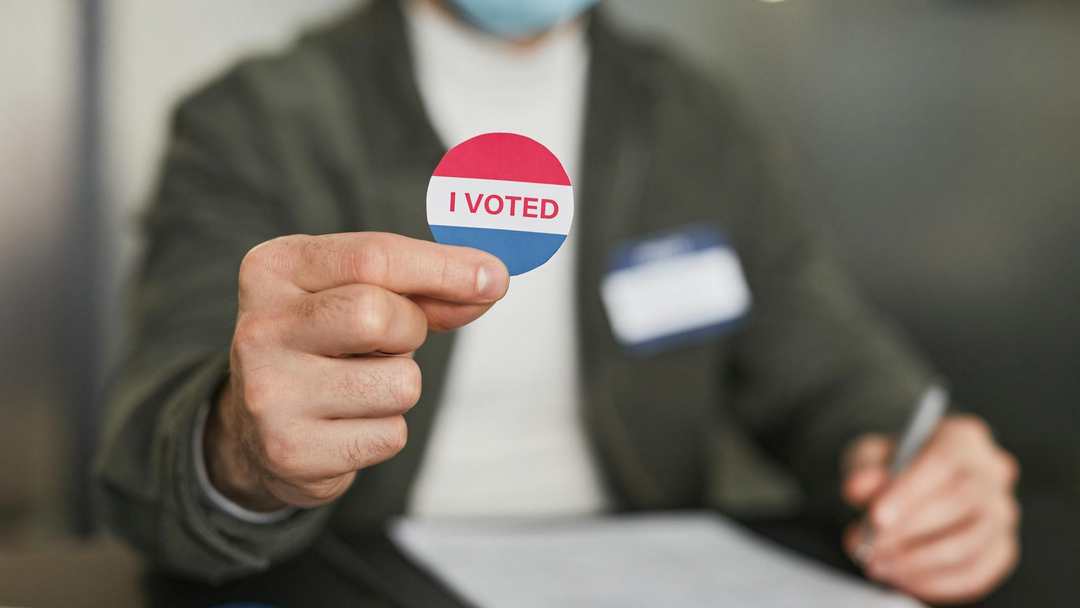
“Today, we are expanding voting rights and strengthening our democracy,” said Governor Whitmer. “Michiganders spoke clearly last year when they overwhelmingly passed Proposal 2, and now we are building on that effort. By banning deepfakes and AI in campaign advertisements, criminalizing violence towards election workers, and allowing souls to get to the polls, we are making our sure every Michigander’s vote is cast and counted.”

“This is a great day for democracy and for the people of Michigan,” said Secretary of State Jocelyn Benson. “I’m grateful to the Governor and to our legislative partners doing the thoughtful, collaborative work to make our elections safer and more accessible for all citizens. With these new tools we are well-prepared to administer secure and fair elections in 2024 and to preserve the strength of Michigan’s democratic process for future generations.”
Protecting Election Workers and Officials
House Bill 4129, sponsored by state Representative Kara Hope, guarantees protection under the law for Michiganders from the actions of intimidating an election official and preventing an election official from performing the official’s duties during an election and enforces a corresponding criminal penalty.
Senate Bill 505, sponsored state Senator Dayna Polehanki, would prescribe a maximum felony penalty of five years for individuals engaging in activity that would prevent or prohibit election workers from doing their jobs.
Improving Election Efficiency
Senate Bill 385, sponsored by state Senator Erika Geiss, amends Michigan Election Law making it easier for Michiganders to participate in the Democratic process as an election inspector by allowing them to file an application online, which will also save counties, cities, and townships money on paperwork.
“At the heart of our democracy is the essential right to vote. Today, with House Bills 4983 and 4695, we’re making it easier to exercise that right,” said state Representative Penelope Tsernoglou (D-East Lansing). “These bills speak to our collective responsibility to uphold the democratic values that define us.
House Bill 4569, sponsored by state Representative Betsy Coffia, allows for preregistration of an applicant that is at least 16 years old but not older than 17 and a half, so that the Secretary of State can process their voter registration in that eligible election year.
“Allowing young people to pre-register to vote — particularly while they’re learning about civics and the democratic process in school — will undoubtedly increase participation in our elections by ensuring when they are legally eligible to vote at 18, they will be all set to become a lifelong voter,” said State Representative Betsy Coffia (D-Traverse City).
Voter Registration
Senate Bill 594, sponsored by state Senator Jeremy Moss will expand voter registration options for citizens by allowing folks to register to vote using the last four digits of their social security number which is commonly used as a secure method in other areas of government.
House Bills 4983, 4984, 4985, and 4986 further expands Michigan’s automatic voter registration process.
House Bill 4983 requires the Secretary of State to register any person who applies for a license or ID card who is eligible to register to vote and to send that applicant a notice of registration with an instruction on how to decline that registration.
Don’t do what you do
House Bills 5143, sponsored by state Representative Matthew Bierlein, defines “artificial intelligence” under the Michigan Campaign Finance Act.
“Artificial Intelligence is a rapidly evolving technology. As we go forward, it’s going to have an even greater impact on our elections process and how people consume political information leading up to elections,” said state Representative Matthew Bierlein (R-Vassar). “Transparency is crucial as this technology moves forward and I’m looking forward to working with my colleagues across the aisle on a bipartisan package to address these evolving concerns.”
House Bill 5144, sponsored by state Representative Penelope Tsernoglou, makes it a crime for a person to knowingly distribute materially deceptive media generated by artificial intelligence if they do so with the intent of harming the reputation or electoral prospects of a candidate in an election occurring within 90 days and deceiving voters into falsely believing that the depicted individual engaged in the fake speech or conduct, and the distribution is reasonably likely to have that result.
House Bill 5145, sponsored by Representative Noah Arbit (D-West Bloomfield), adds a felony sentencing guideline for a person who violates House Bill 5144 more than once within five years.
Legal Counsel and Your Rights
When facing legal challenges, particularly in criminal cases, it is advisable to seek legal counsel immediately.
An experienced attorney can provide guidance on how to navigate interactions with law enforcement while safeguarding your constitutional rights.
Since 1993 our expert legal defense in navigating criminal law matters and protecting your constitutional rights are what we eat for breakfast everyday.
Contact Komorn Law PLLC if you’re ready to fight and win.
Research us and then call us.
Related

Michigan House Bill Proposes 32% Tax on Internet Devices for Kids
Taxed Again..? They're working on it.A newly introduced Michigan House bill would impose a 32% excise tax on smartphones, tablets, gaming systems, and other internet‑connected devices marketed to or primarily used by minors. Lawmakers backing the proposal argue the...
Michigan judge charged in stealing from incapacitated adults
No Good Headline to Lead with HereSummary Federal prosecutors have charged a 36th District Court judge and three associates with orchestrating a long‑running financial scheme that diverted funds from incapacitated adults under court‑appointed guardianship. The...
Other Articles

What is a Preliminary Exam?
Michigan Preliminary Examinations The Strategic Gatekeeper in Felony Defense The Preliminary Examination as the First Line of Defense In Michigan felony cases, the preliminary examination (PE) is the first—and often most decisive—opportunity to challenge the...

What does Nolle Prosequi mean?
What does Nolle Prosequi mean? Fatal Flaw In criminal cases, nolle prosequi may be employed when there is a significant weakness in the prosecution's case, when the prosecutor acknowledges an inability to prove the charges, or even when the prosecutor has lost...

People v. Lukity, 460 Mich 484 (1999)
Case Summary The Michigan Supreme Court reversed the Court of Appeals and reinstated the defendant’s conviction for first-degree criminal sexual conduct against his fourteen‑year‑old daughter. The Court held that although one evidentiary error occurred, it was...

Motion in Limine vs Motion to Suppress
Defininition and Explaination - Motion in LimineOverview Although both a motion in limine and a motion to suppress deal with evidence, they serve very different purposes in Michigan criminal cases. Understanding the distinction is critical because each motion affects...