
Another look at People v. Soto:
Application of Marijuana Regulation and Taxation Act to Felony Charges
Michigan’s cannabis landscape is evolving rapidly, marked by a nuanced exploration of the People v. Soto case and its implications for the Michigan Regulation and Taxation of Marihuana Act alongside the Public Health Code.
Introduction
The advent of the Michigan Regulation and Taxation of Marihuana Act (MRTMA), MCL 333.27951 et seq., has fundamentally reshaped the legal framework surrounding cannabis in Michigan.
However, the precise boundaries of this legislative initiative, particularly its interaction with pre-existing felony provisions of the Public Health Code, MCL 333.7401 et seq., remain a subject of ongoing judicial interpretation.
The case of People of the State of Michigan v. Julia Kathleen Soto, serves as a critical illustration of this evolving legal landscape, offering significant insights for legal practitioners navigating the complexities of cannabis law in the state.
Factual Backstory and Lower Court Proceedings
The genesis of People v. Soto dates to October 26, 2022, when law enforcement initiated an investigation predicated on intelligence from Illinois State Police concerning a substantial quantity of marijuana—approximately 85 pounds—intercepted in a rental vehicle destined for southwest Michigan.
Upon the arrival of the illicit cargo, Boylen was apprehended outside the residence, and Soto eventually exited her dwelling after law enforcement officers established a perimeter and issued commands for her egress.
A “protective sweep” of the residence revealed large quantities of marijuana in plain view.
In the Berrien Circuit Court (LC No. 2022-015939-FH), Soto was bound over for trial on two felony counts: (1) possession with intent to deliver between 5 and 45 kilograms of marijuana, in violation of MCL 333.7401(2)(d)(ii), and (2) maintaining a drug house, contrary to MCL 333.7405(1)(d).
Issue: Whether the evidence was seized in violation of constitutional protections, and whether the MRTMA preempts felony prosecution under the Public Health Code for large-scale possession with intent to deliver marijuana.
Result: The Circuit Court denied both motions, concluding that the evidence was admissible and that the MRTMA did not preclude the felony charges.
Michigan Court of Appeals: Interlocutory Review and Statutory Construction
Soto pursued two distinct interlocutory appeals to the Michigan Court of Appeals.
The first, Docket No. 365822, challenged the denial of her motion to suppress based on the alleged unconstitutional search. On September 11, 2023, the Court of Appeals issued an unpublished order denying leave to appeal, citing a “failure to persuade the Court of the need for immediate appellate review”.
The second appeal, Docket No. 370138, specifically addressed the Circuit Court’s ruling on the applicability of the MRTMA. On May 24, 2024, the Court of Appeals granted leave to appeal, limiting review to the statutory interpretation issues raised.
Issue: Whether the Michigan Regulation and Taxation of Marihuana Act (MRTMA), MCL 333.27951 et seq., prevents prosecution under MCL 333.7401(2)(d)(ii) of the Public Health Code for possession with intent to deliver between 5 and 45 kilograms of marijuana.
Result: On October 7, 2024, the Michigan Court of Appeals issued a published opinion affirming the trial court’s denial of the motion to dismiss. The Court’s analysis hinged on a strict textual interpretation of the MRTMA, emphasizing the principle of expressio unius est exclusio alterius.
The Court noted that while MCL 333.27965(1) and (2) of the MRTMA explicitly include “possession with intent to deliver” when defining civil infractions and misdemeanors for lesser quantities, MCL 333.27965(4)—which addresses misdemeanor penalties for quantities exceeding twice the allowed amount—conspicuously omits this phrase.
This deliberate omission, the Court reasoned, indicated the electorate’s intent to exclude large-scale possession with intent to deliver from the MRTMA’s more lenient penalty scheme, thereby leaving such conduct subject to the felony provisions of Article 7 of the Public Health Code.
The Court further posited that this interpretation aligns with the MRTMA’s broader purpose of preventing the diversion of marijuana to illicit markets, asserting that large-scale, remunerated distribution outside state regulation constitutes illicit dealing.
The case was thus remanded to the Circuit Court for trial on the felony charges.
Michigan Supreme Court: Update 7-11-2025
The legal trajectory of People v. Julia Kathleen Soto has now reached the state’s highest judicial body. The case, identified as Michigan Supreme Court Docket No. 167834
Issue: Whether the Michigan Supreme Court will grant leave to appeal and, if so, affirm, reverse, or modify the Michigan Court of Appeals’ interpretation of the MRTMA’s applicability to felony marijuana charges under the Public Health Code.
Result: On 7-11-25 Denied
The Michigan Supreme Court
The People v. Julia Kathleen Soto case has reached the highest court in Michigan.
Issue: Will the Michigan Supreme Court review the Court of Appeals’ decision and potentially change the interpretation of the MRTMA regarding large-scale marijuana offenses?
Result: The case, identified as Michigan Supreme Court Docket No. 167834, is currently “Pending on Application”.
Implications for Legal Practice
The People v. Julia Kathleen Soto case underscores the critical importance of meticulous statutory interpretation in the evolving domain of cannabis law. The Michigan Court of Appeals’ published opinion provides a clear, albeit potentially temporary, delineation between regulated cannabis activity and illicit trafficking. For legal professionals, this case highlights that the MRTMA is not a blanket decriminalization statute for all marijuana-related conduct, particularly concerning commercial quantities and intent to deliver for remuneration.
For those navigating the complexities of Michigan’s cannabis and controlled substance laws, the need for experienced legal counsel is paramount. Komorn Law specializes in these intricate areas, offering robust defense strategies informed by a deep understanding of statutory construction, appellate procedure, and the nuances of Michigan’s Public Health Code and MRTMA.
Sources: Michigan Court of Appeals Opinion,
People of MI v. Julia Kathleen Soto, COA 370138 (Oct. 7, 2024). Michigan Court of Appeals Order,
People of MI v. Julia Kathleen Soto, Docket No. 370138 (May 24, 2024). Michigan Medical Marijuana Blog, “MRTMA defense denied dismissal by MI Court of Appeals” (Oct. 7, 2024).
Michigan Court of Appeals Opinion,
People of MI v. Julia Kathleen Soto, COA 370138 (Oct. 7, 2024). Michigan Court of Appeals Opinion,
People of MI v. Julia Kathleen Soto, COA 370138 (Oct. 7, 2024). Michigan Court of Appeals Opinion,
People of MI v. Julia Kathleen Soto, COA 370138 (Oct. 7, 2024). Michigan Court of Appeals Opinion,
People of MI v. Julia Kathleen Soto, COA 370138 (Oct. 7, 2024). Michigan Courts Case Search, “PEOPLE OF MI V JULIA KATHLEEN SOTO,” MSC #167834.
Michigan Court of Appeals Order,
People of MI v. Julia Kathleen Soto, Docket No. 365822 (Sep. 11, 2023). Michigan Court of Appeals Order,
People of MI v. Julia Kathleen Soto, Docket No. 365822 (Sep. 11, 2023).
More Posts

MI COA Upholds Constitutionality of State’s Terrorist Threat Statute
The ruling means that prosecutors can continue to use this law as a vital tool in holding individuals accountable for making threats of terrorism, provided they can demonstrate the defendant acted recklessly in communicating the threat. The statute does not require...

Elder and Vulnerable Adult Financial Exploitation in Michigan
FAQs and Laws about Elder and Vulnerable Adult Financial ExploitationFinancial exploitation of elders and vulnerable adults is a growing and particularly insidious crime in Michigan, preying on individuals who, due to age, disability, or mental incapacity, are unable...

Sextortion and Sexploitation in Michigan
FAQs and Laws about Sextortion and SexploitationSextortion and sexploitation are increasingly prevalent and devastating forms of digital abuse, leveraging technology to coerce, manipulate, and exploit individuals, often for sexual gratification or financial gain....
Michigan House Bill NO. 4391
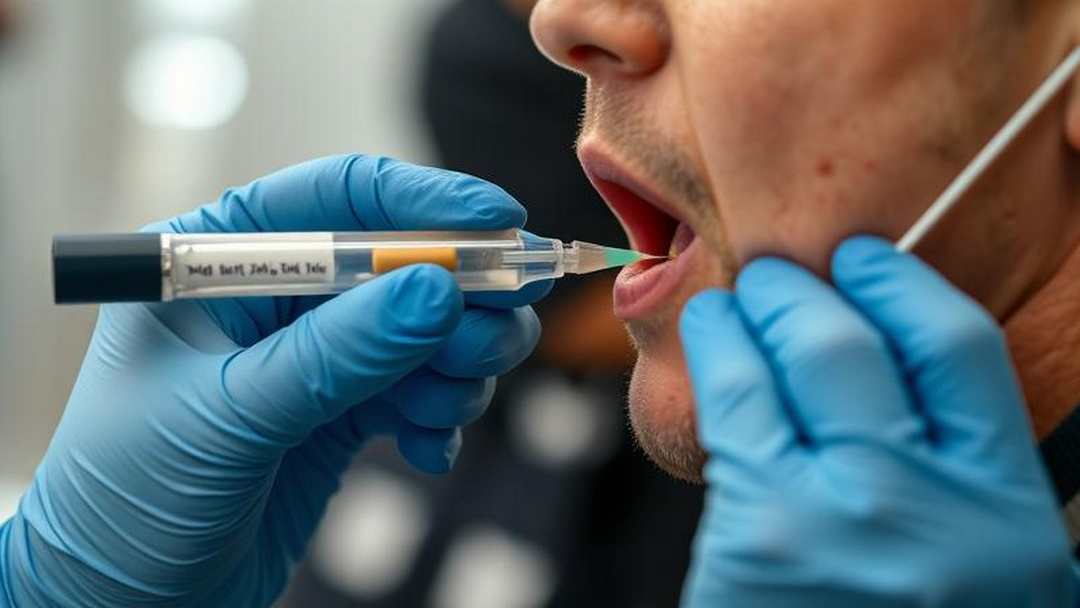
It may just be easier to collect and analyze tears.This legislation seeks to integrate saliva testing for cannabis within law enforcement procedures, designating a refusal to participate in this testing as a criminal offense, similar to the penalties imposed for...

How Much Does It Cost To Hire a Criminal Defense Attorney?
Don't do the crime - if you can't pay the price.Average Flat Fees. Some criminal defense attorneys charge a flat fee for certain types of cases, instead of billing by the hour. This may or may not include filing fees, motions, fees, etc. Flat fees include: DUI/DWI –...
What is a Franks Hearing?
What is a Frank's Hearing?A Franks hearing is a critical legal tool used when a defendant claims that police lied, exaggerated, or recklessly disregarded the truth in a search warrant affidavit. When law enforcement places its hand on the Constitution, the law...
Komorn Law
Arrested? – Better Call Komorn
Komorn Law
Areas of Service
We fight for our clients throughout the State of Michigan and Northern Ohio.
Here are some court contacts we frequently handle cases.
Oakland County
If you are facing any legal charges in Oakland County and need to hire an attorney, call our Office (248) 357-2550. If you need to contact the court, here is the information:
- Telephone Number: (248) 858-0344
- Address: 1200 N Telegraph Rd, Department 404, Pontiac, MI 48341-0404
- Website:
Oakland County 6th Judicial Circuit Court
Macomb County
If you are facing any legal charges in Macomb County and need to hire an attorney, call our Office (248) 357-2550. If you need to contact the court, here is the information:
- Telephone Number: (586) 469-5150
- Address: 40 N. Main Street, Mt. Clemens, MI 48043
- Website:
Macomb County 16th Judicial Circuit Court
Wayne County
If you are facing any legal charges in Wayne County and need to hire an attorney, call our Office (248) 357-2550. If you need to contact the court, here is the information for the Third Circuit Court (Wayne County):
- Telephone Number (Civil/Family): (313) 224-5510
- Telephone Number (Criminal): (313) 224-5261 or (313) 224-2503
- Address (Civil/Family): 2 Woodward Avenue, Detroit, MI 48226
- Address (Criminal): 1441 St. Antoine, Detroit, MI 48226
- Website:
https://www.3rdcc.org/
Kent County
If you are facing any legal charges in Kent County and need to hire an attorney, call our Office (248) 357-2550. If you need to contact the court, here is the information:
- Telephone Number: (616) 632-5220
- Address: 180 Ottawa Avenue NW, Grand Rapids, MI 49503
- Website:
Kent County
Traverse County
If you are facing any legal charges in Traverse County and need to hire an attorney, call our Office (248) 357-2550. If you need to contact the court, here is the information for the 13th Circuit Court (which includes Traverse County):
- Telephone Number: (231) 922-4701
- Address: 328 Washington Street, Suite 300, Traverse City, MI 49684
- Website: Traverse City 13h Circuit Court
Monroe County
If you are facing any legal charges in Monroe County and need to hire an attorney, call our Office (248) 357-2550. If you need to contact the court, here is the information:
- Telephone Number: (734) 240-7020
- Address: 106 E First Street, Monroe, MI 48161
- Website: Monroe County 38th Circuit Court