Someone asked us… Can I be arrested for flying a drone?
As we have seen … They can charge you and arrest you for whatever they want.
But Can I Be Arrested or Fined for Flying a Drone?
Yes, you can be arrested or fined for breaking Michigan’s drone laws. Under MCL 259.322, it is illegal to operate a drone in a way that interferes with law enforcement or emergency operations. Flying a drone over prisons, for example, is strictly prohibited. Violating these laws could lead to arrest, fines, or both.
Additionally, you could be fined for invading someone’s privacy with your drone.
MCL 750.539j makes it illegal to use a drone to photograph or record people in places where they have a reasonable expectation of privacy, like their home. The fine for this offense can vary, but violating privacy laws is a serious matter.
Can My Drone Be Taken Away?
Yes, if you are caught using your drone in a prohibited or dangerous manner, law enforcement may confiscate it.
For example, if you’re flying near critical infrastructure or in restricted airspace, your drone may be seized as “evidence” of the violation.
Use You Right To Remain Silent
If you have been accused or charged with a crime.
Say nothing to anyone. Talk to us first.
Our firm is experienced in both State and Federal courts defending clients.
CALL NOW
Do I need to Register my Drone?
FAA Drone Registration Requirements:
Drones Weighing More than 0.55 Pounds (250 grams): If your drone weighs more than 0.55 pounds (250 grams) and less than 55 pounds (25 kg), you must register it with the FAA before flying it outdoors. This applies whether you are flying for recreational or commercial purposes.
Drones Used for Commercial Purposes: If you’re flying your drone for commercial reasons, even if it weighs less than 0.55 pounds, it must still be registered under the FAA’s Part 107 regulations. Additionally, as a commercial drone operator, you will need a Remote Pilot Certificate.
Drones Weighing Over 55 Pounds: If your drone weighs more than 55 pounds, additional FAA regulations apply, and registration is mandatory.
Do I Need to Be Licensed?
If you’re flying a drone for commercial purposes, you must have an FAA Part 107 Remote Pilot Certificate. To get this, you’ll need to pass a knowledge test administered by the FAA.
If you’re flying for recreational purposes, you don’t need a license, but you must follow FAA safety guidelines, including flying below 400 feet and keeping the drone within your line of sight.
Do FAA Laws Supersede Local Laws?
Yes, Federal Aviation Administration (FAA) laws take precedence over state or local drone regulations.
This means that federal rules about airspace, drone registration, and licensing apply across the country, including Michigan. However, local laws that don’t conflict with FAA rules—like those concerning privacy or property—can still apply.
Michigan State Laws:
In Michigan, there are no separate state registration requirements for drones beyond the FAA’s regulations. However, local ordinances may still apply, particularly regarding where you can fly the drone, so it’s important to check local rules.

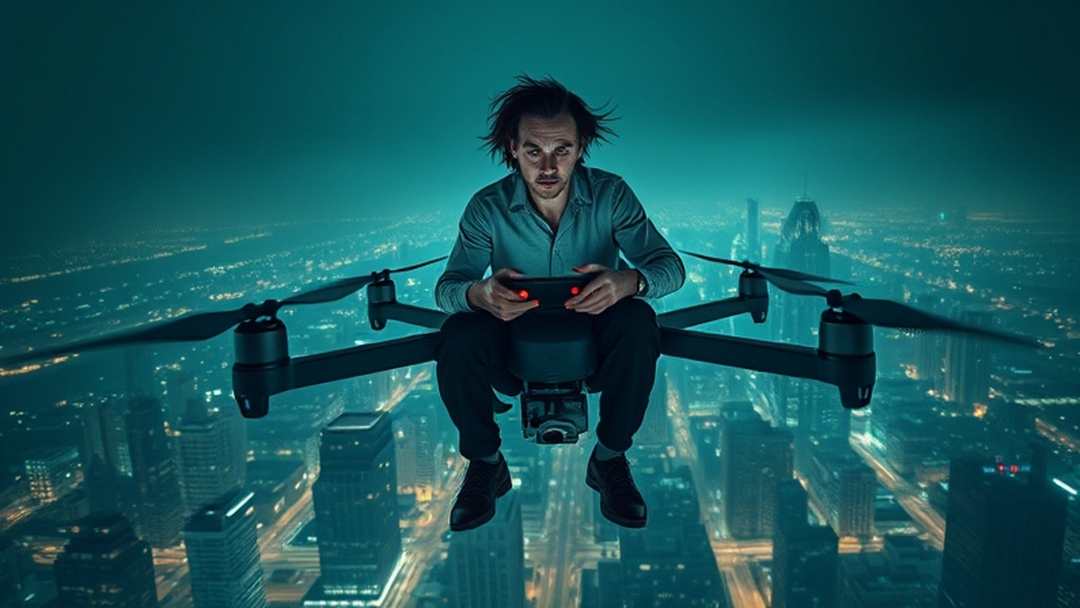
Do I need to have a pilots license if I build a drone I can ride in?
The above question is really what triggered this article and the picture.
If you build a drone that you can ride in, you would most likely need a pilot’s license to operate it legally, because it would be considered an aircraft under Federal Aviation Administration (FAA) regulations.
The FAA categorizes any manned or unmanned aerial vehicle capable of carrying passengers as an aircraft, and specific rules apply depending on its size, weight, and purpose.
Key Points to Consider:
FAA Certification: If the drone is capable of carrying people, it falls under stricter FAA regulations than standard hobbyist or commercial drones. You would likely need to obtain a Private Pilot’s License (PPL) or another applicable certification, depending on the size and capabilities of the aircraft.
Aircraft Certification: Your personal drone would also likely need to meet the FAA’s certification standards for safety. This would involve testing, inspections, and possibly approvals for experimental aircraft if it is custom-built.
Operating Rules: Manned drones would have to comply with the same operating rules as other aircraft, such as airspace restrictions, altitude limits, and safety regulations. You would also need to follow air traffic control instructions when flying in controlled airspace.
Michigan Laws: In addition to FAA rules, you must comply with Michigan’s laws about aviation, such as MCL 259.80, which covers general aviation regulations in the state. These laws include provisions for safe operation, interference with other aircraft, and operating near public spaces.
Bottom Line:
Building and flying a drone that you can ride in is a serious undertaking that involves federal and state regulations. You would almost certainly need to be a licensed pilot and have your drone certified for safety by the FAA before legally flying it. Make sure to consult with aviation experts or the FAA for guidance on licensing and compliance.
Better call a fighting lawyer and prepare to pay for it. Could be more cost effective for your future and cheaper than sitting in jail. You don’t make money there. They do.
Disclaimer: This article provides a general overview and does not substitute for legal advice. As with any law it can change or be modified and research should be done before you rely on any information provided on the internet. Although we make all attempts to link relevant laws these laws can often be gray and corrupted to fit a narrative. Anyone charged with any alleged crime should consult an attorney for specific legal guidance.
DRONE NEWS – DEC 2024
Jersey cops launched into the night sky with catapults to throw dreamcatchers at the unknown drones to entangle their props and bring em down! – Might as well.
—————————————
Drone updates: ‘Something’s going on,’ New Jersey mayor says
——————————
According to the Department of Defense News 12/14/24
https://www.defense.gov/News/News-Stories/Article/Article/4002374/joint-staff-addresses-drones-over-new-jersey-military-installations/
Right now, the FBI, DHS, FAA and DOD have been unable to determine who is responsible for flying the drones, and there’s no indication that there are adversary nations involved.
“To date, we have no intelligence or observations that would indicate that they were aligned with a foreign actor or that they had malicious intent,” the spokesperson said. “But … we don’t know. We have not been able to locate or identify the operators or the points of origin.”
————————————
Darrrrrr – Watch this and try to believe it.
Michigan Laws

Michigan Supreme Court and Court of Appeals Cases – Arrest
People v Lyons, No 370840, ___ Mich App ___, ___ NW3d ___ (May 13, 2025)Case Summary In People v Lyons, the defendant was a passenger in a vehicle stopped by police. Before the vehicle fully stopped, he exited and began walking away. Officers ordered him to return, he...

Michigan Supreme Court and Court of Appeals Cases – Manslaughter
Case Summary These two cases examine the boundaries of involuntary manslaughter. In People v Aiyash, a gas‑station clerk locked an agitated customer and three patrons inside the store, after which the customer shot the patrons. In People v Sherrill, the defendant...

Michigan begins 2026 with New Laws
Michigan’s 2026 legal landscape includes major tax reforms—most notably the gas‑tax increase from 31¢ to 52.4¢ per gallon—along with cannabis tax changes, wage increases, consumer protections, and transparency laws.Michigan begins 2026 with a slate of new laws...
Michigan Supreme Court and Court of Appeals Cases – Appeal
Michigan appellate courts issued several significant decisions refining how convictions are reviewed, when relief from judgment is appropriate, and how procedural errors must be preserved. These cases collectively clarify retroactivity, evidentiary‑weight standards,...

Coalition Forms to Support Voter Approved MRTMA
New Coalition Forms To Support Voter Approved Cannabis ActMichigan’s adult‑use cannabis framework was not created by accident. It was built through a deliberate, voter‑driven process culminating in the Michigan Regulation and Taxation of Marihuana Act (MRTMA). The Act...

Michigan Court of Appeals Orders City of Taylor to Release Police Misconduct Records
Case Summary The Michigan Court of Appeals has ruled that the City of Taylor must comply with a Freedom of Information Act (FOIA) request submitted by the ACLU of Michigan seeking police misconduct records dating back to 2021. The request covers documents involving...

Michigan Supreme Court and Court of Appeals Cases – Home Invasion
Case Summary In People v Berry, the defendant co‑owned a home with his former partner. After moving out and negotiating a buyout, he re‑entered the home with another individual before the agreement was finalized. Both were charged with first‑degree home invasion. The...

Cannabis Regulators Association-Briefing on Marijuana Schedule Change
Overview of the President’s December 18th Executive Order and the Implications When Marijuana is Rescheduled to Schedule III under the U.S. Controlled Substances ActTOP-LINE SUMMARY The President signed an Executive Order on December 18, 2025, ordering his...

Trump’s Marijuana Reclassification 2025
Donald Trump’s Actions On December 18, 2025, President Donald Trump signed an executive order reclassifying marijuana from a Schedule I to a Schedule III controlled substance under the federal Controlled Substances Act (CSA). This marks the most significant federal...

Michigan Supreme Court and Court of Appeals Cases – Felon in Possession
Case Summary In People v Hughes, the defendant challenged Michigan’s felon‑in‑possession statute on Second Amendment grounds. He argued the law was unconstitutional both on its face and as applied to nonviolent offenders. The Court of Appeals rejected both...