
Adult-Use Marijuana Tax Payments Being Distributed In Michigan
Here’s what they say…
Treasury: Adult-Use Marijuana Payments Being Distributed to Michigan Municipalities and Counties; More Than $59.5 Million Going to 224 Municipalities and Counties.
Sales of “legal” marijuana in Michigan contributed $266.2 million in tax revenue to the government during the most recent fiscal year, according to a new report from the legislature’s nonpartisan House Fiscal Agency.
That’s more than the state made from the sale of beer, wine and liquor combined.
February 28, 2023
The Michigan Department of Treasury today announced that more than $59.5 million is being distributed among 224 municipalities and counties as a part of the Michigan Regulation and Taxation of Marijuana Act.
Over the next few days, 81 cities, 26 villages, 53 townships and 64 counties will receive payments from the Marihuana Regulation Fund. For the state of Michigan’s 2022 fiscal year, this means each eligible municipality and county will receive more than $51,800 for every licensed retail store and microbusiness located within its jurisdiction.
“Municipalities and counties will begin seeing these payments appear in their banking accounts,” State Treasurer Rachael Eubanks said. “Through a partnership, the dollars received from the adult-use marijuana taxes and fees are distributed to our participating communities.”
Revenue was collected from 574 licensees among the state’s cities, villages and townships during the 2022 fiscal year. Some of these municipalities host more than one licensed retail store and microbusiness.
For the 2022 state fiscal year, there was $198.4 million available for distribution from the Marihuana Regulation Fund.
State law outlines how much is distributed from the Marihuana Regulation Fund.
Aside from the more than $59.5 million in disbursements to municipalities and counties, $69.4 million was sent to the School Aid Fund for K-12 education and another $69.4 million to the Michigan Transportation Fund.
In total, more than $1.8 billion in adult-use marijuana sales was reported for Fiscal Year 2022.
“The team at the CRA does an amazing job and our effective regulatory approach allows our licensees to provide Michigan’s cannabis consumers the safest possible product,” said CRA Executive Director Brian Hanna. “The funding that makes its way to local governments through the excise tax collected by licensed retailers is an important benefit of the regulated cannabis industry and the CRA is committed to doing our part in supporting our law-abiding licensees.”
Where they say the money goes…
Adult-Use (Recreational) Marijuana
Adult Use Break Downs
$226m – $59m = $167m (left over after distribution…nice haul)
Marijuana funds collected under the Michigan Regulation and Taxation of Marihuana Act (Initiated Law 1 of 2018) are distributed, upon appropriation, as follows:
- 15% to municipalities in which a marijuana retail store or a marijuana microbusiness is located, allocated in proportion to the number of marijuana retail stores and marijuana microbusinesses within the municipality.
- 15% to counties in which a marijuana retail store or a marijuana microbusiness is located, allocated in proportion to the number of marijuana retail stores and marijuana microbusinesses within the county.
- 35% to the School Aid Fund to be used for K-12 education.
- 35% to the Michigan Transportation Fund to be used for the repair and maintenance of roads and bridges.
Links
MEDICAL Marijuana Break Downs
For more information about adult-use marijuana tax distributions – including a breakdown of how much municipalities and counties received – go to Michigan.gov/RevenueSharing. To learn more about Michigan’s adult-use marijuana industry, go to Michigan.gov/cra.
Source: https://www.michigan.gov/treasury/news/2023/02/28/adult-use-marijuana-payments-being–distributed-to-michigan-municipalities-and-counties
Have your rights been violated?
Have your driving priviledges been revoked?
Has your professional license been suspended?
Second Amendment rights taken away?
Have you been charged with a crime?
Call our office to see if we can help
Komorn Law 248-357-2550
More is always better for the Government
Legislative Update 12-9-22
Liquor tax funding change means $25 million boost to counties
 A two-bill package designed to extend the capture of liquor tax revenue that counties use for substance abuse programs passed during the last days of the legislative session this week and will soon mean a $25 million boost to counties.
Senate Bills 1222-23, by Sen Wayne Schmidt (R-Grand Traverse), amend the State Convention Facilities Authority Act to extend the sunset on the capture of liquor tax revenue for improvements to the convention facility in Detroit and therefore extend the sunset on the collection of liquor tax revenue for counties.
The issues were tied together when the act was created. Under current law, the collection and allocation of the liquor tax revenue expires once the bonds for the convention facility are paid off. Due to recent increases in liquor tax revenue, those bonds are scheduled to be paid off 13 years early, which would eliminate the future collection of revenue and deplete the allocation to counties. This two-bill package does not extend the 2039 deadline for the bonds to be paid off, but it does allow the facility authority to issue additional bonds for improvements.
MAC has been working with representatives from the authority to address our need to have counties’ annual allocation reflective of the collection of the liquor tax revenue. Current law states counties receive an increase in their allocation based on a percentage above the previous year’s allocation, not on a percentage of the total tax collected. The excess tax collected is instead allocated to the reduction of the bond debt of the authority. (Again, due to the increase in liquor tax revenue, those bonds are scheduled to be paid off early.)
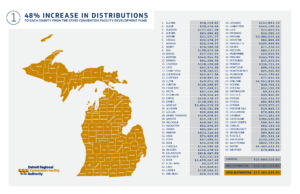
By allowing the authority to issue additional debt for improvements, the bills do something significant for counties. Beginning in 2023, the baseline allocation in liquor tax dollars for counties will increase by approximately 48 percent — or $25 million. (See county-by-county estimates.) The annual increase will remain the same as current law of 1 percent additional each year, but the baseline will be reset every three years to reflect the increase in revenue from the liquor tax.
Also, current law states 50 percent of the liquor tax revenue received by counties must be allocated to substance abuse programs. SBs 1222-23 will change that requirement to 40 percent (though no less than the amount allocated in FY22). In short, this will be a significant increase in funds toward substance abuse programs and an increase in the amount counties can allocate to their general funds.
The bills are now headed to the governor for her expected signature.
For more information on this issue, contact Deena Bosworth at bosworth@micounties.org.

Related Articles

Michigan House Bill Proposes 32% Tax on Internet Devices for Kids
Taxed Again..? They're working on it.A newly introduced Michigan House bill would impose a 32% excise tax on smartphones, tablets, gaming systems, and other internet‑connected devices marketed to or primarily used by minors. Lawmakers backing the proposal argue the...

Shadow cash is corrupting Michigan courtrooms
The Shadow Cash Threat: Protecting the Integrity of Michigan Courtrooms In recent months, a spotlight has been cast on a hidden influence within the Michigan legal system: "shadow cash." This term refers to third-party litigation funding (TPLF), where outside...

Michigan judge charged in stealing from incapacitated adults
No Good Headline to Lead with HereSummary Federal prosecutors have charged a 36th District Court judge and three associates with orchestrating a long‑running financial scheme that diverted funds from incapacitated adults under court‑appointed guardianship. The...

Michigan Cannabis Tax Fraud Cases Are Rising
Hands up CaponeMichigan’s regulated cannabis industry is in a very different place than it was when medical marijuana and adult-use legalization were the primary battlegrounds. As prices compress, margins disappear, and tax burdens increase, enforcement doesn’t...
More Posts

What is Inference Stacking?
What Is Inference Stacking? A Legal ExplanationInference stacking—also called pyramiding of inferences—is a rule of evidence that prohibits courts or juries from building one inference on top of another when the first inference is not supported by direct evidence....
Deadlocked Jury – What does it mean?
A deadlocked jury is often called a hung jury—A deadlocked jury—often called a hung jury—occurs when jurors cannot reach the unanimous (or legally required) agreement needed to deliver a verdict. In criminal cases, most jurisdictions require unanimity. When the jury...

The New Federal Definition of Hemp
The New Federal Definition of Hemp: Legal and Regulatory ImplicationsCongress has enacted a sweeping revision to the federal definition of hemp through the Continuing Appropriations, Agriculture, Legislative Branch, Military Construction and Veterans Affairs, and...

Miranda v Arizona
Case Summary Miranda v. Arizona established that before police conduct custodial interrogation, they must advise suspects of their rights: the right to remain silent, that statements may be used against them, and the right to an attorney. These “Miranda warnings”...

Your Voice, Your Rights: Understanding the First Amendment in Michigan
Freedom of Speech - The First Amendment This right is not really absoluteIn a world filled with diverse opinions and constant communication, knowing your fundamental rights is more important than ever. In Michigan, residents are protected by robust free speech rights,...

Legal Tip – Driving High on Cannabis in Michigan
Driving under the influence of cannabis is illegal and carries serious consequences in Michigan.We have fought and won many cases from the District Courts, Circuit Courts, Court of Appeals and the Supreme Court through out the State of Michigan. We have also fought...
Michigan House Bill NO. 4391
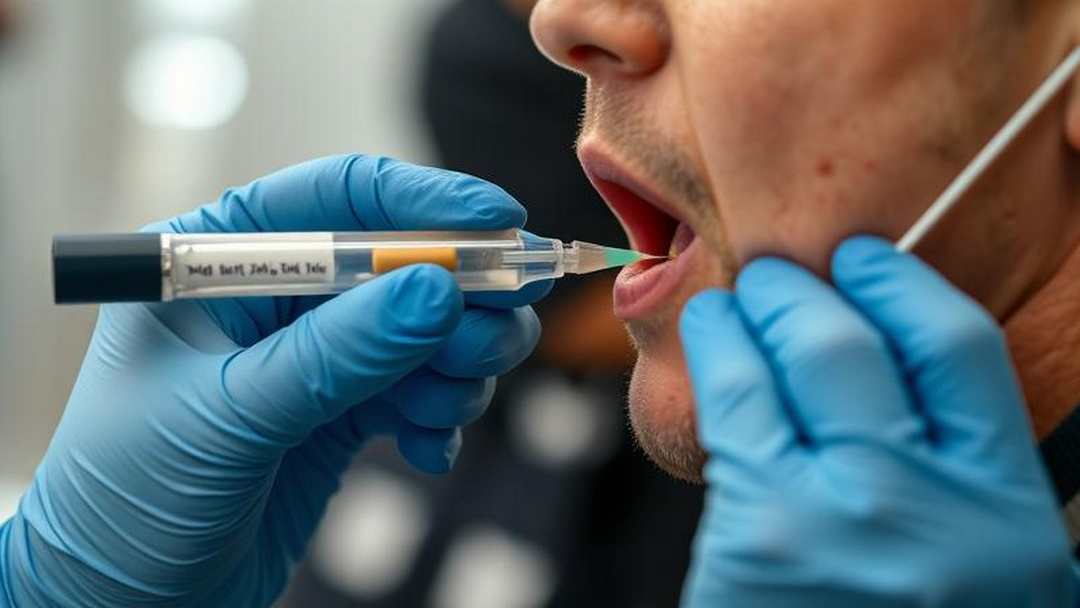
It may just be easier to collect and analyze tears.This legislation seeks to integrate saliva testing for cannabis within law enforcement procedures, designating a refusal to participate in this testing as a criminal offense, similar to the penalties imposed for...
Legal Tip – Your Rights During a DUI Stop in Michigan
Komorn Law - Quick Legal TipsLegal Tip: Understanding Your Rights During a DUI Stop in Michigan A DUI stop can be stressful, but knowing your rights is crucial. You have the right to remain silent. You are not obligated to answer questions beyond basic identification....
Forfeiture without Criminal Charges
Can the police seize your belongings and hold it without charging you with a crime?Read the summary below and watch Attorney Michael Komorn in the Court of Appeals.Summary of "Ruben Delgado v. Michigan State Police": This case was filed in the Jackson County Circuit...

23andMe filed for Chapter 11 bankruptcy and your data is?
As of Friday 3/28/25, the firm’s shares were worth less than a dollar.If you are charged with a crime you're part of the State of Michigan family now. Call us - Because you don't want to be a part of that family. Komorn Law (248) 357-2550Genetic testing service...