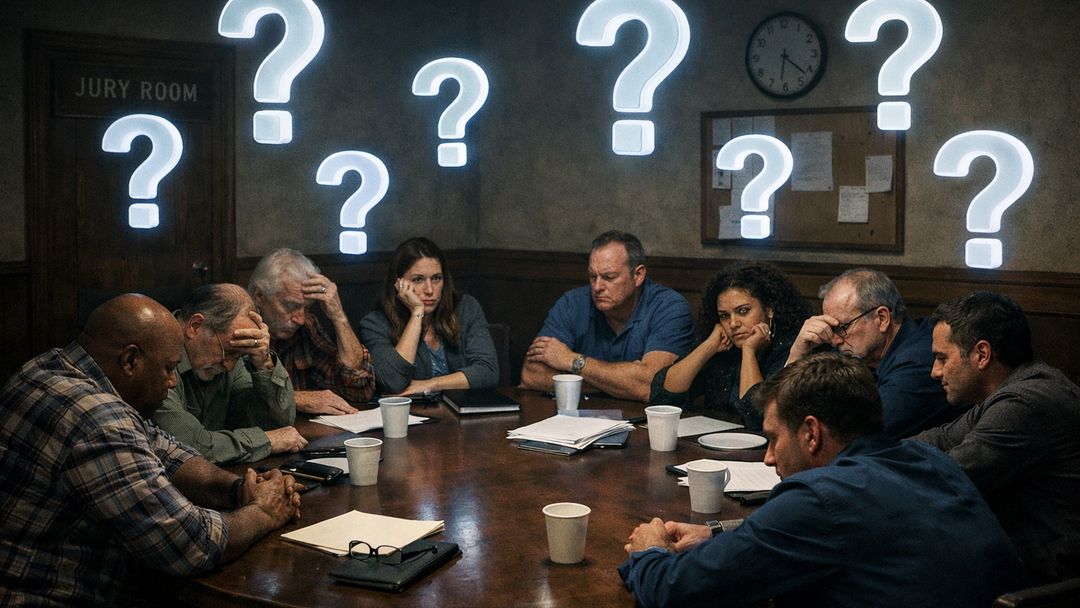
A deadlocked jury is often called a hung jury—
A deadlocked jury—often called a hung jury—occurs when jurors cannot reach the unanimous (or legally required) agreement needed to deliver a verdict. In criminal cases, most jurisdictions require unanimity. When the jury reports that further deliberation will not resolve the disagreement, the court may declare a mistrial.
Background and Historical Information
The concept of a unanimous jury verdict traces back to English common law, where unanimity was seen as a safeguard against wrongful convictions. As American courts adopted this tradition, the requirement became a cornerstone of criminal procedure. Over time, courts developed tools—such as supplemental instructions—to help juries overcome impasse without compromising fairness.
How Courts Respond
A deadlocked jury signals that the jurors, despite deliberation, cannot agree on guilt or innocence. When this happens, the judge typically takes several steps:
- Inquires whether further deliberation may help.
- Issues an “Allen charge” or similar instruction encouraging jurors to re-examine their views without surrendering honest convictions.
- Allows additional time for discussion if appropriate.
If the stalemate persists, the judge may declare a mistrial, ending the trial without a verdict.
What are Allen Charges?
Allen charges also known as dynamite nitroglycerin shotgun or third-degree charges are jury instructions directed at a hung jury encouraging them to reach a consensus on a verdict these charges are contentious as critics argue they can unduly influence certain jurors to alter their views and submit to peer pressure particularly those with minority opinions as a result many states prohibit the use of Allen charges while federal courts may implement them the term “Allen” charge derives from the case Allen v United States 1896 in which the Supreme Court permitted these types of jury instructions in federal courts
What a Deadlocked Jury Can Lead To – Is It Good or Bad?
A deadlocked jury is neither inherently good nor bad—it depends on perspective.
Potential outcomes include:
-
Retrial: The prosecution may choose to try the case again.
-
Dismissal: Charges may be dropped if evidence is weak or a retrial is impractical.
-
Plea negotiations: Parties may reach a resolution short of trial.
For defendants, a hung jury can be a temporary relief but may also prolong uncertainty. For prosecutors, it may signal evidentiary weaknesses. For the justice system, it reflects both the strength and challenge of requiring consensus.
In Closing
A deadlocked jury occurs when jurors cannot reach the agreement required to issue a verdict. Courts attempt to resolve the impasse through additional instructions and deliberation, but if disagreement persists, a mistrial may follow. While frustrating for all involved, hung juries serve as a reminder of the high burden of proof and the value placed on collective judgment in criminal trials.
Frequently Asked Questions
Q: What causes a jury to become deadlocked?
A: Jurors may disagree about witness credibility, evidence strength, or legal standards, making consensus impossible.
Q: Can a defendant be retried after a hung jury?
A: Yes. Because no verdict was reached, double jeopardy does not apply.
Q: How long will a judge let a jury deliberate?
A: As long as deliberations remain productive and not coercive. There is no fixed time limit.
Q: Is an Allen charge mandatory?
A: No. Judges may choose whether to give a supplemental instruction based on the circumstances.
Q: Does a hung jury mean the case was weak?
A: Not necessarily. It may reflect close evidence, strong disagreement, or differing interpretations among jurors.
Komorn Law, founded in 1993, brings decades of seasoned experience to Michigan’s most complex criminal and regulatory matters, including the evolving cannabis framework from the MMMA to today’s MRTMA landscape. The firm represents clients facing controlled‑substance offenses, DUI and drug‑related driving charges, firearm violations, property crimes, resisting or obstructing, and the most serious allegations such as manslaughter and homicide. With a proven record in courts across Michigan and the federal system, Komorn Law delivers strategic, relentless advocacy when the stakes are highest. To work with a firm that truly refuses to back down, call 248-357-2550.
More
A Motion in Limine – What does it Mean?
Defininition and Explaination - Motion in LimineA motion in limine is a pretrial request asking the judge to exclude (or sometimes allow) specific evidence before the jury ever hears it. It’s one of the most important evidentiary tools in both criminal and civil...

Michigan Supreme Court and Court of Appeals Cases – Threat of Terrorism
Case Summary In People v Kvasnicka, the defendant sent a message to a young girl stating she “would not be laughing” when he came to her school to “shoot it up or blow it up like Columbine.” Charged under Michigan’s threat‑of‑terrorism statute, he argued the law was...
What is a Franks Hearing?
What is a Frank's Hearing?A Franks hearing is a critical legal tool used when a defendant claims that police lied, exaggerated, or recklessly disregarded the truth in a search warrant affidavit. When law enforcement places its hand on the Constitution, the law...

Michigan House Bill Proposes 32% Tax on Internet Devices for Kids
Taxed Again..? They're working on it.A newly introduced Michigan House bill would impose a 32% excise tax on smartphones, tablets, gaming systems, and other internet‑connected devices marketed to or primarily used by minors. Lawmakers backing the proposal argue the...
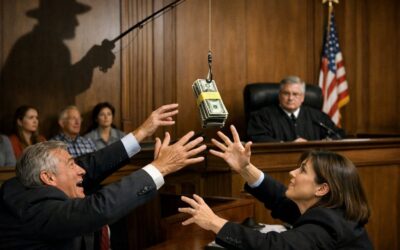
Shadow cash is corrupting Michigan courtrooms
The Shadow Cash Threat: Protecting the Integrity of Michigan Courtrooms In recent months, a spotlight has been cast on a hidden influence within the Michigan legal system: "shadow cash." This term refers to third-party litigation funding (TPLF), where outside...

Michigan judge charged in stealing from incapacitated adults
No Good Headline to Lead with HereSummary Federal prosecutors have charged a 36th District Court judge and three associates with orchestrating a long‑running financial scheme that diverted funds from incapacitated adults under court‑appointed guardianship. The...

Michigan Supreme Court and Court of Appeals Cases – Prisoner in Possession
Prisoner in Possession of a Controlled SubstanceCase Summary In People v Tadgerson, the Michigan Supreme Court addressed a critical question: does the crime of a prisoner possessing a controlled substance under MCL 800.281(4) require proof of intent, or is it a...
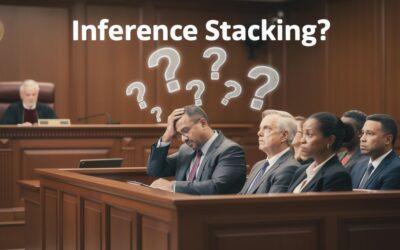
What is Inference Stacking?
What Is Inference Stacking? A Legal ExplanationInference stacking—also called pyramiding of inferences—is a rule of evidence that prohibits courts or juries from building one inference on top of another when the first inference is not supported by direct evidence....

Michigan Supreme Court and Court of Appeals Cases – Murder
Case Summary In People v Jones, the Michigan Court of Appeals addressed whether a single act of abuse can support convictions for both first‑degree child abuse and felony murder. The defendant argued that using the same conduct to support both charges violated...

Michigan Supreme Court and Court of Appeals Cases – Neglect of Duty
Case Summary In People v Harper, a Wayne County Sheriff’s deputy was charged with neglect of duty after witnessing an inmate escape during his smoke break and taking no action to stop or pursue the prisoner. The prosecution relied on the Sheriff’s Department policy...