
Students and 4th Amendment Rights
Students are entitled to a right to be safe from unreasonable searches and seizures even within school premises, as ruled by the Supreme Court of the United States.
However, these rights are somewhat limited for students, allowing school officials to conduct searches based on reasonable suspicion rather than just probable cause.
Reasonable Suspicion – The standard that must be met in order to search a student at school; this criterion was established by in 1985 by the case New Jersey v. T.L.O.
Case Background
In a New Jersey high school, a teacher caught two girls smoking in the bathroom and escorted them to the principal’s office. While one girl confessed to smoking, the other, identified as T.L.O., denied it.
The principal discovered that the girl was also selling marijuana at school when they inspected her purse. T.L.O. confessed to the offense after being brought to the police station.
Based on her confession and the evidence in her purse, the state of New Jersey brought charges against her. In a juvenile court, T.L.O. argued that her Fourth Amendment rights against unreasonable searches and seizures had been violated.
The school was supported by the court, but T.L.O. appealed to the New Jersey Supreme Court, which ultimately deemed the search unreasonable and the evidence inadmissible.
The state of New Jersey appealed the decision to the United States Supreme Court.

US Supreme Court Decision
School administrators are not required to obtain a search warrant or establish probable cause
In 1985, the Supreme Court ruled, by a 6-3 margin, that New Jersey and the school had met a “reasonableness” standard for conducting such searches at school.
School administrators are not required to obtain a search warrant or establish probable cause before conducting searches, as students have a decreased expectation of privacy while on school premises.
Legal Counsel and Your Rights
When facing legal challenges, particularly in criminal cases, it is advisable to seek legal counsel immediately.
An experienced attorney can provide guidance on how to navigate interactions with law enforcement while safeguarding your constitutional rights.
Since 1993 our expert legal defense in navigating criminal law matters and protecting your constitutional rights are what we eat for breakfast everyday.
Contact Komorn Law PLLC if you’re ready to fight and win.
Research us and then call us.
CONSTITUTION OF MICHIGAN OF 1963
§ 11 Searches and seizures.
Sec. 11.
The person, houses, papers, possessions, electronic data, and electronic communications of every person shall be secure from unreasonable searches and seizures. No warrant to search any place or to seize any person or things or to access electronic data or electronic communications shall issue without describing them, nor without probable cause, supported by oath or affirmation.
The provisions of this section shall not be construed to bar from evidence in any criminal proceeding any narcotic drug, firearm, bomb, explosive or any other dangerous weapon, seized by a peace officer outside the curtilage of any dwelling house in this state.
History: Const. 1963, Art. I, § 11, Eff. Jan. 1, 1964 ;– Am. S.J.R. G, approved Nov. 3, 2020, Eff. Dec. 19, 2020
Constitutionality: The last sentence of this section was held invalid as in conflict with US Const, Am IV. Lucas v People, 420 F2d 259 (CA 6, 1970); Caver v Kropp, 306 F Supp 1329 (DC Mich 1969); People v Pennington, 383 Mich 611; 178 NW2d 460 (1970); People v Andrews, 21 Mich App 731; 176 NW2d 460 (1970).
Former Constitution: See Const. 1908, Art. II, § 10.
Recent
What is a Preliminary Exam?
Michigan Preliminary Examinations The Strategic Gatekeeper in Felony Defense The Preliminary Examination as the First Line of Defense In Michigan felony cases, the preliminary examination (PE) is the first—and often most decisive—opportunity to challenge the...

What does Nolle Prosequi mean?
What does Nolle Prosequi mean? Fatal Flaw In criminal cases, nolle prosequi may be employed when there is a significant weakness in the prosecution's case, when the prosecutor acknowledges an inability to prove the charges, or even when the prosecutor has lost...
Other Articles

Supreme Court to Hear Case on Gun Rights and Marijuana Use
Supreme Court to Hear Case on Gun Rights and Marijuana Use The Supreme Court has agreed to hear U.S. v. Hemani, a case challenging the federal ban on gun ownership by individuals who use marijuana—even in states where it’s legal. The decision could reshape how drug...

Supreme Court Declines to Hear Maryland Gun Permit Case
The U.S. Supreme Court recently declined to hear Snope v. Brown, a case challenging Maryland’s requirement for a permit to carry a concealed handgun. While the Court offered no explanation, the decision leaves in place a lower court ruling that upheld the state’s...
Video kept from family shows police force not drugs killed son
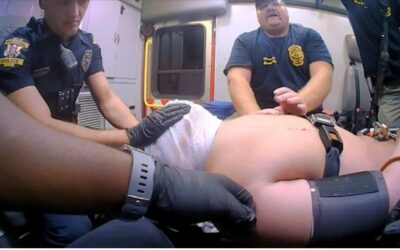
police and paramedics inflicted “inhumane acts of violence”A mother has filed a federal lawsuit claiming that, while her son was experiencing a seizure in his Tennessee apartment, police and paramedics inflicted “inhumane acts of violence” on the 23-year-old instead...
What could happen when you click the – I agree – box?
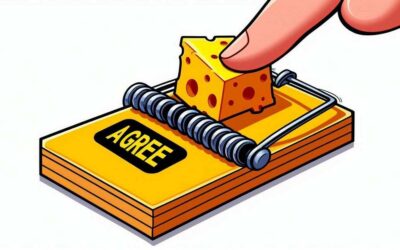
Wrongful death suit against Disney serves as a warning to consumers when clicking ‘I agree’A wrongful death lawsuit involving Walt Disney Parks and Resorts highlights the critical importance for consumers to meticulously review the fine print before registering for a...