

Michigan Rules of Evidence: A Guide to Rules 201-202
Understanding the Michigan Rules of Evidence is crucial for anyone involved in legal proceedings within the state.
This article focuses on two key rules: 201** (Judicial Notice of Adjudicative Facts)** and 202** (Judicial Notice of Law)**, providing a concise and informative overview of their purpose, scope, and application.
Rule 201: Judicial Notice of Adjudicative Facts
This rule empowers the court to take certain facts, known as “adjudicative facts,” as true without requiring formal proof during a trial.
These facts must be:
- Not subject to reasonable dispute: They are either universally accepted within the court’s jurisdiction or readily verifiable from reliable sources.
- Examples: Commonly-known geographic features, population statistics, or widely-accepted scientific principles.
The court can take notice of these facts either:
- On its own initiative: In situations where the fact is readily apparent and critical to the case.
- At the request of a party: If the party provides sufficient information and allows opposing parties time to prepare.
Rule 201: Judicial Notice of Adjudicative Facts
This rule empowers the court to take certain facts, known as “adjudicative facts,” as true without requiring formal proof during a trial.
These facts must be:
- Not subject to reasonable dispute: They are either universally accepted within the court’s jurisdiction or readily verifiable from reliable sources.
- Examples: Commonly-known geographic features, population statistics, or widely-accepted scientific principles.
Have your rights been violated?
Have your driving priviledges been revoked?
Has your professional license been suspended?
Have you been charged with a crime?
Call our office to see if we can help
Komorn Law 248-357-2550
Rule 202: Judicial Notice of Law
Similar to Rule 201, this rule allows the court to acknowledge certain legal matters without requiring formal presentation of evidence. These matters include:
Law in force: This encompasses the common law, constitutions, and public statutes of all jurisdictions within the United States.
Private acts and resolutions: These are specific legislative documents passed by Congress or the Michigan Legislature.
Local ordinances and regulations: These are rules established by governmental subdivisions or agencies within Michigan.
Foreign laws: The court can take notice of foreign laws upon proper presentation of evidence.
The court may take notice of these legal matters either:
On its own initiative: In situations where the law is readily apparent and relevant to the case.
At the request of a party: If the party provides sufficient information and allows opposing parties time to prepare.
Key Differences between Rules 201 and 202:
Type of knowledge: Rule 201 deals with factual matters, while Rule 202 deals with legal matters.
Scope: Rule 201 applies to facts within the court’s jurisdiction, while Rule 202 has a broader scope covering national, state, local, and even foreign laws.
Onus of proof: For Rule 201, the burden of proof lies with the party requesting judicial notice to provide the necessary information. For Rule 202, the court may take notice on its own initiative, but parties can still object or challenge the accuracy of the legal matter.
Important:
This article provides a simplified overview of the Michigan Rules of Evidence for informational purposes only. It should not be interpreted as legal advice. When facing legal matters, always consult with a qualified attorney for professional guidance.
The Michigan Rules of Evidence are subject to change over time. Always consult the latest official version for accurate information.
Here is the link to the Michigan Rules of Evidence Handbook. Check the footer for the latest update.
Related Articles
No Results Found
The page you requested could not be found. Try refining your search, or use the navigation above to locate the post.
More Posts

Michigan’s DUI Laws and Penalties
Michigan's OWI Laws and PenaltiesAn DUI / OUI / OWVI conviction requires proof only that the driver shows visible signs of impairment due to ingesting alcohol or drugs. The Michigan Law Under MCL 257.625(3), you are assumed guilty of a crime if, regardless of your...

Michigan Law on Boating Under the Influence
Michigan Laws on Boating Under the InfluenceBoating is a fun activity, but it can be dangerous if the operator is under the influence of drugs or alcohol. Michigan law prohibits operating a motorboat while under the influence of drugs or alcohol. Boating Under the...

I was arrested what should I do
I was arrested what should I doIf you have been accused of any Crime or DUI.Call Our Office If You're Ready to Fight it.DO NOT TALK CONFESS BE AN A-HOLE THINK YOUR SMARTER THAN THE COPS THINK BY COOPERATING THEY WILL BE ON YOUR SIDE LIE (You can't lie if you say...

Federal Court Strikes Down Gun Ban For People Who Use Marijuana
The federal government's justification for upholding the law is "concerning," according to a federal judge, who ruled that the ban on marijuana users owning firearms is unconstitutional. A man was charged in Oklahoma in 2022 after police found marijuana and a handgun...

Police found my friend’s drugs in my car-What do I do?
When you're pulled over by the police and your friend throws their stash under your seat. Are they still your friend? That's up to you. But at the moment you probably are going to take the fall, pay the price and have your life turned inside out and upside down. The...

The Right to a Jury Trial
When facing criminal charges you have the right to have a trial by jury. The justice system will offer you the right to a jury trial. It's just a matter if you can afford that right. A jury trial with an attorney that is not a public defender can be costly. If you...

Can Police Lie To You?
Police are allowed to lie to you. One might believe that if you ask an undercover cop if they are a police officer they have to tell you. That’s not true. Police can and will lie to you. It's legal for cops to lie The Police may legally lie, bluff, mislead and...

Client testimonies about their experience with the legal system
Komorn Law clients speak about their experience with the legal system Several of Komorn Law client's as well as other individuals have chosen to speak about their encounter with law enforcement, the legal system and how it has affected their lives, families and...
MICHIGAN MEDICAL MARIHUANA ACT – Section 4 Defense
Marijuana Criminal Defense Client with medical marijuana card was charged with marijuana possession. Client was assigned a court appointed lawyer and encouraged to plead guilty and accept 3 months of probation. Client hired Michael Komorn for representation and...
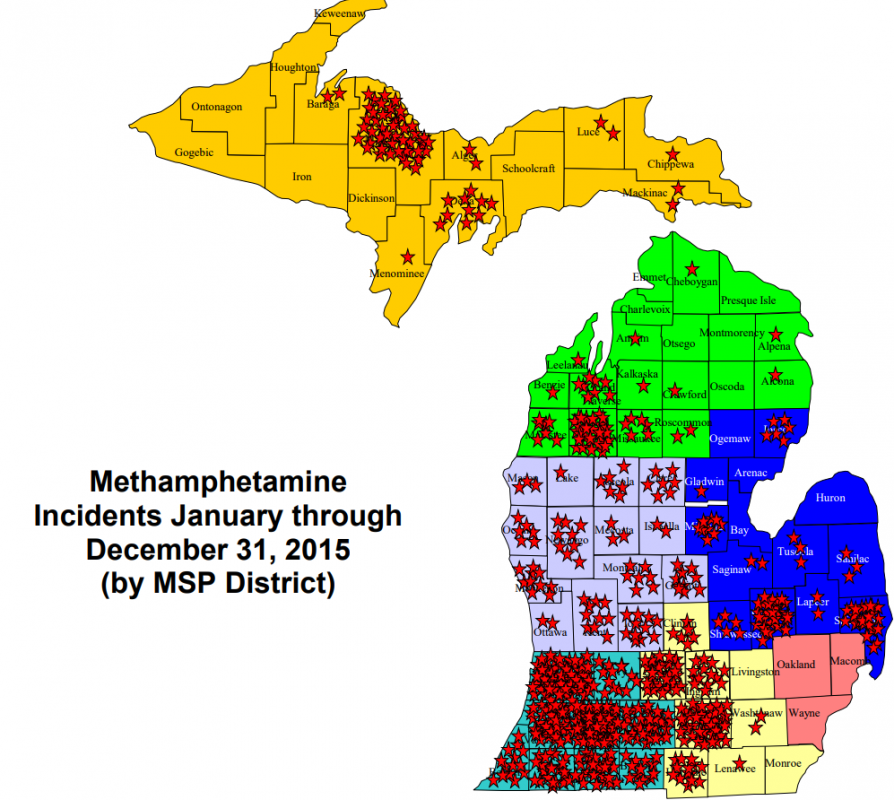
Michigan Methamphetamine Defense
Bill Schuette, the current Michigan Attorney General, is waging war against Meth users, dealers and labs. Innocent people get swept up with meth crimes when police run field tests on any powdery substances, frequently returning false positive results. Komorn...