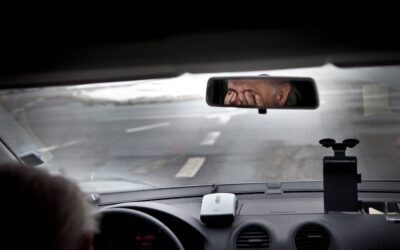

Mere presence in a “high crime” area does not provide particularized suspicion of criminal activity for an investigatory detention.
People vs Prude
In People v Prude, Prude was in a parked vehicle at an apartment complex that was regularly patrolled by police because of frequent reports of crimes committed by non-residents. Prude was observed by an officer sitting alone during daylight hours, with the engine off, in an area of the parking lot where criminal activity was common. No one else was in the area, and there was no evidence Prude’s vehicle was parked illegally or describing how long he had been parked in that location.
I’m outta here
An officer approached Prude, asked for identification, and inquired whether he was a resident of the complex. Although Prude declined to identify himself, he answered that he was not a resident but that he stayed at the complex with his girlfriend who was a resident. A second officer then arrived, approached Prude’s vehicle, and upon recognizing Prude, provided his name to the first officer.
The first officer then advised Prude he needed to be with a resident while on the property before returning to his patrol vehicle to verify Prude’s tenant status through LEIN and to check the complex’s internal database to see if Prude had previously received a trespass warning from the complex. When asked, the second officer advised Prude he was being detained and that he was not free to leave. Prude then started the vehicle, rolled up his window, and drove away at a high rate of speed.
Komorn Law (248) 357-2550
Criminal Defense | DUI | Traffic Tickets | Business | Family Law
In it to win it
Prude was later arrested, charged, and eventually convicted by a jury of second degree fleeing and eluding under MCL 257.602a(4), and assaulting, resisting, or obstructing a police officer under MCL 750.81d(1). The Court of Appeals affirmed Prude’s convictions. Prude sought leave to appeal where he argued that because both offenses required the prosecution to prove beyond a reasonable doubt the police acted lawfully (see People v Chapo and People v Moreno), the prosecution presented insufficient evidence the officers lawfully detained him based on a reasonable suspicion he was trespassing. The Michigan Supreme Court granted leave and without any oral argument, reversed Prude’s convictions and remanded the case to the trial court to enter judgments of acquittal.
The article is continued here: Terry Stop and Refusal to Identify Yourself to Police
Source: Legal Update 157 Mich.gov
Just goes to show – when you fight there’s a chance you can win.
Better call Komorn (248) 357-2550
More Posts
Sometimes our posts provide a general overview of things with opinionated sarcasm and dry humor by the writer to lighten the same old same old of other law sites. It does not substitute for legal advice. Anyone charged with a criminal offense should consult an attorney for specific legal guidance. BTW. True Fact: When Michael Komorn fights the justice system there is only one focus. You and your rights.

Recent
Shadow cash is corrupting Michigan courtrooms
The Shadow Cash Threat: Protecting the Integrity of Michigan Courtrooms In recent months, a spotlight has been cast on a hidden influence within the Michigan legal system: "shadow cash." This term refers to third-party litigation funding (TPLF), where outside...

Michigan judge charged in stealing from incapacitated adults
No Good Headline to Lead with HereSummary Federal prosecutors have charged a 36th District Court judge and three associates with orchestrating a long‑running financial scheme that diverted funds from incapacitated adults under court‑appointed guardianship. The...
Related

Supreme Court Rejects Gun Rights Cases Leaving Weapons Ban Unresolved
Supreme Court Rejects Gun Rights Cases, Leaving Assault Weapons Ban Unresolved In a surprising move, the U.S. Supreme Court recently declined to hear two major gun rights cases, leaving unresolved questions about the constitutionality of assault weapons bans and...

Marijuana and Driving in Michigan is an OWI
Don't Smoke and DriveMichigan's legalization of recreational marijuana in 2018 brought new freedoms, but it's crucial for every driver to understand a critical distinction: while consuming marijuana is legal for adults over 21, driving under its influence is...

Michigan’s Evolving “Youth Lifer” Laws
Evolving "Youth Lifer" LawsIn a significant shift for criminal justice in Michigan, the state's Supreme Court has issued groundbreaking rulings that redefine how young adults are sentenced for serious crimes, particularly those that historically carried mandatory life...

Client Was Caught With Brass Knuckles – What’s the Law?
Michigan Criminal Laws FAQs Brass KnucklesGetting caught with brass knuckles in Michigan can lead to serious legal trouble. While some states have more lenient laws, Michigan takes a strict stance on these types of weapons. If you or someone you know faces charges...

Resisting an Unlawful Arrest in Michigan
Michigan Criminal Laws FAQs Resisting an Unlawful Arrest in MichiganThe question of whether you can legally resist an unlawful arrest in Michigan is complex, and the answer is generally no, with very limited exceptions. While the idea of defending oneself against an...

Criminal Law FAQs – Assault with Intent to do Great Bodily Harm Less Than Murder (AWIGBH)
Michigan Criminal Laws FAQs Assault with Intent to do Great Bodily Harm Less Than MurderAccording to Michigan State Law (Michigan Compiled Laws - MCL), Assault with Intent to do Great Bodily Harm Less Than Murder (AWIGBH) is a serious felony offense defined in MCL...