
Undocumented immigrants could obtain a Michigan driver license or state identification card under Democratic legislation that sponsors hope to make law this year.
Supporters say that giving more illegal immigrants legal permission to drive to work, medical appointments or other functions without the threat of arrest or deportation is a matter of “human dignity” that would benefit the economy, including farmers who rely on seasonal labor.
“It is not the state government’s purview or job to fix our broken immigration system,” House Majority Floor Leader Abraham Aiyash, D-Hamtramck, said.
“We’re not going to wait for the federal government to act to make sure that all Michiganders are going to be safe.”
“My colleagues and I will do everything we can to make sure that we have the votes that are necessary to get these bills passed and signed into law,” Senate Civil Rights Committee Chair Stephanie Chang, D-Detroit, told reporters.
“There’s not an apple, blueberry, asparagus, turkey, egg (farm) that this legislation wouldn’t help,” said Rob Steffens. “Our people want to follow the law, but they can’t.”
More from BridgeMI
- In Michigan, an affordable housing ‘emergency’ looms
- Michigan Democrats in no rush to prioritize ‘fixing the damn roads’
- Michigan passes $21.5B school budget with boost for at-risk students
- Cooling off period proposed for Michigan lawmakers to become lobbyists
- Lawsuit aims to disqualify Trump from Michigan ballot
FAQs
Q: What do Michigan House bills 4410-4412 do?
A: Michigan House bills 4410-4412 would make noncommercial Michigan driver’s licenses and state identification cards available to applicants who do not have proof of U.S. citizenship or immigration status.
Q: Why are these bills being introduced?
A: The bills are being introduced to address the needs of undocumented immigrants and other noncitizens who need a driver’s license or state identification card for driving, employment, and other purposes.
Q: Who would be eligible for a noncommercial Michigan driver’s license or state identification card under these bills?
A: To be eligible for a noncommercial Michigan driver’s license or state identification card under these bills, an applicant must:
- Be at least 16 years old
- Be a resident of Michigan
- Meet all other requirements for a driver’s license or state identification card, except for the requirement of proof of U.S. citizenship or immigration status
Q: How would noncommercial Michigan driver’s licenses and state identification cards be different from regular Michigan driver’s licenses and state identification cards?
A: Noncommercial Michigan driver’s licenses and state identification cards would have the same appearance and function as regular Michigan driver’s licenses and state identification cards, except that they would be marked “NONCOMMERCIAL” and would not be valid for travel outside of the United States.
Q: When would these bills take effect if they are passed?
A: If these bills are passed and signed into law, they would take effect on October 1, 2024.
Additional information:
The bills were introduced by Representative Stephanie Chang on September 28, 2023.
The bills have been referred to the House Committee on Transportation and Infrastructure.
Please note that this is just a summary of the legislation and does not constitute legal advice. If you have any questions about the legislation, you should consult with an attorney.
More Posts

What is a Preliminary Exam?
Michigan Preliminary Examinations The Strategic Gatekeeper in Felony Defense The Preliminary Examination as the First Line of Defense In Michigan felony cases, the preliminary examination (PE) is the first—and often most decisive—opportunity to challenge the...

What does Nolle Prosequi mean?
What does Nolle Prosequi mean? Fatal Flaw In criminal cases, nolle prosequi may be employed when there is a significant weakness in the prosecution's case, when the prosecutor acknowledges an inability to prove the charges, or even when the prosecutor has lost...

People v. Lukity, 460 Mich 484 (1999)
Case Summary The Michigan Supreme Court reversed the Court of Appeals and reinstated the defendant’s conviction for first-degree criminal sexual conduct against his fourteen‑year‑old daughter. The Court held that although one evidentiary error occurred, it was...
Motion in Limine vs Motion to Suppress
Defininition and Explaination - Motion in LimineOverview Although both a motion in limine and a motion to suppress deal with evidence, they serve very different purposes in Michigan criminal cases. Understanding the distinction is critical because each motion affects...
A Motion in Limine – What does it Mean?
Defininition and Explaination - Motion in LimineA motion in limine is a pretrial request asking the judge to exclude (or sometimes allow) specific evidence before the jury ever hears it. It’s one of the most important evidentiary tools in both criminal and civil...

Michigan Supreme Court and Court of Appeals Cases – Threat of Terrorism
Case Summary In People v Kvasnicka, the defendant sent a message to a young girl stating she “would not be laughing” when he came to her school to “shoot it up or blow it up like Columbine.” Charged under Michigan’s threat‑of‑terrorism statute, he argued the law was...
What is a Franks Hearing?
What is a Frank's Hearing?A Franks hearing is a critical legal tool used when a defendant claims that police lied, exaggerated, or recklessly disregarded the truth in a search warrant affidavit. When law enforcement places its hand on the Constitution, the law...

Michigan House Bill Proposes 32% Tax on Internet Devices for Kids
Taxed Again..? They're working on it.A newly introduced Michigan House bill would impose a 32% excise tax on smartphones, tablets, gaming systems, and other internet‑connected devices marketed to or primarily used by minors. Lawmakers backing the proposal argue the...
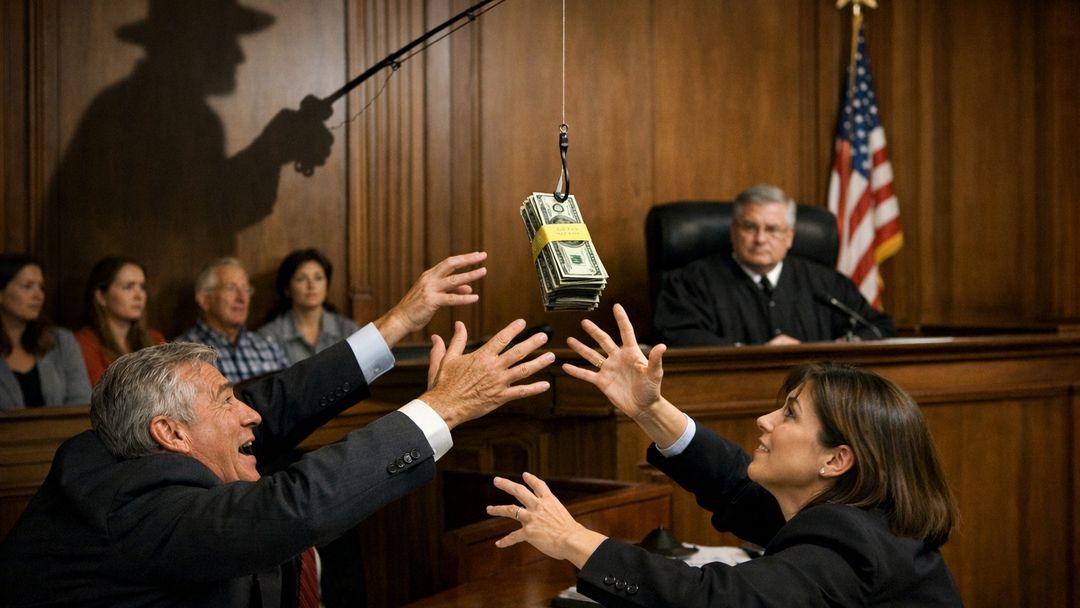
Shadow cash is corrupting Michigan courtrooms
The Shadow Cash Threat: Protecting the Integrity of Michigan Courtrooms In recent months, a spotlight has been cast on a hidden influence within the Michigan legal system: "shadow cash." This term refers to third-party litigation funding (TPLF), where outside...

Michigan judge charged in stealing from incapacitated adults
No Good Headline to Lead with HereSummary Federal prosecutors have charged a 36th District Court judge and three associates with orchestrating a long‑running financial scheme that diverted funds from incapacitated adults under court‑appointed guardianship. The...