Michigan Court of Appeals – People v. Bosworth
Despite these efforts, the jury found the evidence against Bosworth compelling.
In the case of People v. Christopher Mychael Bosworth, the Michigan Court of Appeals rendered a decision on July 18, 2024. Bosworth was convicted by a jury of first-degree murder, assault with intent to commit murder, and two counts of possession of a firearm during the commission of a felony (felony-firearm). These convictions stemmed from a violent incident that occurred in Muskegon County.
Incident Details
The incident leading to Bosworth’s convictions occurred in late 2022. Bosworth was accused of fatally shooting one individual and attempting to kill another. The circumstances of the crime involved a dispute that escalated, resulting in the use of a firearm. The prosecution presented evidence that Bosworth acted with premeditation and intent, elements crucial for the first-degree murder charge under Michigan law (MCL 750.316(1)(a)).
Trial and Evidence
During the trial, the prosecution’s case was built on eyewitness testimonies, forensic evidence, and Bosworth’s own statements. The defense argued that Bosworth did not have the requisite intent for first-degree murder and sought to undermine the reliability of the eyewitness accounts. Despite these efforts, the jury found the evidence against Bosworth compelling.

Appeal Grounds
On appeal, Bosworth raised several issues, including challenges to the sufficiency of the evidence, procedural errors during the trial, and the effectiveness of his trial counsel. He contended that the evidence presented did not support a finding of premeditation and intent necessary for a first-degree murder conviction. Additionally, Bosworth argued that the trial court made errors in admitting certain pieces of evidence and that his attorney failed to provide an adequate defense.
Court of Appeals Decision
The Michigan Court of Appeals reviewed the case and upheld Bosworth’s convictions. The court found that the evidence, when viewed in the light most favorable to the prosecution, was sufficient to support the jury’s verdict. The court noted that the testimonies and forensic evidence presented at trial were adequate to establish Bosworth’s guilt beyond a reasonable doubt.
Regarding the procedural errors claimed by Bosworth, the Court of Appeals determined that any errors made during the trial were harmless and did not affect the overall fairness of the proceedings. The court also dismissed Bosworth’s claims of ineffective assistance of counsel, concluding that his attorney’s performance did not fall below an objective standard of reasonableness and that there was no reasonable probability that the outcome would have been different absent the alleged deficiencies.
Conclusion
The decision in People v. Bosworth reaffirms the standards for evaluating sufficiency of evidence and handling claims of trial errors and ineffective counsel on appeal. The case illustrates the rigorous scrutiny applied by appellate courts to ensure that convictions are supported by substantial evidence and that defendants receive a fair trial.
Read the opinion here:
Legal Counsel and Your Rights
When facing legal challenges, particularly in criminal cases, it is advisable to seek legal counsel immediately.
An experienced attorney can provide guidance on how to navigate interactions with law enforcement while safeguarding your constitutional rights.
Since 1993 our expert legal defense in navigating criminal law matters and protecting your constitutional rights are what we eat for breakfast everyday.
Contact Komorn Law PLLC if you’re ready to fight and win.
Research us and then call us.
More Rights You Should Know

What does Nolle Prosequi mean?
What does Nolle Prosequi mean? Fatal Flaw In criminal cases, nolle prosequi may be employed when there is a significant weakness in the prosecution's case, when the prosecutor acknowledges an inability to prove the charges, or even when the prosecutor has lost...
Supreme Court Declines to Hear Maryland Gun Permit Case
The U.S. Supreme Court recently declined to hear Snope v. Brown, a case challenging Maryland’s requirement for a permit to carry a concealed handgun. While the Court offered no explanation, the decision leaves in place a lower court ruling that upheld the state’s...
Other Articles

The Day Michigan’s Sentencing Guidelines Changed (People v Lockridge)
People v Lockridge, 498 Mich 358 (2015)A Guide to One of the Most Important Early Stages in a Felony CaseSummary: The Day Michigan’s Sentencing Guidelines Changed In 2015, the Michigan Supreme Court handed down a landmark decision in People v. Lockridge, 498 Mich 358...
Michigan Court of Appeals Vacates Sentences in OWI‑3rd and Prisoner‑in‑Possession Case
Michigan Preliminary Exams The Strategic Gatekeeper in Felony Defense Convictions Upheld, But Panel Finds Sentences “Disproportionate” and Lacking Adequate ExplanationCheboygan Circuit Court LC No. 20-006006-FHSummary A divided Michigan Court of Appeals panel upheld...

What is a Preliminary Exam?
Michigan Preliminary Examinations The Strategic Gatekeeper in Felony Defense The Preliminary Examination as the First Line of Defense In Michigan felony cases, the preliminary examination (PE) is the first—and often most decisive—opportunity to challenge the...

What does Nolle Prosequi mean?
What does Nolle Prosequi mean? Fatal Flaw In criminal cases, nolle prosequi may be employed when there is a significant weakness in the prosecution's case, when the prosecutor acknowledges an inability to prove the charges, or even when the prosecutor has lost...

People v. Lukity, 460 Mich 484 (1999)
Case Summary The Michigan Supreme Court reversed the Court of Appeals and reinstated the defendant’s conviction for first-degree criminal sexual conduct against his fourteen‑year‑old daughter. The Court held that although one evidentiary error occurred, it was...

Motion in Limine vs Motion to Suppress
Defininition and Explaination - Motion in LimineOverview Although both a motion in limine and a motion to suppress deal with evidence, they serve very different purposes in Michigan criminal cases. Understanding the distinction is critical because each motion affects...
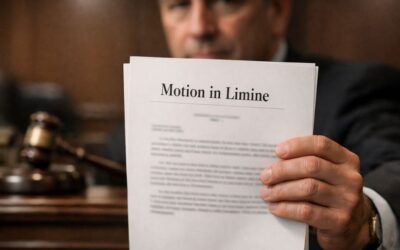
A Motion in Limine – What does it Mean?
Defininition and Explaination - Motion in LimineA motion in limine is a pretrial request asking the judge to exclude (or sometimes allow) specific evidence before the jury ever hears it. It’s one of the most important evidentiary tools in both criminal and civil...

Michigan Supreme Court and Court of Appeals Cases – Threat of Terrorism
Case Summary In People v Kvasnicka, the defendant sent a message to a young girl stating she “would not be laughing” when he came to her school to “shoot it up or blow it up like Columbine.” Charged under Michigan’s threat‑of‑terrorism statute, he argued the law was...