Concerns:
- Ineffective assistance of counsel
- Failure to move to dismiss a reckless-driving causing death charge
- The Motor Vehicle Act (MVA) MCL 257.626(4)
- Whether careless maintenance can satisfy the elements of reckless operation & operation causing death Willful & wanton “manner”MCL 257.626(2)
- Fair notice
- Prejudice
Summary:
Under the reckless driving statute the court held that defendant-Otto was denied effective assistance of counsel because defense counsel failed to move to dismiss the reckless-driving causing death charge when the facts here—”failing to maintain a vehicle and then operating the poorly maintained vehicle—cannot support a conviction under MCL 257.626(4).”
The court vacated his conviction. “The prosecution’s theory was that Otto failed to maintain the truck he was driving and that failure made him criminally liable under MCL 257.626(4) when the truck’s brakes failed while he was driving it, causing a wreck that resulted in a child’s death.”
The court found that “counsel should have moved to quash or dismiss the defective charge, and such a motion would have been successful.” It determined that counsel “was objectively deficient, and the deficiency was outcome determinative.”
The court concluded that the “text and context of MCL 257.626(4), and more broadly the [MVA], do not support the boundless interpretation underpinning the prosecution’s theory and Otto’s conviction.” Thus, it vacated the conviction, concluding that to “hold otherwise would be to allow the prosecution—not the Legislature—to criminalize a wide array of commonplace conduct (such as failing to check your brakes, driving on old tires, and driving on empty) that the Legislature did not intend to outlaw.”
FAQ
What does Quash mean?
to say officially that something or an earlier decision, is no longer to be accepted: His conviction was quashed after his attorney argued that police evidence was all lies.
What is conviction vacated mean?
When a sentence is vacated: It legally annuls the conviction. Vacating a criminal sentence means removing that conviction from a person’s record. The record will then appear as if the person was never charged and convicted of a crime.
Why would a sentence be vacated?
Someone who has their conviction vacated are released from custody under certain conditions, such as a plea bargain being breached, proof of ineffective counsel, court bias, or another similar factor that might have impacted the outcome of the original trial.
Is vacating the same as dismissing?
‘Vacating’ or ‘setting aside’ is used when referring to nullifying a specific judgment from the judge (in this case, a guilty or ‘no contest’ judgment).
‘Dismissing’ applies to the entire case. It means that the case is thrown out for reasons other than its factual merits.
Does vacated mean innocent?
Winning the motion to vacate doesn’t mean that this is the end of the matter. The conviction or sentence is canceled as if it never existed, but the court doesn’t close your case. Instead, the prosecutor then decides whether to drop or pursue the original charges.
More Posts
What is a Preliminary Exam?
Michigan Preliminary Examinations The Strategic Gatekeeper in Felony Defense The Preliminary Examination as the First Line of Defense In Michigan felony cases, the preliminary examination (PE) is the first—and often most decisive—opportunity to challenge the...

What does Nolle Prosequi mean?
What does Nolle Prosequi mean? Fatal Flaw In criminal cases, nolle prosequi may be employed when there is a significant weakness in the prosecution's case, when the prosecutor acknowledges an inability to prove the charges, or even when the prosecutor has lost...

People v. Lukity, 460 Mich 484 (1999)
Case Summary The Michigan Supreme Court reversed the Court of Appeals and reinstated the defendant’s conviction for first-degree criminal sexual conduct against his fourteen‑year‑old daughter. The Court held that although one evidentiary error occurred, it was...
Motion in Limine vs Motion to Suppress
Defininition and Explaination - Motion in LimineOverview Although both a motion in limine and a motion to suppress deal with evidence, they serve very different purposes in Michigan criminal cases. Understanding the distinction is critical because each motion affects...
A Motion in Limine – What does it Mean?
Defininition and Explaination - Motion in LimineA motion in limine is a pretrial request asking the judge to exclude (or sometimes allow) specific evidence before the jury ever hears it. It’s one of the most important evidentiary tools in both criminal and civil...

Michigan Supreme Court and Court of Appeals Cases – Threat of Terrorism
Case Summary In People v Kvasnicka, the defendant sent a message to a young girl stating she “would not be laughing” when he came to her school to “shoot it up or blow it up like Columbine.” Charged under Michigan’s threat‑of‑terrorism statute, he argued the law was...
What is a Franks Hearing?
What is a Frank's Hearing?A Franks hearing is a critical legal tool used when a defendant claims that police lied, exaggerated, or recklessly disregarded the truth in a search warrant affidavit. When law enforcement places its hand on the Constitution, the law...

Michigan House Bill Proposes 32% Tax on Internet Devices for Kids
Taxed Again..? They're working on it.A newly introduced Michigan House bill would impose a 32% excise tax on smartphones, tablets, gaming systems, and other internet‑connected devices marketed to or primarily used by minors. Lawmakers backing the proposal argue the...
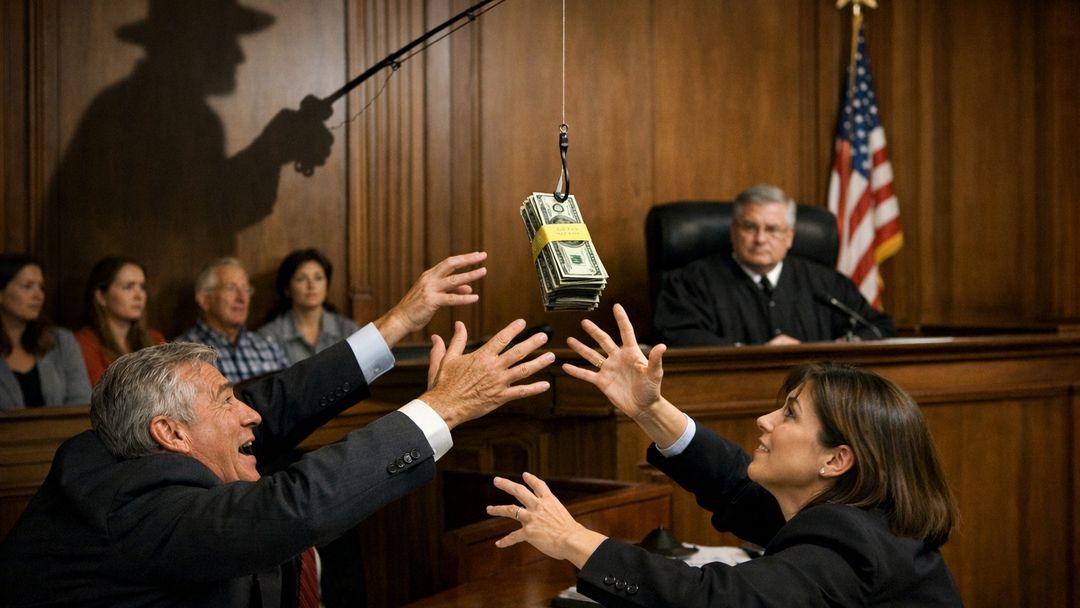
Shadow cash is corrupting Michigan courtrooms
The Shadow Cash Threat: Protecting the Integrity of Michigan Courtrooms In recent months, a spotlight has been cast on a hidden influence within the Michigan legal system: "shadow cash." This term refers to third-party litigation funding (TPLF), where outside...

Michigan judge charged in stealing from incapacitated adults
No Good Headline to Lead with HereSummary Federal prosecutors have charged a 36th District Court judge and three associates with orchestrating a long‑running financial scheme that diverted funds from incapacitated adults under court‑appointed guardianship. The...