
Michigan DNA Collection – The Law

Chapter 750
Act 328 of 1931
328-1931-LXXVI

THE MICHIGAN PENAL CODE (EXCERPT)
Act 328 of 1931

Here’s the website info

750.520m DNA identification profiling; chemical testing; manner of collecting and transmitting samples; existing DNA identification profile; assessment; definitions.

Sec. 520m.

(1) A person shall provide samples for chemical testing for DNA identification profiling or a determination of the sample’s genetic markers and shall provide samples for chemical testing if any of the following apply:
(a) The individual is arrested for committing or attempting to commit a felony offense or an offense that would be a felony if committed by an adult.
(b) The person is convicted of, or found responsible for, a felony or attempted felony, or any of the following misdemeanors or local ordinances that are substantially corresponding to the following misdemeanors:
(i) A violation of section 167(1)(c), (f), or (i), disorderly person by window peeping, engaging in indecent or obscene conduct in public, or loitering in a house of ill fame or prostitution.
(ii) A violation of section 335a(1), indecent exposure.
(iii) A violation punishable under section 451(1) or (2), first and second prostitution violations.
(iv) A violation of section 454, leasing a house for purposes of prostitution.


(2) Notwithstanding subsection (1), if at the time the person is arrested for, convicted of, or found responsible for the violation the investigating law enforcement agency or the department of state police already has a sample from the person that meets the requirements of the DNA identification profiling system act, 1990 PA 250, MCL 28.171 to 28.176, the person is not required to provide another sample or pay the assessment required under subsection (5).


(3) The county sheriff or the investigating law enforcement agency shall collect and transmit the samples in the manner required under the DNA identification profiling system act, 1990 PA 250, MCL 28.171 to 28.176.


(4) An investigating law enforcement agency, prosecuting agency, or court that has in its possession a DNA identification sample obtained from a person under subsection (1) shall forward the DNA identification sample to the department of state police after the person from whom the sample was taken has been charged with committing or attempting to commit a felony offense or an offense that would be a felony if committed by an adult unless the department of state police already has a DNA identification profile of the person.


(5) The court shall order each person found responsible for or convicted of 1 or more crimes listed in subsection (1) to pay an assessment of $60.00. The assessment required under this subsection is in addition to any fine, costs, or other assessments imposed by the court.


(6) An assessment required under subsection (5) shall be ordered upon the record, and shall be listed separately in the adjudication order, judgment of sentence, or order of probation.


(7) After reviewing a verified petition by a person against whom an assessment is imposed under subsection (5), the court may suspend payment of all or part of the assessment if it determines the person is unable to pay the assessment.


(8) The court that imposes the assessment prescribed under subsection (5) may retain 10% of all assessments or portions of assessments collected for costs incurred under this section and shall transmit that money to its funding unit. On the last day of each month, the clerk of the court shall transmit the assessments or portions of assessments collected under this section as follows:
(a) Twenty-five percent to the county sheriff or other investigating law enforcement agency that collected the DNA sample as designated by the court to defray the costs of collecting DNA samples.
(b) Sixty-five percent to the state treasurer for deposit in the justice system fund created in section 181 of the revised judicature act of 1961, 1961 PA 236, MCL 600.181.


(9) As used in this section:
(a) “DNA identification profile” and “DNA identification profiling” mean those terms as defined in section 2 of the DNA identification profiling system act, 1990 PA 250, MCL 28.172.
(b) “Investigating law enforcement agency” means the law enforcement agency responsible for the investigation of the offense for which the person is arrested or convicted. Investigating law enforcement agency includes the county sheriff but does not include a probation officer employed by the department of corrections.
    (c) “Felony” means a violation of a penal law of this state for which the offender may be punished by imprisonment for more than 1 year or an offense expressly designated by law to be a felony.
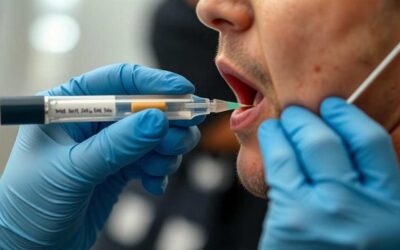
    (d) “Sample” means a portion of a person’s blood, saliva, or tissue collected from the person.


Here’s what we say

Attorney Michael Komorn

Attorney Michael Komorn

State / Federal Legal Defense

With extensive experience in criminal legal defense since 1993 from pre-arrest, District, Circuit, Appeals, Supreme and the Federal court systems.

KOMORN LAW (248) 357-2550

Don’t talk to the police before, during or after your Miranda rights have been read without a lawyer present. If you do limit your information because what you say locks you into what you said. Just because you are not under arrest or being detained does not mean what you say will not be used against you.

Here is some information to review.

Don’t worry, a copy of your DNA has not been sent off to the Government Mountain Storage Facility for permanant storage out of view, or has it?

Legal Counsel and Your Rights

When facing legal challenges, particularly in criminal cases, it is advisable to seek legal counsel immediately.

An experienced attorney can provide guidance on how to navigate interactions with law enforcement while safeguarding your constitutional rights.

Since 1993 our expert legal defense in navigating criminal law matters and protecting your constitutional rights are what we eat for breakfast everyday.

Contact Komorn Law PLLC if you’re ready to fight and win.

Research us and then call us.

More Rights You Should Know
What is a Preliminary Exam?

What is a Preliminary Exam?

Michigan Preliminary Examinations The Strategic Gatekeeper in Felony Defense The Preliminary Examination as the First Line of Defense In Michigan felony cases, the preliminary examination (PE) is the first—and often most decisive—opportunity to challenge the...
read more
Supreme Court Declines to Hear Maryland Gun Permit Case

Supreme Court Declines to Hear Maryland Gun Permit Case

The U.S. Supreme Court recently declined to hear Snope v. Brown, a case challenging Maryland’s requirement for a permit to carry a concealed handgun. While the Court offered no explanation, the decision leaves in place a lower court ruling that upheld the state’s...

read more

Other Articles

What is a Preliminary Exam?

What is a Preliminary Exam?

Michigan Preliminary Examinations The Strategic Gatekeeper in Felony Defense The Preliminary Examination as the First Line of Defense In Michigan felony cases, the preliminary examination (PE) is the first—and often most decisive—opportunity to challenge the...

read more
What does Nolle Prosequi mean?

What does Nolle Prosequi mean?

What does Nolle Prosequi mean? Fatal Flaw In criminal cases, nolle prosequi may be employed when there is a significant weakness in the prosecution's case, when the prosecutor acknowledges an inability to prove the charges, or even when the prosecutor has lost...

read more
People v. Lukity, 460 Mich 484 (1999)

People v. Lukity, 460 Mich 484 (1999)

Case Summary The Michigan Supreme Court reversed the Court of Appeals and reinstated the defendant’s conviction for first-degree criminal sexual conduct against his fourteen‑year‑old daughter. The Court held that although one evidentiary error occurred, it was...

read more
Motion in Limine vs Motion to Suppress

Motion in Limine vs Motion to Suppress

Defininition and Explaination - Motion in LimineOverview Although both a motion in limine and a motion to suppress deal with evidence, they serve very different purposes in Michigan criminal cases. Understanding the distinction is critical because each motion affects...
read more
A Motion in Limine – What does it Mean?

A Motion in Limine – What does it Mean?

Defininition and Explaination - Motion in LimineA motion in limine is a pretrial request asking the judge to exclude (or sometimes allow) specific evidence before the jury ever hears it. It’s one of the most important evidentiary tools in both criminal and civil...

read more
What is a Franks Hearing?

What is a Franks Hearing?

What is a Frank's Hearing?A Franks hearing is a critical legal tool used when a defendant claims that police lied, exaggerated, or recklessly disregarded the truth in a search warrant affidavit. When law enforcement places its hand on the Constitution, the law...

read more
Michael Komorn-Criminal Defense Attorney

About Your Attorney

Attorney Michael Komorn

Categories

Disclaimer: Please remember that the information provided in these legal tips and articles is for educational purposes only and should not be considered legal advice or an agreement for legal services. Laws are subject to change, and interpretations can vary. While we strive for accuracy, legal information can be complex and may not apply to your specific situation. Reading this information does not establish an attorney-client relationship. It is crucial to consult with a qualified attorney to discuss the specific facts of your case before taking any action or making any decisions.

Other Topics

Driving Under the Influence

Michigan Laws FAQs

Your Rights

Michigan Supreme Court

Michigan Court of Appeals

Law Firm VIctories

Share This