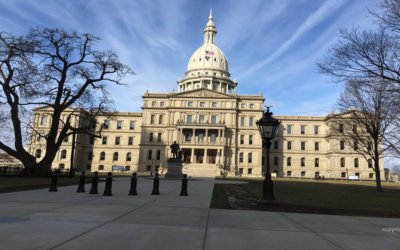

In a landmark decision, the Michigan Supreme Court has ruled that counties cannot retain surplus proceeds from tax-foreclosed property sales, a move poised to return millions to former homeowners. This ruling, stemming from the case Rafaeli, LLC v. Oakland County, found that keeping surplus auction proceeds violated the Michigan Constitution’s Takings Clause, which prohibits the government from seizing private property without just compensation.
MCL – Article X § 2 Seizing private property without just compensation
Typical Government Hustle
Historically, Michigan’s tax foreclosure law, established in 1999, allowed counties to auction off properties with unpaid taxes and retain any proceeds beyond the owed taxes and associated fees.
This practice led to significant financial windfalls for counties, often at the expense of the original property owners, who lost their homes and any equity built up in them.
The Supreme Court’s decision overturns this precedent, emphasizing that former homeowners are entitled to any surplus funds from these sales.
The Michigan Supreme Court ruled that practice as unconstitutional and said the homeowner was entitled to that surplus.
At the time of the ruling, only claims from 2020 and later qualified for reimbursement of funds, but a new ruling Monday could impact sales as far back as 2014.

The case that catalyzed this ruling involved Uri Rafaeli, whose property in Oakland County was sold for $24,500 after he failed to pay a $285 property tax debt.
The county kept the entire sale amount, far exceeding the owed tax. The court ruled this action as an unconstitutional taking, highlighting the inequity of the practice.
This decision has significant financial implications for Michigan counties.
Many counties relied on surplus proceeds from tax foreclosure auctions to supplement their budgets and support various county operations.
Wayne County, for instance, often used these funds to cover budget deficits. Now, counties may face financial strain, particularly if the ruling is applied retroactively, necessitating repayments for past surpluses retained from property sales prior to the 2020 decision.
In response to the ruling, Oakland County and others will need to amend their practices. Oakland County has already settled a related lawsuit, establishing a $38 million fund to compensate affected homeowners. This settlement underscores the potential scale of financial restitution that counties might need to provide.
Like every other poor decision the government makes it will be funded by tax payers.
The ruling aligns Michigan with other states that ensure surplus proceeds from tax sales are returned to former property owners, reinforcing property rights and equitable treatment. Moving forward, Michigan counties will need to adjust their tax foreclosure processes to comply with this ruling, likely influencing legislative changes to solidify the new legal framework.
For former homeowners, this ruling represents a significant victory, affirming their rights to any equity remaining in their properties after tax debts are settled. It also serves as a check on governmental overreach, ensuring that property seizure for unpaid taxes does not result in unjust enrichment at the expense of taxpayers.
This decision has broader implications beyond Michigan, resonating with similar cases across the United States. Earlier this year, the U.S. Supreme Court sided with a Minnesota homeowner in a comparable situation, emphasizing a national trend towards protecting homeowners from losing their property equity in tax foreclosure processes.
Conclusion
The Michigan Supreme Court’s ruling mandates a fairer approach to tax foreclosures, ensuring surplus proceeds return to the rightful owners and setting a precedent for property rights protections. This decision will reshape county financial strategies and bolster homeowner protections, marking a pivotal shift in Michigan’s handling of tax-delinquent properties
Legal Counsel and Your Rights
When facing legal challenges, particularly in criminal cases, it is advisable to seek legal counsel immediately.
An experienced attorney can provide guidance on how to navigate interactions with law enforcement while safeguarding your constitutional rights.
Since 1993 our expert legal defense in navigating criminal law matters and protecting your constitutional rights are what we eat for breakfast everyday.
Contact Komorn Law PLLC if you’re ready to fight and win.
Research us and then call us.
More Rights You Should Know

Michigan Court of Appeals Orders City of Taylor to Release Police Misconduct Records
Case Summary The Michigan Court of Appeals has ruled that the City of Taylor must comply with a Freedom of Information Act (FOIA) request submitted by the ACLU of Michigan seeking police misconduct records dating back to 2021. The request covers documents involving...

Trump’s Marijuana Reclassification 2025
Donald Trump’s Actions On December 18, 2025, President Donald Trump signed an executive order reclassifying marijuana from a Schedule I to a Schedule III controlled substance under the federal Controlled Substances Act (CSA). This marks the most significant federal...
Other Articles

Criminal Law FAQs – Marijuana Offenses
Michigan Criminal Laws FAQs Marijuana OffensesFAQ 1: Is recreational marijuana legal in Michigan? Answer: Yes, recreational marijuana is legal for adults 21 and over in Michigan. However, there are restrictions on possession, use in public places, and driving under...

Criminal Law FAQs – Operating While Intoxicated (DUI – OWI)
Michigan Criminal Laws FAQs Drunk Driving (Operating While Intoxicated - OWI)FAQ 1: What is the legal blood alcohol content (BAC) limit in Michigan? Answer: In Michigan, the legal BAC limit for operating a vehicle is 0.08% for individuals 21 years of age or older. For...

The Case of Cannarbor -v- The Michigan Dept of Treasury
Nice Try...This case centered on the disagreement between Cannarbor, Inc., a medical marijuana provisioning center operating in Michigan, and the Michigan Department of Treasury concerning the obligation to collect sales tax on the retail sale of medical marijuana....

Legal Tip – Driving High on Cannabis in Michigan
Driving under the influence of cannabis is illegal and carries serious consequences in Michigan.We have fought and won many cases from the District Courts, Circuit Courts, Court of Appeals and the Supreme Court through out the State of Michigan. We have also fought...

Michigan House Bill NO. 4391
It may just be easier to collect and analyze tears.This legislation seeks to integrate saliva testing for cannabis within law enforcement procedures, designating a refusal to participate in this testing as a criminal offense, similar to the penalties imposed for...

Legal Tip – Your Rights During a DUI Stop in Michigan
Komorn Law - Quick Legal TipsLegal Tip: Understanding Your Rights During a DUI Stop in Michigan A DUI stop can be stressful, but knowing your rights is crucial. You have the right to remain silent. You are not obligated to answer questions beyond basic identification....

How to create and share a Dropbox link
Simplified Sender and Receiver Dropbox Share Instructions to Someone NOT on your Team. Don't get caught up in another license or give access to your whole box by mistake.Dropbox Sender Share Instructions Log into your Dropbox account Hover over the file or folder...

Smell of marijuana no longer legal grounds for search
The Michigan Supreme Court has ruled that the smell of marijuana alone is no longer sufficient probable cause for police to conduct a warrantless search of a vehicle. This decision overturns a previous precedent where the odor of marijuana was considered enough...