
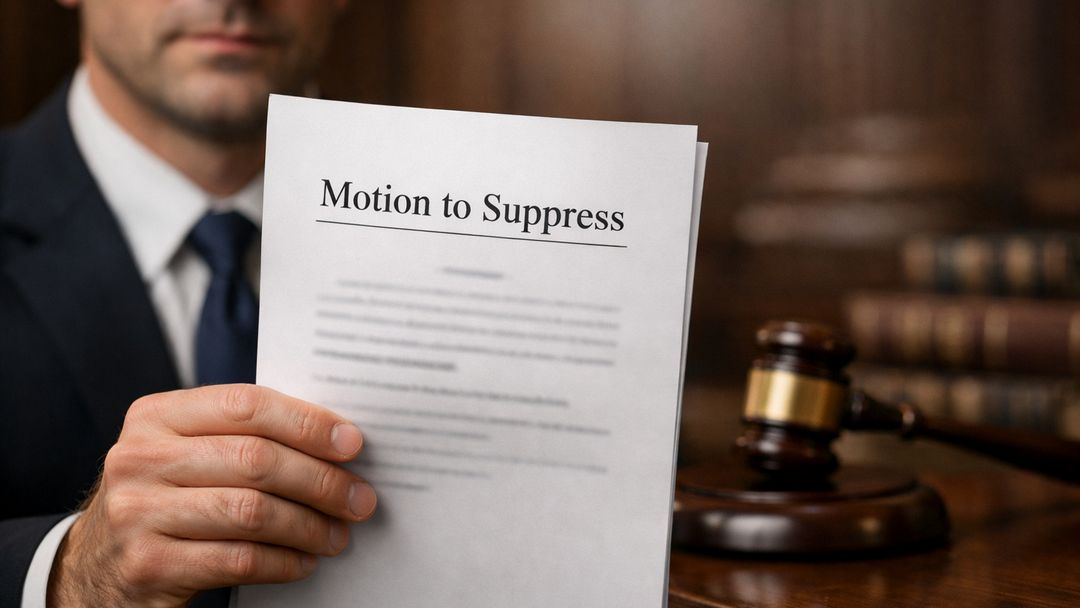
Defininition and Explaination – Motion in Limine
Overview
Although both a motion in limine and a motion to suppress deal with evidence, they serve very different purposes in Michigan criminal cases. Understanding the distinction is critical because each motion affects the trial in its own way and relies on different legal standards. Komorn Law regularly litigates both types of motions to protect clients’ constitutional rights and prevent improper evidence from reaching the jury.
What Is a Motion to Suppress?
A motion to suppress asks the court to exclude evidence because it was obtained in violation of a defendant’s constitutional rights. These motions typically involve:
- Fourth Amendment illegal searches or seizures
- Fifth Amendment violations (e.g., Miranda issues)
- Sixth Amendment right‑to‑counsel violations
- Unlawful traffic stops
- Invalid warrants
- Coerced statements If the court grants a motion to suppress, the evidence is completely barred from trial because it was unlawfully obtained. See Mapp v. Ohio, 367 U.S. 643 (1961) (exclusionary rule).
What Is a Motion in Limine?
A motion in limine is a pretrial request asking the judge to decide whether certain evidence should be excluded or allowed before the jury hears it. Unlike a motion to suppress, it does not depend on constitutional violations. Instead, it focuses on the Michigan Rules of Evidence, such as:
-
MRE 401–403 (relevance and prejudice)
-
MRE 404(b) (other‑acts evidence)
-
MRE 702 (expert testimony) A motion in limine is about trial fairness, not police misconduct.
Key Differences Between the Two Motions
Although both motions can keep evidence out of trial, they differ in purpose, timing, and legal basis:
| Issue | Motion to Suppress | Motion in Limine |
|---|---|---|
| Legal Basis | Constitutional violations | Michigan Rules of Evidence |
| Focus | Police conduct | Jury fairness & evidentiary rules |
| Timing | Usually early in the case | Typically right before trial |
| Effect | Evidence excluded entirely | Evidence excluded or limited at trial |
| Examples | Illegal search, Miranda violation | Prior bad acts, hearsay, prejudicial statements |
A motion to suppress challenges how evidence was obtained. A motion in limine challenges whether the jury should hear it.
Why Both Motions Matter in Criminal Defense
Strategic use of both motions can dramatically change the outcome of a case. A successful motion to suppress may eliminate key evidence, forcing the prosecution to reduce or dismiss charges. A motion in limine can prevent the jury from hearing damaging, irrelevant, or inflammatory information. Together, they help ensure a fair trial and protect constitutional rights.
Since 1993, Komorn Law, PLLC has aggressively defended clients in Michigan courts, litigating motions to suppress, motions in limine, and complex constitutional issues. If you are facing criminal charges or need strategic pretrial advocacy, contact us at 248‑357‑2550 or visit > KomornLaw.com
FAQs
Q: Can a motion in limine exclude evidence that was illegally obtained?
A: No. That requires a motion to suppress based on constitutional grounds.
Q: Can both motions be filed in the same case?
A: Yes. Many cases involve both constitutional issues and evidentiary concerns.
Q: When is a motion to suppress usually filed?
A: Early in the case, often before the preliminary exam or shortly after discovery.
Q: Does a motion in limine apply only to the prosecution’s evidence?
A: No. Either side may file one to control what the jury hears.
Q: What happens if the prosecutor violates a granted motion in limine?
A: The judge may issue sanctions, strike testimony, or declare a mistrial.
More

The New Federal Definition of Hemp
The New Federal Definition of Hemp: Legal and Regulatory ImplicationsCongress has enacted a sweeping revision to the federal definition of hemp through the Continuing Appropriations, Agriculture, Legislative Branch, Military Construction and Veterans Affairs, and...

Should courts allow prosecutors to refer to complainants as victims
Labeling before adjudication. Kedero Treasvant was convicted of multiple firearm-related offenses in Michigan, and his appeal raises a key issue about courtroom language—specifically, whether prosecutors can refer to complainants as “victims” before guilt is...

Improper Transport of a Firearm in Michigan
Improper Firearms Transport, Storage Laws and Penalties Michigan law makes improper gun transport a misdemeanor crime under MCL 750.227d. Firearms can be confiscated and sometimes not returned, but attorneys can file motions under Michigan Court Rules (MCR) to seek...

Supreme Court to Hear Case on Gun Rights and Marijuana Use
Supreme Court to Hear Case on Gun Rights and Marijuana Use The Supreme Court has agreed to hear U.S. v. Hemani, a case challenging the federal ban on gun ownership by individuals who use marijuana—even in states where it’s legal. The decision could reshape how drug...

House Bill 5107 – The MRTMA Shuffle
Michigan House Bill 5105 proposes new marijuana penalties and possession limits to combat illicit cannabis operations. Michigan’s Cannabis Regulation Challenges Since Michigan legalized recreational marijuana in 2018 under the Michigan Regulation and Taxation of...

House Bill 5105 – The MRTMA Shuffle
Michigan House Bill 5105 proposes new marijuana penalties and possession limits to combat illicit cannabis operations. Michigan’s Cannabis Laws Since Michigan legalized recreational marijuana in 2018, the state has worked to balance personal freedom with public...

Miranda v Arizona
Case Summary Miranda v. Arizona established that before police conduct custodial interrogation, they must advise suspects of their rights: the right to remain silent, that statements may be used against them, and the right to an attorney. These “Miranda warnings”...

Michigan Cannabis Tax Bill HB4951- Passed
In case you did not know...In September 2025, the Michigan Legislature passed House Bill 4951, known as the Comprehensive Road Funding Tax Act. This legislation introduces a significant change to the taxation of marijuana in Michigan, with implications for cannabis...

Don’t worry – There’s always a workaround
In case you did not know...The Michigan Supreme Court has ruled that the smell of marijuana alone is no longer sufficient probable cause for police to conduct a warrantless search of a vehicle. This decision overturns a previous precedent where the odor of marijuana...

Seven News Story Summaries – September 2025 (Part 1)
Seven Summaries of Seven News StoriesGovernor Issues Executive Directive on AI Use in State Agencies Between September 1–15, 2025, the Governor of Michigan issued an executive directive regulating the use of artificial intelligence in state agencies. The directive...