
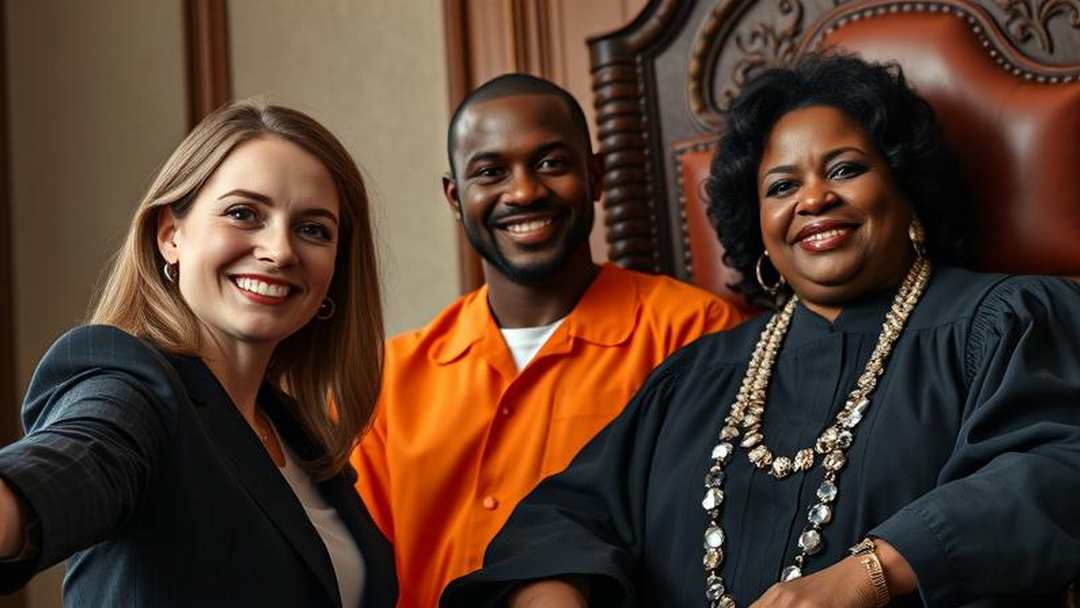
Note: This is what they are supposed to do. Whether they give a damn about you and the outcome is up to the individual attorney
What it is supposed to be
In Michigan, public defenders play a vital role in the criminal justice system by providing legal representation to people who cannot afford private attorneys.
They help ensure that everyone, regardless of income, receives a fair trial as guaranteed by the U.S. Constitution.
Public defenders handle cases ranging from misdemeanors to serious felonies and work at different levels based on experience and qualifications.
What Public Defenders Do
Public defenders represent clients in criminal cases at all stages of the legal process, including:
- Arraignments – Advising clients on their rights and entering pleas.
- Pretrial Hearings – Filing motions to suppress evidence, dismiss charges, or seek reduced bail.
- Trials – Presenting evidence, cross-examining witnesses, and making arguments in court.
- Plea Bargaining – Negotiating with prosecutors to reduce charges or sentencing.
- Sentencing – Advocating for fair punishments or alternatives like probation or rehabilitation programs.
- Appeals – Challenging wrongful convictions or excessive sentences in higher courts.
Because public defenders handle many cases at once, they must work quickly and efficiently while giving each client strong representation.
Levels of Public Defenders and Their Qualifications
Public defenders in Michigan progress through different levels based on education, experience, and case complexity.
1. Entry-Level Public Defender (Assistant Public Defender I)
- Education: Must have a Juris Doctor (J.D.) degree from an accredited law school.
- License: Must pass the Michigan Bar Exam and be licensed to practice law in Michigan.
- Experience: No prior courtroom experience required, though internships or clerkships in criminal law are helpful.
- Duties: Handles misdemeanor cases and low-level felonies under supervision.
2. Mid-Level Public Defender (Assistant Public Defender II & III)
- Education: J.D. degree and active Michigan law license.
- Experience: At least 2-5 years of criminal defense or prosecutorial experience.
- Duties: Takes on more serious felony cases, may argue motions in higher courts, and supervises newer attorneys.
3. Senior Public Defender (Assistant Public Defender IV)
- Education: Same as lower levels but with extensive trial experience.
- Experience: 7+ years in criminal defense, often handling serious felonies like murder or sexual assault cases.
- Duties: Represents high-profile clients, trains junior attorneys, and may work on appeals.
4. Chief Public Defender
- Education: J.D. degree and Michigan law license.
- Experience: 10+ years in criminal defense, with leadership and administrative experience.
- Duties: Manages the public defender’s office, oversees budgets, and sets legal strategies for the department.
If you need a defender to fight to the better end you either get lucky and get assigned a public defender that really cares or you hire a private attorney who primary goal is your rights, freedom, family and future.
Are Your Constitutional Rights Threatened?
1 A – 2 A – 4 A or any right
Call Our Office
Komorn Law (248) 357-2550
Other Posts
Sometimes our posts provide a general overview of things with opinionated sarcasm and dry humor by the writer to lighten the same old same old of other law sites. It does not substitute for legal advice. Anyone charged with a criminal offense should consult an attorney for specific legal guidance. BTW. True Fact: When Michael Komorn fights the justice system there is only one focus. You and your rights.

Recent
A Motion in Limine – What does it Mean?
Defininition and Explaination - Motion in LimineA motion in limine is a pretrial request asking the judge to exclude (or sometimes allow) specific evidence before the jury ever hears it. It’s one of the most important evidentiary tools in both criminal and civil...

Michigan Supreme Court and Court of Appeals Cases – Threat of Terrorism
Case Summary In People v Kvasnicka, the defendant sent a message to a young girl stating she “would not be laughing” when he came to her school to “shoot it up or blow it up like Columbine.” Charged under Michigan’s threat‑of‑terrorism statute, he argued the law was...
More

Coalition Forms to Support Voter Approved MRTMA
New Coalition Forms To Support Voter Approved Cannabis ActMichigan’s adult‑use cannabis framework was not created by accident. It was built through a deliberate, voter‑driven process culminating in the Michigan Regulation and Taxation of Marihuana Act (MRTMA). The Act...

Michigan Court of Appeals Orders City of Taylor to Release Police Misconduct Records
Case Summary The Michigan Court of Appeals has ruled that the City of Taylor must comply with a Freedom of Information Act (FOIA) request submitted by the ACLU of Michigan seeking police misconduct records dating back to 2021. The request covers documents involving...

Michigan Supreme Court and Court of Appeals Cases – Home Invasion
Case Summary In People v Berry, the defendant co‑owned a home with his former partner. After moving out and negotiating a buyout, he re‑entered the home with another individual before the agreement was finalized. Both were charged with first‑degree home invasion. The...

Cannabis Regulators Association-Briefing on Marijuana Schedule Change
Overview of the President’s December 18th Executive Order and the Implications When Marijuana is Rescheduled to Schedule III under the U.S. Controlled Substances ActTOP-LINE SUMMARY The President signed an Executive Order on December 18, 2025, ordering his...

Trump’s Marijuana Reclassification 2025
Donald Trump’s Actions On December 18, 2025, President Donald Trump signed an executive order reclassifying marijuana from a Schedule I to a Schedule III controlled substance under the federal Controlled Substances Act (CSA). This marks the most significant federal...

Michigan Supreme Court and Court of Appeals Cases – Felon in Possession
Case Summary In People v Hughes, the defendant challenged Michigan’s felon‑in‑possession statute on Second Amendment grounds. He argued the law was unconstitutional both on its face and as applied to nonviolent offenders. The Court of Appeals rejected both...