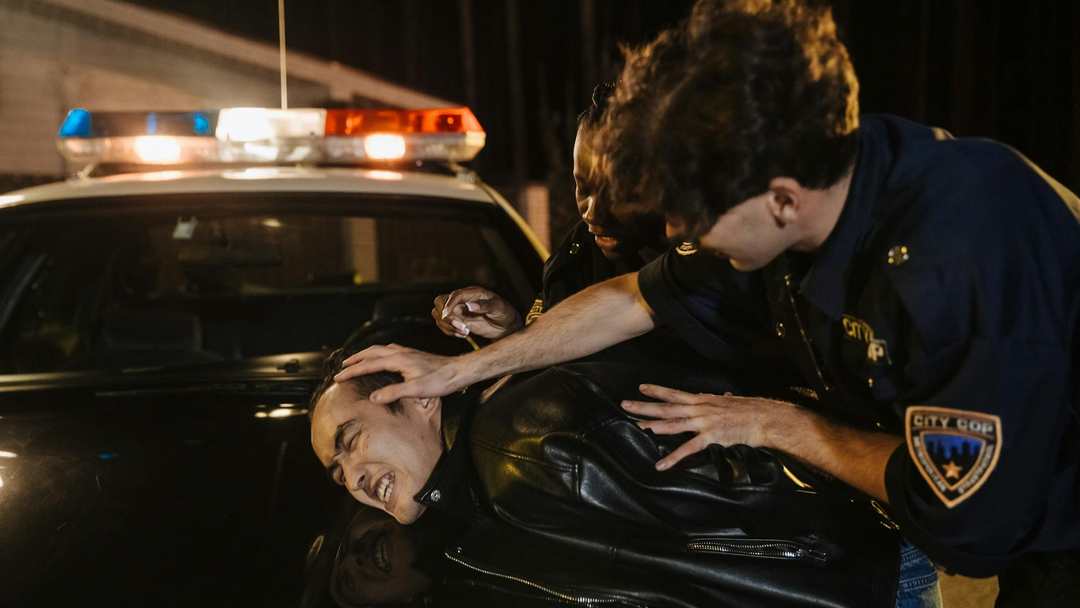
Stop resisting! Stop resisting!
In Michigan, resisting arrest is a serious crime. Under Michigan Compiled Law (MCL) 750.81d, it is illegal to resist or obstruct a police officer or any other law enforcement official when they are performing their duties. This law doesn’t only apply to police officers but also to firefighters, paramedics, and other emergency personnel.
Beside obstruction of “Justice” – This is a favorite of government officials to throw on for any reason they see fit. It may be that they are just having a bad day and you did not submit like a wet noodle.
Charged with resisting arrest?
The first and most important step is to immediately seek the help of an experienced criminal defense trial attorney. Because a trial is where you may have to take it and it won’t be cheap.
A lawyer who specializes in Resisting and Obstructing cases will know how to navigate the complexities of the legal system, protect your rights, and build a strong defense.
They will also help you avoid making mistakes that could hurt your case.

Levels of Obstruction and Resisting Arrest in Michigan
In Michigan, the law deals with obstruction and resisting arrest through a range of actions that can interfere with a law enforcement officer’s duties. These actions are illegal and are taken seriously by the courts. Michigan law outlines several levels of offenses for obstruction and resisting arrest, depending on the severity of the act and the resulting consequences.
Resisting and Obstructing Officers
Michigan law, specifically Michigan Compiled Law (MCL) 750.81d, makes it a crime to obstruct, resist, or assault a police officer while they are carrying out their duties.
This law applies not only to police officers but also to firefighters, emergency medical personnel, and other authorized officials.
Resisting involves refusing to comply with lawful orders, such as resisting an arrest.
Obstruction, on the other hand, refers to actions that make it difficult or impossible for an officer to perform their duties, like lying to police, refusing to move when asked, or hiding evidence.
If you are found guilty of resisting or obstructing, you can face a felony charge. The penalties for this crime depend on the circumstances:
- Basic offense: If there is no injury to the officer, the crime is punishable by up to 2 years in prison and/or a fine of up to $2,000.
- Injury to an officer: If the officer is injured during the act of resisting or obstructing, the penalty increases to a maximum of 4 years in prison and/or a fine of up to $5,000.
- Serious injury to an officer: If the officer suffers a serious bodily injury, the punishment increases to 15 years in prison and/or a fine of up to $10,000.
- Death of an officer: If the officer dies as a result of the obstruction or resistance, the offender can face up to 20 years in prison and/or a fine of up to $20,000.
Passive vs. Active Resistance
There is a distinction between passive resistance and active resistance. Passive resistance is often seen in peaceful protests, where someone might sit or stand in a location without fighting back. While still illegal, passive resistance typically results in lower penalties than active resistance, which involves physical struggle or fleeing from an officer.
Conclusion
Resisting arrest and obstructing officers in Michigan whether the resistance is passive or active, it is important to understand that interfering with law enforcement can lead to felony charges and significant penalties.
For more details, you can refer to the Michigan Compiled Laws:
Understanding these laws can help prevent situations that might lead to arrest or additional charges.
Recent

People v. Lukity, 460 Mich 484 (1999)
Case Summary The Michigan Supreme Court reversed the Court of Appeals and reinstated the defendant’s conviction for first-degree criminal sexual conduct against his fourteen‑year‑old daughter. The Court held that although one evidentiary error occurred, it was...

Michigan Supreme Court and Court of Appeals Cases – Threat of Terrorism
Case Summary In People v Kvasnicka, the defendant sent a message to a young girl stating she “would not be laughing” when he came to her school to “shoot it up or blow it up like Columbine.” Charged under Michigan’s threat‑of‑terrorism statute, he argued the law was...
Other Articles

Michigan Supreme Court and Court of Appeals Cases – Threat of Terrorism
Case Summary In People v Kvasnicka, the defendant sent a message to a young girl stating she “would not be laughing” when he came to her school to “shoot it up or blow it up like Columbine.” Charged under Michigan’s threat‑of‑terrorism statute, he argued the law was...
What is a Franks Hearing?
What is a Frank's Hearing?A Franks hearing is a critical legal tool used when a defendant claims that police lied, exaggerated, or recklessly disregarded the truth in a search warrant affidavit. When law enforcement places its hand on the Constitution, the law...

Michigan House Bill Proposes 32% Tax on Internet Devices for Kids
Taxed Again..? They're working on it.A newly introduced Michigan House bill would impose a 32% excise tax on smartphones, tablets, gaming systems, and other internet‑connected devices marketed to or primarily used by minors. Lawmakers backing the proposal argue the...

Shadow cash is corrupting Michigan courtrooms
The Shadow Cash Threat: Protecting the Integrity of Michigan Courtrooms In recent months, a spotlight has been cast on a hidden influence within the Michigan legal system: "shadow cash." This term refers to third-party litigation funding (TPLF), where outside...