
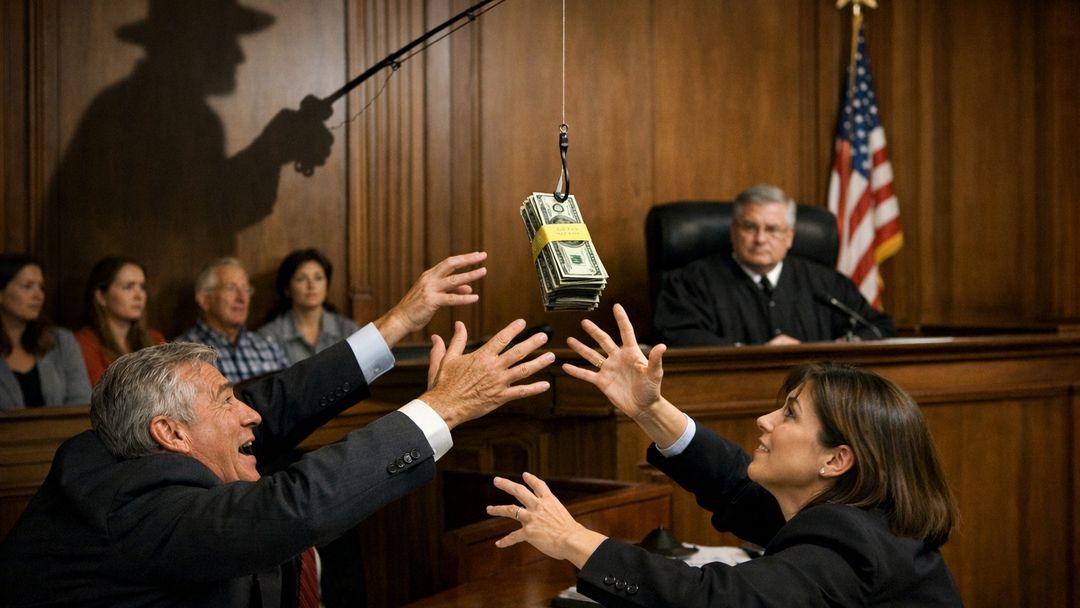
The Shadow Cash Threat: Protecting the Integrity of Michigan Courtrooms
In recent months, a spotlight has been cast on a hidden influence within the Michigan legal system: “shadow cash.” This term refers to third-party litigation funding (TPLF), where outside investors—ranging from private equity firms to foreign entities—finance lawsuits in exchange for a portion of the settlement.
The Legislative Push: House Bill 5281 and Transparency
To combat this “secret rot,” Michigan legislators have introduced
Judicial Integrity and Dark Money in Elections
The concern over shadow cash extends beyond individual lawsuits and into the very seats of the judiciary.
The Pros and Cons of Third-Party Funding
The debate over litigation funding is nuanced. Pros include “leveling the playing field” for individuals facing off against massive corporations with unlimited resources. Without this funding, some legitimate claims might never reach a courtroom. On the other hand, the cons are significant: investors often prioritize their ROI over the client’s best interest, which can prolong litigation and drive up insurance premiums and consumer costs.
FAQ
Q: Is third-party litigation funding currently illegal in Michigan?
A: No. It is a legal practice that currently operates in a “gray area” with very few disclosure requirements.
Q: Why does it matter if a foreign entity funds a Michigan lawsuit?
A: Legal experts and legislators warn that foreign adversaries could use litigation funding to gain access to sensitive American business strategies, trade secrets, and intellectual property through the discovery process of a lawsuit.
Q: How does “dark money” affect my specific court case?
A: If a judge received significant campaign support from an anonymous group funded by your opponent, there is a risk of bias. Current laws make it difficult to identify these connections, which is why groups like the State Bar of Michigan have called for stricter disclosure rules.
Referenced Links
Komorn Law,
Established 1993
In a legal climate where “shadow cash” and dark money threaten the fairness of our courtrooms, you need an advocate who stands firmly in the light. At
Follow the money
- 24% tax on weed
- 52 cents per gallon tax
- fraud
- more fraud
- more fraud
- more fraud
- more fraud
- Detroit judge, 3 others charged in alleged scheme to steal thousands from vulnerable and incapacitated people
- Ex-(Who cares Red or Blue) Party treasurer charged with embezzling from vulnerable adult
- and more fraud
- Taxpayer funded Michigan Ice Tracker
More
A Motion in Limine – What does it Mean?
Defininition and Explaination - Motion in LimineA motion in limine is a pretrial request asking the judge to exclude (or sometimes allow) specific evidence before the jury ever hears it. It’s one of the most important evidentiary tools in both criminal and civil...

Michigan Supreme Court and Court of Appeals Cases – Threat of Terrorism
Case Summary In People v Kvasnicka, the defendant sent a message to a young girl stating she “would not be laughing” when he came to her school to “shoot it up or blow it up like Columbine.” Charged under Michigan’s threat‑of‑terrorism statute, he argued the law was...

What is a Franks Hearing?
What is a Frank's Hearing?A Franks hearing is a critical legal tool used when a defendant claims that police lied, exaggerated, or recklessly disregarded the truth in a search warrant affidavit. When law enforcement places its hand on the Constitution, the law...

Michigan House Bill Proposes 32% Tax on Internet Devices for Kids
Taxed Again..? They're working on it.A newly introduced Michigan House bill would impose a 32% excise tax on smartphones, tablets, gaming systems, and other internet‑connected devices marketed to or primarily used by minors. Lawmakers backing the proposal argue the...

Michigan judge charged in stealing from incapacitated adults
No Good Headline to Lead with HereSummary Federal prosecutors have charged a 36th District Court judge and three associates with orchestrating a long‑running financial scheme that diverted funds from incapacitated adults under court‑appointed guardianship. The...

Michigan Supreme Court and Court of Appeals Cases – Prisoner in Possession
Prisoner in Possession of a Controlled SubstanceCase Summary In People v Tadgerson, the Michigan Supreme Court addressed a critical question: does the crime of a prisoner possessing a controlled substance under MCL 800.281(4) require proof of intent, or is it a...
What is Inference Stacking?
What Is Inference Stacking? A Legal ExplanationInference stacking—also called pyramiding of inferences—is a rule of evidence that prohibits courts or juries from building one inference on top of another when the first inference is not supported by direct evidence....

Michigan Supreme Court and Court of Appeals Cases – Murder
Case Summary In People v Jones, the Michigan Court of Appeals addressed whether a single act of abuse can support convictions for both first‑degree child abuse and felony murder. The defendant argued that using the same conduct to support both charges violated...

Michigan Supreme Court and Court of Appeals Cases – Neglect of Duty
Case Summary In People v Harper, a Wayne County Sheriff’s deputy was charged with neglect of duty after witnessing an inmate escape during his smoke break and taking no action to stop or pursue the prisoner. The prosecution relied on the Sheriff’s Department policy...

Michigan Supreme Court and Court of Appeals Cases – Metallic Knuckles
Case Summary In People v Dummer, the defendant challenged Michigan’s metallic‑knuckles statute, arguing that simply possessing the weapon was protected by the Second Amendment. The Michigan Court of Appeals acknowledged that possession of metallic knuckles is...