
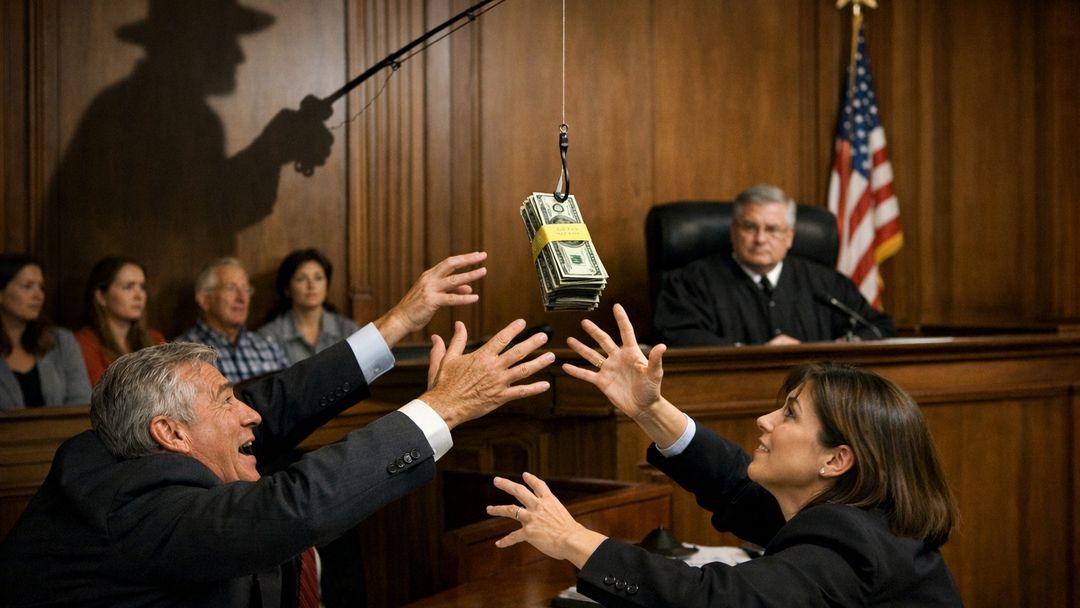
The Shadow Cash Threat: Protecting the Integrity of Michigan Courtrooms
In recent months, a spotlight has been cast on a hidden influence within the Michigan legal system: “shadow cash.” This term refers to third-party litigation funding (TPLF), where outside investors—ranging from private equity firms to foreign entities—finance lawsuits in exchange for a portion of the settlement.
The Legislative Push: House Bill 5281 and Transparency
To combat this “secret rot,” Michigan legislators have introduced
Judicial Integrity and Dark Money in Elections
The concern over shadow cash extends beyond individual lawsuits and into the very seats of the judiciary.
The Pros and Cons of Third-Party Funding
The debate over litigation funding is nuanced. Pros include “leveling the playing field” for individuals facing off against massive corporations with unlimited resources. Without this funding, some legitimate claims might never reach a courtroom. On the other hand, the cons are significant: investors often prioritize their ROI over the client’s best interest, which can prolong litigation and drive up insurance premiums and consumer costs.
FAQ
Q: Is third-party litigation funding currently illegal in Michigan?
A: No. It is a legal practice that currently operates in a “gray area” with very few disclosure requirements.
Q: Why does it matter if a foreign entity funds a Michigan lawsuit?
A: Legal experts and legislators warn that foreign adversaries could use litigation funding to gain access to sensitive American business strategies, trade secrets, and intellectual property through the discovery process of a lawsuit.
Q: How does “dark money” affect my specific court case?
A: If a judge received significant campaign support from an anonymous group funded by your opponent, there is a risk of bias. Current laws make it difficult to identify these connections, which is why groups like the State Bar of Michigan have called for stricter disclosure rules.
Referenced Links
Komorn Law,
Established 1993
In a legal climate where “shadow cash” and dark money threaten the fairness of our courtrooms, you need an advocate who stands firmly in the light. At
Follow the money
- 24% tax on weed
- 52 cents per gallon tax
- fraud
- more fraud
- more fraud
- more fraud
- more fraud
- Detroit judge, 3 others charged in alleged scheme to steal thousands from vulnerable and incapacitated people
- Ex-(Who cares Red or Blue) Party treasurer charged with embezzling from vulnerable adult
- and more fraud
- Taxpayer funded Michigan Ice Tracker
More

Coalition Forms to Support Voter Approved MRTMA
New Coalition Forms To Support Voter Approved Cannabis ActMichigan’s adult‑use cannabis framework was not created by accident. It was built through a deliberate, voter‑driven process culminating in the Michigan Regulation and Taxation of Marihuana Act (MRTMA). The Act...

Michigan Court of Appeals Orders City of Taylor to Release Police Misconduct Records
Case Summary The Michigan Court of Appeals has ruled that the City of Taylor must comply with a Freedom of Information Act (FOIA) request submitted by the ACLU of Michigan seeking police misconduct records dating back to 2021. The request covers documents involving...

Michigan Supreme Court and Court of Appeals Cases – Home Invasion
Case Summary In People v Berry, the defendant co‑owned a home with his former partner. After moving out and negotiating a buyout, he re‑entered the home with another individual before the agreement was finalized. Both were charged with first‑degree home invasion. The...

Cannabis Regulators Association-Briefing on Marijuana Schedule Change
Overview of the President’s December 18th Executive Order and the Implications When Marijuana is Rescheduled to Schedule III under the U.S. Controlled Substances ActTOP-LINE SUMMARY The President signed an Executive Order on December 18, 2025, ordering his...

Trump’s Marijuana Reclassification 2025
Donald Trump’s Actions On December 18, 2025, President Donald Trump signed an executive order reclassifying marijuana from a Schedule I to a Schedule III controlled substance under the federal Controlled Substances Act (CSA). This marks the most significant federal...

Michigan Supreme Court and Court of Appeals Cases – Felon in Possession
Case Summary In People v Hughes, the defendant challenged Michigan’s felon‑in‑possession statute on Second Amendment grounds. He argued the law was unconstitutional both on its face and as applied to nonviolent offenders. The Court of Appeals rejected both...

Michigan Supreme Court and Court of Appeals Cases – Controlled Substances
Case Summary In People v Soto (COA) the defendant faced a felony charge after an 85‑pound shipment of marijuana was delivered to her home. She argued that the Michigan Regulation and Taxation of Marihuana Act (MRTMA) shielded her from felony prosecution because the...

Michigan Supreme Court and Court of Appeals Cases – Confessions
Case Summary Michigan courts issued several important decisions clarifying when confessions are admissible, how Miranda applies in nontraditional settings, and what constitutes a valid invocation of counsel. In Lafey, a spontaneous statement made during a pat‑down was...

Fourth Amendment Search & Seizure — A Quick Summary
Fourth Amendment Search & Seizure — Quick Summary The Fourth Amendment protects individuals from unreasonable searches and seizures, limiting when and how the government may intrude on privacy. These protections apply only when police conduct qualifies as a search...

Marijuana Under Fire in Michigan
Marijuana in Michigan is facing renewed challenges as lawmakers push for higher taxes and regulatory changes that critics argue undermine the voter-approved legalization of 2018. Court battles, legislative maneuvers, and industry pushback highlight the tension between...