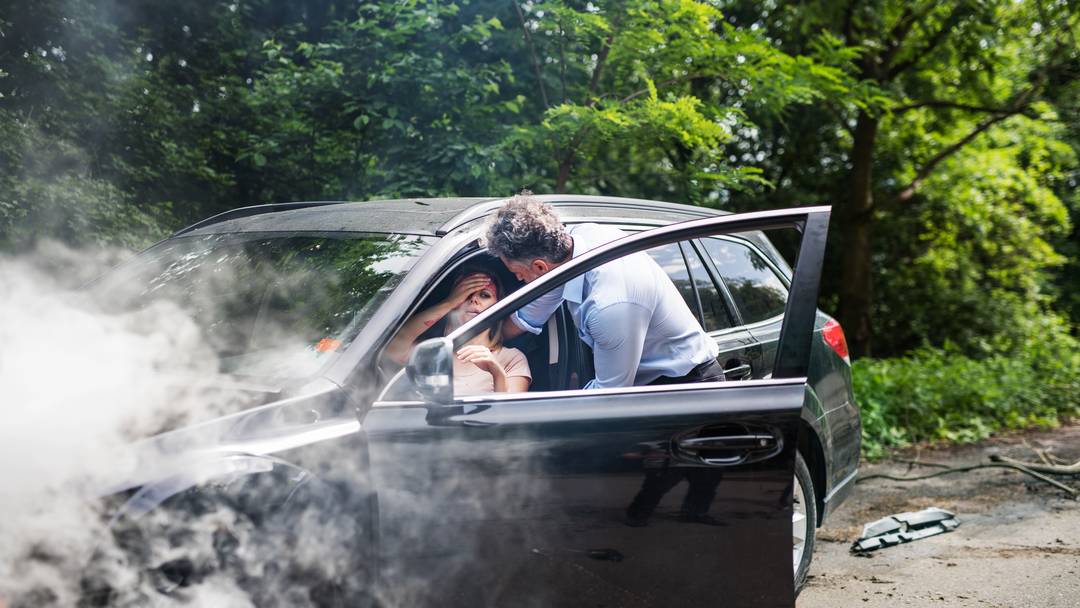
Feezel was driving when he encountered an intoxicated pedestrian in the street. Feezel struck the pedestrian whom as a result of the accident passed away.
Feezel’s blood was analyzed which contained 6 nanograms of a THC metabolite called 11 Carboxy THC.
Feezel was charged with OWI causing death and operating with the presence of a schedule one controlled substance. The trial judge refused to admit the evidence that the victim was extremely intoxicated.
In order to be convicted of Operating with the presence of drugs it must be active THC and not a metabolite.
The court also ruled that the victim’s intoxication was material and should have been admitted into evidence.
The People vs Feezel opinion by the Michigan Supreme Court has been used in many cases since as well as other case law. Many can be found listed here.
Either you're here just out of interest or you are searching for an attorney. If you need a law firm to protect and fight for your rights call our office 248-357-2550 or visit KomornLaw.com and do your research. The justice system doesn't like winners unless it's them...They don't like us.
What are drug metabolites?
A drug metabolite is a byproduct of the body breaking down, or “metabolizing,” a drug into a different substance. The process of metabolizing a drug is predictable and certain; everyone metabolizes drugs the same way. Therefore, the presence of a drug metabolite can be a reliable indicator that a person used the “parent” drug of that metabolite.
Some metabolites remain in the body much longer than a drug. A drug test has a higher chance of identifying a user by looking for the metabolites of a drug, rather than the parent drug.
Some examples of drug tests that detect metabolites, rather than the drug:
Marijuana
THC is the active substance in marijuana. The body quickly metabolizes the THC molecule into several metabolites with long chemical names. Urine drug tests typically detect the THC-COOH (nor-delta-9-tetrahydrocannabinol) metabolite to identify marijuana users because it stays in the body much longer than the active THC drug.
Cocaine
A typical cocaine drug test kit looks for the presence of the metabolite benzoylecgonine. The presence of benzoylecgonine in a person’s system indicates cocaine use. Benzoylecgonine stays in a person’s system significantly longer than cocaine.
Nicotine
Nicotine is metabolized into cotinine, which has a much longer life in the body than the nicotine drug. A urine drug test for “nicotine” looks for the presence of cotinine as a sign of tobacco use.
If you are looking for an attorney that will fight for you. You found him. Michael Komorn – provides DUI, drugged driving and criminal defense passionately an aggressively. Call The Office 248-357-2550 or visit KomornLaw.com
According to the CDC... Every day 29 people in the United States die in motor vehicle crashes that involve an alcohol-impaired driver. This is one death every 50 minutes.1 The annual cost of alcohol-related crashes totals more than $44 billion.2
How big is the problem?
In 2016, 10,497 people died in alcohol-impaired driving crashes, accounting for 28% of all traffic-related deaths in the United States.1
Of the 1,233 traffic deaths among children ages 0 to 14 years in 2016, 214 (17%) involved an alcohol-impaired driver.1
In 2016, more than 1 million drivers were arrested for driving under the influence of alcohol or narcotics.3 That’s one percent of the 111 million self-reported episodes of alcohol-impaired driving among U.S. adults each year (figure below).
Drugs other than alcohol (legal and illegal) are involved in about 16% of motor vehicle crashes.4
Marijuana use is increasing and 13% of nighttime, weekend drivers have marijuana in their system.5
Marijuana users were about 25% more likely to be involved in a crash than drivers with no evidence of marijuana use, however other factors–such as age and gender–may account for the increased crash risk among marijuana users.4
Have You Been Arrested?
For DUI, OWI or Drugged Driving?
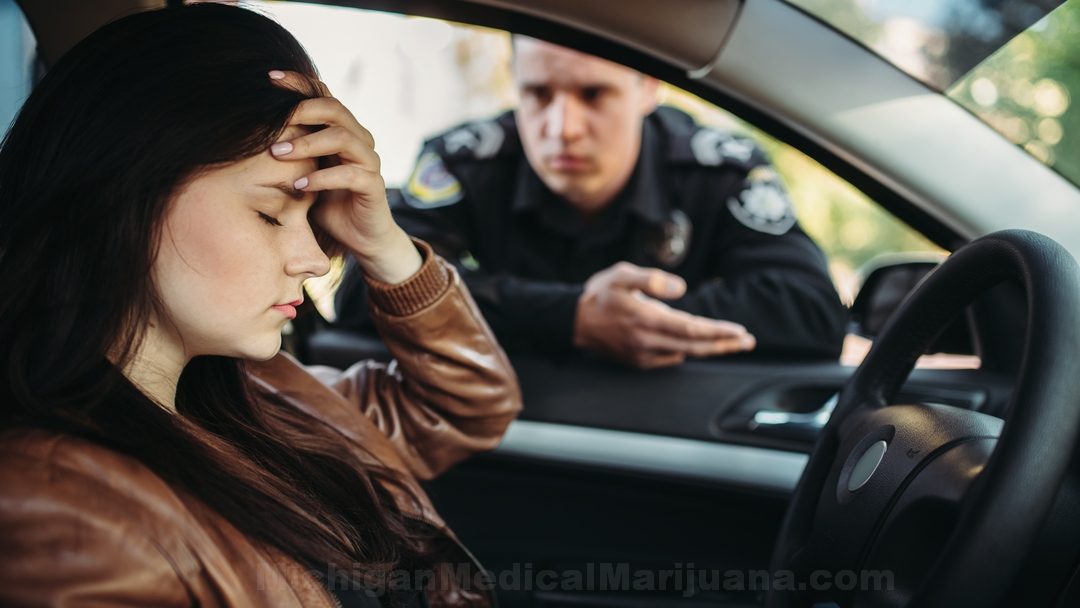
Michigan Law provides police with a wide range of powers during roadside stops. Komorn Law has the experience, knowledge, and skill to balance those powers and preserve your rights in the courtroom.
Our firm aggressively defends all aspects of traffic law, from simple civil infractions to more serious alcohol and drug-related offenses. We diligently investigate all aspects of the incident from the initial stop through the arrest in order to most effectively defend your case
Retaining a lawyer as soon as possible can make or break your case.
Marijuana laws in Michigan are constantly changing.
Michael Komorn is the experienced lead and trial attorney who provides one of the best chances for a positive case outcome.
For over 25 years, the Law Office of Michael Komorn has provided outstanding, results-focused legal counsel for clients in all areas of criminal defense – in state and federal courts – including medical marijuana patients, caregivers, processors, Adult Recreational Use, Cannabis Business and Licensing.
We are long time advocates of our clients’ rights.
For a Felony or Misdemeanor Criminal Offense?
Komorn Law is considered one of Michigan’s premier criminal defense firms armed with the resources, knowledge and experience to provide you with an opportunity for a positive outcome.
We have successfully defended clients in a wide range of criminal offenses, including drug charges, theft, misdemeanors in federal and state court, and all marijuana and medical marijuana cases.
Retaining a lawyer as soon as possible can make or break your case.
At all levels of blood alcohol concentration (BAC), the risk of being involved in a crash is greater for young people than for older people.6
Among drivers with BAC levels of 0.08% or higher involved in fatal crashes in 2016, nearly three in 10 were between 25 and 34 years of age (27%). The next two largest groups were ages 21 to 24 (26%) and 35 to 44 (22%).1
Motorcyclists:
Among motorcyclists killed in fatal crashes in 2016, 25% had BACs of 0.08% or greater.1
Motorcyclists ages 35-39 have the highest percentage of deaths with BACs of 0.08% or greater (38% in 2016).7
Drivers with prior driving while impaired (DWI) convictions:
Drivers with a BAC of 0.08% or higher involved in fatal crashes were 4.5 times more likely to have a prior conviction for DWI than were drivers with no alcohol in their system. (9% and 2%, respectively).1
What are the effects of blood alcohol concentration (BAC)?
Information in this table shows the blood alcohol concentration (BAC) level at which the effect usually is first observed.
Blood Alcohol Concentration (BAC)*
Typical Effects
Predictable Effects on Driving
.02% About 2 alcoholic drinks**
Some loss of judgmentRelaxationSlight body warmthAltered mood
Decline in visual functions (rapid tracking of a moving target)Decline in ability to perform two tasks at the same time (divided attention)
.05% About 3 alcoholic drinks**
Exaggerated behaviorMay have loss of small-muscle control (e.g., focusing your eyes)Impaired judgmentUsually good feelingLowered alertnessRelease of inhibition
Reduced coordinationReduced ability to track moving objectsDifficulty steeringReduced response to emergency driving situations
.08% About 4 alcoholic drinks**
Muscle coordination becomes poor (e.g., balance, speech, vision, reaction time, and hearing)Harder to detect dangerJudgment, self-control, reasoning, and memory are impaired
ConcentrationShort-term memory lossSpeed controlReduced information processing capability (e.g., signal detection, visual search)Impaired perception
.10% About 5 alcoholic drinks**
Clear deterioration of reaction time and controlSlurred speech, poor coordination, and slowed thinking
Reduced ability to maintain lane position and brake appropriately
.15% About 7 alcoholic drinks**
Far less muscle control than normalVomiting may occur (unless this level is reached slowly or a person has developed a tolerance for alcohol)Major loss of balance
Substantial impairment in vehicle control, attention to driving task, and in necessary visual and auditory information processing
*Blood Alcohol Concentration Measurement
The number of drinks listed represents the approximate amount of alcohol that a 160-pound man would need to drink in one hour to reach the listed BAC in each category.
**A Standard Drink Size in the United States
A standard drink is equal to 14.0 grams (0.6 ounces) of pure alcohol. Generally, this amount of pure alcohol is found in
12-ounces of beer (5% alcohol content)
8-ounces of malt liquor (7% alcohol content)
5-ounces of wine (12% alcohol content)
1.5-ounces or a “shot” of 80-proof (40% alcohol content) distilled spirits or liquor (e.g., gin, rum, vodka, whiskey)
Blincoe LJ, Miller TR, Zaloshnja E, Lawrence BA. National Highway Traffic Safety Administration. The economic and societal impact of motor vehicle crashes, 2010. (Revised). U.S. Department of Transportation, Washington, DC; 2015. Available at: http://www-nrd.nhtsa.dot.gov/pubs/812013.pdfCdc-pdfExternal. Accessed 16 April 2018.
Zador PL, Krawchuk SA, Voas RB. Alcohol-related relative risk of driver fatalities and driver involvement in fatal crashes in relation to driver age and gender: an update using 1996 data. Journal of Studies on Alcohol 2000; 61:387-395.
Gielen AC, Sleet DA, DiClemente RJ. Modifying alcohol use to reduce motor vehicle injury. Injury and violence prevention: behavior science theories, methods, and applications. San Francisco, CA: Jossey-Bass, 2006 pp 534. ISBN 978- 7879-7764-1
Holder HD, Gruenewald PJ, Ponicki WR, et al. Effect of community-based interventions on high-risk drinking and alcohol-related injuries. JAMA 2000;284:2341-7.
Shults RA, Elder RW, Nichols J, et al. Effectiveness of multicomponent programs with community mobilization for reducing alcohol-impaired driving. American Journal of Preventative Medicine, 009;37(4):360-371.
Higgins-Biddle J, Dilonardo J. National Highway Traffic Safety Administration. Alcohol and highway safety: screening and brief intervention for alcohol problems as a community approach to improving traffic safety. U.S. Department of Transportation, Washington, DC; 2013 DOT HS 811 836.
New law allows roadside drug testing throughout state - Whitmer signs roadside drug testing into law.
LANSING, MI (WILX) -- Gov. Gretchen Whitmer signed three bills into law Thursday, including one that allows roadside drug testing.
Senate Bill 718 establishes a one-year pilot program in five counties that will be selected by Michigan State Police, Whitmer’s office said in a news release. Under the law, drivers can be tested for controlled substance use.
The MSP will also conduct another one-year program, adding more counties, at the end of the first one.
The MSP then expanded the program to every county in the state. The agency will then have 90 days to submit a report to the state legislature detailing the number of traffic stops resulting in arrests for operating a vehicle under the influence of a controlled substance.
The report must also say how many convictions were obtained from those arrests.
MLIVE
Michigan added at least 32 officers known as “drug recognition experts" to its roadside drug testing program between January and March 4, according to data state police provided MLive and a state House committee.
State police are heading the expanded pilot program that is now in its second year and has grown to include law enforcement in all 83 Michigan counties. The second year of the pilot concludes Aug. 31, after which state police have 90 days to present results of the program to the legislature.
In the meantime, the frequency and results of roadside drug tests being performed by drug recognition experts, who include state police, sheriff’s deputies, tribal, university and local police, remain secret.
“There will be no data available until the pilot concludes, the results are analyzed and a report is prepared,” MSP spokeswoman Shanon Banner said Thursday, June 11.
The program had 125 officers in January, Banner said at the time.
The letter urged the committee to support Senate Bill 718, designed to clarify language in an existing law that outlined the roadside drug testing program. Gov. Gretchen Whitmer signed the bill into law Thursday; however, it doesn’t impact the scope of the pilot program.
AN ACT to amend 1949 PA 300, entitled “An act to provide for the registration, titling, sale, transfer, and regulation of certain vehicles operated upon the public highways of this state or any other place open to the general public or generally accessible to motor vehicles and distressed vehicles; to provide for the licensing of dealers; to provide for the examination, licensing, and control of operators and chauffeurs; to provide for the giving of proof of financial responsibility and security by owners and operators of vehicles; to provide for the imposition, levy, and collection of specific taxes on vehicles, and the levy and collection of sales and use taxes, license fees, and permit fees; to provide for the regulation and use of streets and highways; to create certain funds; to provide penalties and sanctions for a violation of this act; to provide for civil liability of manufacturers, the manufacturers of certain devices, the manufacturers of automated technology, upfitters, owners, and operators of vehicles and service of process on residents and nonresidents; to regulate the introduction and use of certain evidence; to regulate and certify the manufacturers of certain devices; to provide for approval and certification of installers and servicers of certain devices; to provide for the levy of certain assessments; to provide for the enforcement of this act; to provide for the creation of and to prescribe the powers and duties of certain state and local agencies; to impose liability upon the state or local agencies; to provide appropriations for certain purposes; to repeal all other acts or parts of acts inconsistent with this act or contrary to this act; and to repeal certain parts of this act on a specific date,” by amending section 625t (MCL 257.625t), as added by 2016 PA 243.
The People of the State of Michigan enact:
Sec. 625t (1) The department of state police may establish a pilot program in this state for roadside drug testing to determine whether an individual is operating a vehicle while under the influence of a controlled substance in violation of section 625.
(2) A pilot program established under this section shall be for a period of 1 calendar year. The funding of a pilot program established under this section is subject to appropriation.
(3) The department of state police shall develop a written policy for the implementation of the pilot program and the administration of roadside drug testing.
(4) The department of state police may promulgate rules under the administrative procedures act of 1969, 1969 PA 306, MCL 24.201 to 24.328, to implement a pilot program established under this section.
(5) Not more than 90 days after the conclusion of a pilot program established under this section, the department of state police shall submit a report to the legislative committees of the senate and house of representatives with primary responsibility for judicial and criminal justice issues. The report shall cover both of the following:
(a) The different types of law enforcement agencies in the pilot program participant counties that engaged in roadside drug testing.
(b) Relevant statistical data, including, but not limited to, the following: (i) The number of traffic stops resulting in an arrest for operating under the influence of a controlled substance in violation of section 625 as a result of roadside drug testing by a certified drug recognition expert. (ii) The number and type of convictions resulting from an arrest made based on the result of a roadside drug test by a certified drug recognition expert.
(6) As used in this section: (a) “Certified drug recognition expert” means a law enforcement officer trained to recognize impairment in a driver under the influence of a controlled substance rather than, or in addition to, alcohol. (b) “Controlled substance” means that term as defined in section 7104 of the public health code, 1978 PA 368, MCL 333.7104.
MICHIGAN VEHICLE CODE (EXCERPT) Act 300 of 1949 257.625t - Roadside drug testing pilot program.
Sec. 625t.
(1) The department of state police may establish a pilot program in 5 counties in this state for roadside drug testing to determine whether an individual is operating a vehicle while under the influence of a controlled substance in violation of section 625.
(2) A pilot program established under this section shall be for a period of 1 calendar year. The funding of a pilot program established under this section is subject to appropriation.
(3) Except as provided in subsection (8), the department of state police shall select 5 counties in which to implement a pilot program established under this section.
(4) A county is eligible to participate in the pilot program if the county has a law enforcement agency within its boundary, including, but not limited to, a state police post, a sheriff's department, or a municipal police department, that employs not fewer than 1 law enforcement officer who is a certified drug recognition expert.
(5) The department of state police shall develop a written policy for the implementation of the pilot program and the administration of roadside drug testing.
(6) The department of state police may promulgate rules under the administrative procedures act of 1969, 1969 PA 306, MCL 24.201 to 24.328, to implement a pilot program established under this section.
(7) Not more than 90 days after the conclusion of a pilot program established under this section, the department of state police shall submit a report to the legislative committees of the senate and house of representatives with primary responsibility for judicial and criminal justice issues.
The report shall cover all of the following:
(a) How pilot program participant counties were selected. (b) The different types of law enforcement agencies in the pilot program participant counties that engaged in roadside drug testing. (c) Relevant statistical data, including, but not limited to, the following: (i) The number of traffic stops resulting in an arrest for operating under the influence of a controlled substance in violation of section 625 as a result of roadside drug testing by a certified drug recognition expert. (ii) The number and type of convictions resulting from an arrest made based on the result of a roadside drug test by a certified drug recognition expert.
(8) Upon the conclusion of a pilot program established under this section, the department of state police may, subject to appropriation, establish additional pilot programs in eligible counties not included among the 5 counties initially selected under subsection (3). The duration of a pilot program established under this subsection shall be for a period of 1 year.
(9) As used in this section: (a) "Certified drug recognition expert" means a law enforcement officer trained to recognize impairment in a driver under the influence of a controlled substance rather than, or in addition to, alcohol. (b) "Controlled substance" means that term as defined in section 7104 of the public health code, 1978 PA 368, MCL 333.7104.
257.625 Operating motor vehicle while intoxicated; "operating while intoxicated" defined; operating motor vehicle when visibly impaired; penalties for causing death or serious impairment of a body function; operation of motor vehicle by person less than 21 years of age; "any bodily alcohol content" defined; requirements; controlled substance; costs; enhanced sentence; guilty plea or nolo contendere; establishment of prior conviction; special verdict; public record; burden of proving religious service or ceremony; ignition interlock device; definitions; prior conviction; violations arising out of same transaction.
Sec. 625.
(1) A person, whether licensed or not, shall not operate a vehicle upon a highway or other place open to the general public or generally accessible to motor vehicles, including an area designated for the parking of vehicles, within this state if the person is operating while intoxicated. As used in this section, "operating while intoxicated" means any of the following:
(a) The person is under the influence of alcoholic liquor, a controlled substance, or other intoxicating substance or a combination of alcoholic liquor, a controlled substance, or other intoxicating substance.
(b) The person has an alcohol content of 0.08 grams or more per 100 milliliters of blood, per 210 liters of breath, or per 67 milliliters of urine or, beginning October 1, 2021, the person has an alcohol content of 0.10 grams or more per 100 milliliters of blood, per 210 liters of breath, or per 67 milliliters of urine.
(c) The person has an alcohol content of 0.17 grams or more per 100 milliliters of blood, per 210 liters of breath, or per 67 milliliters of urine.
(2) The owner of a vehicle or a person in charge or in control of a vehicle shall not authorize or knowingly permit the vehicle to be operated upon a highway or other place open to the general public or generally accessible to motor vehicles, including an area designated for the parking of motor vehicles, within this state by a person if any of the following apply:
(a) The person is under the influence of alcoholic liquor, a controlled substance, other intoxicating substance, or a combination of alcoholic liquor, a controlled substance, or other intoxicating substance.
(b) The person has an alcohol content of 0.08 grams or more per 100 milliliters of blood, per 210 liters of breath, or per 67 milliliters of urine or, beginning October 1, 2021, the person has an alcohol content of 0.10 grams or more per 100 milliliters of blood, per 210 liters of breath, or per 67 milliliters of urine.
(c) The person's ability to operate the motor vehicle is visibly impaired due to the consumption of alcoholic liquor, a controlled substance, or other intoxicating substance, or a combination of alcoholic liquor, a controlled substance, or other intoxicating substance.
(3) A person, whether licensed or not, shall not operate a vehicle upon a highway or other place open to the general public or generally accessible to motor vehicles, including an area designated for the parking of vehicles, within this state when, due to the consumption of alcoholic liquor, a controlled substance, or other intoxicating substance, or a combination of alcoholic liquor, a controlled substance, or other intoxicating substance, the person's ability to operate the vehicle is visibly impaired. If a person is charged with violating subsection (1), a finding of guilty under this subsection may be rendered.
(4) A person, whether licensed or not, who operates a motor vehicle in violation of subsection (1), (3), or (8) and by the operation of that motor vehicle causes the death of another person is guilty of a crime as follows:
(a) Except as provided in subdivisions (b) and (c), the person is guilty of a felony punishable by imprisonment for not more than 15 years or a fine of not less than $2,500.00 or more than $10,000.00, or both. The judgment of sentence may impose the sanction permitted under section 625n. If the vehicle is not ordered forfeited under section 625n, the court shall order vehicle immobilization under section 904d in the judgment of sentence.
(b) If the violation occurs while the person has an alcohol content of 0.17 grams or more per 100 milliliters of blood, per 210 liters of breath, or per 67 milliliters of urine, and within 7 years of a prior conviction, the person is guilty of a felony punishable by imprisonment for not more than 20 years or a fine of not less than $2,500.00 or more than $10,000.00, or both. The judgment of sentence may impose the sanction permitted under section 625n. If the vehicle is not ordered forfeited under section 625n, the court shall order vehicle immobilization under section 904d in the judgment of sentence.
(c) If, at the time of the violation, the person is operating a motor vehicle in a manner proscribed under section 653a and causes the death of a police officer, firefighter, or other emergency response personnel, the person is guilty of a felony punishable by imprisonment for not more than 20 years or a fine of not less than $2,500.00 or more than $10,000.00, or both. This subdivision applies regardless of whether the person is charged with the violation of section 653a. The judgment of sentence may impose the sanction permitted under section 625n. If the vehicle is not ordered forfeited under section 625n, the court shall order vehicle immobilization under section 904d in the judgment of sentence.
(5) A person, whether licensed or not, who operates a motor vehicle in violation of subsection (1), (3), or (8) and by the operation of that motor vehicle causes a serious impairment of a body function of another person is guilty of a crime as follows:
(a) Except as provided in subdivision (b), the person is guilty of a felony punishable by imprisonment for not more than 5 years or a fine of not less than $1,000.00 or more than $5,000.00, or both. The judgment of sentence may impose the sanction permitted under section 625n. If the vehicle is not ordered forfeited under section 625n, the court shall order vehicle immobilization under section 904d in the judgment of sentence.
(b) If the violation occurs while the person has an alcohol content of 0.17 grams or more per 100 milliliters of blood, per 210 liters of breath, or per 67 milliliters of urine, and within 7 years of a prior conviction, the person is guilty of a felony punishable by imprisonment for not more than 10 years or a fine of not less than $1,000.00 or more than $5,000.00, or both. The judgment of sentence may impose the sanction permitted under section 625n. If the vehicle is not ordered forfeited under section 625n, the court shall order vehicle immobilization under section 904d in the judgment of sentence.
(6) A person who is less than 21 years of age, whether licensed or not, shall not operate a vehicle upon a highway or other place open to the general public or generally accessible to motor vehicles, including an area designated for the parking of vehicles, within this state if the person has any bodily alcohol content. As used in this subsection, "any bodily alcohol content" means either of the following:
(a) An alcohol content of 0.02 grams or more but less than 0.08 grams per 100 milliliters of blood, per 210 liters of breath, or per 67 milliliters of urine or, beginning October 1, 2021, the person has an alcohol content of 0.02 grams or more but less than 0.10 grams per 100 milliliters of blood, per 210 liters of breath, or per 67 milliliters of urine.
(b) Any presence of alcohol within a person's body resulting from the consumption of alcoholic liquor, other than consumption of alcoholic liquor as a part of a generally recognized religious service or ceremony.
(7) A person, whether licensed or not, is subject to the following requirements:
(a) He or she shall not operate a vehicle in violation of subsection (1), (3), (4), (5), or
(8) while another person who is less than 16 years of age is occupying the vehicle. A person who violates this subdivision is guilty of a crime punishable as follows:
(i) Except as provided in subparagraph (ii), a person who violates this subdivision is guilty of a misdemeanor and must be sentenced to pay a fine of not less than $200.00 or more than $1,000.00 and to 1 or more of the following:
(A) Imprisonment for not less than 5 days or more than 1 year. Not less than 48 hours of this imprisonment must be served consecutively. This term of imprisonment must not be suspended.
(B) Community service for not less than 30 days or more than 90 days.
(ii) If the violation occurs within 7 years of a prior conviction or after 2 or more prior convictions, regardless of the number of years that have elapsed since any prior conviction, a person who violates this subdivision is guilty of a felony and must be sentenced to pay a fine of not less than $500.00 or more than $5,000.00 and to either of the following:
(A) Imprisonment under the jurisdiction of the department of corrections for not less than 1 year or more than 5 years.
(B) Probation with imprisonment in the county jail for not less than 30 days or more than 1 year and community service for not less than 60 days or more than 180 days. Not less than 48 hours of this imprisonment must be served consecutively. This term of imprisonment must not be suspended.
(b) He or she shall not operate a vehicle in violation of subsection (6) while another person who is less than 16 years of age is occupying the vehicle. A person who violates this subdivision is guilty of a misdemeanor punishable as follows:
(i) Except as provided in subparagraph (ii), a person who violates this subdivision may be sentenced to 1 or more of the following:
(A) Community service for not more than 60 days.
(B) A fine of not more than $500.00.
(C) Imprisonment for not more than 93 days.
(ii) If the violation occurs within 7 years of a prior conviction or after 2 or more prior convictions, regardless of the number of years that have elapsed since any prior conviction, a person who violates this subdivision must be sentenced to pay a fine of not less than $200.00 or more than $1,000.00 and to 1 or more of the following:
(A) Imprisonment for not less than 5 days or more than 1 year. Not less than 48 hours of this imprisonment must be served consecutively. This term of imprisonment must not be suspended.
(B) Community service for not less than 30 days or more than 90 days.
(c) In the judgment of sentence under subdivision (a)(i) or (b)(i), the court may, unless the vehicle is ordered forfeited under section 625n, order vehicle immobilization as provided in section 904d. In the judgment of sentence under subdivision (a)(ii) or (b)(ii), the court shall, unless the vehicle is ordered forfeited under section 625n, order vehicle immobilization as provided in section 904d.
(d) This subsection does not prohibit a person from being charged with, convicted of, or punished for a violation of subsection (4) or (5) that is committed by the person while violating this subsection. However, points shall not be assessed under section 320a for both a violation of subsection (4) or (5) and a violation of this subsection for conduct arising out of the same transaction.
(8) A person, whether licensed or not, shall not operate a vehicle upon a highway or other place open to the general public or generally accessible to motor vehicles, including an area designated for the parking of vehicles, within this state if the person has in his or her body any amount of a controlled substance listed in schedule 1under section 7212 of the public health code, 1978 PA 368, MCL 333.7212, or a rule promulgated under that section, or of a controlled substance described in section 7214(a)(iv) of the public health code, 1978 PA 368, MCL 333.7214.
(9) If a person is convicted of violating subsection (1) or (8), all of the following apply:
(a) Except as otherwise provided in subdivisions (b) and (c), the person is guilty of a misdemeanor punishable by 1 or more of the following:
(i) Community service for not more than 360 hours.
(ii) Imprisonment for not more than 93 days, or, if the person is convicted of violating subsection (1)(c), imprisonment for not more than 180 days.
(iii) A fine of not less than $100.00 or more than $500.00, or, if the person is guilty of violating subsection (1)(c), a fine of not less than $200.00 or more than $700.00.
(b) If the violation occurs within 7 years of a prior conviction, the person must be sentenced to pay a fine of not less than $200.00 or more than $1,000.00 and 1 or more of the following:
(i) Imprisonment for not less than 5 days or more than 1 year. Not less than 48 hours of the term of imprisonment imposed under this subparagraph must be served consecutively.
(ii) Community service for not less than 30 days or more than 90 days.
(c) If the violation occurs after 2 or more prior convictions, regardless of the number of years that have elapsed since any prior conviction, the person is guilty of a felony and must be sentenced to pay a fine of not less than $500.00 or more than $5,000.00 and to either of the following:
(i) Imprisonment under the jurisdiction of the department of corrections for not less than 1 year or more than 5 years.
(ii) Probation with imprisonment in the county jail for not less than 30 days or more than 1 year and community service for not less than 60 days or more than 180 days. Not less than 48 hours of the imprisonment imposed under this subparagraph must be served consecutively.
(d) A term of imprisonment imposed under subdivision (b) or (c) must not be suspended.
(e) In the judgment of sentence under subdivision (a), the court may order vehicle immobilization as provided in section 904d. In the judgment of sentence under subdivision (b) or (c), the court shall, unless the vehicle is ordered forfeited under section 625n, order vehicle immobilization as provided in section 904d.
(f) In the judgment of sentence under subdivision (b) or (c), the court may impose the sanction permitted under section 625n.
(10) A person who is convicted of violating subsection (2) is guilty of a crime as follows:
(a) Except as provided in subdivisions (b) and (c), a misdemeanor punishable by imprisonment for not more than 93 days or a fine of not less than $100.00 or more than $500.00, or both.
(b) If the person operating the motor vehicle violated subsection (4), a felony punishable by imprisonment for not more than 5 years or a fine of not less than $1,500.00 or more than $10,000.00, or both.
(c) If the person operating the motor vehicle violated subsection (5), a felony punishable by imprisonment for not more than 2 years or a fine of not less than $1,000.00 or more than $5,000.00, or both.
(11) If a person is convicted of violating subsection (3), all of the following apply:
(a) Except as otherwise provided in subdivisions (b) and (c), the person is guilty of a misdemeanor punishable by 1 or more of the following:
(i) Community service for not more than 360 hours.
(ii) Imprisonment for not more than 93 days.
(iii) A fine of not more than $300.00.
(b) If the violation occurs within 7 years of 1 prior conviction, the person must be sentenced to pay a fine of not less than $200.00 or more than $1,000.00, and 1 or more of the following:
(i) Imprisonment for not less than 5 days or more than 1 year. Not less than 48 hours of the term of imprisonment imposed under this subparagraph must be served consecutively.
(ii) Community service for not less than 30 days or more than 90 days.
(c) If the violation occurs after 2 or more prior convictions, regardless of the number of years that have elapsed since any prior conviction, the person is guilty of a felony and must be sentenced to pay a fine of not less than $500.00 or more than $5,000.00 and either of the following:
(i) Imprisonment under the jurisdiction of the department of corrections for not less than 1 year or more than 5 years.
(ii) Probation with imprisonment in the county jail for not less than 30 days or more than 1 year and community service for not less than 60 days or more than 180 days. Not less than 48 hours of the imprisonment imposed under this subparagraph must be served consecutively.
(d) A term of imprisonment imposed under subdivision (b) or (c) must not be suspended.
(e) In the judgment of sentence under subdivision (a), the court may order vehicle immobilization as provided in section 904d. In the judgment of sentence under subdivision (b) or (c), the court shall, unless the vehicle is ordered forfeited under section 625n, order vehicle immobilization as provided in section 904d.
(f) In the judgment of sentence under subdivision (b) or (c), the court may impose the sanction permitted under section 625n.
(12) If a person is convicted of violating subsection (6), all of the following apply:
(a) Except as otherwise provided in subdivision (b), the person is guilty of a misdemeanor punishable by 1 or both of the following:
(i) Community service for not more than 360 hours.
(ii) A fine of not more than $250.00.
(b) If the violation occurs within 7 years of 1 or more prior convictions, the person may be sentenced to 1 or more of the following:
(i) Community service for not more than 60 days.
(ii) A fine of not more than $500.00.
(iii) Imprisonment for not more than 93 days.
(13) In addition to imposing the sanctions prescribed under this section, the court may order the person to pay the costs of the prosecution under the code of criminal procedure, 1927 PA 175, MCL 760.1 to 777.69.
(14) A person sentenced to perform community service under this section must not receive compensation and must reimburse the state or appropriate local unit of government for the cost of supervision incurred by the state or local unit of government as a result of the person's activities in that service.
(15) If the prosecuting attorney intends to seek an enhanced sentence under this section or a sanction under section 625n based upon the defendant having 1 or more prior convictions, the prosecuting attorney shall include on the complaint and information, or an amended complaint and information, filed in district court, circuit court, municipal court, or family division of circuit court, a statement listing the defendant's prior convictions.
(16) If a person is charged with a violation of subsection (1), (3), (4), (5), (7), or (8) or section 625m, the court shall not permit the defendant to enter a plea of guilty or nolo contendere to a charge of violating subsection (6) in exchange for dismissal of the original charge. This subsection does not prohibit the court from dismissing the charge upon the prosecuting attorney's motion.
(17) A prior conviction must be established at sentencing by 1 or more of the following:
(a) A copy of a judgment of conviction.
(b) An abstract of conviction.
(c) A transcript of a prior trial or a plea-taking or sentencing proceeding.
(d) A copy of a court register of actions.
(e) A copy of the defendant's driving record.
(f) Information contained in a presentence report.
(g) An admission by the defendant.
(18) Except as otherwise provided in subsection (20), if a person is charged with operating a vehicle while under the influence of a controlled substance or other intoxicating substance or a combination of alcoholic liquor, a controlled substance, or other intoxicating substance in violation of subsection (1) or a local ordinance substantially corresponding to subsection (1), the court shall require the jury to return a special verdict in the form of a written finding or, if the court convicts the person without a jury or accepts a plea of guilty or nolo contendere, the court shall make a finding as to whether the person was under the influence of a controlled substance or other intoxicating substance or a combination of alcoholic liquor, a controlled substance, or other intoxicating substance at the time of the violation.
(19) Except as otherwise provided in subsection (20), if a person is charged with operating a vehicle while his or her ability to operate the vehicle was visibly impaired due to his or her consumption of a controlled substance or other intoxicating substance or a combination of alcoholic liquor, a controlled substance, or other intoxicating substance in violation of subsection (3) or a local ordinance substantially corresponding to subsection (3), the court shall require the jury to return a special verdict in the form of a written finding or, if the court convicts the person without a jury or accepts a plea of guilty or nolo contendere, the court shall make a finding as to whether, due to the consumption of a controlled substance or a combination of alcoholic liquor, a controlled substance, or other intoxicating substance, the person's ability to operate a motor vehicle was visibly impaired at the time of the violation.
(20) A special verdict described in subsections (18) and (19) is not required if a jury is instructed to make a finding solely as to either of the following:
(a) Whether the defendant was under the influence of a controlled substance or a combination of alcoholic liquor, a controlled substance, or other intoxicating substance at the time of the violation.
(b) Whether the defendant was visibly impaired due to his or her consumption of a controlled substance or a combination of alcoholic liquor, a controlled substance, or other intoxicating substance at the time of the violation.
(21) If a jury or court finds under subsection (18), (19), or (20) that the defendant operated a motor vehicle under the influence of or while impaired due to the consumption of a controlled substance or a combination of a controlled substance, an alcoholic liquor, or other intoxicating substance, the court shall do both of the following:
(a) Report the finding to the secretary of state.
(b) On a form or forms prescribed by the state court administrator, forward to the department of state police a record that specifies the penalties imposed by the court, including any term of imprisonment, and any sanction imposed under section 625n or 904d.
(22) Except as otherwise provided by law, a record described in subsection (21)(b) is a public record and the department of state police shall retain the information contained on that record for not less than 7 years.
(23) In a prosecution for a violation of subsection (6), the defendant bears the burden of proving that the consumption of alcoholic liquor was a part of a generally recognized religious service or ceremony by a preponderance of the evidence.
(24) The court may order as a condition of probation that a person convicted of violating subsection (1) or (8), or a local ordinance substantially corresponding to subsection (1) or (8), shall not operate a motor vehicle unless that vehicle is equipped with an ignition interlock device approved, certified, and installed as required under sections 625k and 625l.
(25) As used in this section:
(a) "Intoxicating substance" means any substance, preparation, or a combination of substances and preparations other than alcohol or a controlled substance, that is either of the following:
(i) Recognized as a drug in any of the following publications or their supplements:
(A) The official United States Pharmacopoeia.
(B) The official Homeopathic Pharmacopoeia of the United States.
(C) The official National Formulary.
(ii) A substance, other than food, taken into a person's body, including, but not limited to, vapors or fumes, that is used in a manner or for a purpose for which it was not intended, and that may result in a condition of intoxication.
(b) "Prior conviction" means a conviction for any of the following, whether under a law of this state, a local ordinance substantially corresponding to a law of this state, a law of the United States substantially corresponding to a law of this state, or a law of another state substantially corresponding to a law of this state, subject to subsection (27):
(i) Except as provided in subsection (26), a violation or attempted violation of any of the following:
(A) This section, except a violation of subsection (2), or a violation of any prior enactment of this section in which the defendant operated a vehicle while under the influence of intoxicating or alcoholic liquor or a controlled substance, or a combination of intoxicating or alcoholic liquor and a controlled substance, or while visibly impaired, or with an unlawful bodily alcohol content.
(B) Section 625m.
(C) Former section 625b.
(ii) Negligent homicide, manslaughter, or murder resulting from the operation of a vehicle or an attempt to commit any of those crimes.
(iii) Section 601d or 626(3) or (4).
(26) Except for purposes of the enhancement described in subsection (12)(b), only 1 violation or attempted violation of subsection (6), a local ordinance substantially corresponding to subsection (6), or a law of another state substantially corresponding to subsection (6) may be used as a prior conviction.
(27) If 2 or more convictions described in subsection (25) are convictions for violations arising out of the same transaction, only 1 conviction must be used to determine whether the person has a prior conviction.
History: 1949, Act 300, Eff. Sept. 23, 1949 ;-- Am. 1951, Act 270, Eff. Sept. 28, 1951 ;-- Am. 1954, Act 10, Eff. Aug. 13, 1954 ;-- Am. 1956, Act 34, Eff. Aug. 11, 1956 ;-- Am. 1958, Act 113, Eff. Sept. 13, 1958 ;-- Am. 1976, Act 285, Eff. Apr. 1, 1977 ;-- Am. 1978, Act 57, Imd. Eff. Mar. 10, 1978 ;-- Am. 1978, Act 391, Eff. Jan. 15, 1979 ;-- Am. 1980, Act 515, Eff. Apr. 1, 1981 ;-- Am. 1982, Act 309, Eff. Mar. 30, 1983 ;-- Am. 1987, Act 109, Eff. Mar. 30, 1988 ;-- Am. 1991, Act 98, Eff. Jan. 1, 1992 ;-- Am. 1993, Act 359, Eff. Sept. 1, 1994 ;-- Am. 1994, Act 211, Eff. Nov. 1, 1994 ;-- Am. 1994, Act 448, Eff. May 1, 1995 ;-- Am. 1994, Act 449, Eff. May 1, 1995 ;-- Am. 1996, Act 491, Eff. Apr. 1, 1997 ;-- Am. 1998, Act 350, Eff. Oct. 1, 1999 ;-- Am. 1999, Act 73, Eff. Oct. 1, 1999 ;-- Am. 2000, Act 77, Eff. Oct. 1, 2000 ;-- Am. 2000, Act 460, Eff. Mar. 28, 2001 ;-- Am. 2003, Act 61, Eff. Sept. 30, 2003 ;-- Am. 2004, Act 62, Eff. May 3, 2004 ;-- Am. 2006, Act 564, Imd. Eff. Jan. 3, 2007 ;-- Am. 2008, Act 341, Eff. Jan. 1, 2009 ;-- Am. 2008, Act 462, Eff. Oct. 31, 2010 ;-- Am. 2008, Act 463, Eff. Oct. 31, 2010 ;-- Am. 2012, Act 543, Eff. Mar. 31, 2013 ;-- Am. 2013, Act 23, Imd. Eff. May 9, 2013 ;-- Am. 2014, Act 219, Eff. Sept. 24, 2014 ;-- Am. 2017, Act 153, Eff. Feb. 6, 2018 Compiler's Notes: Section 2 of Act 309 of 1982 provides: “All proceedings pending and all rights and liabilities existing, acquired, or incurred at the time this amendatory act takes effect are saved and may be consummated according to the law in force when they are commenced. This amendatory act shall not be construed to affect any prosecution pending or initiated before the effective date of this amendatory act, or initiated after the effective date of this amendatory act for an offense committed before that effective date.” Popular Name: Heidi's Law
(1) The following controlled substances are included in schedule 1:
(a) Any of the following opiates, including their isomers, esters, the ethers, salts, and salts of isomers, esters, and ethers, unless specifically excepted, when the existence of these isomers, esters, ethers, and salts is possible within the specific chemical designation:
Acetylmethadol
Difenoxin
Noracymethadol
Allylprodine
Dimenoxadol
Norlevorphanol
Alpha-acetylmethadol
Dimepheptanol
Normethadone
Alphameprodine
Dimethylthiambutene
Norpipanone
Alphamethadol
Dioxaphetyl butyrate
Phenadoxone
Benzethidine
Dipipanone
Phenampromide
Betacetylmethadol
Ethylmethylthiambutene
Phenomorphan
Betameprodine
Etonitazene
Phenoperidine
Betamethadol
Etoxeridine
Piritramide
Betaprodine
Furethidine
Proheptazine
Clonitazene
Hydroxypethidine
Properidine
Dextromoramide
Ketobemidone
Propiram
Diampromide
Levomoramide
Racemoramide
Diethylthiambutene
Levophenacylmorphan
Trimeperidine
Morpheridine
(b) Any of the following opium derivatives, their salts, isomers, and salts of isomers, unless specifically excepted, when the existence of these salts, isomers, and salts of isomers is possible within the specific chemical designation:
Acetorphine
Drotebanol
Morphine-N-Oxide
Acetyldihydrocodeine
Etorphine
Myrophine
Benzylmorphine
Heroin
Nicocodeine
Codeine methylbromide
Hydromorphinol
Nicomorphine
Codeine-N-Oxide
Methyldesorphine
Normorphine
Cyprenorphine
Methyldihydromorphine
Pholcodine
Desomorphine
Morphine methylbromide
Thebacon
Dihydromorphine
Morphine methylsulfonate
(c) Any material, compound, mixture, or preparation which contains any quantity of the following hallucinogenic substances, their salts, isomers, and salts of isomers, unless specifically excepted, when the existence of these salts, isomers, and salts of isomers is possible within the specific chemical designation:
Except as provided in subsection (2), Marihuana, including
pharmaceutical-grade cannabis
Mecloqualone
Mescaline
Peyote
N-ethyl-3 piperidyl benzilate
N-methyl-3 piperidyl benzilate
Psilocybin
Psilocyn
Thiophene analog of phencyclidine
Some trade or other names:
1-(1-(2-thienyl)cyclohexyl) piperidine
2-thienyl analog of phencyclidine; TPCP
(d) Synthetic equivalents of the substances contained in the plant, or in the resinous extractives of cannabis and synthetic substances, derivatives, and their isomers with similar chemical structure or pharmacological activity, or both, such as the following, are included in schedule 1:
(i) /\1 cis or trans tetrahydrocannabinol, and their optical isomers.
(ii) /\6 cis or trans tetrahydrocannabinol, and their optical isomers.
(iii) /\3,4, cis or trans tetrahydrocannabinol, and their optical isomers.
(e) Synthetic cannabinoids. As used in this subdivision, "synthetic cannabinoids" includes any material, compound, mixture, or preparation that is not otherwise listed as a controlled substance in this schedule or in schedules II through V, is not approved by the federal food and drug administration as a drug, and contains any quantity of the following substances, their salts, isomers (whether optical, positional, or geometric), homologues (analogs), and salts of isomers and homologues (analogs), unless specifically excepted, whenever the existence of these salts, isomers, homologues (analogs), and salts of isomers and homologues (analogs) is possible within the specific chemical designation:
(i) Any compound containing a 3-(1-naphthoyl)indole structure, also known as napthoylindoles, with substitution at the nitrogen atom of the indole ring by an alkyl, haloalkyl, alkenyl, cycloalkylmethyl, cycloalkylethyl, 1-(N-methyl-2-piperidinyl)methyl, or 2-(4-morpholinyl)ethyl group, whether or not further substituted on the indole ring to any extent and whether or not substituted on the naphthyl ring to any extent. Examples of this structural class include but are not limited to: JWH-007, JWH-015, JWH-018, JWH-019, JWH-073, JWH-081, JWH-122, JWH-200, JWH-210, JWH-398, AM-1220, AM-2201, and WIN-55, 212-2.
(ii) Any compound containing a 1H-indol-3-yl-(1-naphthyl)methane structure, also known as napthylmethylindoles, with substitution at the nitrogen atom of the indole ring by an alkyl, haloalkyl, alkenyl, cycloalkylmethyl, cycloalkylethyl, 1-(N-methyl-2-piperidinyl)methyl, or 2-(4-morpholinyl)ethyl group, whether or not further substituted on the indole ring to any extent and whether or not substituted on the naphthyl ring to any extent. Examples of this structural class include but are not limited to: JWH-175, and JWH-184.
(iii) Any compound containing a 3-(1-naphthoyl)pyrrole structure, also known as naphthoylpyrroles with substitution at the nitrogen atom of the pyrrole ring by an alkyl, haloalkyl, alkenyl, cycloalkylmethyl, cycloalkylethyl, 1-(N-methyl-2- piperidinyl)methyl, or 2-(4-morpholinyl)ethyl group, whether or not further substituted on the pyrrole ring to any extent and whether or not substituted on the naphthyl ring to any extent. Examples of this structural class include but are not limited to: JWH-370, JWH-030.
(iv) Any compound containing a naphthylideneindene structure with substitution at the 3-position of the indene ring by an alkyl, haloalkyl, alkenyl, cycloalkylmethyl, cycloalkylethyl, 1-(N-methyl-2-piperidinyl)methyl, or 2-(4-morpholinyl)ethyl group, whether or not further substituted on the indene ring to any extent and whether or not substituted on the naphthyl ring to any extent. Examples of this structural class include but are not limited to: JWH-176.
(v) Any compound containing a 3-phenylacetylindole structure, also known as phenacetylindoles, with substitution at the nitrogen atom of the indole ring by an alkyl, haloalkyl, alkenyl, cycloalkylmethyl, cycloalkylethyl, 1-(N-methyl-2-piperidinyl)methyl, or 2-(4-morpholinyl)ethyl group, whether or not further substituted on the indole ring to any extent and whether or not substituted on the phenyl ring to any extent. Examples of this structural class include but are not limited to: RCS-8 (SR-18), JWH-250, JWH-203, JWH-251, and JWH-302.
(vi) Any compound containing a 2-(3-hydroxycyclohexyl)phenol structure, also known as cyclohexylphenols, with substitution at the 5-position of the phenolic ring by an alkyl, haloalkyl, alkenyl, cycloalkylmethyl, cycloalkylethyl, 1-(N-methyl-2-piperidinyl)methyl, or 2-(4-morpholinyl)ethyl group, whether or not substituted on the cyclohexyl ring to any extent. Examples of this structural class include but are not limited to: CP-47,497 (and homologues(analogs)), cannabicyclohexanol, and CP-55,940.
(vii) Any compound containing a 3-(benzoyl)indole structure, also known as benzoylindoles, with substitution at the nitrogen atom of the indole ring by an alkyl, haloalkyl, alkenyl, cycloalkylmethyl, cycloalkylethyl, 1-(N-methyl-2-piperidinyl)methyl, or 2-(4-morpholinyl)ethyl group, whether or not further substituted on the indole ring to any extent and whether or not substituted on the phenyl ring to any extent. Examples of this structural class include but are not limited to: AM-694, pravadoline (WIN-48,098), RCS-4, AM-630, AM-679, AM-1241, and AM-2233.
(viii) Any compound containing a 11-hydroxy-/\8-tetrahydrocannabinol structure, also known as dibenzopyrans, with further substitution on the 3-pentyl group by an alkyl, haloalkyl, alkenyl, cycloalkylmethyl, cycloalkyethyl, 1-(N-methyl-2-piperidinyl)methyl, or 2-(4-morpholinyl)ethyl group. Examples of this structural class include but are not limited to: HU-210, JWH-051, JWH-133.
(ix) Any compound containing a 3-(L-adamantoyl)indole structure, also known as adamantoylindoles, with substitution at the nitrogen atom of the indole ring by an alkyl, haloalkyl, alkenyl, cycloalkylmethyl, cycloalkylethyl, 1-(N-methyl-2-piperidinyl)methyl, or 2-(4-morpholinyl)ethyl group, whether or not further substituted on the adamantyl ring system to any extent. Examples of this structural class include but are not limited to: AM-1248.
(x) Any other synthetic chemical compound that is a cannabinoid receptor agonist and mimics the pharmacological effect of naturally occurring cannabinoids that is not listed in schedules II through V and is not approved by the federal food and drug administration as a drug.
(f) Compounds of structures referred to in subdivision (d), regardless of numerical designation of atomic positions, are included.
(g) Gamma-hydroxybutyrate and any isomer, salt, or salt of isomer of gamma-hydroxybutyrate.
MDPV, Bath salts, charge plus, cloud nine, hurricane Charlie, ivory wave, ocean, red dove, scarface, sonic, white dove, white lightning
(q) 5,6-Methylenedioxy-2-aminoindane
Some trade and other names:
MDAI
Woof-woof
(r) Naphyrone (Naphthylpyrovalerone)
Some trade and other names:
NRG-1
Rave
(s) Pyrovalerone (1-(4-Methylphenyl)-2-(1-pyrrolidinyl)-1-pentanone)
(t) Catha edulis; except as provided in subdivision (u) and section 7218, all parts of the plant presently classified botanically as catha edulis, whether growing or not; the leaves and seeds of that plant; any extract from any part of that plant; and every compound, salt, derivative, mixture, or preparation of that plant or its leaves, seeds, or extracts.
(v) Salvia divinorum; except as provided in subdivision (w), all parts of the plant presently classified botanically as salvia divinorum, whether growing or not; the leaves and seeds of that plant; any extract from any part of that plant; and every compound, salt, derivative, mixture, or preparation of that plant or its leaves, seeds, or extracts.
(x) Synthetic cathinones. As used in this subdivision, "synthetic cathinones" includes any material, compound, mixture, or preparation that is not otherwise listed as a controlled substance in this schedule or in schedules II through V, is not approved by the federal food and drug administration as a drug, and contains any quantity of the following substances, their salts, isomers (whether optical, positional, or geometric), homologues (analogs), and salts of isomers and homologues (analogs), unless specifically excepted, whenever the existence of these salts, isomers, homologues (analogs), and salts of isomers and homologues (analogs) is possible within the specific chemical designation:
(i) Any compound containing a 2-amino-1-propanone structure with substitution at the 1-position with a monocyclic or fused polycyclic ring system and a substitution at the nitrogen atom by an alkyl group, cycloalkyl group, or incorporation into a heterocyclic structure. Examples of this structural class include, but are not limited to, dimethylcathinone, ethcathinone, and alpha-pyrrolidinopropiophenone.
(ii) Any compound containing a 2-amino-1-propanone structure with substitution at the 1-position with a monocyclic or fused polycyclic ring system and a substitution at the 3-position carbon with an alkyl, haloalkyl, or alkoxy group. Examples of this structural class include, but are not limited to, naphyrone.
(iii) Any compound containing a 2-amino-1-propanone structure with substitution at the 1-position with a monocyclic or fused polycyclic ring system and a substitution at any position of the ring system with an alkyl, haloalkyl, halogen, alkylenedioxy, or alkoxy group, whether or not further substituted at any position on the ring system to any extent. Examples of this structural class include, but are not limited to, mephedrone, methylone, and 3-fluoromethylone.
(2) Marihuana, including pharmaceutical-grade cannabis, is a schedule 2 controlled substance if it is manufactured, obtained, stored, dispensed, possessed, grown, or disposed of in compliance with this act and as authorized by federal authority.
(3) For purposes of subsection (1), "isomer" includes the optical, position, and geometric isomers.
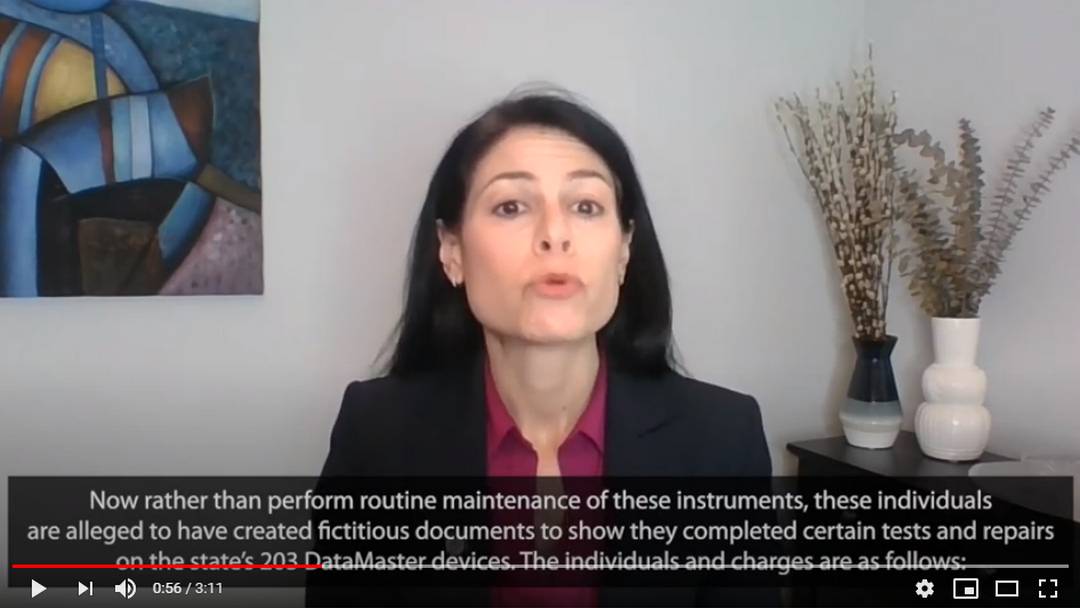
The Michigan AG filed charges against two technicians contracted to service all the DataMaster DMT breath alcohol testing instruments for the Lower Peninsula
One device is at the Beverly Hills Police Department in Oakland County, the other at the Alpena County Sheriff's Office.
Michigan State Police's Breath Alcohol Program says it found problems when conducting a routine review of records early on Jan. 2, Nessel's statement said. They issued a stop order on the Intoximeters contract on Jan. 7.
"Discrepancies in some submitted diagnostic reports came to light during a routine technical review by MSP’s Breath Alcohol Program on Jan. 2, 2020. Specifically, it is alleged that two of Intoximeters Inc.’s three technicians" Nessel's statement said.
If you feel like your datamaster breathalyzer test was done on a faulty machine or was false and would like to hire an attorney that will fight for you. You found him. Michael Komorn – provides DUI, drugged driving and criminal defense passionately an aggressively. Call Our Office 248-357-2550 or visit KomornLaw.com
Michigan AG News Release
May 22, 2020
LANSING – Michigan Attorney General Dana Nessel on Thursday filed charges against two technicians contracted to service all the DataMaster DMT (DataMaster Transportable) breath alcohol testing instruments for the Lower Peninsula. The DataMaster DMT (often referred to as a breathalyzer) is the evidentiary instrument used by law enforcement across Michigan to measure the alcohol level of motor vehicle drivers suspected of being under the influence of alcohol.
The Michigan State Police (MSP) entered into a contract with Intoximeters Inc. that began Sept. 1, 2018 to provide ongoing maintenance and repairs, as well as 120-day on-site inspections on each of the 203 DataMaster DMTs in the state. Each technician was required to physically visit each site to conduct various diagnostic verifications, calibrations and repairs.
Discrepancies in some submitted diagnostic reports came to light during a routine technical review by MSP’s Breath Alcohol Program on Jan. 2, 2020. Specifically, it is alleged that two of Intoximeters Inc.’s three technicians -- Andrew Clark and David John -- created fictitious documents to show they completed certain diagnostic tests and repairs on two DataMaster instruments for which they had responsibility for calibration and performance—one incident involved the DataMaster DMT instrument located at the Beverly Hills Police Department and the other incident involved the DataMaster DMT instrument located at the Alpena County Sheriff’s Office.
Upon discovery of this issue, the MSP temporarily removed all instruments from service and launched an investigation, notifying both its criminal justice partners and the public of its discovery. The MSP promptly began working with the Attorney General’s Public Integrity Unit, continuing to demonstrate a steadfast belief that public trust and accountability are essential in government. The combined efforts of the MSP Breath Alcohol Program, MSP Fraud Investigation Section and the Attorney General’s Public Integrity Unit have culminated in the charges announced today.
Following a four-month investigation led by the Attorney General’s Public Integrity Unit and the MSP, a total of nine felony charges were filed against David John, age 59, of Kalamazoo, and a total of six felony charges were filed against Andrew Clark, 53, of Oxford. Specific charges are as follows:
Andrew Clark, charged in Eaton County:
Two counts, forgery of a public record, a 14-year felony charge;
Two counts, uttering and publishing, a 14-year felony charge; and
Two counts, use of a computer to commit a crime, a 10-year felony charge.
David John, charged in Kalamazoo County:
Three counts, forgery of a public record, a 14-year felony charge;
Three counts, uttering and publishing, a 14-year felony charge; and
Three counts, use of a computer to commit a crime, a 10-year felony charge.
“Those who hold positions of trust and responsibility at any level within our overall system of justice must be held to a high standard. When that trust is betrayed, it is incumbent upon my department to ensure accountability on behalf of the people of our state.” Nessel said. “I’m grateful for the Michigan State Police’s assistance in this investigation, and I know that the MSP and my Public Integrity Unit have handled this matter appropriately and in the public’s best interest.”
“From the time we first uncovered discrepancies, the MSP was committed to conducting a complete and thorough investigation, and to being as transparent as possible regarding the outcomes of this situation,” stated Col. Joe Gasper, director of the MSP. “We recognize the critical role these instruments can play in drunk driving convictions and we are confident that a properly calibrated and maintained DataMaster remains an extremely reliable instrument.”
Certified MSP staff have been performing the ongoing maintenance, repairs and 120-day inspections for all DataMaster instruments since Jan. 10, 2020, and will continue to do so. The State of Michigan’s contract with Intoximeter’s Inc. was officially terminated effective April 9, 2020.
Clark has been arraigned in the Eaton County District Court and was given a personal recognizance bond. He is scheduled for a probable cause conference at 4 p.m. June 1.
John will be arraigned at a later date due to reduced court operations related to COVID-19.
Note: A criminal charge is just an allegation and that the defendant is presumed innocent unless and until proven guilty. At least that's what it's supposed to be.
Last November the Michigan State Police wrapped up a year long pilot program in five Michigan counties to test the accuracy of a roadside drug test.
In December lawmakers agreed to fund an expansion of the program based on its success.
A fatal crash in the Upper Peninsula city of Gladstone in 2013 was the catalyst behind the drug testing pilot. A semi-truck driver was convicted on six-felony charges in connection with the crash, including two counts of operating a motor vehicle with the presence of a controlled substance causing death.
According to MSP the number of drug-impaired fatal crashes has increased over the ten year period between 2007 and 2017 by 151%, up from 98 to 246.
When his parents were killed in 2016, the couple’s son contacted his legislator who got the ball rolling on legislation to curb drugged driving.
Senator Thomas Casperson introduced a pair of bills to combat the problem and come up with a solution to roadside testing. Public Act 242 and 243 of 2016 became known as the Barbara J. and Thomas J. Swift Law, and police started looking at test instruments.
Members of MSP, prosecuting attorneys, toxicologists and forensic experts got together, forming the Oral Fluid Roadside Analysis Pilot Program Committee.
Their report was recently released along with the recommendation to expand the pilot state-wide for at least a year.
The oral fluid roadside test is the Alere DDS2, which detects six different drugs, including a component of cannabis known as Delta 9 THC. It also tests for the presence of amphetamine, cocaine, methamphetamine, opiates and benzodiazepines.
Program director, F/Lt. Jim Flegel said an independent laboratory as well as the MSP Forensic Lab tested the results, and across the board they proved accurate.
In all 92 people were tested and 89 were arrested. According to the report 83 people tested positive for substances; and over 80% of those who tested positive for cannabis.
As a result of the five-county pilot, MSP plans to continue working on the accuracy of the equipment, which it hopes will support permanent changes to the Motor Vehicle Code.
MSP is also training more officers across the state as Drug Recognition Experts (DRE) who can spot impaired drivers and test them at the roadside.
A date to start the yearlong pilot program has not been set, but is expected to be sometime within 2019.
Key Takeaways McPhearson is one of the Sixth Circuit’s strongest holdings limiting “nexus” arguments in search‑warrant cases. The court held that traveling alone, without more, cannot establish a nexus between suspected drug activity and a defendant’s home. The…
Key Takeaways The Michigan Supreme Court’s 2024 decision in People v. Armstrong held that the odor of marijuana alone is not probable cause to search a vehicle. Michigan’s legalization framework (MMMA 2008, MRTMA 2018) means the smell of cannabis is consistent with…
The Michigan AG filed charges against two technicians contracted to service all the DataMaster DMT breath alcohol testing instruments for the Lower Peninsula One device is at the Beverly Hills Police Department in Oakland County, the other at the Alpena County…
Last November the Michigan State Police wrapped up a year long pilot program in five Michigan counties to test the accuracy of a roadside drug test. In December lawmakers agreed to fund an expansion of the program based on its success. A fatal crash in the Upper…