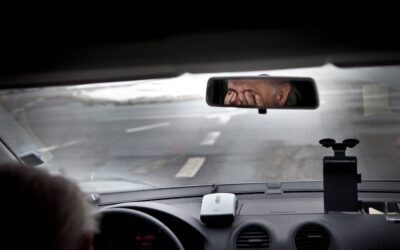

The “automobile exception” in Michigan law allows police to search a vehicle without a warrant if they have probable cause to believe it contains evidence of a crime.
This exception is grounded in the idea that vehicles are inherently mobile, meaning evidence could be moved or destroyed before a warrant is obtained.
Probable cause is a key element in applying this exception.
If law enforcement has a reasonable belief—based on the facts and circumstances—that the vehicle contains contraband or evidence of illegal activity, they can conduct a search.
This standard often arises in cases involving drug-related offenses.
For example, the smell of marijuana has frequently been cited as a factor contributing to probable cause, although recent rulings have added complexity due to the legalization of marijuana in small amounts under Michigan law.
Use You Right To Remain Silent
If you have been accused or charged with a crime.
Say nothing to anyone. Talk to us first.
Our firm is experienced in both State and Federal courts defending clients.
CALL NOW
One notable case is People v. Kazmierczak (2000), where the Michigan Supreme Court ruled that the smell of marijuana alone could justify a search under the automobile exception.
However, as marijuana laws evolved, this principle was reconsidered.
In People v. Armstrong (2023), the court ruled that while the smell of marijuana can contribute to probable cause, it must be combined with other suspicious factors to justify a search.

The debate around this exception continues as courts balance law enforcement’s ability to investigate crimes and individuals’ privacy rights, especially with the legalization of marijuana in Michigan.
Cases
Several legal cases have examined the validity of conducting warrantless vehicle searches based on the odor of marijuana, particularly considering the changing landscape of marijuana legislation.
People v. Freddie Wilkins III (2024): In Wilkins’ case, the search was triggered by the odor of marijuana, but his defense challenged whether that alone should constitute probable cause for a broader search, particularly when possession of small amounts of marijuana is legal.
People v. Armstrong (2023): In this instance, the courts in Michigan reassessed the applicability of the automobile exception, taking into consideration the provisions outlined in the Michigan Regulation and Taxation of Marihuana Act (MRTMA).
The court ruled that while the smell of marijuana could still contribute to probable cause, it must be accompanied by other suspicious factors to justify a search. This case closely mirrors Wilkins, where the search was based on marijuana odor but also raised questions about unregistered firearms found during the search.
People v. Moorman (2020): During a traffic stop, a police officer detected the scent of marijuana, and when the defendant denied possessing any, this denial, along with the odor, provided the officer with probable cause to conduct a search of the vehicle.
The court found that the defendant’s behavior, along with the odor, justified the search, similar to the arguments presented in Wilkins. The ruling was based on the idea that such behavior suggests illegal possession beyond the legal limits
People v. Kazmierczak (2000): Previously, Michigan courts held that the smell of marijuana alone was sufficient to establish probable cause for a vehicle search.
However, this decision was later overruled in part due to changes in marijuana laws.
This case laid the groundwork for discussions like those in Wilkins, where courts must determine if the presence of marijuana (legal in small amounts) is enough to justify a search.
Note: This article provides a general overview and does not substitute for legal advice. Anyone charged with a CSC offense should consult an attorney for specific legal guidance.
More Articles

Terry Stop and Refusal to Identify Yourself to Police
Because this is how it always goes...This is the second part of this post. Read this first - Just Because You're Hanging Out in a High Crime Area Doesn't Make You Suspicious.Standard for Investigatory Detentions / Terry Stops Under Terry v Ohio and other well...

Just Because You’re Hanging Out in a High Crime Area Doesn’t Make You Suspicious
Mere presence in a “high crime” area does not provide particularized suspicion of criminal activity for an investigatory detention.People vs Prude In People v Prude, Prude was in a parked vehicle at an apartment complex that was regularly patrolled by police because...

Gun buyback program – Michigan
There's another bounty to be claimed besides turning in your neighbor.Defined here in HB6144 can mean so many things... “firearm” means any weapon that will, is designed to, or may readily be converted to expel a projectile by action of an explosiveEntrepreneurs get...

Sextortion – Michigan
Sextortion - Extortion with an S.Michigan House Bills 5887 and 5888 make sextortion illegal in Michigan. The law defines sextortion as a threat to create or disseminate sexually explicit images or videos of another person to coerce them. The new law makes a first...
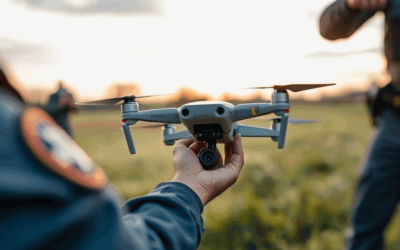
When Can Police Confiscate Your Drone in Michigan?
Someone asked us... Can the police take my drone?As we have seen ... They can charge, arrest you and take your stuff for whatever they want. You'll have to fight it out in court to get it back.In Michigan, the police can confiscate your drone under certain...

Using a computer to commit a crime – The latest add on charges
FRAUDULENT ACCESS TO COMPUTERS, COMPUTER SYSTEMS, AND COMPUTER NETWORKS (EXCERPT)Act 53 of 1979752.796 Use of computer program, computer, computer system, or computer network to commit crime. Sec. 6. (1) A person shall not use a computer program, computer,...

Can I be arrested for flying a drone in Michigan?
Someone asked us... Can I be arrested for flying a drone?As we have seen ... They can charge you and arrest you for whatever they want. But Can I Be Arrested or Fined for Flying a Drone? Yes, you can be arrested or fined for breaking Michigan’s drone laws. Under MCL...

What is the Difference Between a Magistrate and a Judge
What's the difference between a Magistrate and a Judge in Michigan?In Michigan’s court system, both magistrates and judges play important roles, but they have different responsibilities and authority. Understanding the differences between the two can help you know...

Add on charges for your permanent record – Using a computer
The Use of Electronic Devices to Commit Crimes in Michigan Yes that means your cellphone... Computer" means any connected, directly interoperable or interactive device, equipment, or facility that uses a computer program or other instructions to perform specific...

Can You Be Charged for Using Your Phone During a Crime in Michigan?
Your breaking the law if you are using a cellphone while driving. On top of that if you're committing a crime and you use the phone... You're in for a prosecutor's extra round of office high fives.Can You Be Charged for Using Your Phone During a Crime in Michigan?...