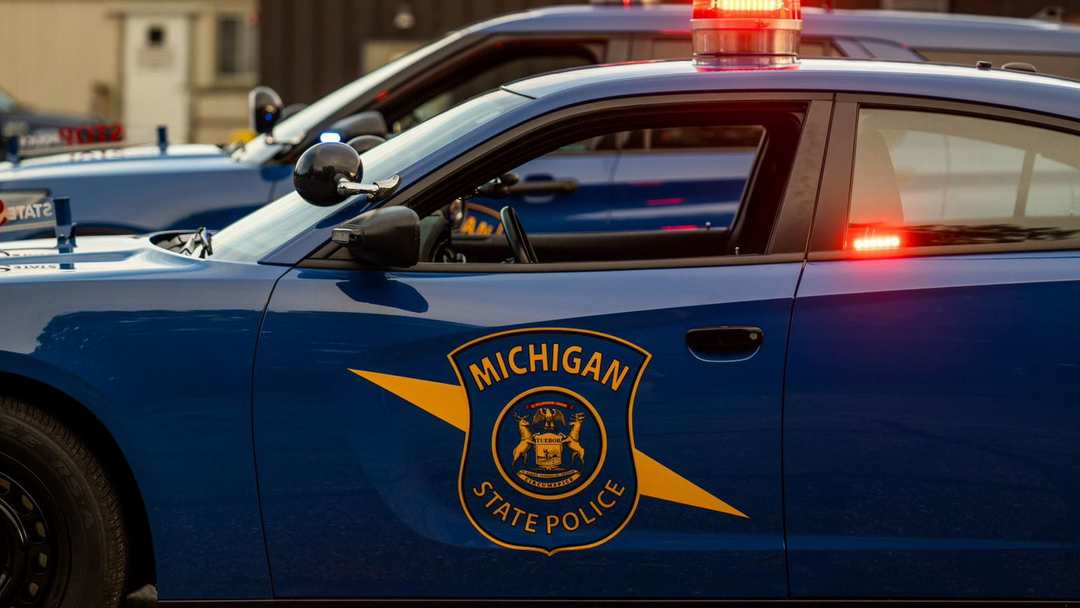
Is the Michigan State Police really concerned about your DNA / biometric privacy?
Here’s what they say on their website
The Michigan State Police (MSP) is committed to protecting the privacy of your potentially personally identifiable data (PPID) in a strong and meaningful manner. Our privacy policy is designed to inform both members of the public and our employees about the PPID information we collect, how we use it, how we maintain it in our systems, under what circumstances you may access or correct your own information, and what we may disclose to others.
Biometric Identification Information
MSP may collect and use your biometric Information, including (but not limited to): fingerprint images, palm print images, iris images, digital images captured during your arrest or booking, and descriptive data associated with all images, identifying marks, scars, amputations, and tattoos, for identification and investigative purposes.
It may also require submission of biometric information for employment purposes. This information is protected, retained, and used in compliance with the Bureau of Criminal Identification and Records Act, Act 289 of 1925. This act also allows for data sharing between interstate, national, and international systems for criminal identification purposes.
Biometric Information may also be submitted voluntarily for specific programs, such as for identification of individuals with special health care needs, per the Fingerprinting Residents of this State Act, MCL 28.274.
DNA identification profile information may be collected, analyzed, indexed, and retained by MSP, as specified in the DNA Identification Profiling System Act, Act 250 of 1990. This act allows DNA profiles to be used for law enforcement identification purposes or to assist in the recovery or identification of human remains or missing persons. If personal identifiers are removed, it may also be used or shared for academic, research, statistical analysis, or protocol development purposes.
The following notice will be given to all individuals who provide a DNA sample (MSP FORM BID-016):
At the time a DNA sample is taken, please be advised:
(a) That, except as otherwise provided by law, your DNA sample or DNA profile, or both, shall be destroyed or expunged, as appropriate, if the charge for which the sample was obtained has been dismissed or resulted in acquittal, or no charge was filed within the limitations period.
(b) That your DNA sample or profile, or both, will not be destroyed or expunged, as appropriate, if MSP determines you are otherwise obligated to submit a sample or if it is evidence relating to another individual that would otherwise be retained under MCL 28.176.
(c) That the burden is on the arresting law enforcement agency and the prosecution to request the destruction or expunction of a DNA sample or profile as required under MCL 28.176, not on you.
Here’s what we say

Don’t talk to the police before, during or after your Miranda rights have been read without a lawyer present. If you do limit your information because what you say locks you into what you said. Just because you are not under arrest or being detained does not mean what you say will not be used against you.
Here is some information to review.
Don’t worry, a copy of your DNA has not been sent off to the Government Mountain Storage Facility for permanant storage out of view, or has it?
Legal Counsel and Your Rights
When facing legal challenges, particularly in criminal cases, it is advisable to seek legal counsel immediately.
An experienced attorney can provide guidance on how to navigate interactions with law enforcement while safeguarding your constitutional rights.
Since 1993 our expert legal defense in navigating criminal law matters and protecting your constitutional rights are what we eat for breakfast everyday.
Contact Komorn Law PLLC if you’re ready to fight and win.
Research us and then call us.
More Rights You Should Know

What is the Exclusionary Rule?
What is the Exclusionary Rule?The Exclusionary Rule is a legal principle in the United States that prevents the government from using most evidence gathered in violation of the United States Constitution. Specifically, it applies to evidence obtained through an...
No Results Found
The page you requested could not be found. Try refining your search, or use the navigation above to locate the post.
Other Articles
Do Passengers in a Vehicle have 4th Amendment Rights?
Do Passengers have 4th Amendment Rights?Michigan Supreme Court Limits Police Ability to Search Passenger Property in CarsBackground Mead was a passenger in a car and had just met the driver, who offered him a ride. When the police stopped the vehicle and ordered both...

Michigan Appeals Court Decision on Cannabis Use and Probation
Michigan Court of Appeals - Recreational Cannabis Use and ProbationRecently, another pivotal case, People v. Lopez-Hernandez, was decided by the Michigan Court of AppealsAt Komorn Law, we are dedicated to protecting the rights of our clients and staying at the...

Do Students Have 4th Amendment Rights in Schools
Students and 4th Amendment RightsStudents are entitled to a right to be safe from unreasonable searches and seizures even within school premises, as ruled by the Supreme Court of the United States. However, these rights are somewhat limited for students, allowing...

Forfeiture Law: SCOTUS and Sixth Circuit Issue Landmark Rulings
Forfeiture Law in Focus: SCOTUS and Sixth Circuit Issue Landmark RulingsThe landscape of forfeiture law has been significantly shaped by recent decisions from the U.S. Supreme Court and the Sixth Circuit Court of Appeals. These rulings, in the cases of United States v...

When Can Your Silence Be Used Against You in a Legal Situation?
US Supreme Court - Salinas v. TexasWhen Can Silence Be Used Against You? In the realm of criminal law, the Fifth Amendment to the United States Constitution grants individuals critical protections, including the right to remain silent and the right against...
Supreme Court 8-1 Gun Possession Decision Changes Second Amendment
Supreme Court 8-1 Gun Possession Decision Changes Second Amendment Landscape Forever!Issue: Whether 18 U.S.C. 922(g)(1), the federal statute that prohibits a person from possessing a firearm if he has been convicted of “a crime punishable by imprisonment for a term...

Facial Recognition and Wrongful Arrests
Facial RecognitionHow Technology Can Lead to Mistaken-Identity Arrests Facial recognition technology has become increasingly prevalent in law enforcement, but its use raises critical questions about civil liberties and accuracy. One landmark case sheds light on the...

People v. Chandler Case: Protecting Fourth Amendment Rights
Court of Appeals of Michigan PEOPLE of the State of Michigan, Plaintiff-Appellee, v. Javarian CHANDLER, Defendant-Appellant. No. 368736 Decided: June 27, 2024Before: Borrello, P.J., and Swartzle and Young, JJ. Introduction In the People v. Chandler case, the Michigan...