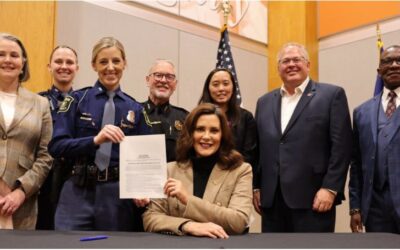

Is the Michigan State Police really concerned about your DNA / biometric privacy?
Here’s what they say on their website
The Michigan State Police (MSP) is committed to protecting the privacy of your potentially personally identifiable data (PPID) in a strong and meaningful manner. Our privacy policy is designed to inform both members of the public and our employees about the PPID information we collect, how we use it, how we maintain it in our systems, under what circumstances you may access or correct your own information, and what we may disclose to others.
Biometric Identification Information
MSP may collect and use your biometric Information, including (but not limited to): fingerprint images, palm print images, iris images, digital images captured during your arrest or booking, and descriptive data associated with all images, identifying marks, scars, amputations, and tattoos, for identification and investigative purposes.
It may also require submission of biometric information for employment purposes. This information is protected, retained, and used in compliance with the Bureau of Criminal Identification and Records Act, Act 289 of 1925. This act also allows for data sharing between interstate, national, and international systems for criminal identification purposes.
Biometric Information may also be submitted voluntarily for specific programs, such as for identification of individuals with special health care needs, per the Fingerprinting Residents of this State Act, MCL 28.274.
DNA identification profile information may be collected, analyzed, indexed, and retained by MSP, as specified in the DNA Identification Profiling System Act, Act 250 of 1990. This act allows DNA profiles to be used for law enforcement identification purposes or to assist in the recovery or identification of human remains or missing persons. If personal identifiers are removed, it may also be used or shared for academic, research, statistical analysis, or protocol development purposes.
The following notice will be given to all individuals who provide a DNA sample (MSP FORM BID-016):
At the time a DNA sample is taken, please be advised:
(a) That, except as otherwise provided by law, your DNA sample or DNA profile, or both, shall be destroyed or expunged, as appropriate, if the charge for which the sample was obtained has been dismissed or resulted in acquittal, or no charge was filed within the limitations period.
(b) That your DNA sample or profile, or both, will not be destroyed or expunged, as appropriate, if MSP determines you are otherwise obligated to submit a sample or if it is evidence relating to another individual that would otherwise be retained under MCL 28.176.
(c) That the burden is on the arresting law enforcement agency and the prosecution to request the destruction or expunction of a DNA sample or profile as required under MCL 28.176, not on you.
Here’s what we say

Don’t talk to the police before, during or after your Miranda rights have been read without a lawyer present. If you do limit your information because what you say locks you into what you said. Just because you are not under arrest or being detained does not mean what you say will not be used against you.
Here is some information to review.
Don’t worry, a copy of your DNA has not been sent off to the Government Mountain Storage Facility for permanant storage out of view, or has it?
Legal Counsel and Your Rights
When facing legal challenges, particularly in criminal cases, it is advisable to seek legal counsel immediately.
An experienced attorney can provide guidance on how to navigate interactions with law enforcement while safeguarding your constitutional rights.
Since 1993 our expert legal defense in navigating criminal law matters and protecting your constitutional rights are what we eat for breakfast everyday.
Contact Komorn Law PLLC if you’re ready to fight and win.
Research us and then call us.
More Rights You Should Know

Red Flag Rules for Extreme Risk Protection Orders-Firearms Act
Michigan Supreme Court - These changes follow the creation of the Extreme Risk Protection Order Act and amendments to the Firearms Act. Red Flag Laws.Effective February 13, 2024On February 6, 2024, the Michigan Supreme Court issued ADM File No. 2023-24, which adopts...
No Results Found
The page you requested could not be found. Try refining your search, or use the navigation above to locate the post.
Other Articles

Cannabis Tax Payments Being Distributed in Michigan
Adult-Use Marijuana Tax Payments Being Distributed In MichiganHere's what they say...Treasury: Adult-Use Marijuana Payments Being Distributed to Michigan Municipalities and Counties; More Than $59.5 Million Going to 224 Municipalities and Counties. Sales of "legal"...

The Expanding List of Crimes that Restrict Gun Ownership
The Expanding List of Crimes that Restrict Gun Ownership in MichiganHere are the LawsDomestic Violence The legislature passed a package of bills that add subsets to certain misdemeanor offenses (identified below) for offenses involving domestic relationships. See 2023...

Forensic Science Division – DNA Profiling System
The Michigan State Police Forensic Science Division (FSD) DNA Profiling System is a comprehensive program that uses DNA analysis to support criminal investigations throughout the state. The system is housed within the Biometrics and Identification Division (BID),...
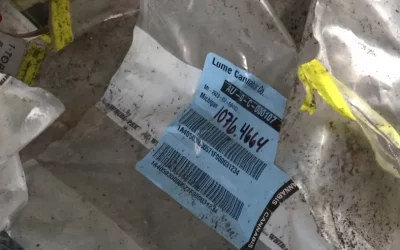
Apparent cannabis testing bags in trash pile in Lansing
Michigan's marijuana laws mandate that both retail recreational and medical marijuana undergo comprehensive testing conducted by independent laboratories. The purpose of such testing is to identify and mitigate potential contaminants such as mold, mildew, and harmful...
Evidence in Michigan Courts: Proposed Amendments of MRE
The Michigan Rules of Evidence are the rules adopted by the Michigan Supreme Court to govern evidentiary processes throughout Michigan's judicial system. Occasionally, the Rules of Evidence require amendments or changes. You can access proposed and recently-adopted...

Evidence in Michigan Courts: Michigan’s Evidence Rules 1001-1008
Michigan's Rules of Evidence, established by the Supreme Court, dictate how evidence is presented and admitted in court proceedings. Rules 1001 through 1008, focusing on how written words, recordings, and photographs are treated as evidence.Rule 1001: Defining the...

Evidence in Michigan Courts: Rules 901-903 Authenticating Evidence
Michigan Rules 901-903 - Evidence Authentication Ever wondered how that document or recording made its way into a Michigan courtroom? The answer lies in Michigan Rules of Evidence 901 to 903, which govern the crucial step of authenticating evidence. This article...

Evidence in Michigan Courts: Rule 801-807 Hearsay Evidence
Michigan Rules of Evidence 801-807 Hearsay: In the courtroom, truth-finding is paramount. Yet, not every statement offered as evidence directly reveals the truth. Enter the realm of hearsay, statements made out of court, and the complex rules governing their...