
What are Miranda Rights?
Miranda Rights, also known as the Miranda warning, are the rights given to people in the United States upon arrest.
“You have the right to remain silent. Anything you say can and will be used against you in a court of law…” These rights stem from a 1966 Supreme Court case: Miranda v. Arizona 1.
Here’s the backstory: In 1963, Ernesto Miranda, a 24-year-old with a police record, was accused of kidnapping, raping, and robbing an 18-year-old woman in Phoenix, Arizona. During a two-hour interrogation, Miranda confessed to the crimes. However, his lawyers argued that he hadn’t been clearly informed of his rights to have a lawyer and against self-incrimination.
The court agreed, and the Miranda Rights were born. Now, when law enforcement detains suspects, they must recite these rights to ensure awareness of the right to an attorney and the right against self-incrimination. It forever changed U.S. criminal procedure, emphasizing fairness and protecting individuals’ rights.
At what point do the police have to read me my miranda rights?
Police must read you your Miranda rights as soon as they plan to interrogate you while you are in custody. Being in custody means that you are not free to leave at any point that you wish.
If you are free to leave or not in custody, police do not need to read you your rights before asking you questions. Remember, these rights protect your right to remain silent and have an attorney present during questioning.

One notable case involving Miranda Rights is Missouri v. Seibert. Here’s what happened:
Background: Respondent Seibert was arrested after her son, afflicted with cerebral palsy, died in a fire. She was present when her sons and friends discussed burning their mobile home to conceal the circumstances of her son’s death.
An unrelated mentally ill 18-year-old named Donald was left to die in the fire. The police arrested Seibert but did not read her Miranda rights initially.
The Interrogation: At the police station, Officer Hanrahan questioned Seibert for 30 to 40 minutes without providing Miranda warnings. He obtained a confession related to the plan for Donald to die in the fire. After a 20-minute break, Hanrahan returned, gave her the Miranda warnings, and obtained a signed waiver. He then resumed questioning, confronting Seibert with her pre-warning statements.
Legal Outcome: Seibert moved to suppress both her pre-warning and post-warning statements. The District Court admitted the post-warning statement but suppressed the pre-warning one. Seibert was convicted of second-degree murder. The Missouri Court of Appeals affirmed the decision.
Supreme Court Ruling: The U.S. Supreme Court affirmed the decision. Justice Souter concluded that Seibert’s post-warning statements were inadmissible because the midstream recitation of warnings after interrogation and an unwarned confession couldn’t comply with Miranda’s constitutional warning requirement.
What the Miranda Rule means in one long sentence: This rule states before you are interrogated or you’re questioned by police, they have to read you your miranda rights only if you are not free to leave.
At Komorn Law, we specialize in navigating the complex landscape of constitutional law. This recent Supreme Court decisions illustrates the nuanced legal analyses and strategic thinking that we bring to our practice, ensuring that our clients receive informed and effective representation.
Our commitment to understanding and influencing the trajectory of legal standards helps us advocate for a balanced approach to individual rights and public safety.
And now for something completely different….
Michigan Law: False Report of Crime
According to MCL Section 750.411a, intentionally making a false report of a crime to law enforcement or emergency services is a crime. Depending on the severity, it can range from a misdemeanor to a felony.
For instance:
False report of a misdemeanor: Up to 93 days in jail or a $500 fine.
False report of a felony: Up to 4 years in prison or a $2,000 fine.
If the false report results in injury or death, the penalties escalate
Recent

What does Nolle Prosequi mean?
What does Nolle Prosequi mean? Fatal Flaw In criminal cases, nolle prosequi may be employed when there is a significant weakness in the prosecution's case, when the prosecutor acknowledges an inability to prove the charges, or even when the prosecutor has lost...

People v. Lukity, 460 Mich 484 (1999)
Case Summary The Michigan Supreme Court reversed the Court of Appeals and reinstated the defendant’s conviction for first-degree criminal sexual conduct against his fourteen‑year‑old daughter. The Court held that although one evidentiary error occurred, it was...
Other Articles

Supreme Court to Hear Case on Gun Rights and Marijuana Use
Supreme Court to Hear Case on Gun Rights and Marijuana Use The Supreme Court has agreed to hear U.S. v. Hemani, a case challenging the federal ban on gun ownership by individuals who use marijuana—even in states where it’s legal. The decision could reshape how drug...

Supreme Court Declines to Hear Maryland Gun Permit Case
The U.S. Supreme Court recently declined to hear Snope v. Brown, a case challenging Maryland’s requirement for a permit to carry a concealed handgun. While the Court offered no explanation, the decision leaves in place a lower court ruling that upheld the state’s...
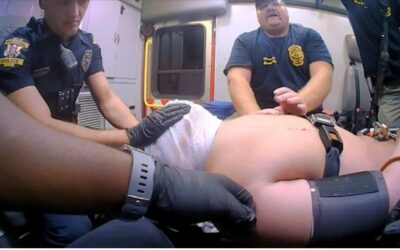
Video kept from family shows police force not drugs killed son
police and paramedics inflicted “inhumane acts of violence”A mother has filed a federal lawsuit claiming that, while her son was experiencing a seizure in his Tennessee apartment, police and paramedics inflicted “inhumane acts of violence” on the 23-year-old instead...

What could happen when you click the – I agree – box?
Wrongful death suit against Disney serves as a warning to consumers when clicking ‘I agree’A wrongful death lawsuit involving Walt Disney Parks and Resorts highlights the critical importance for consumers to meticulously review the fine print before registering for a...