Someone asked us… Can the police take my drone?
As we have seen … They can charge, arrest you and take your stuff for whatever they want. You’ll have to fight it out in court to get it back.
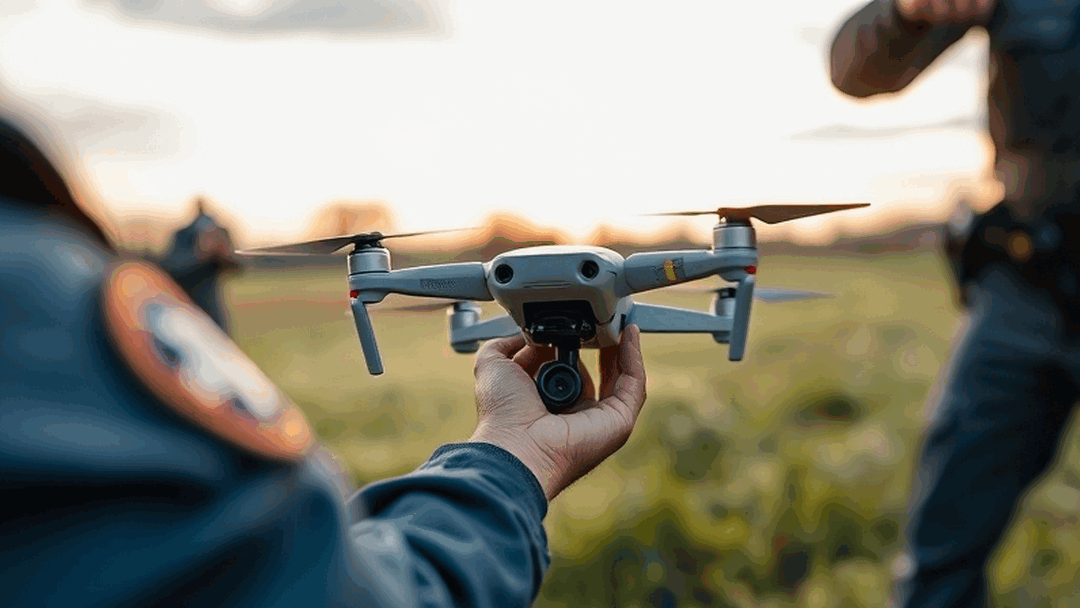
In Michigan, the police can confiscate your drone under certain conditions, mainly if you’re violating the law.
Here’s what you need to know about when and why your drone might be taken by authorities.
—> There’s some cool drone shows at the end of this article.
Illegal Use of Drones
If you’re using your drone in a way that breaks Michigan or federal laws, the police can step in. For example, Michigan law (MCL 259.322) prohibits using drones to interfere with law enforcement, harass others, or invade privacy. If your drone is involved in these activities, the police can seize it as part of their investigation.
Under MCL 259.322, it is illegal to operate a drone in a way that interferes with law enforcement or emergency operations. Flying a drone over prisons, for example, is strictly prohibited. Violating these laws could lead to arrest, fines, or both.
Trespassing
Flying a drone over private property without permission could be considered trespassing. Michigan law (MCL 259.320) regulates the safe operation of drones, and if you violate airspace laws or property rights, your drone could be confiscated as evidence of trespassing or other violations.
259.320 Criminal liability; offense committed with aid of an unmanned aircraft system; exception.
Sec. 20.
(1) A person is guilty of an offense committed with the aid of an unmanned aircraft system if the unmanned aircraft system is under the person’s control and the activity performed with the aid of the unmanned aircraft system would have given rise to criminal liability under the penal law of this state if it was performed directly by the person without the aid of an unmanned aircraft system.
(2) Notwithstanding subsection (1), and except as provided in sections 21 and 22 and section 45a(1) of the Michigan penal code, 1931 PA 328, MCL 750.45a, solely flying an unmanned aircraft system through navigable airspace in accordance with federal law does not give rise to criminal liability under the penal law of this state.
The Key sentence from above: “solely flying an unmanned aircraft system through navigable airspace in accordance with federal law does not give rise to criminal liability under the penal law of this state.”
-So if you use the drone in aiding you to commit a crime – The trouble begins (or maybe just an alleged a crime to sieze it). See you in court.
National Security Concerns
Flying drones near airports, military bases, or other restricted areas can lead to immediate police action. The Federal Aviation Administration (FAA) has strict rules about no-fly zones, and Michigan police will work with federal authorities to confiscate drones that pose a national security risk.
Use You Right To Remain Silent
If you have been accused or charged with a crime.
Say nothing to anyone. Talk to us first.
Our firm is experienced in both State and Federal courts defending clients.
CALL NOW
Accidents or Dangerous Flying
If your drone causes an accident or is flown recklessly, the police can confiscate it to prevent further harm or investigate the incident. This is especially relevant if someone is injured or property is damaged.
Do I Need to Be Licensed?
If you’re flying a drone for commercial purposes, you must have an FAA Part 107 Remote Pilot Certificate. To get this, you’ll need to pass a knowledge test administered by the FAA.
If you’re flying for recreational purposes, you don’t need a license, but you must follow FAA safety guidelines, including flying below 400 feet and keeping the drone within your line of sight.
Do FAA Laws Supersede Local Laws?
Yes, Federal Aviation Administration (FAA) laws take precedence over state or local drone regulations.
This means that federal rules about airspace, drone registration, and licensing apply across the country, including Michigan. However, local laws that don’t conflict with FAA rules—like those concerning privacy or property—can still apply.
Michigan State Laws:
In Michigan, there are no separate state registration requirements for drones beyond the FAA’s regulations. However, local ordinances may still apply, particularly regarding where you can fly the drone, so it’s important to check local rules.

Disclaimer: This article provides a general overview and does not substitute for legal advice. As with any law it can change or be modified and research should be done before you rely on any information provided on the internet. Although we make all attempts to link relevant laws these laws can often be gray and corrupted to fit a narrative. Anyone charged with any alleged crime should consult an attorney for specific legal guidance.
Beautiful when they are used for good…
Michigan Laws

Michigan Supreme Court and Court of Appeals Cases – Arrest
People v Lyons, No 370840, ___ Mich App ___, ___ NW3d ___ (May 13, 2025)Case Summary In People v Lyons, the defendant was a passenger in a vehicle stopped by police. Before the vehicle fully stopped, he exited and began walking away. Officers ordered him to return, he...

Michigan Supreme Court and Court of Appeals Cases – Manslaughter
Case Summary These two cases examine the boundaries of involuntary manslaughter. In People v Aiyash, a gas‑station clerk locked an agitated customer and three patrons inside the store, after which the customer shot the patrons. In People v Sherrill, the defendant...
Michigan begins 2026 with New Laws
Michigan’s 2026 legal landscape includes major tax reforms—most notably the gas‑tax increase from 31¢ to 52.4¢ per gallon—along with cannabis tax changes, wage increases, consumer protections, and transparency laws.Michigan begins 2026 with a slate of new laws...
Michigan Supreme Court and Court of Appeals Cases – Appeal
Michigan appellate courts issued several significant decisions refining how convictions are reviewed, when relief from judgment is appropriate, and how procedural errors must be preserved. These cases collectively clarify retroactivity, evidentiary‑weight standards,...

Coalition Forms to Support Voter Approved MRTMA
New Coalition Forms To Support Voter Approved Cannabis ActMichigan’s adult‑use cannabis framework was not created by accident. It was built through a deliberate, voter‑driven process culminating in the Michigan Regulation and Taxation of Marihuana Act (MRTMA). The Act...

Michigan Court of Appeals Orders City of Taylor to Release Police Misconduct Records
Case Summary The Michigan Court of Appeals has ruled that the City of Taylor must comply with a Freedom of Information Act (FOIA) request submitted by the ACLU of Michigan seeking police misconduct records dating back to 2021. The request covers documents involving...

Michigan Supreme Court and Court of Appeals Cases – Home Invasion
Case Summary In People v Berry, the defendant co‑owned a home with his former partner. After moving out and negotiating a buyout, he re‑entered the home with another individual before the agreement was finalized. Both were charged with first‑degree home invasion. The...

Cannabis Regulators Association-Briefing on Marijuana Schedule Change
Overview of the President’s December 18th Executive Order and the Implications When Marijuana is Rescheduled to Schedule III under the U.S. Controlled Substances ActTOP-LINE SUMMARY The President signed an Executive Order on December 18, 2025, ordering his...

Trump’s Marijuana Reclassification 2025
Donald Trump’s Actions On December 18, 2025, President Donald Trump signed an executive order reclassifying marijuana from a Schedule I to a Schedule III controlled substance under the federal Controlled Substances Act (CSA). This marks the most significant federal...

Michigan Supreme Court and Court of Appeals Cases – Felon in Possession
Case Summary In People v Hughes, the defendant challenged Michigan’s felon‑in‑possession statute on Second Amendment grounds. He argued the law was unconstitutional both on its face and as applied to nonviolent offenders. The Court of Appeals rejected both...