

Navigating the legal system can be daunting, especially when it comes to understanding the rules governing evidence.
This article sheds light on the first six articles of the Michigan Rules of Evidence (MRE), providing a helpful summary for legal professionals, litigants, and anyone interested in gaining insights into how evidence is handled in Michigan courts.
Rule 101: Scope and Definitions
Firstly, MRE 101 establishes the scope of the rules, specifying that they apply to all proceedings in Michigan courts, with exceptions outlined in Rule 1101. It also clarifies key terms like “civil case” and “record,” ensuring consistent interpretation throughout.
Rule 102: Purpose
MRE 102 sets the guiding principle for interpreting the rules: fairness, efficiency, and truth-seeking. It emphasizes administering proceedings justly, minimizing unnecessary cost and delays, and ultimately, ensuring accurate outcomes.
Rule 103: Rulings on Evidence
This rule outlines how to preserve objections and offer proof. To challenge a ruling admitting evidence, a party must object promptly, state the specific reason, and offer a motion to strike. In case of exclusion, the party must inform the court of the evidence’s content through an offer of proof, unless already clear from the context.
Rule 104: Preliminary Questions
MRE 104 addresses situations where the judge must decide a preliminary question, such as witness competency or hearsay exceptions, before determining whether evidence is admissible. The rule allows both parties to present evidence on the preliminary issue, ensuring a fair and informed decision by the judge.
Rule 105: Limiting Admissibility
This rule acknowledges that some evidence, though relevant, might be prejudicial or confusing. MRE 105 empowers the judge to limit the admissibility of such evidence in various ways, like allowing only specific portions, instructing the jury, or imposing an “admonition” to disregard certain aspects. This ensures a balanced presentation of evidence that focuses on the relevant issues.
Rule 106: Remainder of or Related Writings
Finally, MRE 106 addresses situations where a party introduces part of a writing or recording. This rule grants the opposing party the right to introduce any other portion or related document that provides context and fairness. This prevents distortion and ensures the jury hears the complete picture.
Conclusion
These six initial rules of the MRE lay the foundation for a fair and efficient legal system in Michigan. By understanding their purpose and application, individuals can navigate the courtroom with greater confidence and contribute effectively to the pursuit of justice.
Important:
This article provides a simplified overview of MRE 101-106 for informational purposes only. It should not be interpreted as legal advice. When facing legal matters, always consult with a qualified attorney for professional guidance. It is suggested that you read the unsummarized rule. Here is the link to the Michigan Rules of Evidence Handbook
Have your rights been violated?
Have your driving priviledges been revoked?
Has your professional license been suspended?
Have you been charged with a crime?
Call our office to see if we can help
Komorn Law 248-357-2550
Related Articles
Understanding the Rule of Completeness in Michigan Courts
Understanding the Rule of Completeness in Michigan Courts: MRE 106In the pursuit of truth and ensuring fairness during legal proceedings, the Michigan Rules of Evidence (MRE) play a crucial role. One particular rule, MRE 106 (Completeness), safeguards against...
Apparent cannabis testing bags in trash pile in Lansing
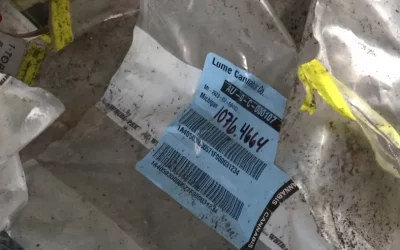
Michigan's marijuana laws mandate that both retail recreational and medical marijuana undergo comprehensive testing conducted by independent laboratories. The purpose of such testing is to identify and mitigate potential contaminants such as mold, mildew, and harmful...

Evidence in Michigan Courts: Proposed Amendments of MRE
The Michigan Rules of Evidence are the rules adopted by the Michigan Supreme Court to govern evidentiary processes throughout Michigan's judicial system. Occasionally, the Rules of Evidence require amendments or changes. You can access proposed and recently-adopted...

Evidence in Michigan Courts: Michigan’s Evidence Rules 1001-1008
Michigan's Rules of Evidence, established by the Supreme Court, dictate how evidence is presented and admitted in court proceedings. Rules 1001 through 1008, focusing on how written words, recordings, and photographs are treated as evidence.Rule 1001: Defining the...
More Posts

What is Inference Stacking?
What Is Inference Stacking? A Legal ExplanationInference stacking—also called pyramiding of inferences—is a rule of evidence that prohibits courts or juries from building one inference on top of another when the first inference is not supported by direct evidence....
Deadlocked Jury – What does it mean?
A deadlocked jury is often called a hung jury—A deadlocked jury—often called a hung jury—occurs when jurors cannot reach the unanimous (or legally required) agreement needed to deliver a verdict. In criminal cases, most jurisdictions require unanimity. When the jury...

The New Federal Definition of Hemp
The New Federal Definition of Hemp: Legal and Regulatory ImplicationsCongress has enacted a sweeping revision to the federal definition of hemp through the Continuing Appropriations, Agriculture, Legislative Branch, Military Construction and Veterans Affairs, and...

Miranda v Arizona
Case Summary Miranda v. Arizona established that before police conduct custodial interrogation, they must advise suspects of their rights: the right to remain silent, that statements may be used against them, and the right to an attorney. These “Miranda warnings”...

Your Voice, Your Rights: Understanding the First Amendment in Michigan
Freedom of Speech - The First Amendment This right is not really absoluteIn a world filled with diverse opinions and constant communication, knowing your fundamental rights is more important than ever. In Michigan, residents are protected by robust free speech rights,...

Legal Tip – Driving High on Cannabis in Michigan
Driving under the influence of cannabis is illegal and carries serious consequences in Michigan.We have fought and won many cases from the District Courts, Circuit Courts, Court of Appeals and the Supreme Court through out the State of Michigan. We have also fought...
Michigan House Bill NO. 4391
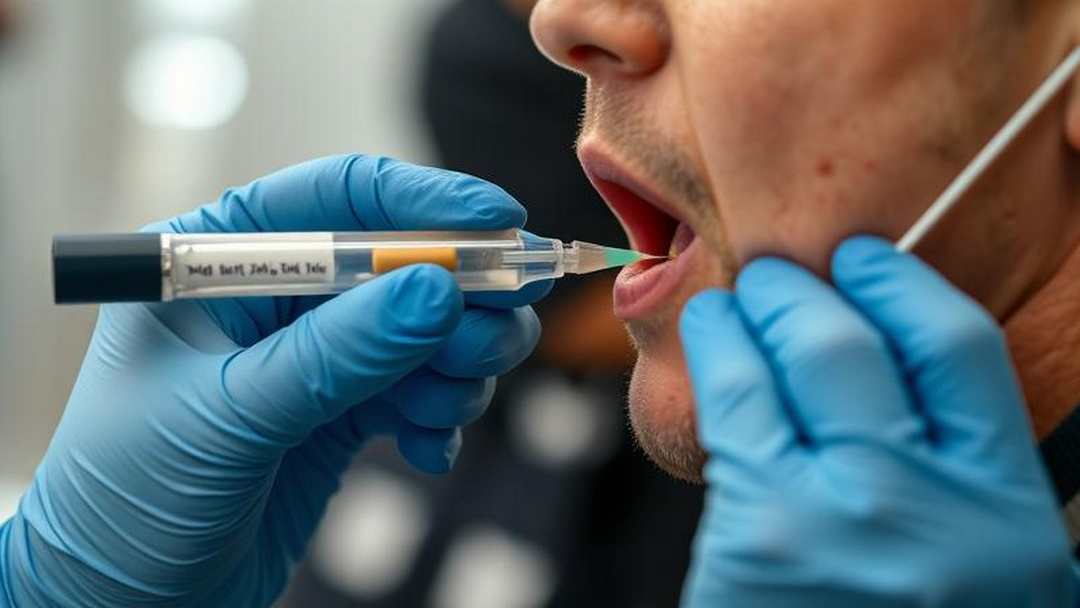
It may just be easier to collect and analyze tears.This legislation seeks to integrate saliva testing for cannabis within law enforcement procedures, designating a refusal to participate in this testing as a criminal offense, similar to the penalties imposed for...
Legal Tip – Your Rights During a DUI Stop in Michigan
Komorn Law - Quick Legal TipsLegal Tip: Understanding Your Rights During a DUI Stop in Michigan A DUI stop can be stressful, but knowing your rights is crucial. You have the right to remain silent. You are not obligated to answer questions beyond basic identification....
Forfeiture without Criminal Charges
Can the police seize your belongings and hold it without charging you with a crime?Read the summary below and watch Attorney Michael Komorn in the Court of Appeals.Summary of "Ruben Delgado v. Michigan State Police": This case was filed in the Jackson County Circuit...

23andMe filed for Chapter 11 bankruptcy and your data is?
As of Friday 3/28/25, the firm’s shares were worth less than a dollar.If you are charged with a crime you're part of the State of Michigan family now. Call us - Because you don't want to be a part of that family. Komorn Law (248) 357-2550Genetic testing service...